
This article may contain affiliate links. We may earn a commission at no extra cost to you.
A richly embroidered magenta Anarkali already makes a statement, so styling it can feel surprisingly difficult. Add too much jewellery, a competing bag or an elaborate dupatta arrangement, and the outfit can lose its natural elegance.
The simplest approach to magenta Anarkali dress styling is to let the embroidered bodice lead, keep supporting accessories coordinated and adjust the finishing details to suit the occasion. Gold, ruby and champagne tones are useful starting points, while carefully chosen footwear, a balanced hairstyle and considered dupatta draping help create a complete look without unnecessary decoration.
Table of Contents
1. Let the Embroidered Bodice Lead
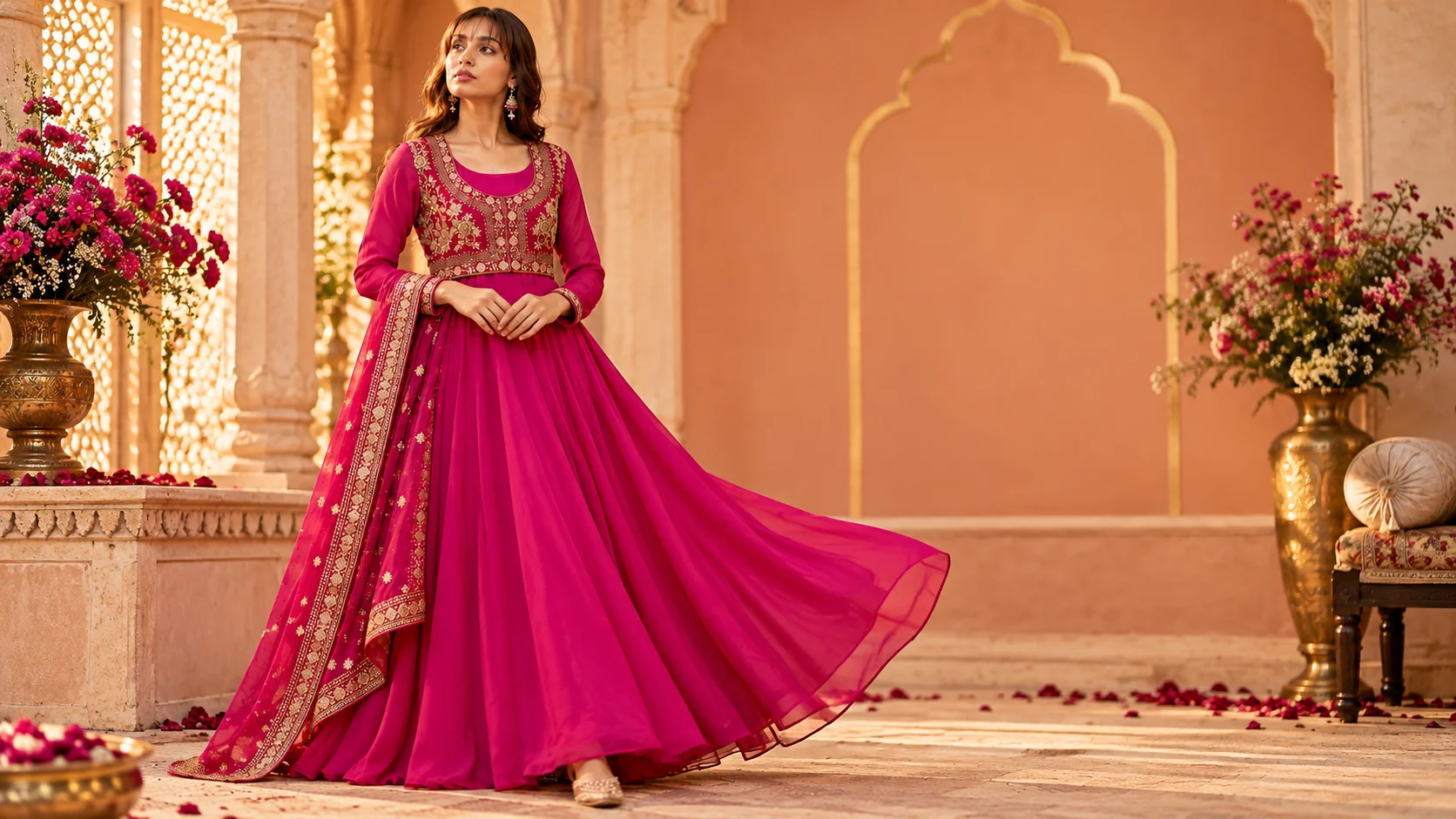
The first decision is not which accessory to add, but which part of the outfit deserves attention. In this Anarkali-inspired look, the fitted maroon bodice features dense gold floral embroidery, while the flowing magenta skirt creates a broad, uninterrupted colour field. The contrast already provides visual interest.
Use the bodice as your focal point. If the embroidery is intricate, avoid automatically adding a heavily embellished necklace, oversized earrings, a decorative belt and a statement clutch together. Instead, choose one prominent accessory and let the remaining pieces support it.
For example, ruby-toned drop earrings can echo the magenta family without competing with the gold detailing. If you prefer a necklace, choose its scale according to the neckline and embroidery: a simpler design may sit more comfortably beside a richly decorated bodice than a large, layered piece.
This approach is useful whenever an outfit contains several decorative elements. You do not need every accessory to make a statement; you need each one to have a clear purpose.
2. Choose Jewellery That Complements the Dress
Jewellery can make the same magenta Anarkali feel traditionally festive, softly romantic or more contemporary. The most reliable starting point is to coordinate the jewellery with the outfit’s visible colours and decorative scale rather than trying to match every detail exactly.
Gold-toned jewellery complements the warm appearance of the embroidery and creates a coherent traditional look. Ruby or deep pink accents can connect with the dress, while pearls or understated neutral details can soften the overall effect. These are styling suggestions, not fixed rules; the best combination depends on personal taste and the jewellery already in your collection.
Use the neckline to guide your choice. With a rounded neckline and a heavily embroidered bodice, statement earrings may provide enough emphasis on their own. If you choose a necklace, keep the overall scale in proportion to the embroidery and check that the two do not compete visually.
For more help choosing earrings, explore how to style statement ethnic earrings for a festive look. The same principle applies here: select a focal piece first, then decide whether another jewellery item adds something useful.
A practical rule is to choose one main jewellery focus—earrings, necklace or bangles—and keep the remaining pieces quieter. This creates definition without making the outfit feel crowded.
Shop the Look3. Balance the Dupatta, Bag and Footwear
The accessories around the dress should support its colour and formality. With a magenta Anarkali featuring gold embroidery, champagne, beige and gold-toned accessories are natural options because they echo the warm decorative details without introducing another dominant colour.
Dupatta styling: If the dupatta has a prominent embroidered border, arrange it so that the border remains visible without covering the entire bodice. A drape over one shoulder can reveal the neckline and embroidery, while a more balanced arrangement across the arms may suit a formal family gathering. If the dupatta is itself heavily decorated, simplify the jewellery to avoid competing focal points.
Handbag: A small champagne, beige or gold-toned clutch can complement the outfit for a wedding or evening celebration. A simple design is especially useful when the bodice and dupatta already contain intricate detail. A matching magenta bag can also work, but choose one with enough contrast or a restrained finish to avoid making the whole look feel overly uniform.
Footwear: Traditional juttis or embellished flats can reinforce the ethnic character of the outfit. Elegant heels are another option for a more formal setting, provided you can walk comfortably in them. Consider the length of the skirt and the venue before deciding; footwear should work with the outfit’s hem and the demands of the event.
The goal is coordination, not identical matching. Repeating one colour or finish in two accessories is often enough to make the outfit feel intentional.
4. Adapt the Outfit for Different Occasions
A magenta Anarkali can be styled differently depending on the event, even when the dress itself remains unchanged. Adjust the number of decorative elements, the footwear and the hairstyle instead of rebuilding the entire look.
For a festive family gathering: Pair the dress with gold or ruby-toned earrings, traditional flats and a neatly arranged dupatta. A soft hairstyle keeps the overall appearance graceful without requiring every detail to be elaborate.
For a wedding or evening celebration: Consider statement earrings or a carefully chosen necklace, a champagne clutch and dressier footwear. If the embroidery is especially prominent, keep the remaining accessories relatively restrained. A low bun or soft curls can complement the traditional mood.
For a smaller celebration or dinner: Let the Anarkali remain the main feature. Choose lighter-looking jewellery, a simple clutch and comfortable footwear suited to the venue. You can still look occasion-ready without using every festive accessory you own.
For photographs: Check the outfit from the front and side before leaving. Make sure the dupatta is not hiding the main embroidery, the skirt falls as intended and the handbag does not introduce a competing focal point. A quick full-length mirror check often reveals imbalances that are less obvious when dressing in stages.
For more outfit inspiration, see pink Anarkali dress styling for a graceful festive look. If you are planning several events, festive outfit planning without buying a new look can also help you make better use of pieces you already own.
Before wearing the outfit, check the garment’s care label rather than assuming that an embroidered piece can be washed or ironed like everyday clothing.
A useful final check is to remove one accessory if several details are competing for attention. Keep the embroidery visible, choose complementary colours and let the occasion determine how dressed-up the finishing touches should be.
Related Blogs
- Maroon Anarkali Kurta Set Styling for Festive Occasions — another Anarkali styling reference.
- Choosing Earrings for High and Low Necklines — supports neckline-based jewellery decisions.
- Statement Necklace Styling Made Effortless With Smart Balance — helps readers balance statement jewellery with decorative clothing.
Frequently Asked Questions
1. How do you style a magenta Anarkali dress?
Start with the embroidery and neckline, then choose one main accessory such as statement earrings or a necklace. Gold, ruby, champagne and neutral tones can complement magenta, while coordinated footwear and a balanced dupatta help the outfit feel complete without excessive decoration.
2. Which jewellery colour goes well with a magenta Anarkali?
Gold-toned jewellery is a natural option for a dress with gold embroidery. Ruby or deep pink accents can echo the outfit, while pearls and neutral details create a softer contrast. Choose according to the embroidery’s scale and whether you want the jewellery or the dress to be the main focus.
3. Which handbag should you carry with a magenta ethnic dress?
A champagne, beige or gold-toned clutch can complement the embroidery without introducing another strong colour. A magenta bag can also work when its finish is restrained. Consider the event’s formality and avoid combining several highly embellished accessories if the outfit is already ornate.
4. Which footwear suits an embroidered Anarkali?
Traditional juttis, embellished flats and elegant heels can all work, depending on the occasion and your comfort. Check the skirt’s length and the venue before choosing. For an event involving prolonged standing or walking, prioritise footwear you can comfortably wear throughout the celebration.
5. How should you drape a dupatta with a heavily embroidered Anarkali?
Choose a drape that shows the neckline and allows the embroidered bodice to remain visible. A one-shoulder arrangement can highlight the front, while a balanced drape across the arms may suit formal occasions. If the dupatta has a heavy border, keep other accessories simpler.