
This article may contain affiliate links. We may earn a commission at no extra cost to you.
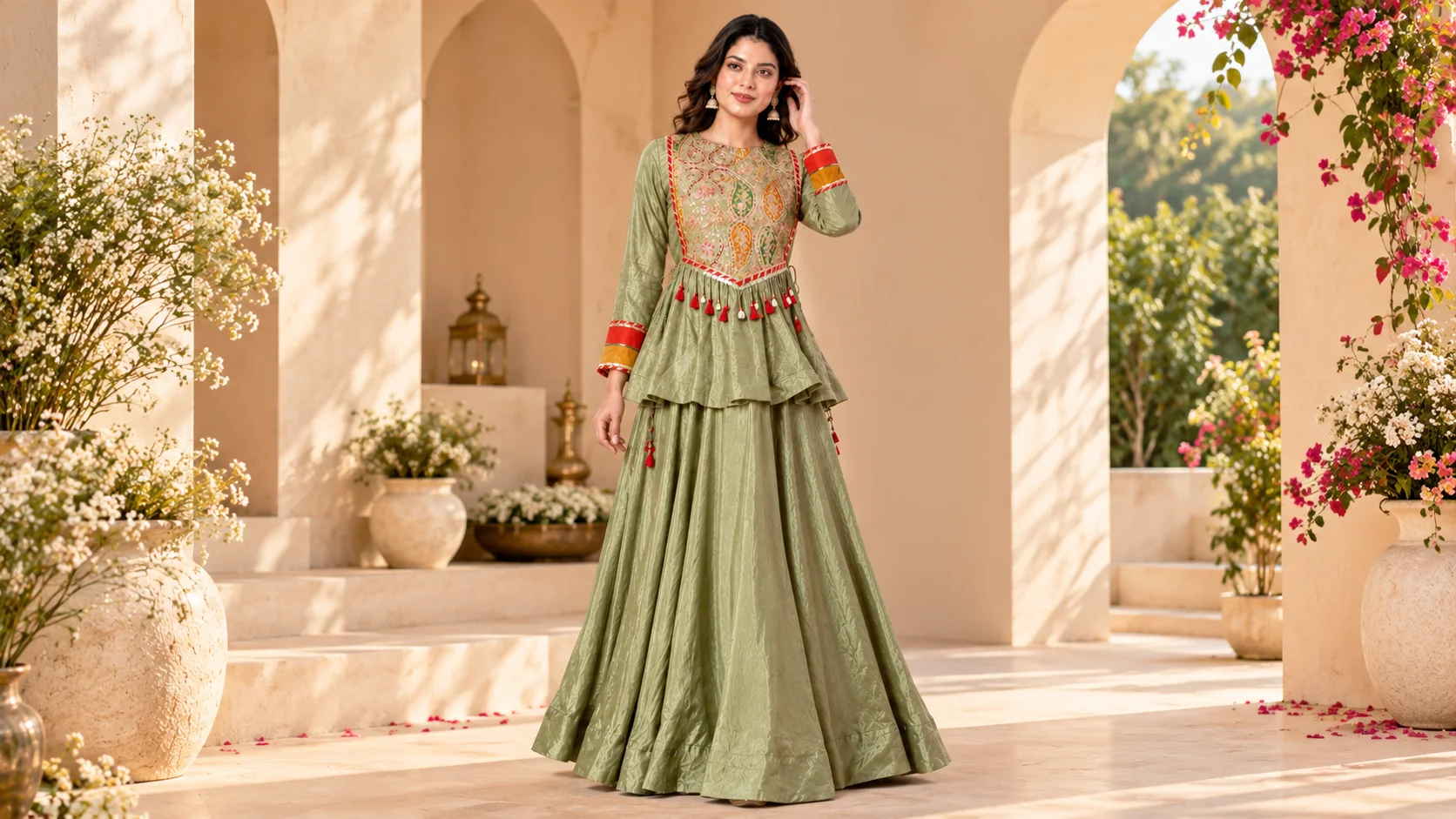
A sage green lehenga offers a refreshing alternative to brighter festive colours, especially when its design features colourful embroidery, contrasting borders and decorative tassels. The challenge is knowing how to style it without allowing jewellery, footwear and accessories to compete with the outfit.
The secret to sage green lehenga styling is to let the embroidery lead. Build the rest of your look around its existing colours, balance the volume of the skirt and choose accessories according to the occasion. With a few thoughtful decisions, the same outfit can feel elegant at a family celebration, polished at a wedding or festive at Diwali.
Table of Contents
Let the Embroidery Lead the Look
The first step in sage green lehenga styling is to identify the garment’s natural focal point. In this look, the embroidered bodice features several colours, while the peplum-style top adds volume around the waist and the long skirt creates a flowing silhouette. The contrasting red and mustard sleeve borders and tassels provide additional visual detail.
Because several elements already attract attention, avoid adding decoration everywhere else. Instead, use the embroidery as your reference when choosing accessories. If the bodice is the most detailed area, let it remain visible rather than covering it with a large necklace or a heavily embellished dupatta.
For a balanced finish, keep the hairstyle away from the neckline if you want the bodice to stand out, or choose soft waves for a more relaxed celebratory look. A neatly arranged dupatta, if your outfit includes one, can add movement without obscuring the embroidery.
Explore the Victoria and Albert Museum’s guide to Indian embroidery for background on the diverse embroidery traditions used in Indian textiles. The specific technique on any individual garment should be confirmed from its product description rather than guessed from appearance.
Explore and ShopChoose Jewellery and Accessories in the Right Proportion
Jewellery should complement the neckline, embroidery and overall volume of the outfit. Traditional jhumka earrings are a natural styling option for this look because they frame the face and connect with the outfit’s festive character. Gold-toned pieces can echo warm embroidery details, while green accents may complement the base colour.
Choose one main jewellery feature rather than making every piece a statement. If you wear ornate earrings, consider slim bangles and a simple ring. If you prefer a statement necklace, choose earrings that do not compete with it. The goal is not to follow a rigid rule about how much jewellery to wear, but to create a clear visual hierarchy.
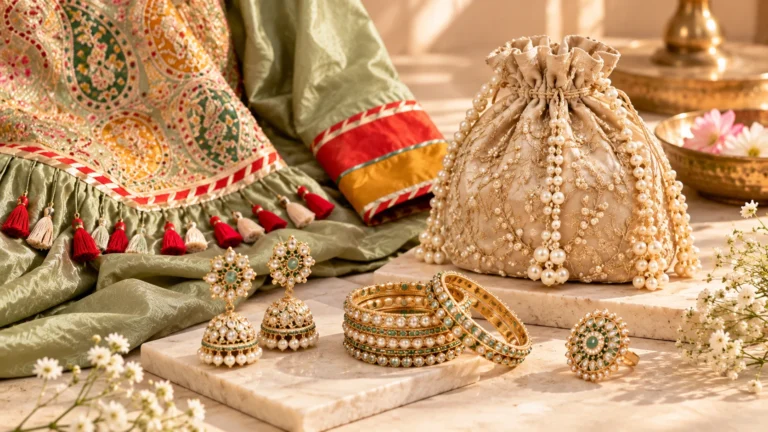
A potli bag or a compact embroidered clutch can complete the look. Beige, muted gold or a design that picks up the red or green details can work well. Avoid choosing a bag solely because it matches the lehenga’s base colour; its embellishment and overall visual weight matter too.
For more ideas on balancing green-toned accessories and jewellery, explore this guide to styling a green stone jewellery set without over-accessorising.
Adapt Your Lehenga Styling to the Occasion
The same lehenga can be styled differently depending on the event, dress code and level of formality.
For a wedding celebration: Choose polished traditional jewellery, a coordinated clutch and occasion-appropriate footwear. If the event is formal, a carefully arranged dupatta and more defined eye makeup can add refinement without requiring extra embellishment across the entire look.
For Diwali or Navratri: Let the red and mustard details create a festive connection. Jhumkas, a few coordinated bangles and a potli bag can bring the outfit together. Choose footwear that allows you to move comfortably if the celebration involves standing, walking or dancing.
For a family gathering: Keep the accessories simpler. Earrings, a small clutch and soft makeup can allow the embroidered bodice to remain the centre of attention. You do not need a full set of matching jewellery to make the outfit feel occasion-ready.
For an evening celebration: Consider a slightly more defined hairstyle, a small embellished bag and jewellery that catches the light. Keep the number of competing focal points under control so the outfit still looks cohesive.
For broader ideas on planning an outfit around an event, see festive outfit planning without buying a new look.
Build a Coordinated Colour Palette
Sage green works as a versatile base for several different styling directions. The most useful approach is to repeat one or two colours already present in the garment rather than introducing several unrelated shades.
- Sage green and muted gold: A refined combination for jewellery, bags and other small accents.
- Sage green and terracotta red: A more noticeable pairing that echoes the contrasting borders and tassels.
- Sage green and beige: A softer combination for footwear, a clutch or understated accessories.
- Sage green and olive: A tonal approach that keeps the overall look grounded without requiring an exact colour match.
- Sage green and mustard: A warm pairing that draws attention to the outfit’s existing accent details.
Use these combinations as starting points, not fixed rules. The exact shade of the embroidery, the lighting and the event’s dress code can all influence the final result. Before choosing accessories, compare them with the garment in similar lighting to avoid a colour that looks harmonious indoors but noticeably different in daylight.
A final styling check
Before leaving, check that the bodice remains visible, the skirt falls naturally, the dupatta stays arranged and the footwear suits the venue. Make sure the bag is practical for the event and that jewellery feels secure enough for the activities planned.
The best sage green lehenga styling is not about adding more. It is about choosing details that support the embroidery, balance the silhouette and suit the occasion.
Related Blogs
- Green Lehenga Styling Guide for Weddings and Festive Occasions
- Festive Lehenga Styling Without Over-Accessorising
- Red Lehenga Styling Guide for Elegant Festive and Wedding Looks
Frequently Asked Questions
1. How do you style a sage green lehenga?
Start by identifying the most detailed part of the lehenga, then choose jewellery, footwear and a bag that support it. Gold-toned jewellery, traditional earrings and muted beige accessories are useful starting points, while red or mustard accents can echo the garment’s existing details.
2. Which jewellery suits a sage green lehenga?
Jhumka earrings, gold-toned bangles and a statement ring can complement a festive sage green lehenga. If the bodice is heavily embroidered, choose one main jewellery feature and keep the remaining pieces simpler to maintain balance.
3. Which clutch colour goes with a sage green lehenga?
Muted gold, beige, olive green and coordinated embroidered clutches are useful options. A terracotta or red accent can also work when the outfit already includes similar details. Consider the clutch’s embellishment and size as well as its colour.
4. Can you wear a sage green lehenga to a wedding?
Yes, a sage green lehenga can suit many wedding celebrations, provided its styling matches the event’s dress code and formality. Traditional jewellery, polished footwear and a carefully arranged dupatta can create a more formal look without overwhelming the outfit.
5. What makeup goes with a sage green lehenga?
Soft, warm-toned makeup is a versatile starting point. You could use neutral eyeshadow, defined lashes, a subtle blush and a lip colour that complements the outfit’s red, mustard or gold accents. Adjust the intensity to the event, lighting and your personal preference.