
This article may contain affiliate links. We may earn a commission at no extra cost to you.
A fuchsia salwar suit can make a memorable festive outfit, but when the kurta features intricate embroidery and the dupatta carries a multicoloured print, choosing the right accessories can feel surprisingly difficult. Add too many competing details, and the outfit may look busy; choose everything to match exactly, and it can lose its character.
The secret is to establish a clear visual hierarchy. Let the fuchsia kurta lead, use the printed dupatta as the secondary focal point, and choose quieter accessories that connect the two. This approach makes it easier to style the same outfit for family celebrations, festive gatherings and wedding functions without overcomplicating the look.
Table of Contents
Table of Contents
Understand the Fuchsia Salwar Suit’s Visual Balance
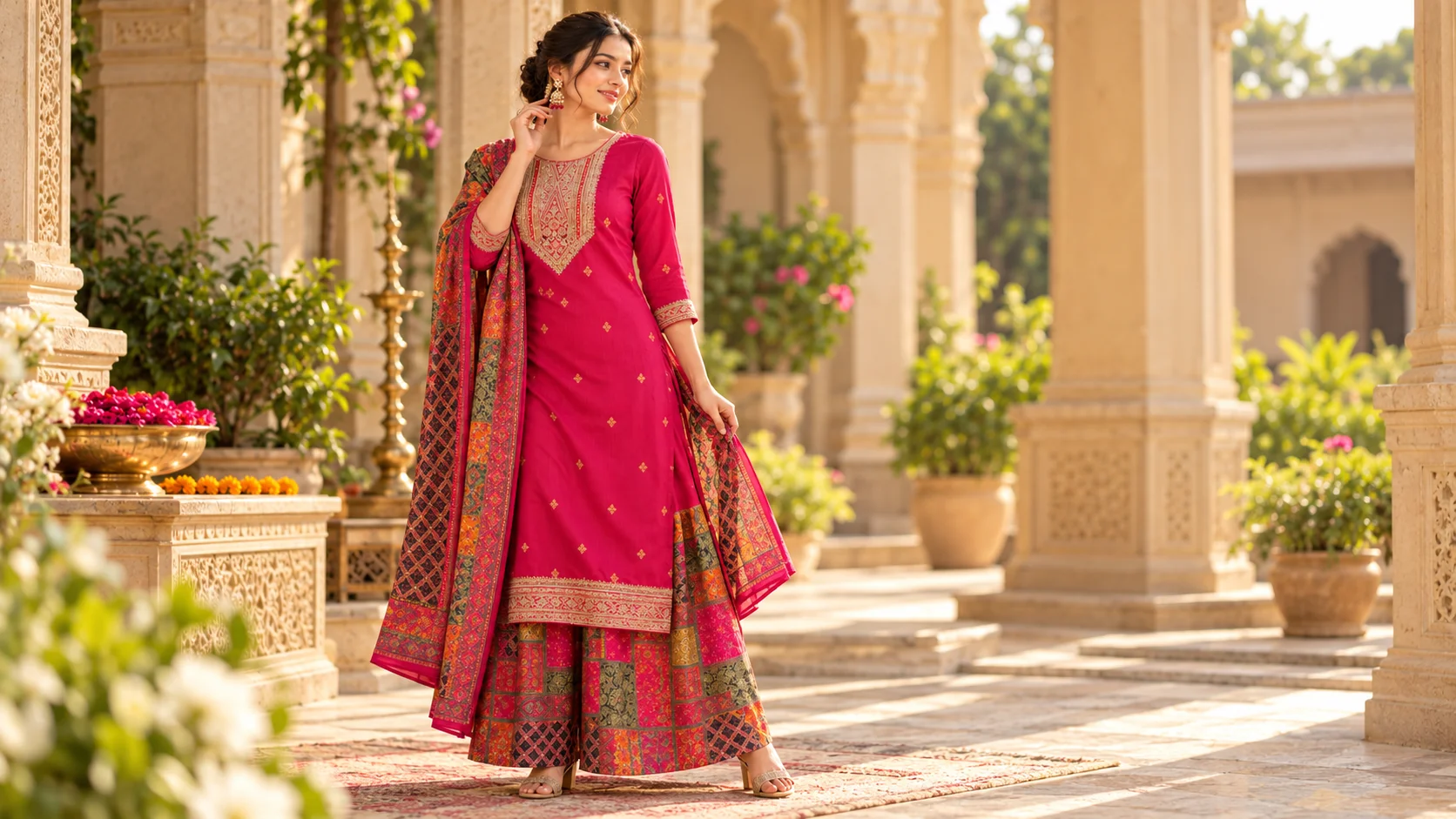
The first step is to identify which parts of the outfit already attract attention. This fuchsia salwar suit combines a richly decorated kurta neckline, small gold-coloured motifs, an ornate hem, a multicoloured printed dupatta and patterned wide-leg bottoms. Each element contributes something different to the overall look.
Instead of treating every component as a separate styling opportunity, think of the outfit as one coordinated composition.
Let the neckline lead. The embroidered front already provides a strong focal point. Avoid adding an elaborate necklace that competes with it. Earrings can frame the face while allowing the neckline to remain visible.
Give the dupatta room to stand out. Its contrasting colours and detailed borders contribute much of the outfit’s visual character. A simple shoulder drape or a natural fall along one side can make those details easier to appreciate. If you prefer a more structured appearance, arrange the dupatta neatly without covering the embroidered front.
Respect the patterned bottoms. Because the lower half is visually active, avoid adding another heavily patterned layer. A coordinated outfit does not require every component to have the same print or level of decoration.
For more ideas using a similar colour-led approach, explore fuchsia kurta set styling for festive looks.
Shop the LookChoose Jewellery and Accessories Without Overdoing It
Jewellery can change the mood of an ethnic outfit, but the amount of decoration matters as much as the pieces themselves. With an embroidered neckline and a colourful dupatta, a useful rule is to choose one dominant accessory and keep the remaining details supportive.
For a family gathering or daytime celebration, consider medium-sized earrings, a simple ring and a restrained selection of bangles. This keeps the face and hands polished without adding too many competing focal points.
For an evening celebration, more decorative earrings can work well. If you choose statement jhumkas, consider skipping the necklace and limiting the number of bangles. The embroidered neckline already provides detail, so leaving it unobstructed creates a more balanced result.
You can explore further options in this guide to styling statement ethnic earrings for a festive look.
Footwear and bags should follow the same principle. Neutral or metallic-toned sandals can complement the rich colours without introducing another strong pattern. A compact clutch or potli-style bag is worth considering for an occasion where you need to carry only a few essentials. Choose its colour from the outfit’s existing palette rather than introducing a completely unrelated shade.
The aim is not to make every accessory understated. It is to decide where you want the eye to settle first.
Adapt the Outfit for Different Occasions
A single salwar suit can be styled differently by changing its accessories, dupatta arrangement and overall level of formality. You do not need to redesign the entire outfit for every event.
For a daytime family gathering, keep the styling relaxed. Arrange the dupatta so its border remains visible, choose earrings that do not overwhelm the neckline, and wear sandals that suit the venue. A lighter touch with jewellery helps the bright fuchsia colour remain the main attraction.
For a festive evening, you can introduce more decorative earrings, a metallic clutch and a slightly more structured dupatta drape. Keep the remaining accessories selective so the embroidery, motifs and printed fabric retain their individual character.
For a wedding function, consider the event’s dress code and how formal the setting will be. A more ornate accessory or a statement pair of earrings may be appropriate, but there is no need to make every component equally elaborate. If the dupatta has a particularly detailed border, arrange it where the design can be seen rather than allowing it to disappear into folds.
For photographs and social gatherings, check the outfit from different angles before leaving. Make sure the neckline is not hidden, the dupatta border is arranged as intended, and the bottoms fall naturally. These small adjustments help the overall styling look considered rather than overly arranged.
If you enjoy experimenting with traditional occasion wear, printed lehenga styling with a red dupatta offers another way to think about balancing a statement garment with a contrasting drape.
Coordinate Colours, Footwear and the Dupatta
The easiest way to coordinate this outfit is to work with colours that already appear in it. Fuchsia is the dominant shade, while the dupatta and bottoms introduce accents that appear to include rust, olive, burgundy and gold.
Fuchsia and gold create a natural festive direction. Gold-toned earrings, a delicate bracelet or metallic footwear can echo the decorative details without requiring every accessory to be metallic.
Rust and burgundy can provide a deeper colour connection. If you choose a bag or footwear in one of these shades, keep the rest of the accessories simpler so the outfit does not become visually crowded.
Olive and other muted tones can balance the stronger pink. These shades work best as supporting accents rather than additional statement pieces.
Footwear should also reflect the occasion and practical setting. Flat or low-heeled sandals may suit a relaxed family event, while dressier sandals can complement an evening celebration. Choose a pair you can comfortably wear for the expected duration and venue; the appearance of footwear alone does not establish its comfort or suitability.
Before finalising the look, check the dupatta one last time. If its border is a major feature, let it remain visible. If the neckline is the main focal point, arrange the drape so it frames rather than covers the embroidery.
Conclusion
Styling a fuchsia salwar suit becomes easier when you decide what should stand out first. Let the embroidered kurta and multicoloured dupatta establish the look, then adapt jewellery, footwear and the drape to suit the occasion. Start with one accessory choice, assess the overall balance in a mirror, and add more only when it genuinely improves the outfit.
Related Blogs
- How to Style a Cream Anarkali with a Pink Dupatta
- How to Style a Kundan Anklet for Festive Glam
- Elegant Festive Kurta Set Styling With Essential Impact
Frequently Asked Questions
1. What jewellery goes with a fuchsia salwar suit?
Gold-toned earrings, jhumkas, a simple ring or a restrained selection of bangles can complement a fuchsia suit. If the neckline is heavily embroidered, consider skipping a statement necklace.
2. Which footwear colours suit a fuchsia salwar suit?
Neutral, gold-toned or other muted metallic footwear can work well. You can also draw on a supporting colour from the printed dupatta, provided it complements rather than competes with the outfit.
3. How should I drape a printed dupatta with an embroidered kurta?
Try a simple shoulder drape or let it fall along one side. Keep the embroidered neckline visible and arrange the border so its pattern can be appreciated.
4. Can a fuchsia salwar suit be worn to a wedding function?
It can be a suitable option for many wedding-related gatherings, depending on the invitation and dress code. Adjust the jewellery, bag and footwear to match the formality of the event.
5. How can I avoid making a printed salwar suit look too busy?
Choose one main focal point, avoid adding competing prints, and keep some accessories simple. With a detailed kurta, patterned bottoms and a colourful dupatta, restraint often creates a more coherent look.