
This article may contain affiliate links. We may earn a commission at no extra cost to you.
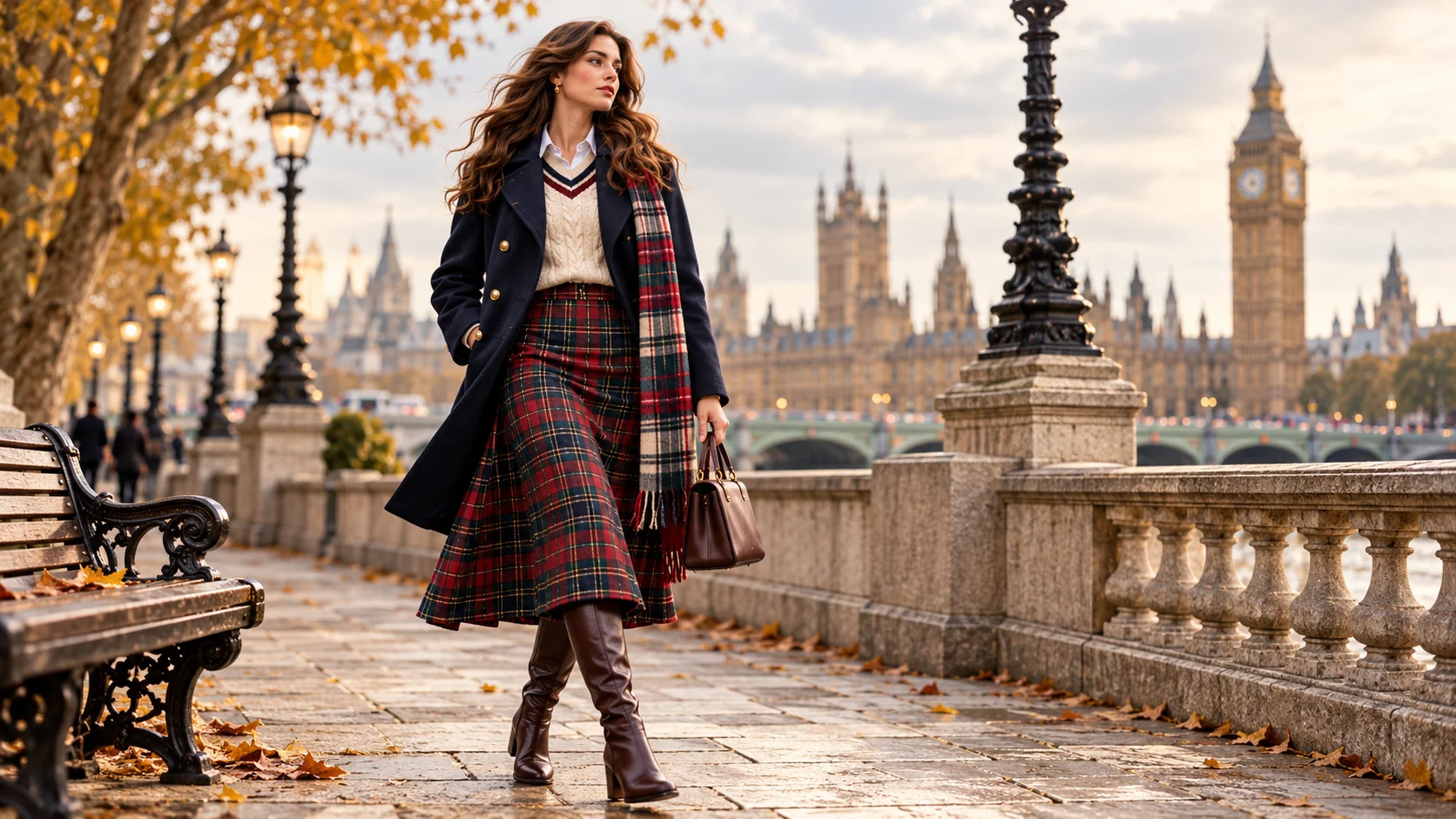
British winter style has a way of making familiar wardrobe pieces feel distinctive. A navy peacoat, a tartan midi skirt, a cream knit and a crisp white shirt can create an outfit that feels polished without looking overly formal. For autumn and winter 2026, the modern heritage approach brings these classic references together with more relaxed proportions and personal styling.
The secret to wearing British winter outfits well is balance. Let one piece, such as a bold plaid skirt or a structured coat, take the lead, then use quieter colours and simpler shapes to support it. This makes the look easier to adapt for a city walk, a café outing, a casual workday or a weekend gathering.
Table of Contents
Table of Contents
What Defines Modern Heritage Winter Style?
Modern heritage style draws on traditional wardrobe references such as tartan checks, cricket-inspired knitwear, cardigans, collared shirts and tailored outerwear. The aim is not to recreate a historical costume. It is to use familiar pieces in combinations that feel appropriate for everyday life.
The 2026 autumn–winter fashion conversation includes renewed interest in heritage checks, expressive styling and classic pieces worn in less predictable ways. British Vogue’s autumn/winter 2026 trend overview discusses heritage-inspired dressing alongside updated wardrobe foundations. These runway observations offer inspiration rather than a guarantee that every item will be popular everywhere.
Start with one recognisable heritage piece. A red-and-green tartan skirt makes an immediate statement; a navy peacoat gives an outfit a more structured outline; a cream cricket-style jumper introduces a preppy reference. Combining all three can work because each item plays a different visual role.
For a more understated result, choose two heritage elements and keep the rest simple. For example, wear the tartan skirt with a plain white shirt and navy coat. Alternatively, pair brown corduroy trousers with a burgundy cardigan and a light shirt. The aim is to create a clear focal point rather than make every item compete for attention.
How to Style a Plaid Skirt Without Overdoing the Pattern
A tartan midi skirt can become the centre of a winter outfit because its intersecting lines and contrasting colours naturally attract attention. When the skirt already includes red, green, navy or cream, use one of those colours elsewhere in the outfit instead of introducing several unrelated shades.
For a city look, pair the skirt with a plain shirt, a navy peacoat and knee-high boots. The coat creates a clean frame around the patterned skirt, while the boots visually connect the outfit from hem to footwear. Keep the handbag relatively simple so that the plaid remains the main point of interest.
For a relaxed café or weekend outfit, try a cream knit with the same skirt and a compact shoulder bag. If the knit has contrasting stripes or a cricket-inspired V-neck, keep the scarf and other accessories quieter. Pattern mixing can work, but differences in scale and colour need to look deliberate rather than accidental.
A useful rule is to check the outfit from a distance. If the skirt is the first thing you notice, the rest of the look should support it. If the jumper, scarf and skirt all compete equally, remove one patterned or strongly contrasting element.
For more ideas on balancing colours and statement pieces, explore colour theory for women’s fashion.
Building a British Winter Outfit Around a Peacoat
A navy peacoat is a useful visual anchor for this style because its structured shape contrasts with the movement of a midi skirt and the softer appearance of knitwear. Double-breasted buttons and broad lapels add detail, so the layers beneath it do not need to be complicated.
For a classic combination, start with a white collared shirt and cream knitwear, then add a tartan skirt. A burgundy cardigan can replace the cream knit when you want a stronger colour accent. If you prefer trousers, brown corduroy-style trousers and a simple shirt create a quieter alternative that still fits the heritage mood.
Think about the order in which the outfit will be seen. When the coat is closed outdoors, it may be the dominant piece. Indoors, the jumper, shirt collar or cardigan becomes more visible. Choose layers that look intentional both together and separately, particularly if you will be moving between outdoor and heated indoor spaces.
Do not assume that every British winter day calls for the same amount of clothing. Conditions vary by location and date. In milder weather, a lighter knit and an open coat may be enough for your plans; in colder or wetter conditions, consider appropriate additional layers and weather-suitable footwear. Check the local forecast rather than relying on the season label alone.
If you are exploring a different silhouette, see women’s winter outfits with soft tailoring for another way to combine structure with a more relaxed feel.
Colour, Footwear and Layering for Different Occasions
A coordinated palette helps heritage pieces feel connected. Navy and cream create a restrained foundation, burgundy adds depth, and brown brings another warm neutral into the outfit. The tartan can contain several of these shades, allowing the rest of the look to repeat colours already present in the pattern.
For a polished city outfit, choose the navy coat, tartan skirt and brown boots, then keep the knitwear light. For smart casual plans, switch the skirt for brown trousers and use a burgundy cardigan over a white shirt. For a relaxed weekend, the cream jumper and tartan skirt can stand on their own with a scarf and a practical bag.
Footwear changes the overall impression. Loafers give the outfit a more tailored, everyday direction when the weather and walking route suit them. Heeled boots create a dressier line with a midi skirt, while flat boots offer a more casual alternative. Choose based on the day’s conditions and how much walking you expect to do.
Accessories should connect the outfit rather than add another competing theme. A brown bag can repeat the colour of the boots; a tartan scarf can echo the skirt, provided the checks do not clash. If the outfit already has a strong print and a contrasting knit, simple jewellery and a less decorated bag can keep the overall effect balanced.
For a broader approach to combining versatile pieces across different settings, browse European winter capsule wardrobe ideas for women.
A Practical Checklist Before You Finish the Outfit
Before leaving home, look at the complete outfit rather than assessing each item separately. Check that the coat, knitwear and skirt or trousers have a clear hierarchy, that the main colours repeat naturally, and that the footwear suits the weather and planned activity.
If the outfit feels busy, remove one competing element first. This might mean replacing a patterned scarf with a plain one, choosing a simpler bag or switching to a solid-colour knit. If the outfit feels too plain, introduce one considered accent, such as a burgundy cardigan or a tartan accessory, rather than adding several new colours at once.
The most useful modern heritage wardrobe is one that works with pieces you already own. Start with a coat, skirt or knit that you genuinely like, then build around its colour and shape. This keeps the result personal instead of turning the outfit into a uniform.
Conclusion
British winter outfits for 2026 can combine heritage checks, preppy knitwear and structured outerwear without feeling overly formal. Let one item lead, repeat a colour or two, and adapt the layers and footwear to your actual plans and local weather. Start by styling one statement piece from your wardrobe in two different ways.
Related Blogs
- Winter 2026 Capsule Wardrobe for Women in the USA — broader seasonal wardrobe planning.
Frequently Asked Questions
1. How can I create British winter outfits with a modern heritage look?
Start with a recognisable piece such as a tartan skirt, navy peacoat or cricket-style jumper. Add simpler pieces in complementary colours, then choose footwear and accessories that suit the occasion. The focus keyword, British winter outfits, describes a broad styling direction rather than one fixed uniform.
2. What can I wear with a tartan midi skirt in winter?
Try a plain white shirt, cream knitwear or a navy coat. Knee-high boots can create a continuous visual line with the skirt, while loafers offer a different, more tailored look when conditions allow. Repeat one colour from the tartan elsewhere in the outfit.
3. Can I wear plaid with other patterns?
Yes, but the combination needs visual balance. Pair a prominent plaid with a quieter pattern or a solid colour, and consider whether the patterns have distinct scales. If both pieces compete for attention, simplify the rest of the outfit before adding more accessories.
4. How should I layer for a British winter day?
Base your choices on the local forecast, temperature, rain and how long you expect to be outdoors. Use layers that can be adjusted when moving indoors, and choose suitable outerwear and footwear for the conditions. A seasonal outfit formula should remain flexible rather than assume the same weather every day.
5. Which colours work well with navy and burgundy winter outfits?
Cream, white, chocolate brown and forest green can complement navy and burgundy. If a tartan already contains several of these colours, repeat one or two elsewhere instead of introducing a completely new palette. The final balance depends on the exact shades and patterns in your clothes.