
This article may contain affiliate links. We may earn a commission at no extra cost to you.
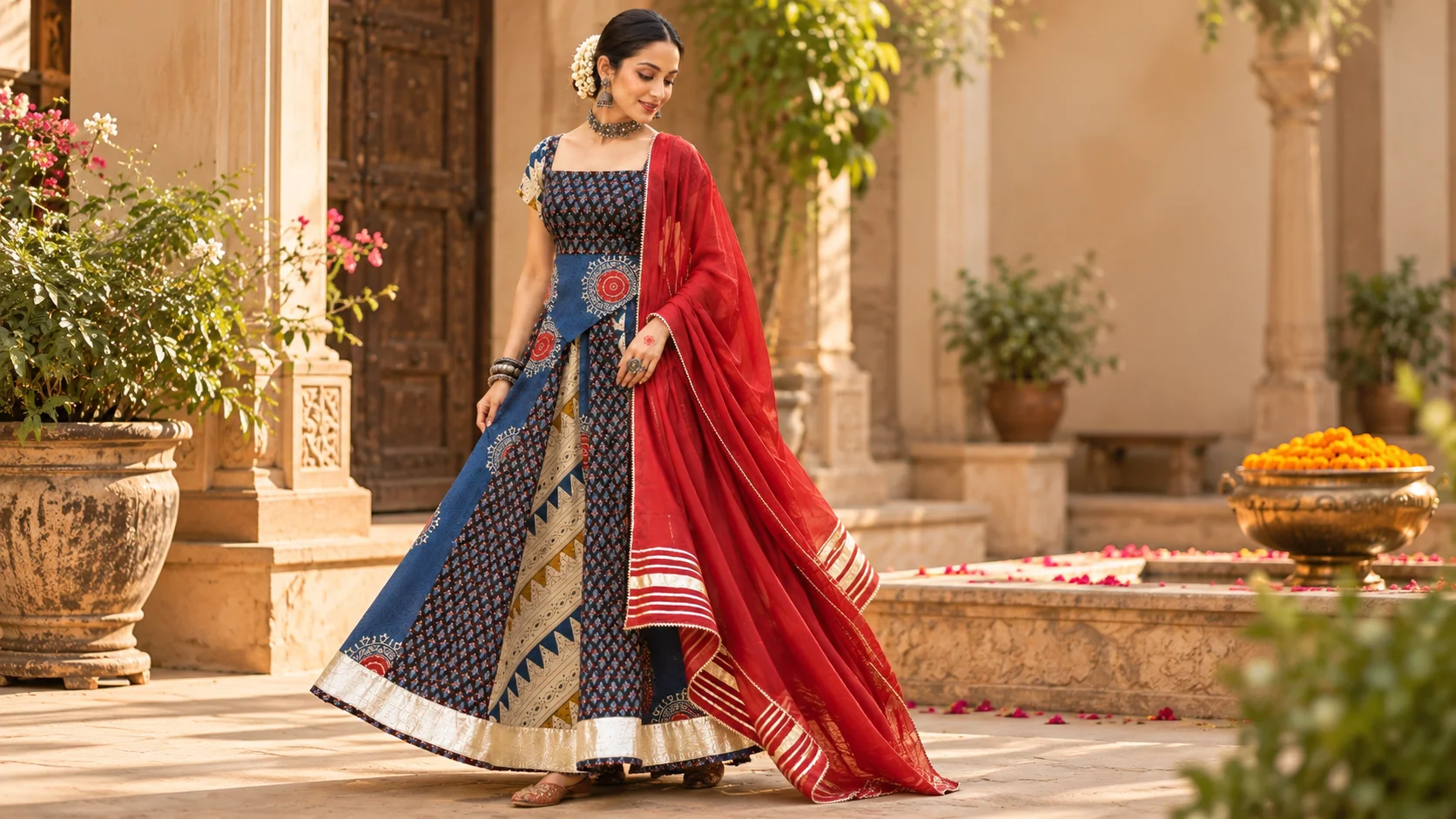
A printed lehenga with a contrasting red dupatta can create a memorable Indian festive outfit, but the styling needs balance. When the skirt already features detailed motifs, contrasting panels and a decorative border, adding too many competing accessories can make the entire look feel busy.
The simplest approach is to let the lehenga lead, use the dupatta as the main colour accent, and choose jewellery, footwear and a bag that support the outfit rather than compete with it. This guide explains how to coordinate these elements for weddings, Diwali, Navratri and family celebrations.
Table of Contents
What Makes a Printed Lehenga Look Balanced?
A printed lehenga can contain several visual elements at once: a patterned blouse, a flared skirt, contrasting panels and a decorative hem. When a rich red dupatta is added, the outfit already has a strong visual identity.
Start by identifying the focal point. If the skirt has the most intricate print, let it remain the centre of attention. A simpler blouse or a clean neckline can create visual breathing room. If the blouse is equally detailed, avoid adding multiple heavily embellished accessories around the neckline.
Colour balance matters just as much. Indigo blue and deep red create a striking contrast, while cream and gold tones soften the combination. Repeat one or two of these colours in your accessories instead of trying to match every detail.
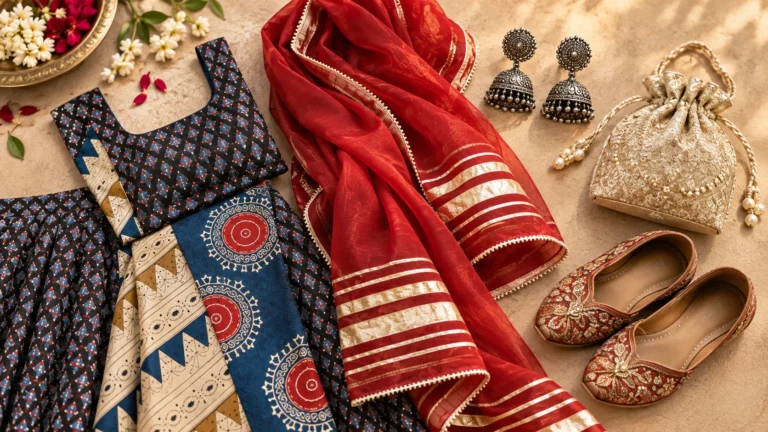
For example, a pair of antique-toned earrings and a small gold-accented bag can connect the outfit without introducing another dominant colour. This approach is particularly useful when the lehenga already has a broad metallic-looking hem or decorative borders.
For more ideas on creating a festive outfit without excessive decoration, explore Festive Lehenga Styling Without Over-Accessorising.
Explore and ShopHow to Choose Jewellery and Style the Dupatta
Choose one main jewellery feature
A statement choker, ornate earrings or a distinctive ring can each work with a printed lehenga. The trick is deciding which piece should attract the most attention.
If you choose a prominent choker, try pairing it with earrings that complement its scale without overwhelming the face. If you prefer large jhumkas, a simpler necklace—or no necklace—may create a more balanced result. Oxidised silver tones can provide a traditional contrast against red and indigo, while gold-toned pieces can echo the warmer details of the outfit.
These are styling options rather than strict rules. The neckline, hairstyle, event formality and personal preference should guide the final choice.
For additional ideas, read How to Style an Oxidised Jewellery Set Without Over-Accessorising.
Make the red dupatta work with the outfit
A red dupatta can frame the upper body, add movement and connect the different colours in the lehenga. You do not need an elaborate drape to achieve this effect.
For a formal celebration, arrange the dupatta neatly over one shoulder so that its border remains visible. For a more relaxed family gathering, a softer drape can create movement while keeping the printed skirt visible. If the dupatta has prominent stripes or decorative edging, avoid folding the entire border out of sight.
Before leaving, check that the dupatta stays in place when you walk or sit. The most attractive drape is one you can wear comfortably without constantly adjusting it.
How to Adapt Your Lehenga for Different Occasions
The same lehenga can feel different depending on the event. Rather than changing every accessory, adjust the level of decoration and formality.
For a wedding celebration: Consider statement earrings or a choker, a neatly arranged dupatta and embellished juttis or dressy heels. Keep the accessory palette connected to the outfit, and follow the event’s dress code.
For Diwali or Navratri: Let the red and indigo contrast provide the festive character. Traditional earrings, bangles and a decorative potli bag can complete the look. If you expect to move or dance, choose footwear that feels secure for the activity.
For a family gathering: A lighter jewellery combination, a straightforward dupatta drape and understated footwear can make the outfit feel less formal without losing its ethnic character.
For an engagement or evening celebration: You could introduce a more prominent accessory, such as a statement ring or a structured evening bag. Keep the other details restrained so that the outfit still looks coordinated.
For help planning an outfit around an event rather than buying an entirely new look, see Festive Outfit Planning Made Effortless Without Buying a New Look.
Which Footwear, Bags and Colours Complete the Look?
Footwear and bags should complement both the outfit’s colours and the occasion. Embellished juttis can reinforce the traditional character of a lehenga, while dressy heels can create a more formal finish. Choose a pair that works with the skirt length and feels suitable for the venue.
A small potli bag is a natural option for traditional celebrations. A compact clutch can also work when its colour and finish support the rest of the outfit. Neither accessory needs to reproduce the entire print; a simple red, indigo, cream or gold-toned option may be enough.
When choosing colours, use the outfit as your guide:
- Indigo or navy: A natural companion to the darker printed areas.
- Red or burgundy: Connects with the dupatta and adds a deliberate colour accent.
- Cream or beige: Softens the contrast and works well with lighter panels.
- Gold tones: Echo decorative borders and create a festive finish.
- Antique silver: Offers a cooler contrast when paired with oxidised-style jewellery.
If the outfit is already visually rich, avoid introducing several unrelated colours, finishes and embellishments at once. A coordinated palette usually looks more intentional than matching every accessory exactly.
The term block printing can describe different textile-printing methods. The Indian government’s Development Commissioner (Handicrafts) explains the general process of hand block printing and its use in Indian textiles in its Hand Block Printing guide. The appearance of a print alone does not establish its precise technique or the materials used.
Before wearing the outfit, check three practical details: the dupatta stays secure, the footwear works with the skirt length, and the jewellery does not compete with the most detailed part of the lehenga.
Related Blogs
- Red Lehenga Styling Guide for Elegant Festive and Wedding Looks
- How to Style Statement Ethnic Earrings for a Festive Look
- Indian Festive Outfit Ideas for a Cream and Red Wedding Guest Look
Frequently Asked Questions
1. How do you style a printed lehenga for a festive occasion?
Start with the print and colour balance, then choose jewellery, footwear and a bag that complement the strongest details. A contrasting dupatta can provide the main accent. Keeping one accessory as the focal point often helps the overall outfit look coordinated rather than crowded.
2. Which jewellery works with a red dupatta and a blue lehenga?
Oxidised silver jewellery can create a traditional, cooler-toned contrast, while gold-toned pieces can echo warmer borders. Chokers, jhumkas and statement rings are all options. Choose the main jewellery feature according to the neckline, hairstyle and amount of detail already present in the outfit.
3. Which footwear should you wear with a printed lehenga?
Embellished juttis suit a traditional look, while dressy heels can work for a more formal event. Consider the skirt length, walking surface and amount of movement expected. The footwear should complement the outfit and remain practical for the venue.
4. Can you carry a gold or cream bag with a red dupatta?
Yes. Gold can echo metallic-looking borders, while cream can connect with lighter printed panels. A red or indigo bag can also work. Choose one colour that already appears in the outfit rather than adding several competing accents.
5. How can you make a detailed lehenga look less busy?
Keep the main print as the focal point, simplify one area such as the blouse or neckline, and limit competing statement accessories. A neat dupatta drape and a restrained colour palette can also help. You do not need to remove every decorative element to create balance.