
This article may contain affiliate links. We may earn a commission at no extra cost to you.
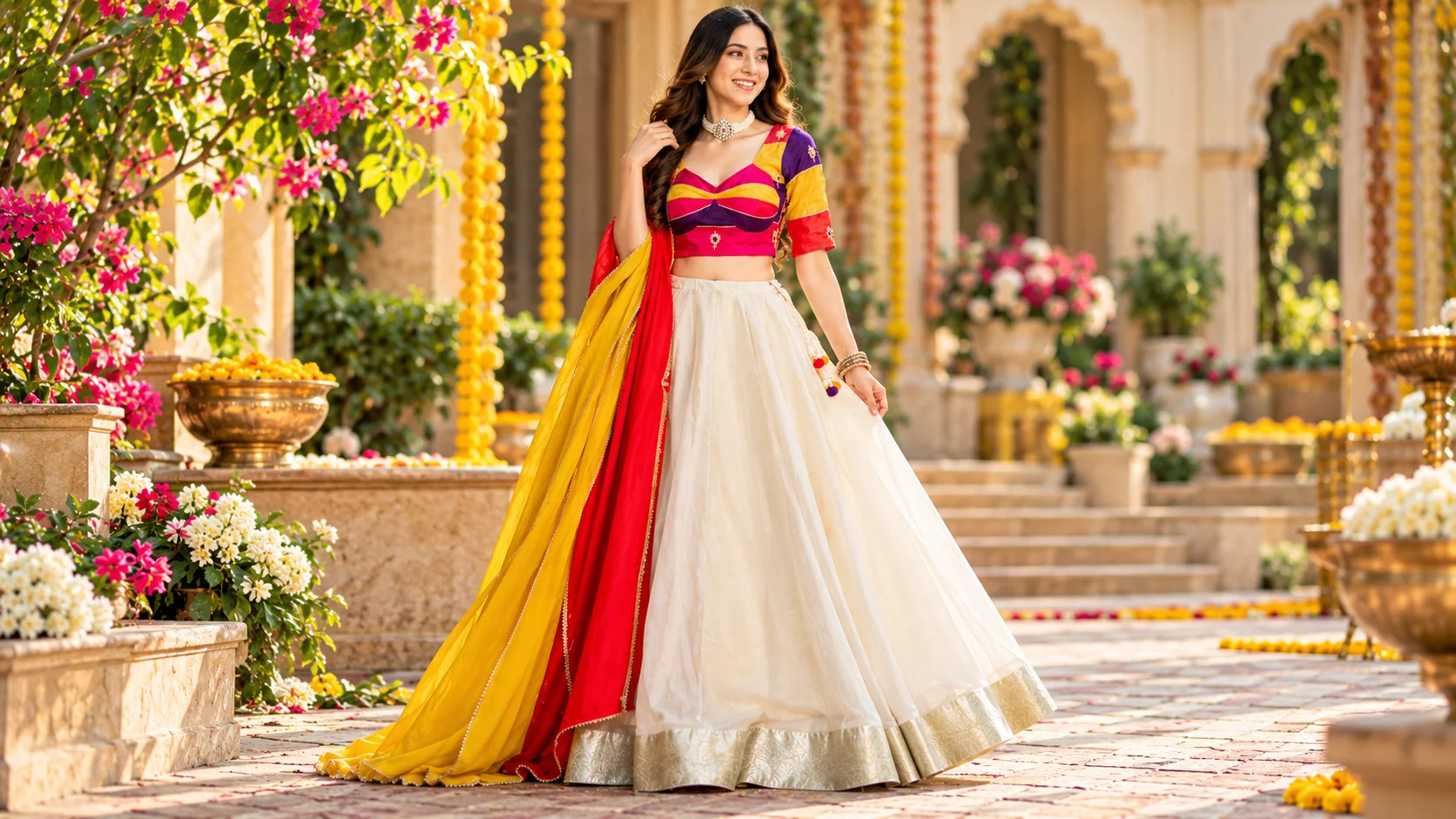
Choosing a wedding guest outfit becomes easier when one piece provides the visual direction. A cream-and-red ready-to-wear lehenga with a flared skirt, blouse and dupatta gives you a festive base, while accessories and styling control how traditional, colourful or polished the final look feels.
The key is not to make every part equally dramatic. Let the lehenga establish the mood, keep supporting pieces intentional, and change the styling according to the event.
Table of Contents
Why This Indian Festive Outfit Feels Balanced
The strongest feature is the contrast between a light cream base and richer red detailing. The flared skirt creates movement, while the V-neck blouse gives the upper half a defined focal area. The dupatta connects the pieces into one recognisable festive outfit.
The product listing identifies the blouse as tissue, the lehenga as a silk blend and the dupatta as organza, with a flared hemline, V-neck and short sleeves. Those details give you a useful styling starting point: keep accessories refined enough that the silhouette and colour contrast remain visible.
Explore the House of Jamoti ready-to-wear lehengaIf you want a similar approach with a different construction, Nimon Group’s Semi-Stitched Lehenga for an Elegant Standout Look can help you compare how colour, tailoring and accessory choices change the overall impression.
How to Style This Indian Festive Outfit Without Over-Accessorising
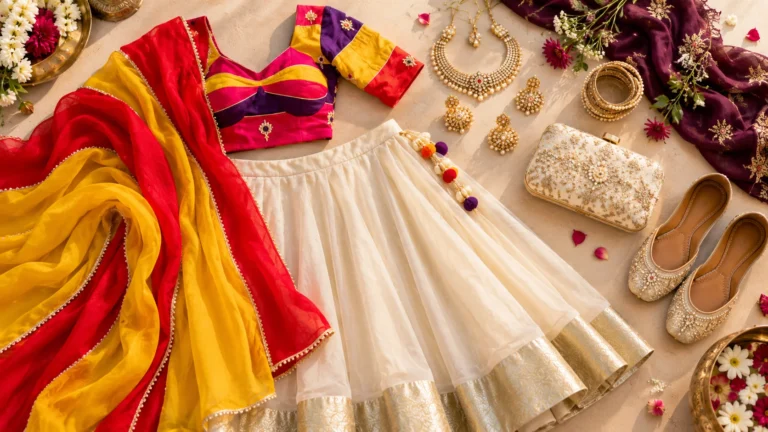
When an outfit already contains strong colour contrast, use a one-focal-point rule. A statement choker, earrings or bangles can work, but they do not all need equal visual weight. Choose the piece that best supports the neckline and let the others become quieter.
The V-neck creates an open area around the face and upper chest, so a choker can emphasise that zone. If you choose statement earrings instead, keep the necklace lighter or skip it. Embellished juttis, dressy sandals or refined heels can shift the mood, while a compact clutch or potli can finish the look without demanding attention.
For more help choosing colours without making every piece match, see Nimon Group’s Colour Pairings for Traditional Outfits With 6 Stylish Power Updates. Repeat one colour deliberately rather than trying to reproduce every shade.
Adapt the Look for Different Wedding Events
A single Indian festive outfit can feel different depending on where you wear it. For a daytime family celebration, keep jewellery lighter and let the cream base and brighter accents do most of the work. A neat hairstyle and simple footwear keep the look festive without becoming overly formal.
For a wedding ceremony or reception, increase polish rather than simply adding decoration. A defined hairstyle, one strong jewellery focal point and dressier footwear can make the same lehenga feel more occasion-ready. If the event is formal, keep the finish refined and avoid unrelated colours.
For a mehndi or pre-wedding gathering, lean into the brighter side of the palette. Let one accessory echo a warmer accent while keeping the rest comparatively calm.
For a broader event-by-event approach, Nimon Group’s Festive Outfit Planning Made Effortless Without Buying a New Look offers a useful framework for coordinating a complete look.
Use Colour to Add Personality Without Over-Matching
Colour is where this look can become personal. Cream provides the quiet base, while red brings the strongest visual energy. If your accessories are colourful, choose one shade to repeat rather than adding a new colour at every step.
Warm metallics can reinforce the festive direction, while ivory or cream accessories create a softer finish. For stronger contrast, deeper plum, burgundy or jewel-toned accents can work as small supporting touches. Use the strongest colour in one or two places, then allow the cream base to create visual breathing room.
This is useful for global wedding guests because the same principle can be adapted to different ceremonies and regional dress expectations. The Victoria and Albert Museum notes that Indian textiles encompass a wide range of regional materials, colours and decorative traditions, while contemporary designers continue to reinterpret traditional techniques for modern audiences.
The Final Styling Check Before the Event
Before leaving, look at the outfit from a distance rather than checking each piece separately. Ask: where does the eye go first, is anything competing with the neckline, and have you repeated too many colours?
If the blouse and skirt lead, the visual hierarchy is working. If the jewellery, dupatta, footwear and outfit all demand equal attention, simplify one element.
Also check the practical finish. Make sure the dupatta placement feels secure, the skirt length works with your footwear, and the accessories suit the event. These are styling checks rather than product claims, but they can make a noticeable difference to how confidently the outfit is worn.
The goal is not maximum decoration. It is a clear visual hierarchy: the lehenga leads, accessories support it, and the occasion determines how polished the final styling becomes.
For a colourful wedding guest look, start with the strongest visual element and build around it. This Indian festive outfit works because the cream base gives richer colours room to stand out; one controlled jewellery focal point, considered footwear and occasion-appropriate styling can take the same lehenga in several directions.
Related Blogs
- Floral Zari Saree Styling: Elegant Ideas for a Standout Look
- Maroon Anarkali Kurta Set Styling for Festive Occasions
- How to Style Statement Ethnic Earrings for a Festive Look
Frequently Asked Questions
1. What is an Indian festive outfit?
An Indian festive outfit combines traditional or ethnic styling with occasion-ready details. A lehenga, saree, kurta set or similar ensemble can work for celebrations when its colours, accessories and overall formality are coordinated with the event.
2. Can a cream and red lehenga work for a wedding guest?
Yes. Cream creates a softer base while red adds festive contrast. Keep accessories focused rather than matching every detail, and adjust jewellery, footwear and hairstyle according to the formality of the wedding event and venue.
3. How should I accessorise a colourful lehenga?
Start with one main focal accessory. A statement choker, earrings or bangles can lead the styling, while the remaining pieces stay quieter. This keeps a colourful lehenga visually balanced instead of making every area compete.
4. What footwear works with a festive lehenga?
Embellished juttis, dressy sandals and refined heels can all work. Choose according to the event, walking requirements and desired mood. The footwear does not need to match exactly; repeating a small colour or metallic detail is often enough.
5. How can I avoid over-matching a wedding outfit?
Choose one or two colours from the outfit to repeat in accessories and let the remaining shades act as supporting tones. A light base such as cream or ivory can also create breathing room when the blouse or dupatta has stronger colour contrast.