
This article may contain affiliate links. We may earn a commission at no extra cost to you.
A vivid fuchsia kurta set can look instantly festive, but strong colour and decorative detailing also make it easy to over-style. The smarter approach is to let the outfit establish the visual hierarchy first, then use the dupatta, Jewellery, footwear and accessories to support it rather than compete with it.
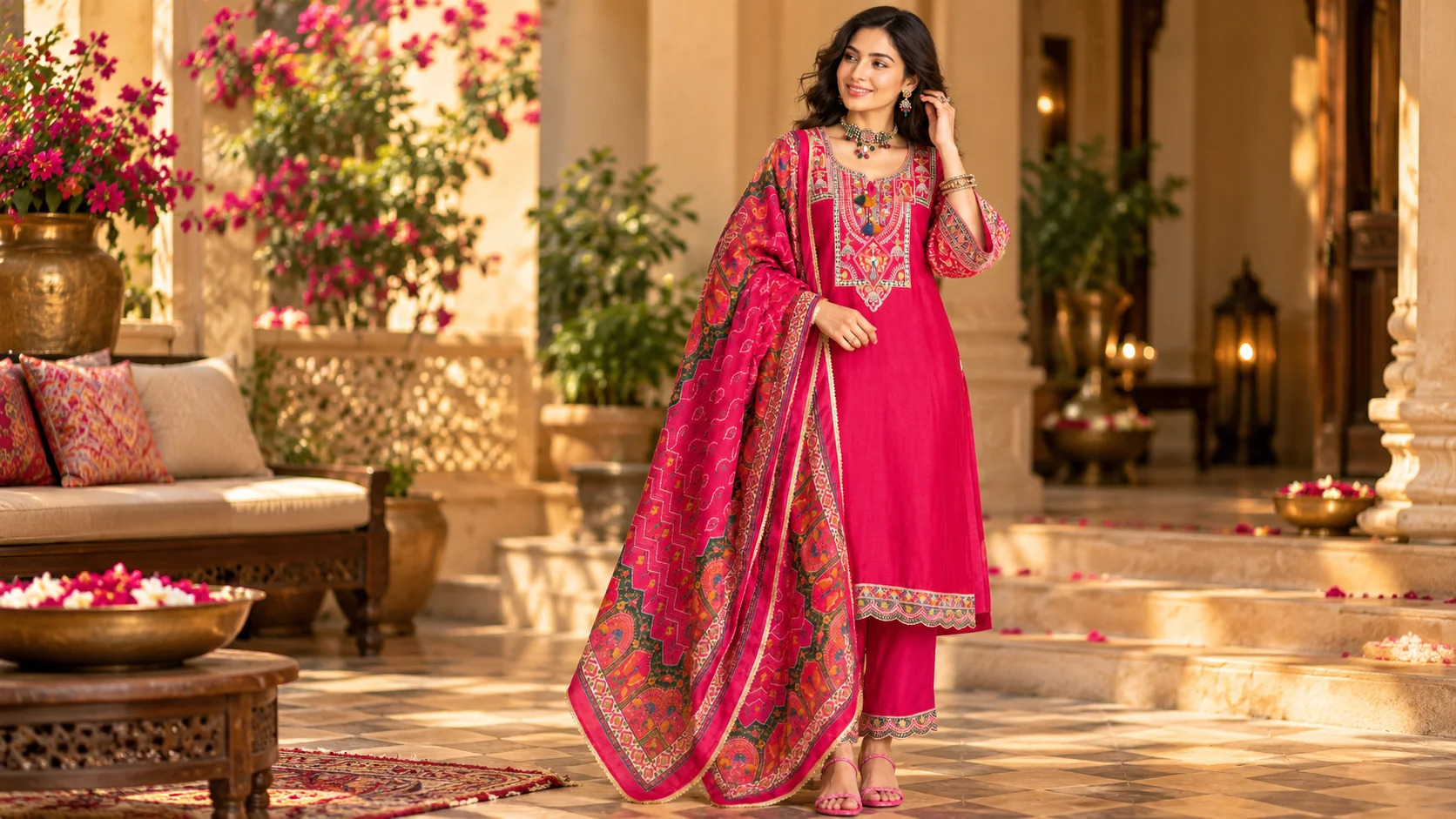
This look combines a bright fuchsia kurta and matching trousers with a richly patterned dupatta, decorative neckline and detailed sleeve and hem borders. That gives you plenty to work with already. The styling opportunity is not about adding more—it is about deciding which details deserve attention and which should stay quiet.
Table of Contents
Let the Fuchsia Kurta Set Be the Visual Anchor
The strongest feature of this outfit is its colour. The vivid fuchsia base immediately draws attention, while the neckline and patterned dupatta introduce additional detail. Because several elements are already visually expressive, the outfit works best when one clear focal point leads the styling.
A useful rule is to treat the kurta, neckline and dupatta as the main story and everything else as supporting detail. That does not mean the accessories have to be plain. It simply means their scale and colour should complement the existing design rather than create another competing focal point.
For example, a statement earring can frame the face beautifully while allowing the embroidered-looking neckline to remain visible. If you choose a prominent necklace as well, keep the earrings and other Jewellery more restrained. The same principle applies to the handbag: repeat an accent colour from the outfit rather than introducing an unrelated dominant shade.
This approach creates a more intentional ethnic look and makes the set easier to adapt across different celebrations.
Shop the LookStyle the Printed Dupatta Without Hiding the Neckline
The dupatta is not simply an extra layer here—it is one of the most colourful parts of the overall outfit. Its contrasting motifs, borders and darker accent tones add depth to the bright fuchsia base.
That makes draping an important styling decision. A simple one-shoulder drape can allow the patterned fabric to remain visible while keeping the neckline exposed. This is particularly useful when the kurta already has decorative detailing around the neck.
For a relaxed festive gathering, allow the dupatta to fall naturally rather than creating an overly structured arrangement. For a more formal occasion, a neater shoulder placement can make the silhouette feel more deliberate while still showcasing the border.
Avoid covering the entire front of the kurta with the dupatta unless the occasion or personal preference calls for it. Doing so can hide the strongest design details and reduce the contrast between the solid fuchsia base and the patterned layer.
The same principle appears in Nimon Group’s embroidered kurta set styling guide—when the garment already has substantial visual detail, restraint in the supporting pieces can make the finished look feel more polished.
Build Jewellery, Footwear and Accessories Around the Colour Story
Once the garment and dupatta establish the colour story, choose accessories by repeating or gently balancing colours already present.
The Jewellery shown with this style provides a useful direction: the neckline area can carry a noticeable piece, while earrings and bangles can be selected according to how much attention you want around the face and wrists. If the necklace is the main Jewellery feature, avoid making every other piece equally prominent.
For a traditional festive interpretation, decorative earrings, bangles and dressy flats can reinforce the ethnic character. For a cleaner modern interpretation, reduce the number of Jewellery pieces and let the fuchsia colour and patterned dupatta do more of the visual work.
Footwear can change the mood without changing the outfit. Embellished juttis or dressy sandals can strengthen the traditional direction, while refined heels can make the same silhouette feel more evening-oriented. A compact clutch or potli-style bag can work for celebrations, particularly when it echoes one of the existing accent colours.
The important point is not to match every accessory exactly. Repeating one or two existing colours usually creates a more cohesive result than trying to make the entire outfit perfectly coordinated.
Adapt the Same Look for Festive and Special Occasions
A strong kurta set does not have to be reserved for one type of event. Small changes in styling can shift its level of formality without making the outfit feel completely different.
For a festive lunch or family gathering, keep the look relatively light. Use the original dupatta drape, one noticeable Jewellery focal point and understated footwear. This allows the vivid colour to feel celebratory without making the outfit unnecessarily formal.
For a wedding-guest setting, increase refinement rather than simply adding more accessories. A more deliberate dupatta arrangement, dressier earrings and polished footwear can give the same kurta set a more occasion-ready finish. A small structured bag or traditional-style clutch can complete the look.
For an evening celebration, use the decorative accents already visible in the outfit as your guide. Warmer metallic-looking accessories can complement the detailed neckline and borders, while dressier footwear adds a more polished finish.
For a smaller celebration, simplify instead. Let the fuchsia kurta remain the dominant element, reduce the number of accessories and allow the printed dupatta to provide the visual interest.
If you are building an entire celebration look rather than styling only one garment, Nimon Group’s Festive Outfit Planning Made Effortless Without Buying a New Look offers a broader approach to coordinating Jewellery, footwear, accessories, draping and colour.
The easiest styling rule to remember is simple: when the outfit already has strong colour and pattern, improve the balance rather than increasing the decoration.
FAQs
1. How should I style a fuchsia kurta set?
Let the fuchsia colour and patterned dupatta remain the main visual focus. Choose one noticeable Jewellery area, keep supporting accessories controlled and repeat one or two colours already present in the outfit rather than introducing several new shades.
2. What Jewellery works with a detailed kurta neckline?
A statement necklace or prominent earrings can work, but wearing both at maximum scale may make the upper half feel crowded. Choose one main focal point and keep the other pieces comparatively restrained so the neckline remains visible.
3. How should I drape a printed dupatta with a kurta set?
A simple one-shoulder or natural side drape can showcase the printed dupatta while keeping the kurta neckline visible. For formal occasions, a neater shoulder arrangement can create a more deliberate silhouette without hiding the outfit’s decorative details.
4. Can a bright pink or fuchsia kurta set work for a wedding guest look?
Yes. The formality can be increased through the finish of the accessories rather than by adding many pieces. Dressier Jewellery, polished footwear, a deliberate dupatta arrangement and a compact occasion bag can make the same set feel more wedding-appropriate.
5. Should my accessories match a fuchsia kurta exactly?
No. Exact matching is not necessary. A more natural approach is to repeat one accent colour from the dupatta, neckline or border while allowing the fuchsia base to remain the dominant colour.