
This article may contain affiliate links. We may earn a commission at no extra cost to you.
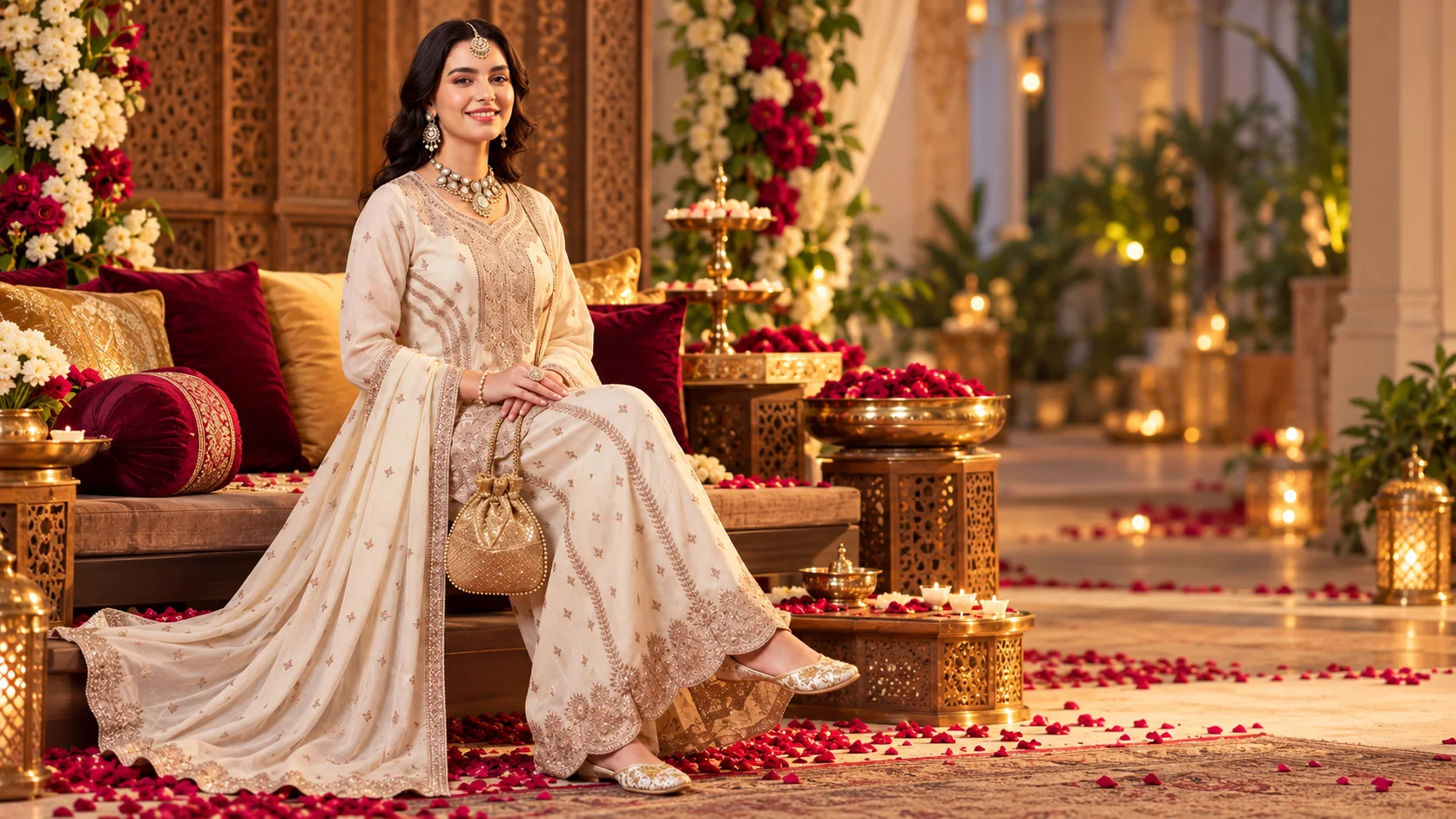
A cream embroidered kurta set can create an elegant festive outfit without needing a complicated styling formula. The light neutral base in this look is balanced by detailed embroidery, a flowing dupatta, statement Jewellery and warm gold-toned accessories, giving the outfit a polished traditional feel.
The most useful styling rule is simple: let the embroidered kurta set remain the main visual focus, then use Jewellery, dupatta placement, footwear and accessories to control how formal the final look feels. This approach makes the same outfit easier to adapt for weddings, festive celebrations, evening gatherings and other special occasions.
Table of Contents
Why This Cream Embroidered Kurta Set Works for Festive Dressing
The strength of this outfit comes from its visual hierarchy. The cream base creates a calm foundation, while the embroidery adds detail around the neckline, front panel, sleeves and lower hem. Because the decorative work is already visible across several areas, the outfit does not need another competing focal point.
That makes cream particularly useful for festive styling. Instead of building the look around several strong colours, you can allow the warm gold-looking details and deeper burgundy accents in the setting to influence the accessories without trying to match every element exactly.
The flowing dupatta also contributes to the overall silhouette. Its decorative border creates a defined edge while the softer fabric appearance keeps the outfit visually light. Allowing part of that border to remain visible can make the styling feel more deliberate.
Explore and Shop This Kurta SetA useful comparison is the styling approach used for other neutral embroidered ethnic outfits. Nimon Group’s Beige Embroidered Anarkali Styling Made Effortlessly Elegant explores a similar principle of letting decorative detailing remain the focal point rather than adding competing elements.
How to Balance Jewellery and the Detailed Neckline
The neckline is already one of the strongest areas of this cream embroidered kurta set. It contains layered decorative detailing, so Jewellery should frame that area rather than completely cover it.
The look shown here uses a statement necklace together with earrings and a maang tikka, creating a distinctly festive direction. This works because the Jewellery follows the same warm, traditional visual language as the outfit instead of introducing a contrasting style.
For your own version, use a simple hierarchy:
- Statement necklace: Let it remain the main Jewellery feature when the neckline has enough visual space.
- Earrings: Choose a pair that supports the necklace rather than competing with it.
- Maang tikka: Useful when the occasion calls for a more traditional festive finish.
- Bracelets or rings: Keep these secondary when the upper half already has substantial detail.
You do not need every Jewellery piece for every occasion. For a daytime celebration, you could reduce the look to earrings and one smaller accent. For a wedding or evening event, a stronger necklace and coordinated earrings can create a more formal impression.
The important point is scale. When both the neckline and Jewellery are detailed, restraint elsewhere helps the outfit look intentional rather than crowded.
How to Style the Dupatta, Potli and Footwear
The accessories around the outfit should support its cream-and-gold visual story.
Start with the dupatta. A relaxed shoulder drape keeps the flowing quality visible and allows the embroidered border to become part of the silhouette. For a more formal occasion, a neater shoulder arrangement can reveal more of the kurta while keeping the border clearly visible.
The potli adds another useful festive detail. Because the outfit already has a decorative surface, a coordinated gold-toned or neutral potli can work better than a bag with a completely unrelated colour or pattern. Think of the bag as a supporting accent rather than another focal point.
Footwear follows the same rule. The embellished flats shown in the look reinforce the traditional festive direction. For a similar outfit, footwear in cream, champagne, gold-toned or another quiet complementary shade can maintain visual continuity.
Avoid trying to match the footwear, Jewellery and bag to every small embroidery detail. Repeating one supporting colour is usually enough to make the outfit feel coordinated.
If you want another example of how a richly decorated ethnic outfit can be controlled through selective accessories, Nimon Group’s Maroon Anarkali Kurta Set Styling for Festive Occasions offers a complementary styling approach.
How to Adapt the Look for Different Festive Occasions
The same cream embroidered kurta set can move between occasions by changing only a few high-impact details.
For a wedding celebration: Keep the statement Jewellery, a deliberate dupatta drape and embellished footwear. The overall styling can remain traditional and polished without adding multiple competing accessories.
For Diwali or another festive gathering: Keep the cream base as the visual foundation and use warm gold-looking Jewellery, a festive potli and dressier footwear. A slightly more relaxed dupatta arrangement can keep the look approachable.
For an evening family celebration: Use the necklace and earrings as the main decorative elements, then simplify the remaining accessories. This creates an elegant look without making the outfit feel excessively formal.
For a daytime festive event: Reduce the Jewellery slightly and let the embroidery provide most of the decoration. Simple embellished flats and a restrained bag can make the same outfit feel lighter.
For a wedding-guest look: Pay attention to the event’s dress code and cultural setting. A more structured dupatta arrangement and stronger Jewellery can increase formality, while simpler accessories can work for a smaller or daytime celebration.
The advantage of this approach is that you do not have to rebuild the entire outfit for every occasion. Change the elements that have the greatest visual impact first: Jewellery, dupatta arrangement and footwear.
Related Blogs
- Ivory Kurta Set Styling for an Elegant Standout Festive Look — useful for another light-neutral festive kurta-set approach.
- Beige Embroidered Anarkali Styling Made Effortlessly Elegant — useful for coordinating neutral embroidered ethnic wear.
- How to Style a Bandhani Anarkali Kurta Set for Festive Occasions — useful for exploring a more colourful festive styling direction.
Frequently Asked Questions
How do you style a cream embroidered kurta set?
Let the embroidery remain the main decorative focus. Choose one clear Jewellery focal point, keep the dupatta border visible and use complementary footwear and a bag rather than matching every small detail.
What Jewellery goes with a cream embroidered kurta set?
Warm gold-toned or traditional-style Jewellery can complement a cream festive outfit. A statement necklace and earrings can create a dressier look, while earrings alone can provide a simpler daytime option.
What colour accessories work with a cream kurta set?
Gold-toned, champagne, beige, cream, warm brown and other understated neutral shades are useful starting points. Choose one or two supporting tones instead of introducing several competing colours.
How should I style the dupatta with an embroidered kurta set?
A relaxed shoulder drape works for an easier festive appearance, while a more structured arrangement can create a dressier look. Keep enough of the decorative border visible to contribute to the overall outfit.
Can a cream kurta set work for a wedding guest outfit?
Yes. Depending on the wedding’s dress code and cultural setting, you can make the look more formal through statement Jewellery, polished footwear and a deliberate dupatta arrangement, or keep it more restrained for daytime celebrations.