This article may contain affiliate links. We may earn a commission at no extra cost to you.
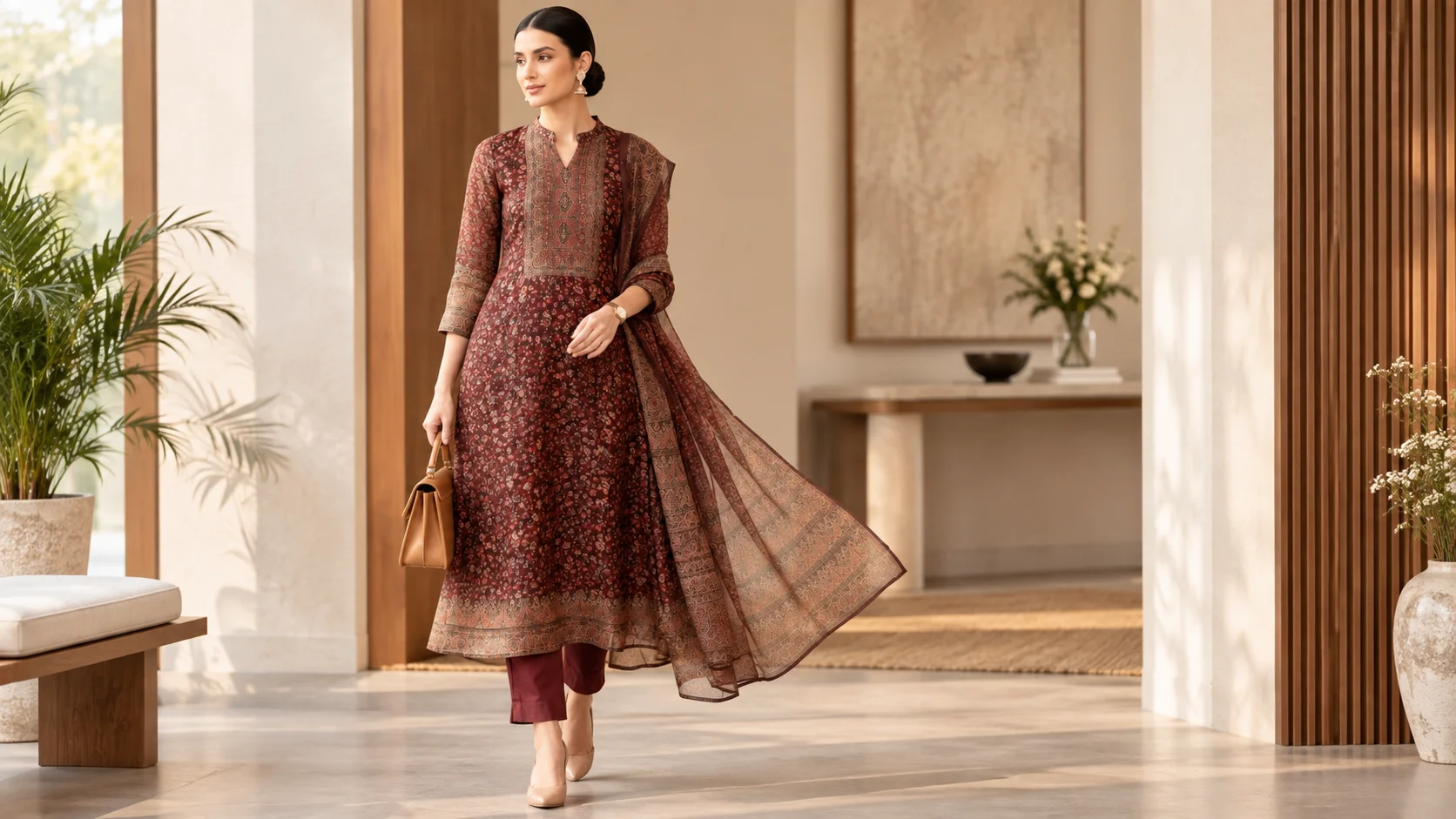
Maroon kurta set styling works especially well when the outfit already carries a strong pattern and coordinated details. The featured Varanga set combines a maroon ethnic-motif printed straight kurta, solid trousers and a printed dupatta, giving the outfit enough visual character to lead the look without excessive accessorising. The retailer lists the kurta with a Mandarin collar, three-quarter sleeves, straight hem and calf-length silhouette.
The simplest styling approach is to keep the kurta and dupatta prominent, then add jewellery, footwear and a bag selectively. Instead of trying to make every accessory a focal point, use a few supporting details to decide whether the look feels more relaxed, polished or occasion-ready.
Table of Contents
Why This Maroon Kurta Set Stands Out
The first thing that gives this outfit its identity is the deep maroon colour story. The kurta carries small repeated motifs across much of the body, while a more elaborate decorative panel around the neckline creates a natural focal point.
The retailer describes the design as an ethnic-motif printed straight kurta accompanied by solid trousers and a dupatta. The solid trousers are useful visually because they give the eye a quieter area between the detailed kurta and patterned dupatta.
That balance makes the outfit interesting without requiring a complicated styling formula.
The dupatta deserves particular attention. Its larger border and all-over pattern introduce another level of detail, but the related maroon and warm neutral tones keep it visually connected to the kurta.
For another take on coordinating a kurta, trousers and decorative dupatta, see Nimon Group’s Pink Kurta Set Styling guide. It explores a useful principle that also applies here: allow one or two elements to lead rather than making every accessory equally prominent.
Explore the Varanga Maroon Kurta Set DetailsMaroon Kurta Set Styling Through Colour
A strong maroon base gives you several possible accessory directions without needing an exact colour match.
For a restrained everyday interpretation, try accessories in tan, beige, cream or other warm neutral-looking shades. These tones can sit quietly alongside maroon while allowing the printed kurta and dupatta to remain the main visual story.
For a more traditional or dressed-up direction, metallic-looking jewellery and decorative footwear can introduce contrast. You do not need to repeat every shade visible in the print. One supporting colour or finish is usually enough.
The key is visual hierarchy:
- Maroon establishes the dominant colour.
- The ethnic motifs and borders provide decorative detail.
- The dupatta adds movement and another patterned surface.
- Accessories should complete the styling rather than compete with all three.
This approach is particularly useful when working with a patterned ethnic outfit because adding several unrelated colours can quickly make the overall composition feel busier than intended.
Nimon Group’s Women’s Clothing section has more ethnic-wear and kurta-set inspiration if you want to compare different colour and styling approaches.
Let the Dupatta Become Part of the Look
The dupatta can change how the entire ensemble reads, even when the kurta and trousers stay exactly the same.
For a clean, polished presentation, let it fall over one shoulder so that the patterned border remains visible while most of the kurta front stays unobstructed. This works particularly well when you want the decorative neckline to remain noticeable.
A looser drape can create more movement and make the dupatta a stronger part of the outfit. If you prefer a neater appearance, bring it closer to the body while still leaving enough of the border visible to connect it with the kurta.
The important point is to avoid treating the dupatta as an afterthought. Its print and border are already part of the outfit’s visual identity.
This is also where you can change the mood without adding more accessories. A carefully arranged dupatta can provide much of the finishing detail that might otherwise come from additional jewellery or layers.
Choose Jewellery Without Overloading the Outfit
A patterned kurta does not automatically require elaborate jewellery.
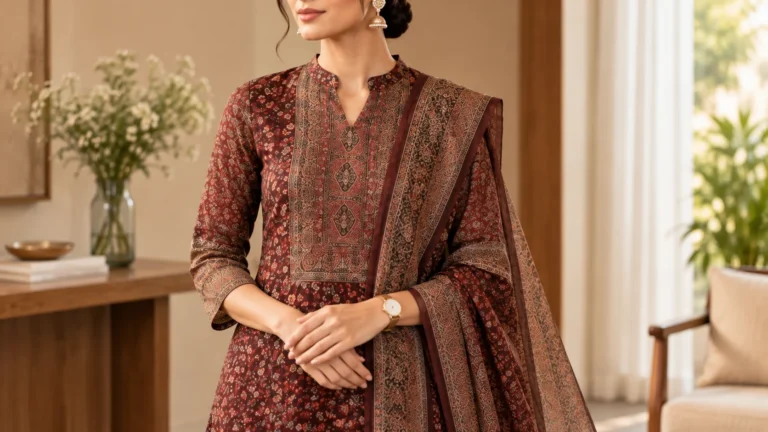
The neckline already contains detailed motifs, so earrings are an easy place to introduce a focal point without covering that area. Jhumka-style or drop earrings can give the face more definition for a dressed-up interpretation, while smaller earrings can keep the look quieter.
If the earrings are visually prominent, consider leaving the necklace out altogether. That gives the neckline and earrings their own space instead of asking several decorative elements to compete.
Wrist styling can follow the same principle. A watch, a restrained bracelet or a small bangle stack can be enough. You do not need earrings, necklace, bangles and rings all competing for attention simultaneously.
If you want to explore this balance further, Nimon Group’s guide to Choosing Earrings for High and Low Necklines looks specifically at the relationship between neckline space and earring proportions.
Footwear and Bag Ideas for a Polished Finish
Footwear can shift the outfit towards either traditional or contemporary styling.
Neutral closed-toe heels or simple sandals can create a cleaner, more modern finish. For a more traditional direction, decorative flats or jutti-inspired footwear can visually reinforce the ethnic character of the outfit.
A tan or warm neutral bag is another easy styling direction because it can complement the maroon palette without becoming a second major colour statement. A structured bag gives the outfit a more polished daytime feel, while a smaller clutch or compact bag can move the styling towards an occasion setting.
There is no need to match shoes and bag perfectly. Think instead about whether they belong to the same visual family.
For example, a warm neutral bag with similarly restrained footwear can create continuity while leaving the clothing itself as the strongest feature.
A useful styling edit
Once you are dressed, look at the complete outfit before adding the final accessory.
If the patterned kurta, dupatta and earrings already establish enough detail, another statement piece may not improve the look. Removing one element can sometimes create a clearer composition than adding another.
That editing step is particularly helpful with printed ethnic wear.
Is This Maroon Kurta Set Style Right for You?
This style is worth considering if you enjoy coordinated ethnic outfits where pattern and colour already do much of the visual work.
According to the current retailer listing, the set consists of a printed straight kurta, solid trousers and dupatta. The listing identifies the kurta fabric as Chanderi silk and the trouser and dupatta fabrics as silk blends; it also specifies hand washing.
Those are retailer-supplied specifications rather than conclusions drawn from appearance, so check the current listing and garment labels before purchasing or caring for the set.
The same applies to sizing. Online size labels are only a starting point; compare the retailer’s current garment measurements with your own requirements before choosing a size.
For a broader explanation of this process, see Nimon Group’s Garment Measurements Made Simple guide.
For garment care, follow the actual care instructions supplied with the item. The US Federal Trade Commission’s care-labelling guidance explains why garment care instructions need to be based on the construction of the actual product rather than assumptions about how a fabric looks.
See the Varanga Kurta Set Sizing and Product InformationUltimately, successful maroon kurta set styling is less about adding more and more about deciding what deserves attention. Let the rich colour establish the mood, allow the ethnic motifs and dupatta to provide decorative interest, and choose only the jewellery, footwear and bag that strengthen that visual story.
The result is an ethnic look that can be adjusted through small styling decisions rather than rebuilt from scratch.
Related Blogs
Pink Kurta Set Styling for Effortless Elegant Festive Looks — useful for another colour-led approach to styling a coordinated kurta, trousers and printed dupatta.
Ivory Embroidered Kurta Set With Effortless Festive Style — explores the opposite colour direction, using a light neutral base and decorative detailing.
Floral Kurta Set Styling With Elegant Standout Appeal — helpful for balancing a detailed kurta, patterned dupatta and jewellery without overcrowding the look.
FAQs
What is the easiest approach to maroon kurta set styling?
Let the maroon kurta and patterned dupatta provide the main visual interest. Add one clear jewellery focal point, restrained footwear and a bag that supports the existing colour palette rather than introducing several competing elements.
What jewellery can I wear with a printed maroon kurta?
Statement earrings are one option when you want a dressier look. With a detailed neckline, you can also skip the necklace and let the earrings become the main jewellery focal point.
What colour accessories work with maroon?
Warm neutrals such as beige, tan and cream can create a restrained combination. Metallic-looking finishes are another styling option. Exact colour matching is unnecessary; visual coordination is more important.
How can I make a maroon kurta set look more occasion-ready?
Change a few finishing elements rather than the entire outfit. More noticeable earrings, decorative footwear, a smaller occasion bag and a deliberate dupatta drape can increase the visual impact.
What should I check before buying a kurta set online?
Review the retailer’s current garment measurements, included pieces, fabric information and care instructions. Compare measurements with your requirements rather than relying only on an S, M, L or similar size label.