
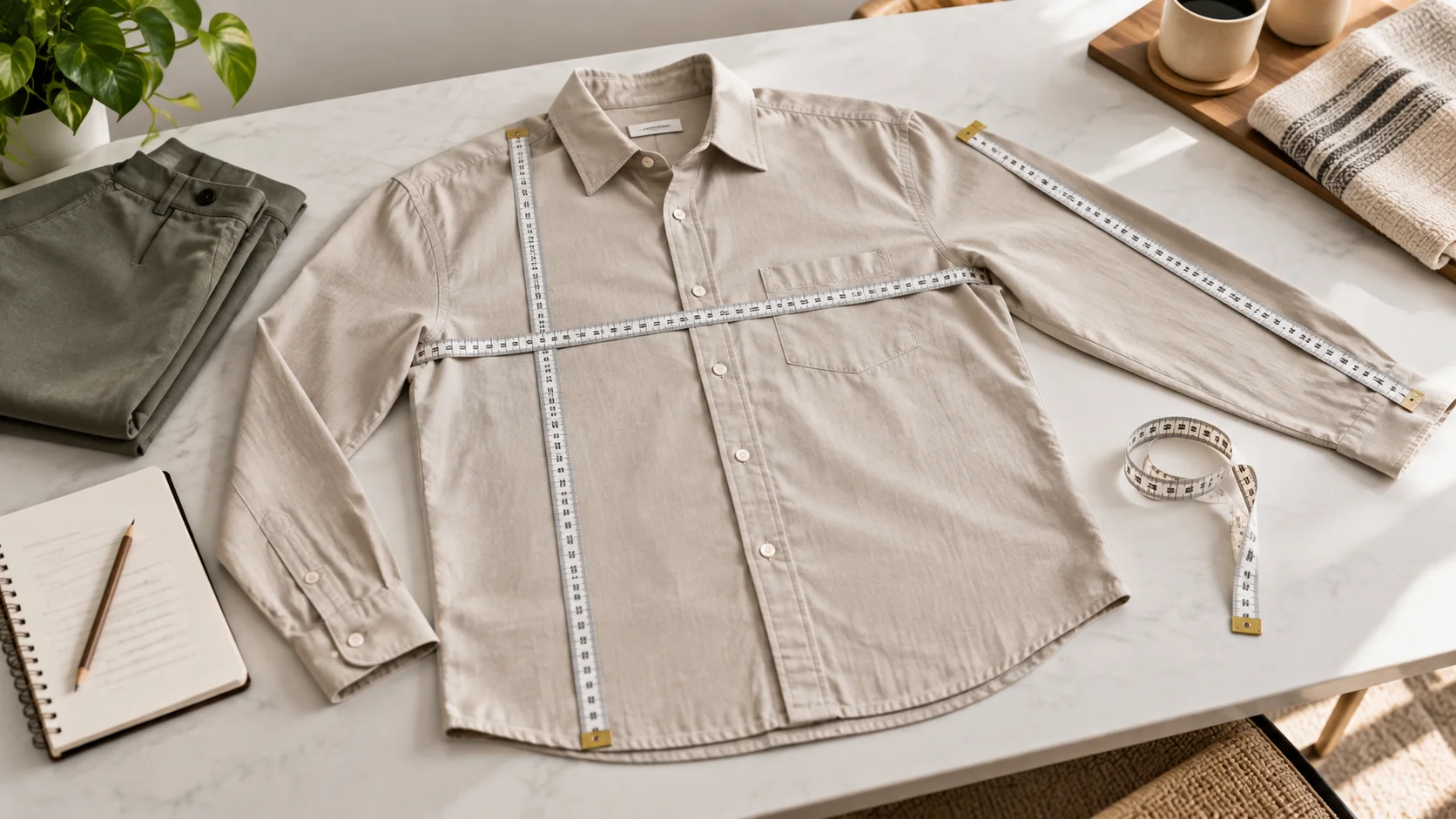
Buying clothes online becomes much easier when you stop treating the size label as the whole answer. Garment measurements can give you a more useful reference because they describe the dimensions of the clothing itself rather than relying only on labels such as S, M, L or a numbered size.
Before buying, compare the measurements supplied for the item with a similar garment you already own and like wearing. Just remember that measurements improve your decision-making; they cannot guarantee fit because cut, fabric, stretch, construction and personal fit preference also matter.
Table of Contents
Why Garment Measurements Matter
Two garments carrying the same nominal size do not necessarily have identical dimensions. Different brands, cuts and silhouettes can use different proportions, while deliberately relaxed, slim or oversized designs can change the finished dimensions further.
That is why simply thinking, “I normally wear a medium,” gives you only part of the information.
A more practical approach is to find a similar garment in your wardrobe whose fit you already understand, lay it flat and record its important measurements. You can then compare those figures with the product measurements shown online.
This approach is particularly useful when shopping across different brands or looking at unfamiliar silhouettes.
International clothing standards also distinguish body dimensions used for sizing from the finished garment itself. ISO 8559-1 provides standardised definitions for anthropometric measurements used in clothing applications.
Further reading from ISO: ISO 8559-1 clothing measurement standard
Garment Measurements or Body Measurements
This distinction is easy to miss.
Body measurements describe your body — for example, chest or bust circumference, natural waist, hips and inseam.
Garment measurements describe the actual finished piece of clothing.
A shirt measured flat across the chest, for example, is not automatically comparable with a full body chest circumference. Some retailers show a flat width, while others provide the full garment circumference. Always check how the retailer defines its measurement.
The difference also matters because garments need different amounts of ease — the additional space between the body and the garment that contributes to movement and the intended silhouette. A fitted shirt and an oversized shirt can therefore be designed for similar body measurements while having noticeably different garment dimensions.
Recent online-sizing guidance similarly recommends checking whether a retailer’s chart describes the body or the finished garment before comparing numbers. 📖
How to Check Garment Measurements at Home
The simplest reference is usually a garment you already own that fits the way you want the new item to fit.
Choose something from the same clothing category whenever possible. Compare a shirt with a shirt, trousers with trousers and a jacket with a similar jacket rather than assuming measurements translate perfectly between different garment types.
Lay the garment on a clean, flat surface. Smooth it gently without stretching the fabric and use a flexible measuring tape.
Chest or bust width
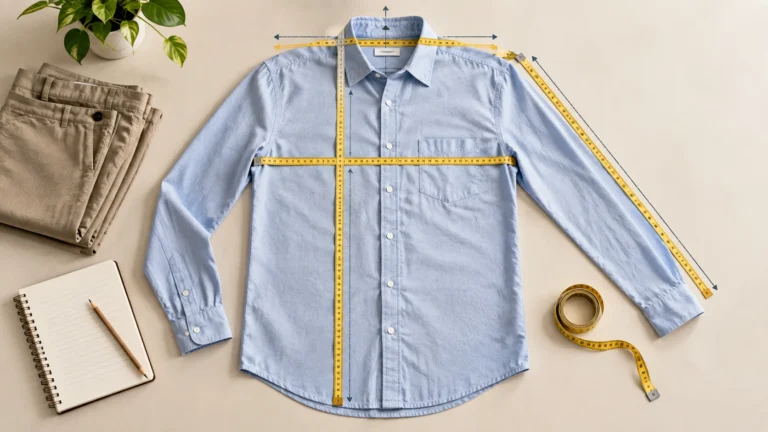
For many tops, shirts and jackets, measure straight across the garment from one underarm area to the other while it lies flat.
Pay attention to the retailer’s terminology. If it lists a full chest circumference rather than a flat chest width, you may need to interpret the figures differently.
Never assume the two measurement methods are interchangeable.
Shoulder width
On garments with conventional shoulder seams, measure across the back from one shoulder seam to the other.
This measurement becomes especially useful for structured shirts, jackets and coats. However, dropped-shoulder and oversized designs intentionally position the seam differently, so the measurement must be interpreted together with the garment’s intended silhouette.
Garment length
Measure from the appropriate upper shoulder point down to the hem, following the method used by the retailer whenever it is specified.
Length can make a surprisingly large difference to how a garment looks. Two tops with similar chest measurements may create very different proportions if one finishes around the waist and another extends towards the hips.
Sleeve length
For a conventional set-in sleeve, measure from the shoulder seam towards the cuff.
Again, construction matters. A dropped-shoulder garment may have a relatively short sleeve measurement because part of the apparent sleeve length comes from the extended shoulder.
Waist
For trousers, jeans or skirts, fasten the garment and lay the waistband flat without stretching it.
Measure across the waistband using the same method described by the seller. If the retailer publishes a circumference, check whether its number represents the complete waist rather than the flat width.
Rise and inseam
For trousers, the waist alone is rarely enough.
Front rise affects where the waistband sits and how the upper section of the trousers feels and looks.
Inseam measures the inside-leg length from the crotch seam towards the hem. It is particularly useful when judging whether trousers are likely to have the length you want.
Which Measurements Matter for Different Clothes
You do not need to compare every possible dimension for every purchase. Concentrate on the measurements that define the shape of the garment.
For T-shirts and casual tops, chest width, shoulder width and overall length are often useful starting points.
For shirts and blouses, consider chest or bust, shoulders, sleeve length and garment length.
For jackets and blazers, shoulder position and chest dimensions can be particularly important because the construction is usually more structured. Sleeve and overall length also affect proportion.
For trousers and jeans, look beyond the nominal waist size. Waist, rise, inseam, thigh width and leg opening can all influence the resulting silhouette.
For dresses and fitted one-piece garments, chest or bust, waist, hips and total length may all matter.
The key is not to chase a perfect universal set of numbers. It is to identify the dimensions that matter most for the particular garment you are considering.
How to Compare Garment Measurements Before Buying
A simple comparison routine can make the numbers much more useful.
Start with a garment you already enjoy wearing. Record its key measurements and make a short note about how it fits — perhaps close, regular, relaxed or oversized.
Then open the size or measurement information for the item you are considering.
Check three things before comparing anything:
1. Are the figures body or garment measurements?
Do not mix the two.
2. Are the units the same?
Centimetres and inches can easily create mistakes if you move too quickly between different international retailers.
3. Is the measuring method explained?
A seller may measure a garment flat, provide a circumference or use its own defined points. Follow the seller’s method rather than assuming it matches yours.
Once those details are clear, compare the most important dimensions one by one.
A difference is not automatically good or bad. It tells you how the new garment may differ from your reference piece.
For example, a noticeably wider chest could be intentional in a relaxed design. A shorter length might be exactly what you want for a cropped silhouette. Measurements are most useful when interpreted alongside the intended style rather than treated as pass-or-fail numbers.
Common Measurement Mistakes to Avoid
One of the easiest mistakes is measuring clothing while it is hanging. Gravity and fabric behaviour can distort the shape, so a flat surface is generally a better reference.
Another is stretching the fabric or waistband while measuring. Unless the seller specifically provides stretched measurements, record the garment in its natural resting state.
Do not compare a favourite oversized shirt with a slim-fit shirt and expect identical numbers to produce the same appearance.
Also avoid relying on a single measurement when several areas determine the fit. A pair of trousers can match your preferred waistband width yet differ considerably in rise, thigh or inseam.
Most importantly, do not turn the measurements into a fit guarantee.
Fabric stretch, pattern cutting, construction, lining, drape, body proportions and personal preference can all influence how clothing actually feels when worn. Measurements reduce guesswork; they do not eliminate it.
Create Your Own Garment Measurement Note
A useful long-term habit is to keep a small reference note on your phone.
You might record:
Favourite T-shirt: chest, shoulder, length and sleeve
Favourite shirt: chest, shoulder, sleeve and length
Favourite trousers: waist, rise, inseam and thigh
Favourite jacket: chest, shoulder, sleeve and length
Add a simple fit description beside each item.
Over time, this gives you a personal reference library that can be more useful than remembering that you usually buy a particular letter size.
Recent 2026 garment-measurement guidance recommends a similar approach: measure an existing garment whose fit you already understand and compare like with like rather than relying solely on its labelled size. 📖
A Better Way to Read Online Size Information
Garment measurements are most valuable when used as decision support, not as a promise.
Before ordering, compare the retailer’s measurements with a familiar garment, confirm the measuring method, look at the intended fit and fabric information, and read the retailer’s returns or exchange terms.
That extra minute can reveal far more than the size label alone.
Once you build the habit, checking garment measurements before buying online becomes less about finding a supposedly universal “correct size” and more about understanding how a particular piece compares with clothing you already know.
FAQs
What garment measurements should I check before buying online?
The most useful garment measurements depend on the item. Tops commonly benefit from chest, shoulder and length checks, while trousers may require waist, rise and inseam comparisons. Always follow the retailer’s stated measuring method.
Are garment measurements the same as body measurements?
No. Body measurements describe your body, while garment measurements describe the finished clothing. Check which type a retailer’s size chart provides before making a comparison.
Can garment measurements guarantee that clothes will fit?
No. They can reduce uncertainty but cannot guarantee fit. Cut, construction, fabric stretch, body proportions and personal preference can all affect the result.
Should I measure my clothes flat?
For many common garment-measurement methods, yes. Lay a similar garment flat, smooth it without stretching and follow measurement points that correspond as closely as possible to those used by the retailer.
What should I do if two sizes look very similar?
Compare the dimensions most important to that particular garment and consider its intended silhouette and fabric behaviour. If uncertainty remains, consult the retailer’s own sizing guidance and returns or exchange policy.