
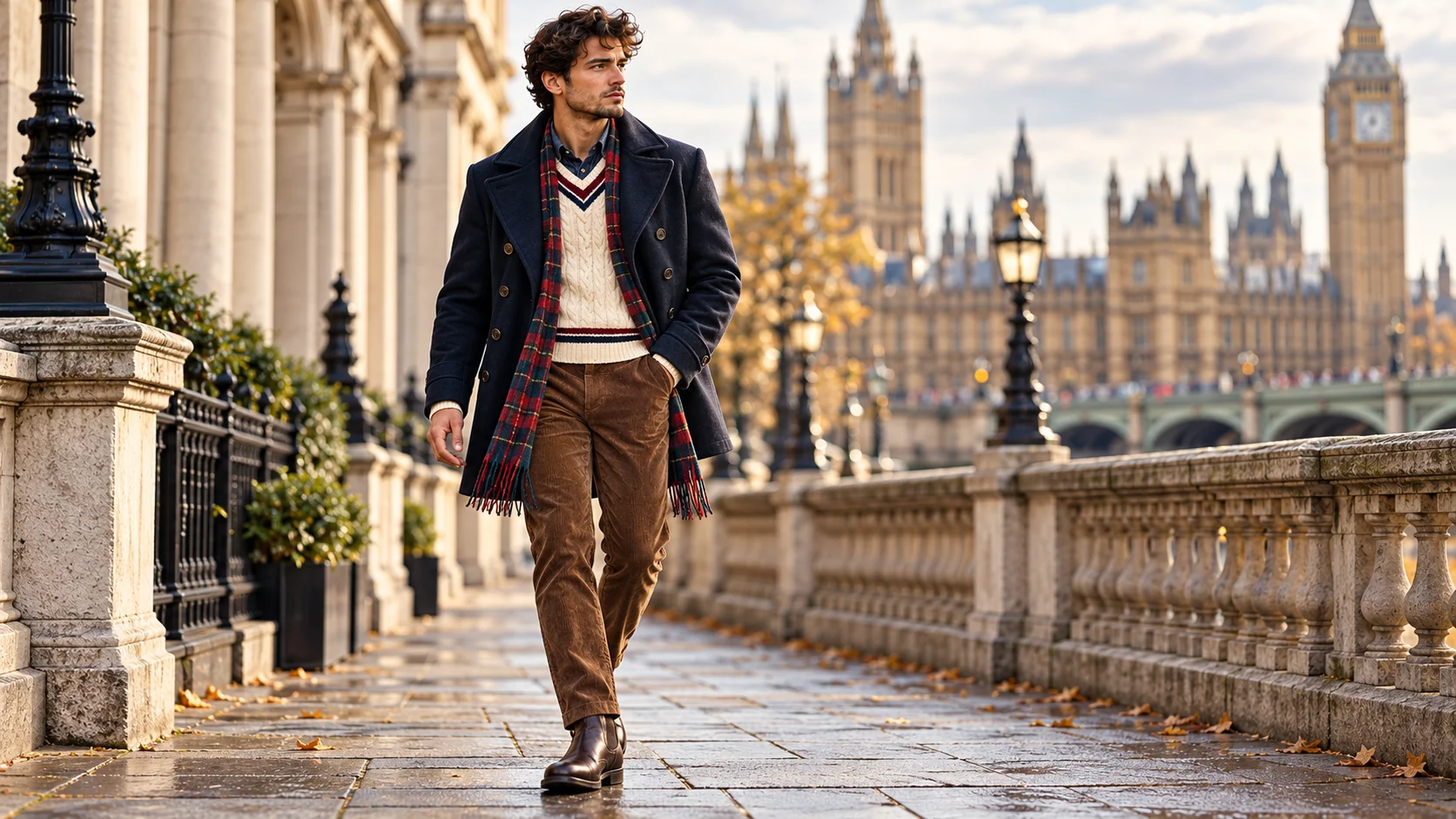
British winter style does not have to mean wearing the heaviest coat you own. A more versatile approach combines heritage-inspired pieces, thoughtful layering and a restrained colour palette to create outfits that look polished without feeling overcomplicated.
The British winter prep look brings together a navy peacoat, a tartan overshirt, a cream cricket sweater, brown corduroy trousers, dark denim and classic footwear. Burgundy, forest green, navy and earthy brown give these pieces a cohesive appearance, while a patterned scarf adds personality.
The key is to let one element lead each outfit. Start with the occasion and the weather, choose a main piece, and build the remaining layers around it.
Table of Contents
Build the Look Around Three Heritage Pieces
A navy peacoat, a cricket sweater and a tartan piece provide a strong starting point for British winter prep outfits. Each has a different visual role: the coat creates structure, the sweater introduces a lighter central layer, and tartan adds pattern.
Start with the navy peacoat. Its dark colour gives the outfit a defined outer layer and works naturally with cream, burgundy, brown and dark denim. For a smart-casual day in the city, wear it over a simple knit and trousers in a complementary colour. If the weather is mild, the coat may be unnecessary indoors, so build the outfit to look complete without it.
Use the cricket sweater to introduce contrast. The cream knit and contrasting V-neck trim in this look draw attention towards the upper body. Pair it with a dark shirt and brown trousers for a traditional combination. Alternatively, dark denim makes the outfit feel more relaxed without removing its heritage character.
Treat tartan as the personality piece. A tartan overshirt can lead an outfit when worn over a plain top, while a tartan scarf can provide a smaller accent beneath a navy coat. Avoid making every visible garment compete for attention. If the overshirt is the main feature, keep the other colours comparatively quiet.
The useful rule is to assign each piece a job before getting dressed: structure from the coat, contrast from the knit and character from the pattern.
Balance Patterns, Textures and Proportions
British heritage prep works through contrast rather than matching everything exactly. The combination of a patterned tartan, a textured-looking knit and ribbed corduroy creates visual interest because the garments do not all look alike.
Keep the pattern hierarchy simple. When wearing a tartan overshirt, choose a relatively plain knit or T-shirt and understated trousers. When the outfit already includes a cream cricket sweater and a tartan scarf, avoid introducing another prominent pattern. This keeps the upper half coordinated instead of visually crowded.
Texture needs similar control. The visible corduroy trousers add depth through their ridged surface, while the knit brings a different pattern to the outfit. Dark denim offers a simpler alternative when you want the tartan or sweater to remain the focal point.
Proportion matters, too. A structured coat is best balanced by trousers that look deliberate rather than accidental. Check the trouser break at the shoe, the length of the coat and whether the layers underneath bunch up. The goal is not a particular body shape; it is a clean line from shoulder to footwear.
For everyday styling, make one change at a time. Replace the corduroy trousers with dark denim, for example, before changing the coat, knit and scarf together. You will see how a single substitution changes the outfit’s overall formality.
Create Four Outfits for Different Situations
The same wardrobe can support several looks when you change the dominant piece, footwear and amount of layering.
1. City smart-casual
Combine the navy peacoat, cream cricket sweater, dark shirt and brown corduroy trousers. Finish with dark-brown Chelsea boots. This is a cohesive option for a city lunch, a casual meeting or an afternoon out when a coat is appropriate.
2. Relaxed weekend
Wear the tartan overshirt with dark denim and simple casual footwear. Keep the rest of the outfit restrained so the overshirt remains the focus. Add the peacoat if conditions call for another layer.
3. Traditional heritage
Pair the cream cricket sweater with brown corduroy trousers, a tartan scarf and the navy coat. The cream, navy, brown and burgundy tones create continuity without requiring every shade to match exactly.
4. Polished casual evening
Choose dark denim, a dark shirt, the cream knit and the navy peacoat. Brown loafers can make sense for a relatively mild, dry evening where the setting suits them. If the ground is wet or the weather is colder, Chelsea boots are the more practical starting point.
For more seasonal wardrobe planning, explore Nimon Group’s Fall 2026 Capsule Wardrobe for Men With 12 Pieces and 36 Outfits. It offers a related approach to creating multiple combinations from a considered selection of clothing.
Choose Colours and Layers for British Weather
A useful British winter palette starts with navy, cream and brown, then introduces burgundy or forest green through tartan and smaller accents. These colours complement one another without requiring a perfectly matching set.
Use navy as the anchor when you want a sharper appearance. Cream lightens the outfit and makes the sweater stand out against a dark coat. Brown connects corduroy trousers and brown footwear, while burgundy and green bring depth to the tartan.
Layer according to the conditions rather than the calendar alone. The UK’s weather varies by location and day, so a cold, wet morning may call for a coat and scarf while a milder afternoon may require fewer layers. Check the forecast and consider wind and rain before deciding what to wear.
A practical approach is to make the base outfit work on its own, then add the coat and scarf as needed. This makes it easier to adapt throughout the day without carrying unnecessary layers. In persistent rain, choose outerwear and footwear suited to wet conditions instead of assuming a traditional wool-look coat or suede-look loafer will provide weather protection.
For more ideas about combining seasonal textures, see Nimon Group’s Fall Texture Styling for Men. It complements this guide’s focus on making different surfaces work together.
Finish the Outfit with the Right Footwear
Footwear can shift the mood of the same outfit without requiring a complete wardrobe change. The two main options in this look are Chelsea boots and loafers, each suited to different conditions and levels of formality.
Chelsea boots work particularly well with the navy peacoat and brown corduroy combination. Their streamlined shape supports the structured outer layer, while the dark-brown colour connects with earthy trousers. They are a sensible styling choice for a cooler city day, although actual weather protection depends on the boot’s construction.
Loafers give dark denim or tailored-looking trousers a more relaxed, refined finish. They are most appropriate when the setting and conditions suit a lower-cut shoe. For wet pavements, cold conditions or long periods outdoors, consider whether boots or other weather-appropriate footwear would be more suitable.
Before leaving, check three things: whether the footwear suits the ground conditions, whether its colour connects with another part of the outfit, and whether the trouser length works with the shoe. These small decisions help the complete look feel intentional.
Make British Heritage Prep Your Own
A successful winter prep outfit is built around a clear focal point, balanced textures and layers that respond to the weather. Begin with the navy peacoat, cream cricket sweater or tartan piece, then choose quieter companions in dark denim, brown corduroy and complementary footwear.
Try one combination from this guide using pieces already in your wardrobe. Adjust the layers for the day’s conditions and change one element at a time until the outfit suits your setting and personal style.
Related Blogs
- Men’s Winter Capsule Wardrobe 2026
- Men’s Autumn City Break Wardrobe Guide
- Men’s Fall Capsule Wardrobe Guide
Frequently Asked Questions
1. How do you style British winter prep outfits for men?
British winter prep outfits for men work well when a structured navy coat, a cream knit or a tartan piece leads the look. Support it with simpler garments in brown, dark denim, burgundy or navy, then adjust the outer layers and footwear to suit the weather and occasion.
2. What colours work well with a navy peacoat?
Cream, brown, burgundy, forest green and dark denim all complement navy. Cream creates a lighter contrast, brown adds an earthy note, and burgundy or green can introduce colour through a scarf or tartan overshirt. Choose one or two supporting shades rather than using every colour equally.
3. Can you wear a cricket sweater with jeans?
Yes. A cream cricket sweater with dark denim creates a relaxed alternative to pairing it with corduroy trousers. Add a dark shirt underneath if appropriate, and use a navy coat to make the combination feel more structured. Keep other patterns understated so the sweater’s contrasting neckline remains visible.
4. When should you choose Chelsea boots instead of loafers?
Chelsea boots are often the more suitable styling choice for colder days and changeable outdoor conditions, depending on their construction. Loafers can work well for milder, drier settings and a more relaxed refined look. Check the weather, walking requirements and the formality of your destination before deciding.
5. How can you wear tartan without making an outfit look too busy?
Let one tartan item lead. Wear a tartan overshirt with a plain top and simple trousers, or use a tartan scarf as an accent with a navy coat and cream knit. Keeping the remaining pieces relatively quiet makes the pattern easier to appreciate and the overall outfit more cohesive.