
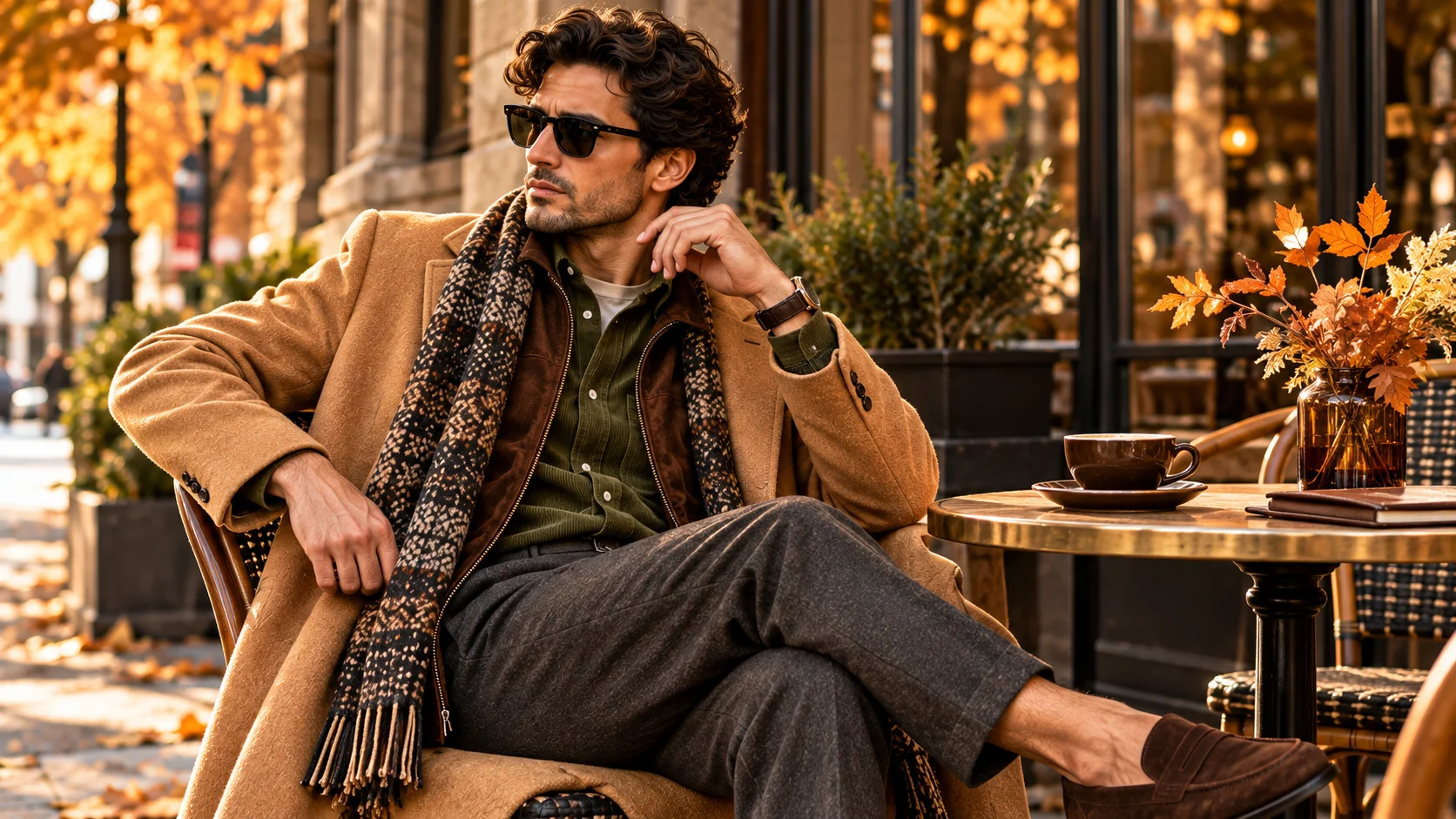
This fall texture styling for men guide shows how to combine wool, suede, corduroy and knitwear without making an outfit feel overloaded. The key is not to wear every textured piece together. Choose one clear focal texture, add one supporting surface, then use colour and silhouette to keep everything connected.
Table of Contents
Understand Where the Texture Should Lead
The strongest looks begin with a clear visual hierarchy. A structured camel layer creates the main shape, darker brown or olive pieces add depth, while charcoal trousers and a patterned scarf give the eye quieter areas to rest.
At the centre of fall texture styling for men is a simple hierarchy: start with the largest textured element. A wool coat or structured outer layer can establish the outfit. Suede can then introduce contrast through a jacket or footwear, while corduroy works well as a smaller middle layer. Knitwear can bridge the pieces without becoming another dominant focal point.
A useful rule is one hero texture, one supporting texture and quiet basics around them. A camel outer layer with a brown suede jacket and plain charcoal trousers keeps the look controlled.
For a wider seasonal wardrobe, Nimon Group’s Men’s Fall Capsule Wardrobe guide explores how coordinated pieces can create multiple combinations.
Control How Much Texture You Wear
For fall texture styling for men, texture becomes harder to manage when every item is equally noticeable. The easiest fix is to control both quantity and visual weight.
If the outer layer has a strong surface, keep the shirt or knit underneath relatively simple. If the scarf carries a prominent pattern, avoid introducing another competing pattern elsewhere. Likewise, textured trousers work best with a quieter top layer.
Colour helps create order. Camel, brown, olive, charcoal and cream sit comfortably together, so the surfaces can provide variation without making the outfit feel disconnected.
Think of texture as a volume control. Wool can establish the seasonal mood; suede can add depth; corduroy can introduce visible ribbing; knitwear can soften the transition.
For smart-casual dressing, try a camel or brown outer layer, a plain dark knit, tailored-looking trousers and simple loafers. For the weekend, swap the structured layer for a suede jacket and keep the rest of the palette restrained.
Adapt the Same Textures for Different Days
The real value of fall texture styling for men is flexibility. Keep the colour family similar, then change one or two pieces to shift the level of formality.
For an office-friendly combination, let the structured layer lead: a camel coat or blazer-style piece over a dark knit, with charcoal trousers and understated loafers. The silhouette stays clean while the different surfaces stop the outfit from looking flat.
For the weekend, reduce structure. A brown suede jacket over an olive corduroy shirt with relaxed trousers gives the same autumn palette a more casual direction. A patterned scarf can be added when the rest of the outfit is quiet.
For a coffee date or smart-casual evening, combine a dark knit with tailored-looking trousers, brown loafers and one warmer-toned layer. Texture and proportion can suggest the season naturally.
Nimon Group’s Men’s Navy Blazer Fall Styling guide shows a similar principle: one structured layer can move between different combinations when the surrounding pieces change.
Fall Texture Styling for Men Colour and Layers
Once the textures work together, fall texture styling for men becomes easier when colour does the quiet organising.
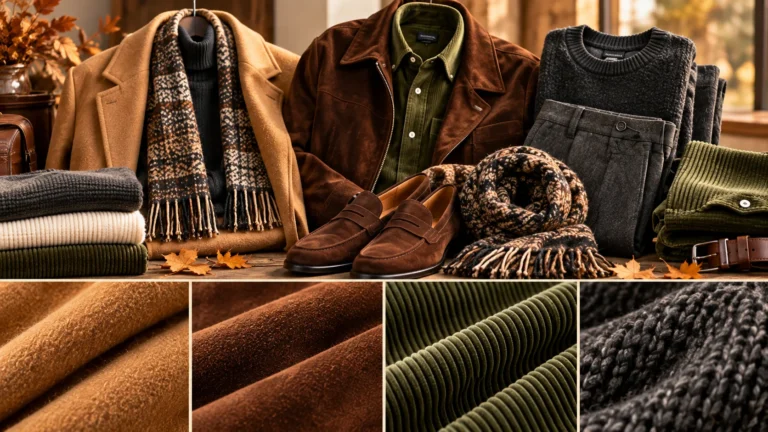
A reliable starting point is a three-part palette: one warm neutral such as camel or chocolate, one earthy shade such as olive, and one grounding neutral such as charcoal, grey or cream. You can then repeat one colour in two places to create a visual connection.
Brown loafers can echo a brown jacket without requiring matching accessories. Olive can appear in a shirt while the rest stays neutral.
Wool can also be a practical seasonal choice. The Woolmark Company explains that wool fibres naturally absorb moisture vapour and help manage temperature, although an individual garment’s performance depends on its construction and blend. The Woolmark Company’s wool fibre guide
For warmer autumn days, reduce the number of layers rather than abandoning texture altogether. A single textured shirt with plain trousers and loafers can carry the seasonal effect without creating a heavy outfit.
A simple formula makes texture easier to repeat: textured anchor + supporting texture + quiet base + one colour connection. Try a camel outer layer with a dark knit, charcoal trousers and brown loafers for a polished everyday direction, or a brown suede jacket with an olive corduroy shirt and neutral trousers for a relaxed option.
The exact pieces do not need to match the supplied visuals. What matters is the sequence: establish the dominant texture, add one supporting surface, control the palette and keep the remaining pieces relatively quiet. Adjust layers for the weather while keeping that visual hierarchy intact.
The simplest test is this: if the eye does not know where to look first, remove one competing texture, pattern or accessory.
The easiest way to make fall texture styling for men work is to control the hierarchy rather than maximise the number of textured pieces. Choose one anchor, support it with one complementary surface and let colour keep the outfit connected. From there, change the layer or footwear to suit the day.
Related Blogs
- Men’s Autumn City Break Wardrobe Guide
- Effortless Business Casual Fall Wardrobe Essential Guide
- Transitional Footwear Ideas for Effortlessly Stylish Warm Autumn Days
FAQs
What is the easiest way to start fall texture styling for men?
Start with one noticeable texture, such as a wool outer layer, then add one quieter textured piece such as knitwear or corduroy. Keep trousers, shoes and accessories relatively simple. This gives the outfit contrast without making every item compete for attention.
Can wool, suede and corduroy be worn together?
Yes, but restraint helps. Use one as the main visual texture and let the others play supporting roles. For example, a textured outer layer can lead while suede appears in a jacket or shoe and corduroy is limited to a shirt or smaller layer.
What colours work well with autumn textures?
Camel, chocolate brown, olive, charcoal, cream, grey and other muted neutrals are easy starting points. You do not need to use all of them together. Choose two or three connected colours, then let texture create the visual variation.
How can I make a textured outfit look suitable for work?
Keep the silhouette clean and limit the number of strong textures. A structured outer layer, plain knit or shirt, tailored-looking trousers and understated footwear can create a polished direction. Always adjust the combination to your workplace’s actual dress code.
How do I avoid looking over-layered in autumn?
Use the temperature as your first filter. If the day is mild, choose one textured layer instead of stacking several. If it is colder, add warmth gradually while keeping one area visually dominant. Removing one pattern or texture is often enough to restore balance.