
This article may contain affiliate links. We may earn a commission at no extra cost to you.
A printed lehenga can make a festive outfit feel colourful, expressive and beautifully coordinated, but styling it can be surprisingly tricky. The challenge is not finding more accessories; it is choosing the right supporting pieces without competing with the print.
The easiest approach to ready-to-wear lehenga styling is to identify the outfit’s strongest visual feature first, control how many other elements demand attention, and then adapt the look to the occasion. Whether you are considering a printed lehenga set or styling one already in your wardrobe, a few deliberate choices can make the entire outfit feel more polished.
Table of Contents
1. Read the Print Before Choosing Accessories
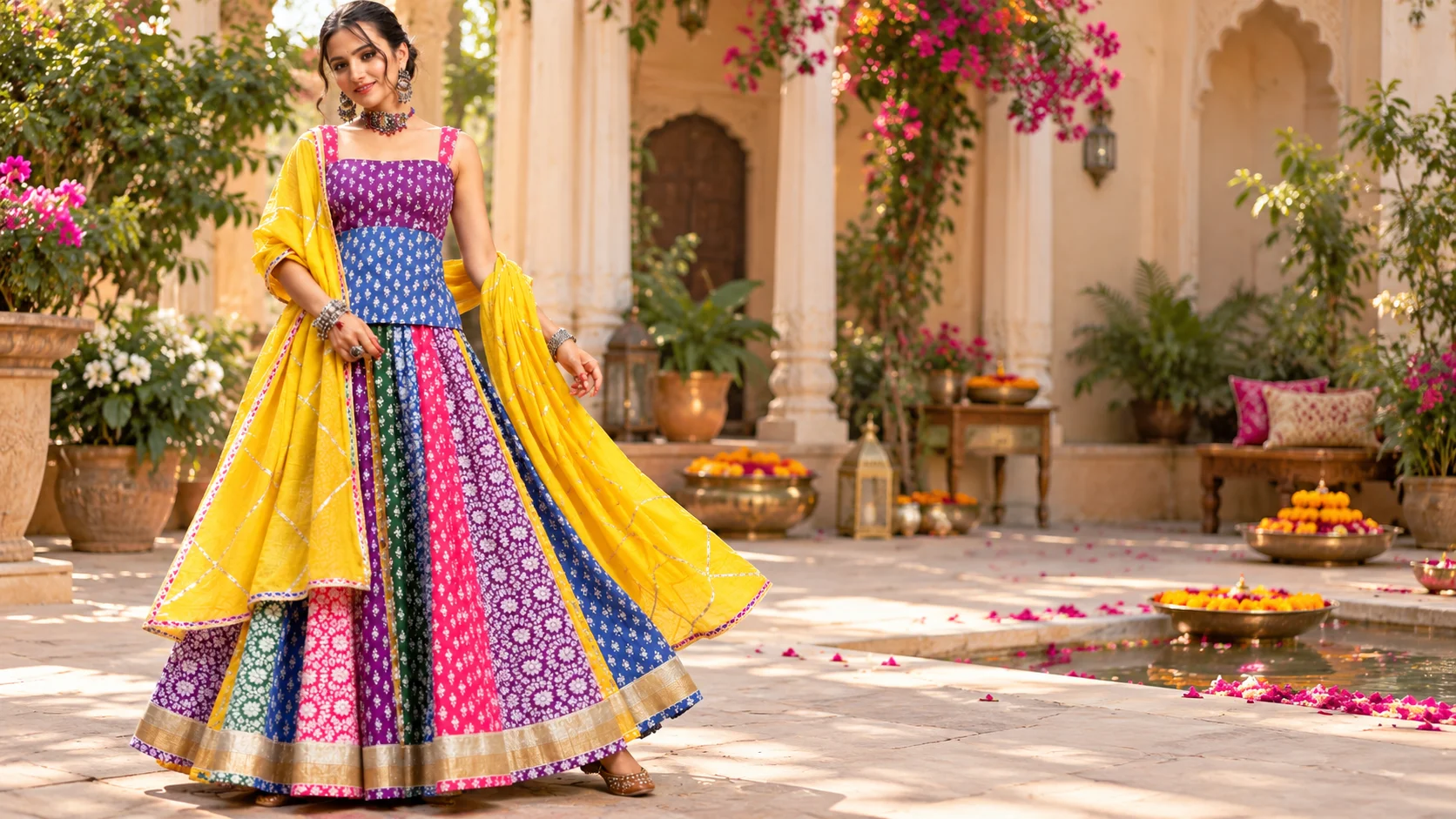
The first step in ready-to-wear lehenga styling is to understand the visual hierarchy of the outfit. A printed blouse, a patterned skirt and a contrasting dupatta can each attract attention. When all three contain noticeable details, adding several more statement accessories can make the overall look feel crowded.
Start by identifying the strongest feature. It might be the skirt’s print, the blouse neckline, a contrasting border or the dupatta’s colour. Let that element lead, then use the remaining pieces to support it.
For example, if your lehenga has an intricate all-over print, a relatively simple blouse neckline and understated footwear can create balance. If the dupatta is the most colourful part, drape it neatly so that its border remains visible instead of adding multiple decorative elements around the shoulders.
Think of the outfit as a visual hierarchy:
- Main feature: the printed lehenga or its most distinctive detail.
- Supporting feature: the dupatta, blouse or one jewellery piece.
- Finishing details: footwear, handbag and smaller accessories.
This approach is particularly useful with printed block-print styles. Block printing is a textile-printing technique involving the application of designs using blocks; the Government of India’s Development Commissioner (Handicrafts) provides an overview of the craft in its Hand Block Printing guide.
If you are considering the Anayna Printed Block Print Ready to Wear Lehenga & Blouse With Dupatta, begin by assessing the actual colourway and details shown on the current product listing rather than assuming every printed lehenga will require the same styling formula.
Explore and Shop2. Balance Jewellery, Dupatta and Footwear
Jewellery should complement the neckline and print rather than compete with them. If your blouse already has a square neckline and a noticeable pattern, earrings may provide enough emphasis around the face. A statement necklace can also work, but consider reducing other jewellery so that the neckline remains visually clear.
With a simpler neckline, you have more freedom to experiment with a necklace. The important decision is where you want the viewer’s attention to settle. Large earrings, an elaborate necklace, stacked bangles and a heavily decorated handbag do not all need to be focal points in one outfit.
For practical inspiration on coordinating traditional jewellery with festive clothing, explore the Navratri Jewellery Guide.
The dupatta deserves the same attention. A neat shoulder drape creates a defined line, while a more flowing drape introduces movement. If your outfit already has several contrasting colours, avoid arranging the dupatta in a way that hides its border or creates unnecessary bulk around the blouse.
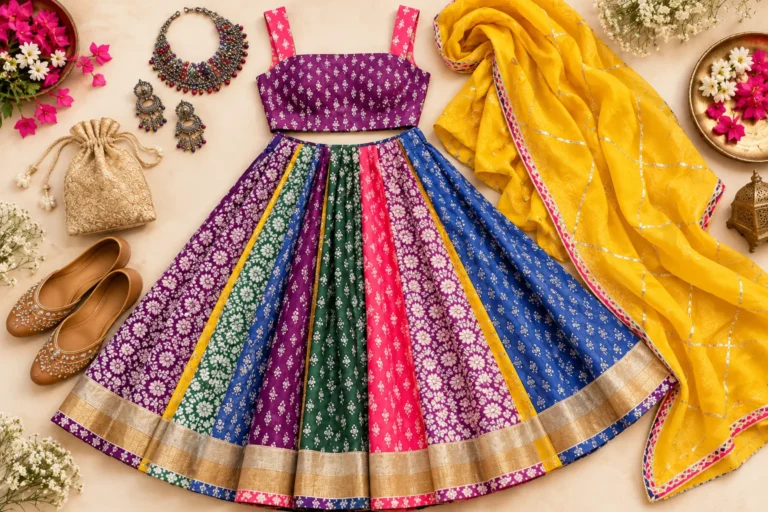
Footwear should follow the occasion and the outfit’s overall formality. Traditional juttis or understated ethnic flats can suit daytime celebrations, while dressier sandals or ethnic heels can work for more formal events. Check the lehenga’s length with your chosen footwear so that the hem falls appropriately when you stand and walk.
A useful rule is to select one statement accessory, one supporting accessory and quieter finishing details. This preserves the festive character without making every component compete for attention.
3. Adapt Your Lehenga Styling to the Occasion
One printed lehenga can create different impressions when you change its supporting pieces. Rather than rebuilding the outfit for every event, adjust the jewellery, dupatta drape and footwear to suit the setting.
For Navratri and lively festive gatherings
Let the colour and movement of the lehenga remain prominent. A secure, practical dupatta drape, jewellery that suits the neckline and footwear appropriate for the venue can create a coordinated look. If you expect to dance or move frequently, prioritise a drape and shoes that allow you to move comfortably.
For Diwali celebrations and family gatherings
A more controlled styling approach can feel elegant without losing the festive mood. Choose a defined dupatta drape, a coordinated pair of earrings and a handbag that does not introduce another competing pattern. If the lehenga is already colourful, repeat one of its existing shades in a smaller accessory rather than trying to match every colour.
For wedding ceremonies and receptions
Consider the event’s dress code, venue and cultural setting. More refined jewellery and dressier footwear may suit a formal ceremony, while a smaller family celebration might call for a more restrained combination. The aim is to look occasion-appropriate without allowing accessories to overpower the garment.
If you are planning several celebrations, the Festive Outfit Planning Guide offers additional ideas for making use of pieces you already own.
The best choice is the one that matches the event and feels practical for the time you will spend wearing it. A beautiful outfit should work in the setting, not just in a photograph.
4. Check the Set Before You Order
A ready-to-wear lehenga set can simplify outfit planning, but the name alone does not tell you everything about what you will receive. Before ordering, check the current listing for the included pieces, colour, fabric composition, size information and care instructions.
Pay particular attention to whether the blouse is ready to wear or requires additional tailoring, and whether the dupatta shown is included. Product photographs can be styled for presentation, so do not assume that jewellery, footwear or other accessories displayed alongside a garment form part of the set.
Sizing deserves a separate check. Use the retailer’s current measurements and size chart rather than relying only on the model’s appearance or the size she is wearing. Consider the blouse measurements, skirt length and the footwear you expect to wear with the outfit. If any important detail is unclear, seek clarification from the retailer before purchasing.
Colour also matters when planning accessories. Screens and lighting can affect how shades appear, so use the current product information and available photographs together. Once you know the actual colourway, you can decide whether to repeat a shade from the print or introduce a quieter neutral.
For a comparison of another construction type, see the Semi-Stitched Lehenga Guide. Understanding the difference between ready-to-wear and semi-stitched options can help you decide how much preparation your outfit may require.
Related Blogs
- Red Lehenga Styling Guide for Elegant Festive and Wedding Looks — Explore colour-specific styling decisions.
- Green Lehenga Styling Guide for Weddings and Festive Occasions — Discover another colour-focused outfit approach.
- Indian Festive Outfit Ideas for a Cream and Red Wedding Guest Look — Explore a contrasting festive colour combination.
Frequently Asked Questions
1. How do you style a ready-to-wear lehenga?
Start with the print and neckline, then choose a complementary dupatta drape, suitable jewellery and occasion-appropriate footwear. Keep one element as the main focus and use simpler accessories around it.
2. What jewellery works with a printed lehenga?
Earrings, necklaces and bangles can all work, depending on the neckline and the amount of detail in the outfit. If the print is visually busy, choose one statement piece and keep the other jewellery understated.
3. Which footwear goes with a printed lehenga?
Traditional juttis, ethnic flats, dressy sandals and ethnic heels are possible options. Choose according to the event, comfort needs and skirt length, and check the hem with the footwear before the occasion.
4. Can a colourful lehenga work for a wedding guest outfit?
Yes, provided the styling suits the wedding’s dress code and cultural setting. A polished drape, controlled jewellery and occasion-appropriate footwear can make a colourful lehenga feel refined.
5. How can I make a printed lehenga look less overwhelming?
Reduce competing focal points rather than removing the colour. Let the lehenga lead, choose one main jewellery feature, simplify the footwear and use the dupatta to add movement without overcrowding the outfit.
A well-styled lehenga does not need more decoration at every step. Identify the print’s strongest feature, choose supporting accessories with intention and adapt the details to your occasion. Before ordering a new set, check the exact product information so that your styling plan matches the garment you will actually receive.