
This article may contain affiliate links. We may earn a commission at no extra cost to you.
Some jewellery is designed to disappear quietly into an outfit. A bold cuff does almost the opposite. Its wider silhouette, clustered detailing and prominent wrist placement can turn a relatively simple look into something far more distinctive.
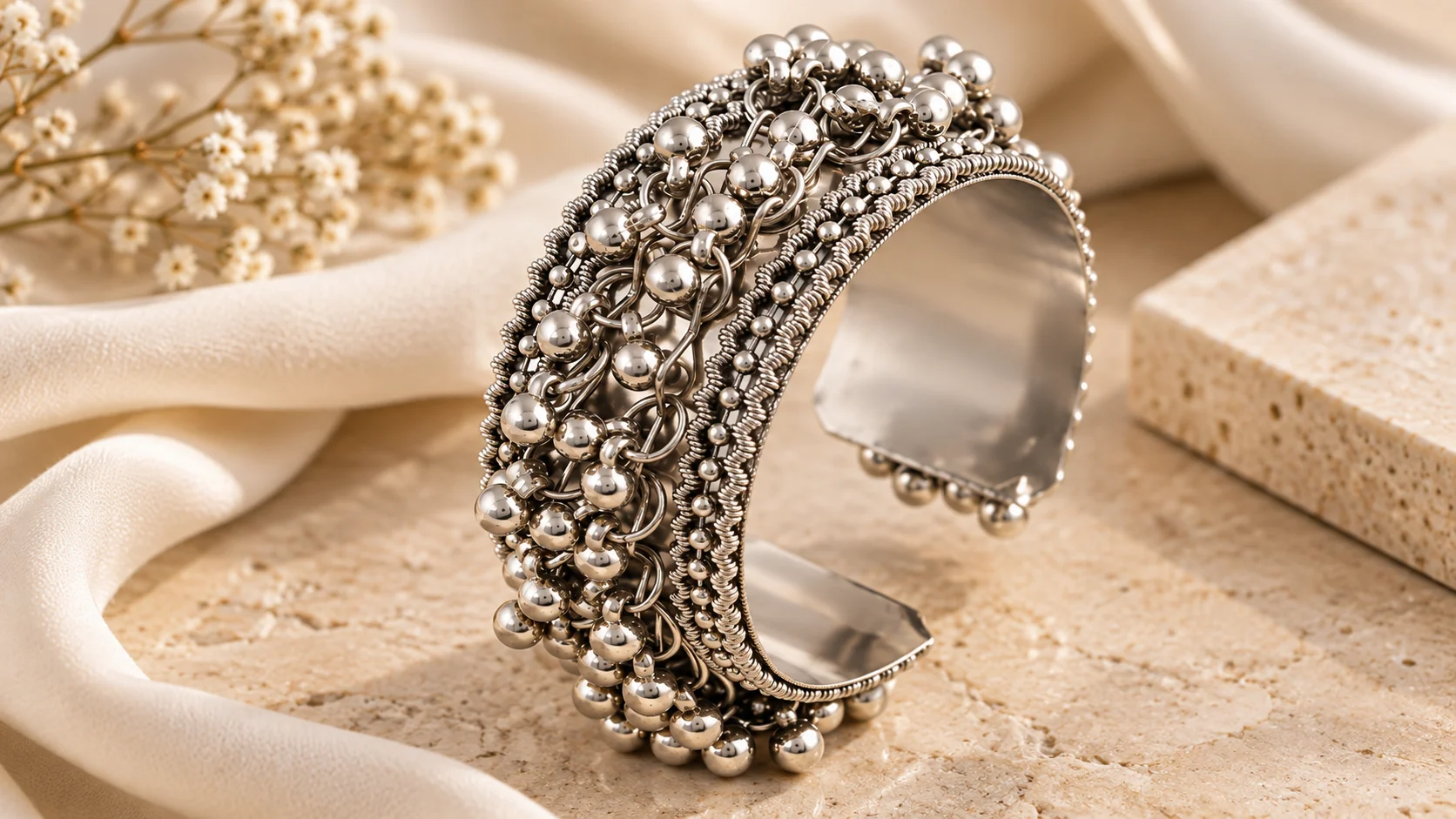
The cuff bracelet featured here has a silver-tone appearance with an ornate combination of rounded bead-like details, linked elements and textured edging. The retailer identifies the product as a VOJ silver-plated, ghungroo-studded oxidised cuff bracelet for women; however, styling recommendations below are editorial guidance rather than claims about its construction or performance. The supplied product page currently requires JavaScript for full page content to display.
The easiest way to style a statement cuff bracelet is to give it visual space. Keep the area around the wrist relatively uncluttered, repeat its cool metallic look elsewhere only when it helps the outfit, and allow the bracelet to provide the main jewellery focal point.
Table of Contents
Why a Statement Cuff Creates So Much Impact
A cuff occupies more visual space than a fine chain bracelet. Add prominent rounded details, layered-looking elements and a highly textured surface, and the wrist immediately becomes an important part of the outfit.
That makes this type of bracelet particularly useful when your clothing already provides a clean backdrop.
Think of a simple black outfit, an understated solid-colour dress, a fluid neutral ensemble or an occasion look where you want the jewellery to contribute personality without relying on several separate pieces.
The important styling principle is contrast. An intricate accessory is easier to appreciate when everything immediately around it is not equally busy.
View Product DetailHow to Style a Statement Cuff Bracelet
Start with a clean sleeve line
If you want the cuff to be noticed, avoid hiding most of it beneath a long, loose sleeve. Sleeveless pieces, short sleeves and sleeves that naturally finish away from the wrist can all provide more breathing room.
With longer sleeves, consider whether the cuff remains clearly visible rather than competing with fabric at exactly the same point.
Let one wrist be the focal point
There is no requirement to create symmetry.
Wearing the statement cuff on one wrist while keeping the other comparatively simple can make the overall look feel deliberate. It also prevents a substantial bracelet from becoming lost among too many similarly prominent accessories.
Use clothing as the backdrop
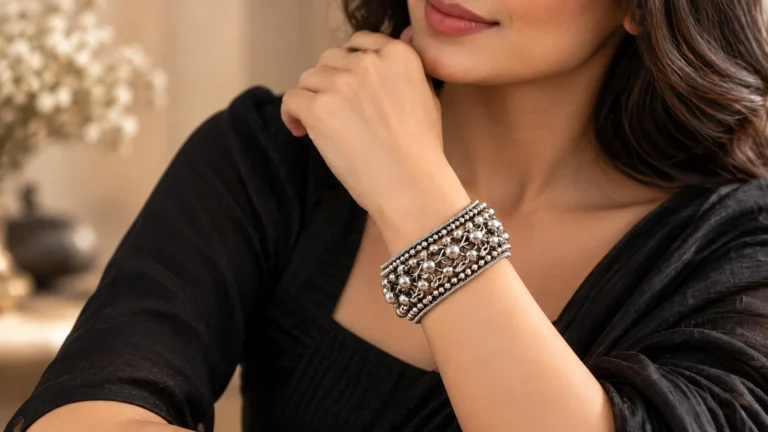
Black creates a particularly striking visual contrast with a cool metallic-looking bracelet. Cream, ivory, charcoal, deep blue and other relatively restrained colours can also give detailed jewellery room to stand out.
This does not mean the rest of your outfit has to be minimal. Instead, decide where you want the eye to go.
If the bracelet is the hero, give it that role.
What to Wear With an Ornate Silver-Tone Cuff
A statement cuff can move in more than one styling direction, which is part of its appeal.
For a contemporary approach, try it with a monochrome or otherwise restrained outfit. Clean clothing lines allow the bracelet’s ornate surface to provide contrast.
For a more dressed-up direction, it can accompany an occasion outfit where decorative jewellery already feels appropriate. Rather than automatically adding several large pieces, use the cuff to establish the jewellery mood first and then decide whether anything else is genuinely needed.
You can also experiment with a fusion approach. A modern solid-colour outfit paired with ornate jewellery can create an interesting balance between clean clothing and decorative accessories.
The objective is not to follow a rigid formula. It is to make the different elements of the outfit feel intentional.
How Much Jewellery Should You Add?
This is where statement jewellery can easily become overworked.
Before adding earrings, a necklace, rings and additional bracelets, look at the cuff by itself. Its wide profile and abundant detailing may already provide enough visual interest around the hand and wrist.
If you want to add other jewellery, consider changing the scale rather than repeating the same intensity everywhere. Smaller earrings or a restrained ring, for example, can support the cuff without necessarily challenging it for attention.
There are exceptions. A deliberately maximalist or festive look can support more jewellery, but even then it helps to establish a hierarchy. Decide which piece should attract attention first and let the others support it.
That distinction can make the difference between layered and simply crowded.
When This Bracelet Style Makes Sense
A bold cuff is worth considering when you want jewellery to do more of the styling work.
It can be especially interesting for dinners, celebrations, festive dressing and other occasions where a more noticeable accessory suits the mood. It can also work beyond occasion dressing when paired with a simple outfit and treated as the central accessory.
This versatility comes from styling rather than from assuming that the bracelet belongs to only one type of wardrobe.
One day, the visual direction could be a dark monochrome outfit with the cuff taking centre stage. Another could pair decorative jewellery with a more traditional or fusion-inspired ensemble.
You do not need to recreate an entire predetermined look. The cuff can simply become the starting point.
Before You Choose a Statement Cuff
Appearance is only one part of choosing jewellery.
A cuff has to work for your wrist and for the way you intend to wear it. Before purchasing, check the retailer’s current product information for measurements or sizing guidance, closure or adjustment details, care instructions and any other specifications that matter to you.
This is particularly important with a broad bracelet because photographs alone cannot reliably establish how a particular piece will fit an individual wrist.
Also look closely at your existing wardrobe. If you regularly wear simple clothing and enjoy noticeable accessories, a decorative cuff could have plenty of styling potential. If you prefer delicate jewellery almost exclusively, consider whether its stronger visual presence fits your usual approach.
Check Current AvailabilityThe Styling Principle to Remember
A statement cuff does not need a complicated outfit to make an impression.
Give the bracelet space, choose clothing that supports rather than fights its detailing, and add other jewellery selectively. The result can feel polished while still allowing the accessory’s character to remain obvious.
Most importantly, style it around the clothes you genuinely wear. A statement cuff bracelet becomes far more useful when it complements your wardrobe rather than requiring an entirely new one.
FAQs
What is the easiest way to style a statement cuff bracelet?
Give the bracelet a clear wrist area and make it one of the main accessories. Simple clothing and restrained additional jewellery can help an ornate cuff remain visually prominent.
Can I wear a cuff bracelet with a black outfit?
Yes. Black can provide a strong, uncomplicated backdrop for silver-tone or other cool metallic-looking jewellery, especially when the bracelet contains considerable visible detailing.
Should I wear other bracelets with an ornate cuff?
You can, but you do not have to. Try the cuff alone first. If you prefer layering, add pieces carefully so the wrist does not become unnecessarily crowded.
Can statement cuffs work with traditional and Western outfits?
They can be styled in different directions depending on their design. An ornate cuff may complement traditional or fusion dressing, while restrained clothing can give the same piece a more contemporary appearance.
What should I check before buying a cuff bracelet online?
Check the retailer’s current sizing or measurement information, fit or adjustment details, care guidance and other relevant specifications. Product photographs alone cannot confirm how a cuff will fit your individual wrist.