

This article may contain affiliate links. We may earn a commission at no extra cost to you.
Shopping for clothes online can be wonderfully convenient, but a beautiful product photo does not always tell you whether a piece will work for your body, wardrobe or everyday life. The smartest approach is to slow the decision down just enough to check the details that matter.
To shop for clothes online more effectively, start with your own measurements, compare them with the retailer’s current size guide, read the product description carefully, inspect all available images and check the returns information before ordering. Then ask one simple question: Can I realistically see myself wearing this with clothes I already own?
That small shift—from browsing for what looks attractive to evaluating what is genuinely useful—can make online fashion shopping much more purposeful.
Table of Contents
Know Your Measurements Before You Browse
Size labels can be an unreliable starting point because sizing may vary between brands, garment types and markets. Instead of assuming that the size you normally buy will always be the best option, keep a few current body measurements handy.
Depending on the garment, useful measurements can include your bust or chest, waist, hips and inseam. For certain pieces, comparing the measurements of a similar garment you already own can also provide helpful context.
Before ordering, use the specific size guide provided for that item or retailer rather than relying solely on a familiar letter or number.
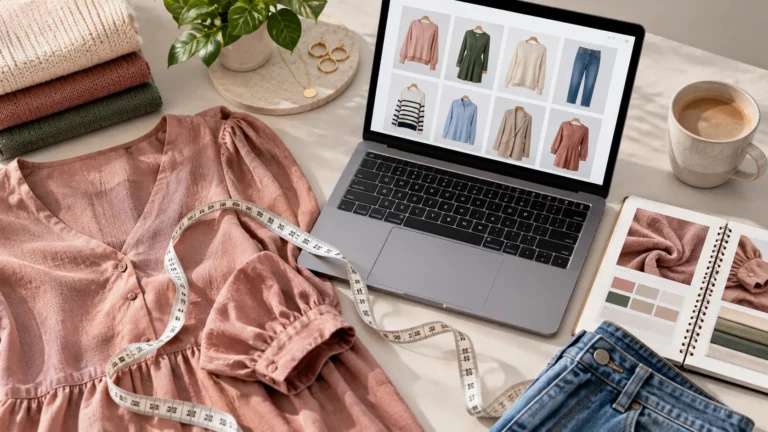
A measuring tape kept near your wardrobe may seem like a tiny detail, but it can turn an uncertain purchase into a more considered decision.
Check whether the chart uses body or garment measurements
This distinction matters. A size chart may describe the body measurements a garment is designed to fit, while another may list measurements of the garment itself.
Look for the retailer’s explanation before comparing numbers. If the information is unclear and fit is important to the purchase, seeking clarification from the retailer may be more useful than guessing.
Read the Product Page Beyond the Photos
Online fashion photography is designed to help you visualise an item, but photographs alone rarely provide everything you need to make a decision.
Read the complete product information and look for details such as:
- fabric or material composition;
- garment measurements where supplied;
- fit description;
- care instructions;
- construction or design details;
- available colour information;
- size guidance; and
- returns or exchange information.
Product photographs can still be useful. Look at front, back and side views where available, and zoom into details such as necklines, hems, fastenings and surface texture.
However, avoid treating appearance on a screen as proof of qualities that cannot be established visually. Colour can also appear somewhat different depending on lighting, photography and your display.
Think About Fit, Not Just the Size Label
One of the most useful online-shopping habits is to separate size from fit.
Two garments carrying the same size label can create very different silhouettes. A fitted shirt, relaxed jumper and oversized jacket are not intended to sit on the body in the same way.
When evaluating an item, consider what you actually want it to do.
Do you want a close silhouette or extra room? Will you layer something underneath it? Where would you prefer the hem to finish? Is the garment intended to sit at the waist or lower on the body?
These questions can make the information on a product page more meaningful.
Reviews may provide additional perspective when they are available, especially when several shoppers mention a similar fit characteristic. Treat individual reviews as personal experiences rather than universal facts; bodies, expectations and preferences differ.
Shop for Your Existing Wardrobe
An effective online purchase should ideally solve a wardrobe need rather than create another styling problem.
Before adding something to your basket, mentally pair it with pieces you already own.
A simple three-outfit check can help: can you imagine at least three realistic outfits using the new item and your existing wardrobe?
For example, a new top might work with your favourite jeans, tailored trousers and a skirt you already wear. A cardigan could complement a dress as well as casual separates. The exact combinations will depend on your personal style, but the principle remains useful.
This approach can also reveal gaps. If a piece requires new shoes, a different bag and several additional layers before it feels wearable, consider whether it is really the purchase you need right now.
Think in outfits rather than isolated products
It is easy to fall for an attractive garment when browsing. Thinking in complete outfits adds practical context.
Consider colour compatibility, proportion, layering possibilities, footwear and the occasions for which you would actually wear the piece.
That does not mean every purchase has to be neutral or purely practical. A standout piece can absolutely earn its place in your wardrobe—the goal is simply to know why you are buying it.
Compare Before You Commit
Online shopping makes comparison easy, but endless browsing can make decisions harder.
Instead of opening dozens of similar products, shortlist a small number of serious candidates and compare the things that genuinely affect your choice.
You might compare:
Fit: Which option best matches the silhouette you want?
Material information: Which product gives you enough useful information to judge whether it suits your needs?
Versatility: Which one works most naturally with your wardrobe?
Care: Are the care requirements realistic for you?
Returns: What happens if the size or fit is not right?
This turns comparison into a decision-making exercise rather than another round of scrolling.
If two pieces seem equally attractive, the one with clearer sizing information and greater wardrobe compatibility may be the easier choice.
Build a Smarter Online Shopping Routine
The best way to shop for clothes online more effectively is to create a repeatable process.
Before checking out, run through a short mental checklist:
- Need: What wardrobe need does this purchase solve?
- Measurements: Have I checked my current measurements against the relevant size information?
- Details: Have I read the complete product description?
- Fit: Do I understand the intended silhouette?
- Wardrobe: Can I realistically style it with pieces I own?
- Comparison: Have I compared it with my strongest alternative?
- Returns: Have I checked the retailer’s current returns conditions?
The aim is not to make shopping complicated. It is to put the most useful checks between “I like this” and “I’ll buy this.”
Save useful information for future purchases
If you shop online regularly, keeping a simple note of your current measurements can save time.
You can also note which garment shapes and proportions you tend to enjoy wearing. Over time, this creates a practical personal reference that can be more useful than relying on a generic size label alone.
Your measurements can change, so update them periodically rather than treating old numbers as permanent.
Make Every Purchase Earn Its Place
Successful online clothes shopping is less about finding the largest number of options and more about filtering those options intelligently.
Start with measurements, investigate the product information, evaluate fit, picture the garment within your existing wardrobe and compare only the strongest candidates. Just as importantly, check the retailer’s current policies before completing your purchase.
A few extra minutes before checkout can help you make a more deliberate choice—and build a wardrobe around clothes that make sense for how you actually dress.
FAQs
How can I shop for clothes online more effectively?
Keep current measurements, use the retailer’s relevant size guide, read the full product details, assess the intended fit, check returns information and consider how the garment will work with your existing wardrobe before ordering.
Should I always order my usual clothing size online?
Not necessarily. Sizing can differ between brands and garments, so compare your current measurements with the relevant retailer or product size guide instead of relying only on your usual size label.
Are customer reviews useful when choosing clothing sizes?
They can provide additional context, particularly when several reviewers describe similar fit characteristics. However, fit experiences are personal, so reviews are best considered alongside official sizing and product information rather than used as a replacement for it.
What should I check before buying clothes online?
Check sizing information, measurements where available, material composition, fit description, care instructions, detailed product images and the retailer’s current returns conditions. Also consider whether the item works with clothes you already own.
How can I avoid buying clothes online that I rarely wear?
Before purchasing, identify the wardrobe need the item solves and imagine several realistic outfits using clothes you already own. If you struggle to see where, when or how you would wear it, reconsider the purchase.