
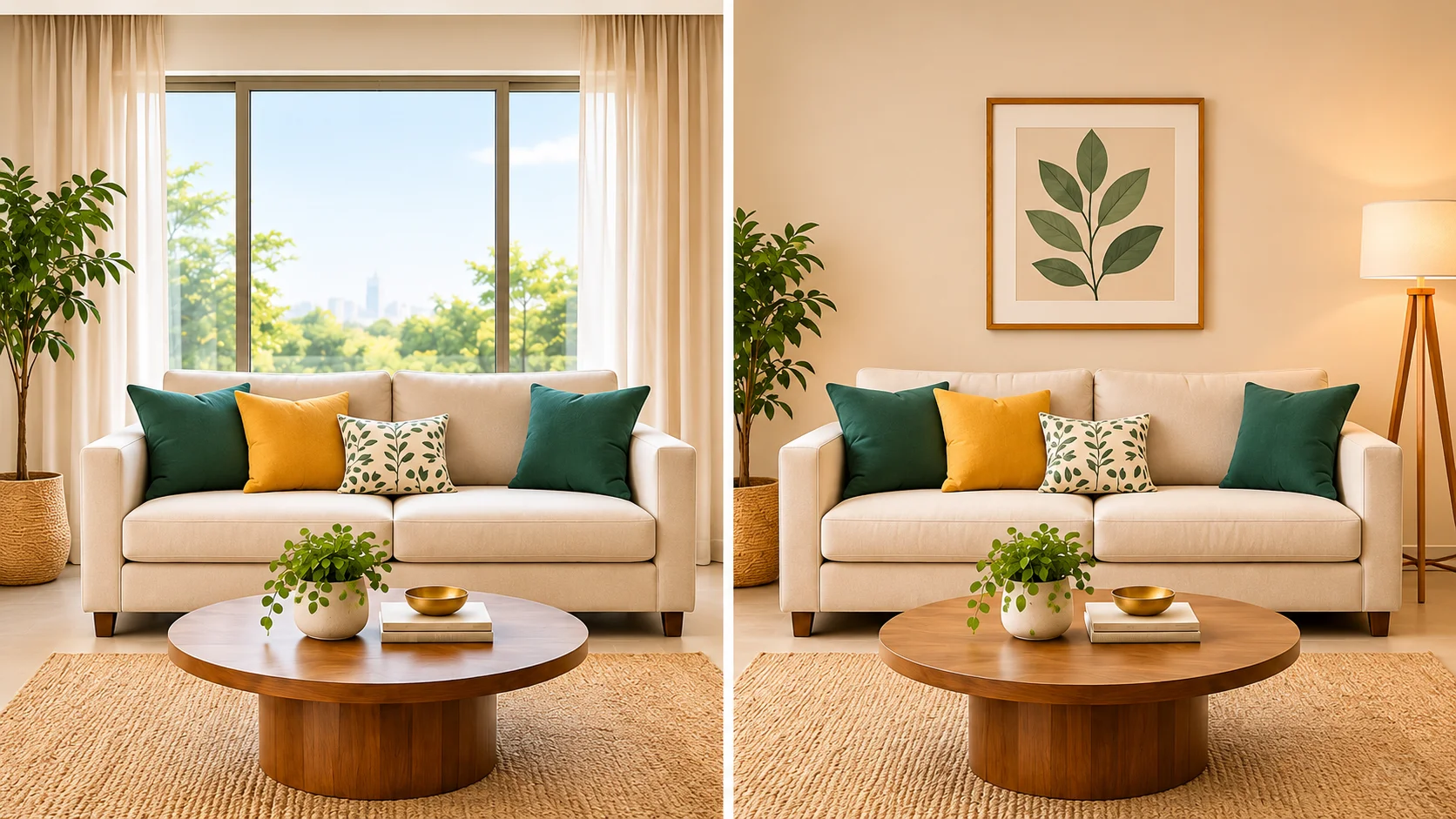
A sofa is often the visual and functional centre of a living room. But according to traditional Feng Shui principles, what sits behind your sofa can matter as much as what sits in front of it.
One common placement to reconsider is a sofa positioned with an open space, large window or major pathway directly behind it.
In traditional Feng Shui, a solid surface behind important seating is associated with a sense of support, stability and security. That is why placing the sofa against a substantial wall is commonly preferred when the room layout allows it.
Table of Contents
Why Is an Open Back Behind the Sofa Traditionally Discouraged?
A sofa floating in the middle of a room can look stylish and practical, especially in open-plan homes. However, traditional Feng Shui often favours having a solid backing behind the main seating area.
The idea is connected to the broader principle of creating a sense of support within a space.
A large open area directly behind the sofa may make the seating arrangement feel visually exposed. A solid wall, by contrast, can create a stronger and more grounded focal point.
This is a traditional design principle rather than a scientifically proven rule, and interpretations can vary between different Feng Shui schools.
The Simple Fix: Place the Sofa Against a Wall
When possible, position the main sofa so that its back is supported by a solid wall.
This can help the living room feel:
- More visually anchored
- Better organised
- Easier to arrange around a central focal point
- More aligned with the traditional Feng Shui idea of symbolic support
You do not need to push every piece of furniture tightly against a wall. The key consideration is the main seating position and whether the overall arrangement feels balanced and supported.
What If Your Sofa Cannot Go Against a Wall?
Many modern homes have open-plan layouts where placing the sofa directly against a wall is simply not practical.
In that situation, you can create a stronger visual boundary behind the sofa.
1. Use a Console Table
A console table placed behind a floating sofa can help define the seating zone.
Choose a design that suits the available space and ensure that walkways remain clear.
2. Create a Visual Backdrop
A decorative screen, room divider or carefully planned shelving unit may create a sense of separation between the sofa and the open area behind it.
Avoid blocking essential entrances or making the room feel cramped.
3. Define the Seating Area with a Rug
A suitably sized rug can visually anchor the sofa, chairs and coffee table into one cohesive arrangement.
This is especially useful in large open-plan living rooms where furniture might otherwise feel disconnected.
4. Maintain Clear Walking Space
Practical comfort should always come first.
Make sure there is enough room to move safely around the sofa and that doors, exits and major walkways remain unobstructed.
Window Behind the Sofa: Is It Always a Problem?
Not necessarily.
A window behind a sofa can provide beautiful natural light and may be the only practical layout option in some homes.
From a traditional Feng Shui perspective, the concern is generally about the feeling of having less substantial backing behind the main seating position.
If moving the sofa is not possible, you might consider practical design solutions such as:
- Using curtains or blinds when appropriate
- Choosing a sofa with a substantial back
- Creating visual structure around the seating area
- Adding a console or other suitable furniture behind the sofa, where space allows
The best solution should balance your home’s architecture, natural light, comfort and everyday needs.
A Better Living Room Layout Starts with Balance
Feng Shui does not have to mean completely redesigning your home.
Sometimes, a small adjustment can make a room feel more intentional and visually balanced. Before moving furniture, look at your living room as a whole:
- Where is the main seating area?
- What is behind the sofa?
- Are major pathways clear?
- Does the furniture arrangement create a comfortable conversation area?
- Does the room feel visually grounded?
These practical questions can help you create a more comfortable living space whether or not you follow Feng Shui traditions closely.
Final Thoughts
According to traditional Feng Shui principles, a sofa with a solid wall behind it is commonly associated with symbolic support and stability.
If your sofa currently has a large open space or window directly behind it, there is no need to panic or make expensive structural changes. A different furniture arrangement—or a thoughtful visual boundary—may be enough to create a more grounded and organised living room.
The most important goal is to create a space that is practical, safe and comfortable for everyday life.
Related Feng Shui Guides
You may also find these Nimon Group guides useful:
- Front Door Facing Back Door in Feng Shui
- Mirror Facing the Main Door in Feng Shui
- Feng Shui Desk Rule Guide
Frequently Asked Questions
Is it bad Feng Shui to have a sofa with open space behind it?
Traditional Feng Shui commonly prefers the main sofa to have a solid backing, such as a wall. An open space behind the sofa is traditionally considered less supportive, although interpretations vary and this should not be treated as a guaranteed cause of negative outcomes.
Should every sofa be placed against a wall?
No. Modern room layouts sometimes require floating furniture. If the main sofa cannot be placed against a wall, you can use practical design elements to define the seating area and create visual structure behind it.
Can I place a sofa in front of a window?
Yes, if it is the most practical arrangement for your room. Traditional Feng Shui may prefer more substantial backing behind the main seating area, but comfort, safety, natural light and the overall layout should also be considered.
What can I put behind a floating sofa?
Depending on available space, a console table, suitable shelving or another visual divider may help define the seating area. Always keep walking routes and exits clear.
Does placing a sofa against a wall guarantee better luck or stability?
No. Feng Shui is a traditional practice with varying interpretations. Furniture placement should not be presented as guaranteeing financial, health, relationship or other life outcomes.