
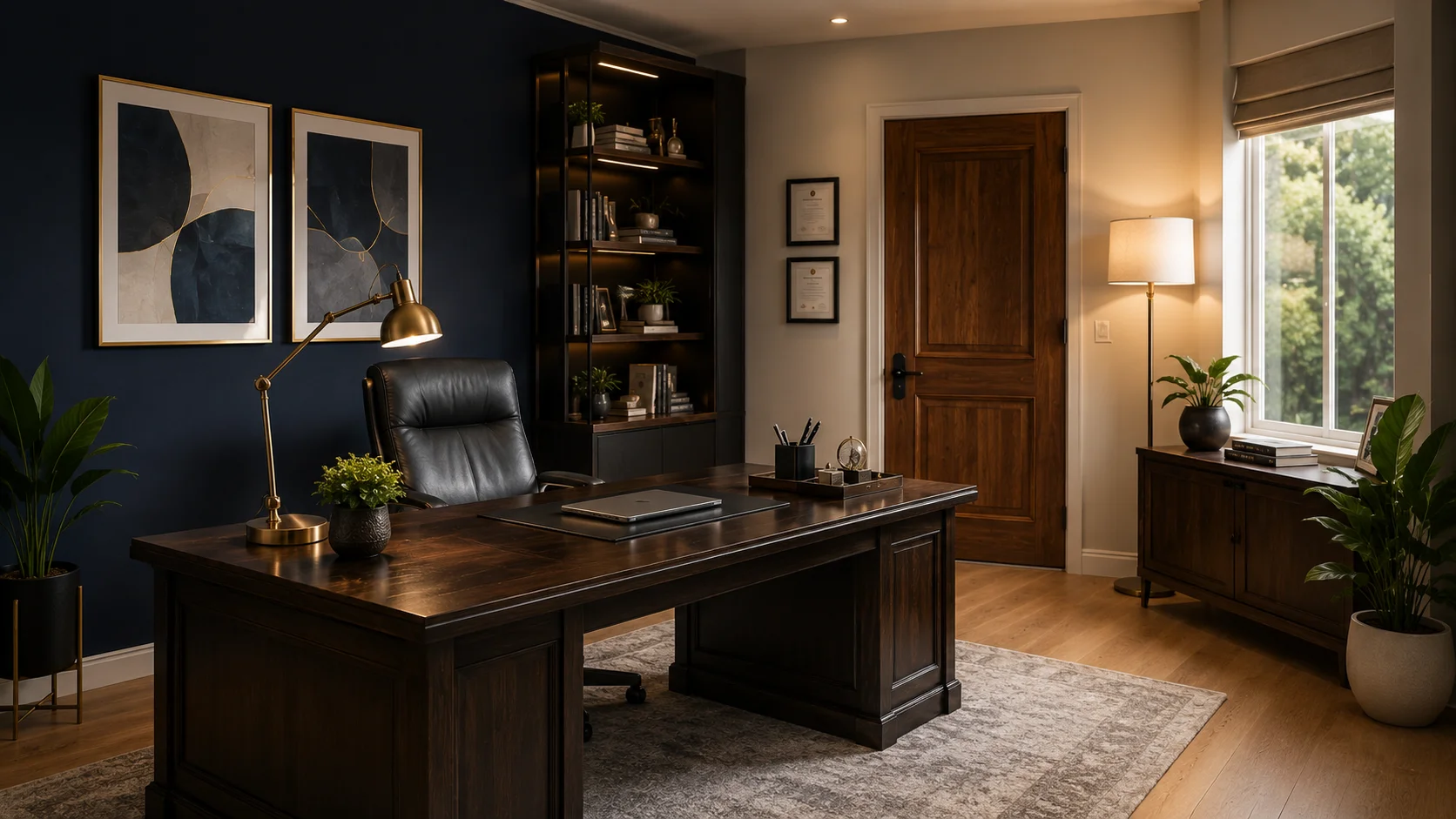
Placing your desk correctly is the single most effective change you can make to improve focus, reduce stress, and invite clarity into your workday. By following the foundational Feng Shui desk rule, you transform your office into an empowering environment that naturally supports productivity and professional flow.
Quick Answer: The core Feng Shui desk rule requires placing your desk in the Commanding Position. This means positioning your workspace so you can clearly see the room’s main entrance without sitting directly in line with the doorway, supported by a solid wall behind your chair.
Table of Contents
- What Is the Feng Shui Desk Rule?
- The Two Pillars of Desk Placement
- How to Set Up the Commanding Position
- Common Desk Placement Mistakes to Avoid
- Simple Feng Shui Remedies for Awkward Spaces
- Final Thoughts
What Is the Feng Shui Desk Rule?
In Feng Shui, your desk represents your career, wealth, and path in life. The central desk rule centers on establishing control and security over your surroundings—a concept traditional practitioners refer to as the Commanding Position.
When you work with a view of the entrance, your subconscious mind feels safe and relaxed. You are no longer startled by people walking in, nor do you experience the subtle psychological strain of turning your back to an unseen doorway. This sense of security translates into improved concentration, reduced mental fatigue, and a steady flow of productive energy throughout the day.
The Two Pillars of Desk Placement
To achieve optimal energy flow (Chi) in your home office or commercial workspace, your layout should unite two foundational principles:
+------------------------------------------------------------------+
|                    THE COMMANDING DESK FORMULA                                |
|                                                                                                                     |
|   SOLID SUPPORT (Solid Wall)  +  DOOR IN VIEW (Clear Sightline)  |
|   = Stability & Confidence               = Opportunity & Control               |
+------------------------------------------------------------------+
1. Solid Support Behind You
A solid wall directly behind your desk chair provides backing and security—symbolically offering protection against unexpected professional setbacks. Avoid placing your chair directly in front of a window or in the middle of a room without rear support.
2. Clear Line of Sight to the Door
You must be able to see anyone entering the room without turning your body entirely around. Seeing who and what approaches gives you symbolic control over incoming professional opportunities and challenges.
How to Set Up the Commanding Position
Achieving the commanding layout is straightforward when you keep geometry and sightlines in mind:
- Position Diagonally: Place your desk diagonally across from the main entrance door. This gives you the widest possible view of the room.
- Maintain Distance: Avoid placing your desk directly in front of the door’s pathway. Sitting directly in line with the door subjects you to harsh, rushing energy.
- Anchor with Decor: Pair a dark wood executive desk with a high-backed ergonomic chair. Anchor the area with a grounded wool rug and balance rich wall tones (such as deep navy or muted slate) with warm metallic desk lamps.
Common Desk Placement Mistakes to Avoid
Even well-designed offices often fall into common spatial traps that drain focus:
- Facing a Blank Wall: Staring directly at a solid wall restricts your perspective and can foster feelings of being trapped or blocked in your career.
- Back to the Door: Sitting with your back to the entrance triggers a subtle, ongoing stress response, making it difficult to enter deep focus.
- Desk Directly Under Overhead Beams: Heavy beams directly above your seating area create symbolic downward pressure, leading to headaches or burnout.
Simple Feng Shui Remedies for Awkward Spaces
If your room size or window arrangement prevents you from placing your desk in an ideal commanding layout, apply these easy design corrections:
- Add a Desk Mirror: If your desk must face a wall, place a decorative convex or rectangular mirror above your monitor so you can easily see behind you.
- Use a High-Backed Chair: If sitting away from a solid wall is unavoidable, choose a sturdy, high-backed executive chair to provide symbolic support.
- Introduce Tall Plants: Place healthy leafy plants (like a rubber plant or fiddle-leaf fig) between your desk and open pathways to soften harsh energy movement.
Final Thoughts
Designing an effective office environment isn’t about rigid principles; it is about creating a space where you feel calm, confident, and focused. Aligning your workspace with the classic Feng Shui desk rule instantly shifts the mood of your room, laying a strong foundation for daily accomplishments and long-term success.
Related Blog
Frequently Asked Questions
What is the basic Feng Shui desk rule for home offices?
The essential Feng Shui desk rule states that your desk should sit in the commanding position—facing the room’s entrance diagonally, supported by a solid wall behind your chair, and kept clear of direct door pathways.
Can I place my desk facing a window?
While facing a window provides natural light, it can cause distraction and drain focus over time. If you face a window, place a small plant or crystal on your sill to ground incoming energy.
What should I do if my back has to face the door?
If you cannot move your desk, place a small desktop or wall-mounted mirror in front of you. This reflects the entrance behind you and eliminates the surprise element.
Which directional placement is best for a desk?
Traditionally, facing North supports career growth, East fosters growth and health, and Southeast encourages wealth and financial abundance.
Should my desk touch the wall?
It is ideal to leave a few inches of space between your desk and the wall to allow energy to circulate freely, promoting flexibility and new creative ideas.