
This article may contain affiliate links. We may earn a commission at no extra cost to you.
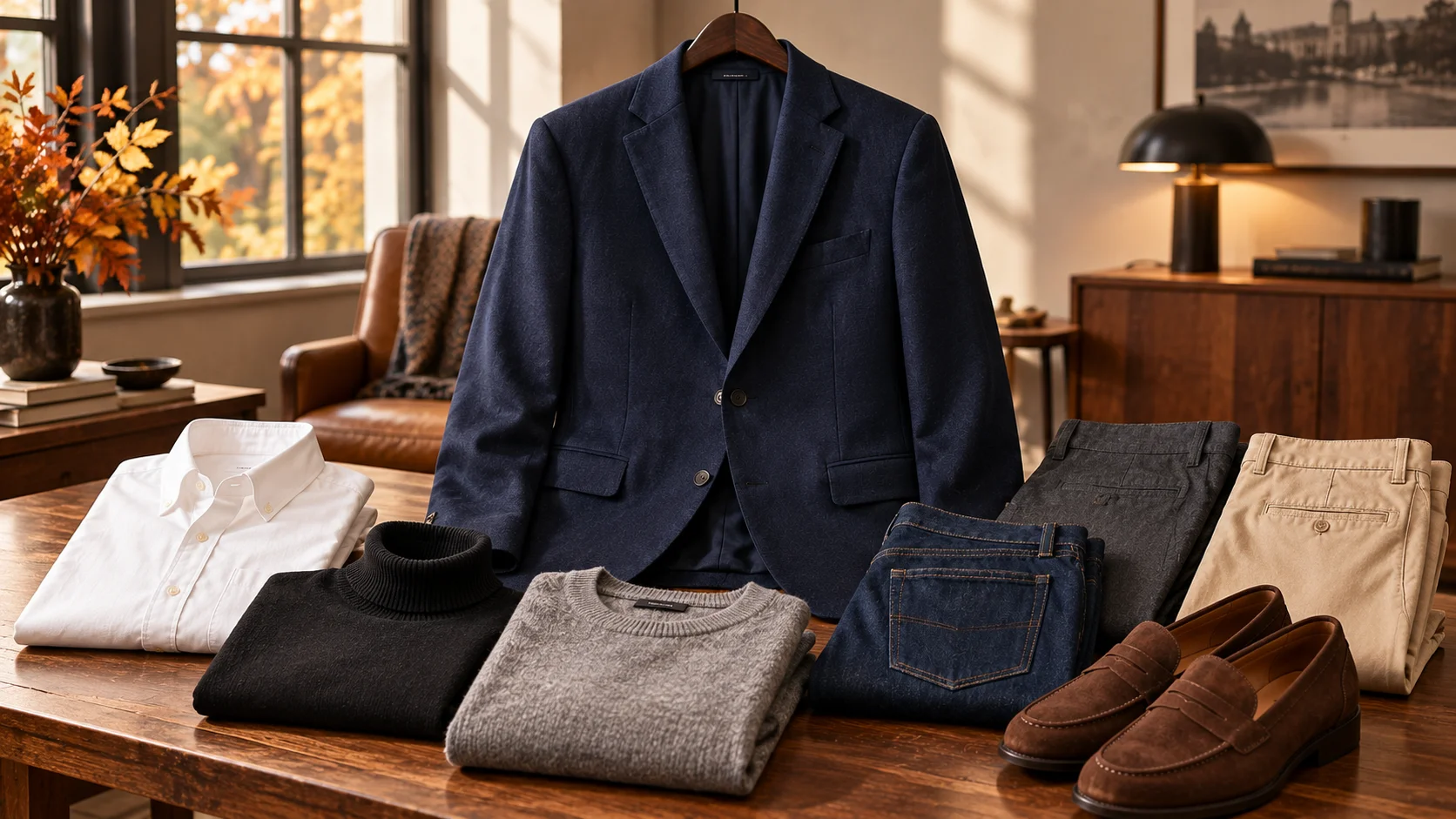
A men’s navy blazer can do far more than sit beside formal shirts and tailored trousers. For Fall 2026, the more useful approach is to treat it as a flexible wardrobe layer that can move between denim, chinos, knitwear and smarter separates.
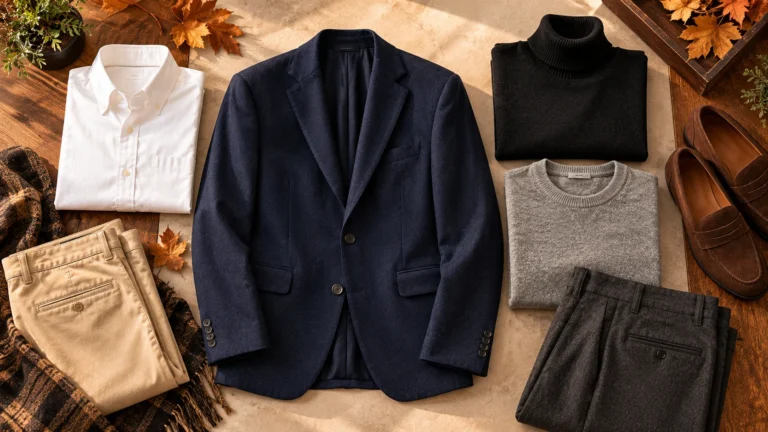
The simplest formula is to keep the blazer consistent and change what sits underneath and below it. A white Oxford shirt, black turtleneck, grey crewneck, dark jeans, charcoal trousers and beige chinos can create noticeably different moods without requiring a completely different wardrobe.
Table of Contents
Why a Men’s Navy Blazer Works for Fall
The appeal of a navy blazer is the space it occupies between dressed-up and relaxed clothing. Contemporary menswear has increasingly moved the blazer away from strictly formal combinations and towards everyday styling with denim, knits and other casual pieces. ⓘ
That makes it particularly useful when you want to build several outfits from a relatively small group of clothes.
The key is not to make every combination look like a minor variation of the same office outfit. Instead, change the contrast, texture, footwear and degree of formality around the blazer.
7 Ways to Style a Men’s Navy Blazer
1. White Oxford Shirt + Dark Jeans
Start with one of the easiest combinations: a navy blazer, crisp white Oxford shirt and dark jeans.
The shirt provides clean contrast while denim takes some formality away from the jacket. Brown loafers can complete the look when you want something polished without moving into full tailoring.
This combination works particularly well as a smart-casual starting point. Current menswear guidance also supports the blazer-and-jeans combination, with proportion and the relationship between the jacket and denim being important to making it look intentional.ⓘ
2. Black Turtleneck + Charcoal Trousers
Replace the white shirt with a black turtleneck and the mood changes immediately.
Navy, black and charcoal create a darker tonal palette that feels more streamlined. Rather than adding more colours, allow the contrast between the tailored blazer and knit layer to provide the visual interest.
Brown footwear can introduce a warmer accent, or darker shoes can keep the outfit more tonal.
3. Grey Crewneck + Beige Chinos
For a lighter interpretation, combine the blazer with a grey crewneck knit and beige chinos.
This formula works because each piece occupies a different part of a restrained neutral palette. Navy anchors the outfit, grey softens the transition and beige keeps the lower half lighter.
It is also a useful reminder that men’s navy blazer styling does not need to rely on shirts. Knitwear can make tailoring feel considerably more relaxed.
4. White Oxford Shirt + Charcoal Trousers
Need to move the blazer towards the smarter end of the wardrobe?
Pair it with a white Oxford shirt and charcoal trousers. Compared with denim or chinos, the darker trousers create a more refined visual line while the white shirt keeps the combination crisp.
Keep the rest restrained. The strength of this outfit comes from its simple navy-white-charcoal colour relationship rather than extra statement pieces.
5. Black Turtleneck + Dark Jeans
For an evening-oriented variation, combine the navy blazer with a black turtleneck and dark denim.
Keeping both the top and trousers dark allows the navy jacket to sit naturally within the palette rather than becoming an isolated block of colour.
It is a good example of how changing just one or two wardrobe components can alter the character of the same blazer.
6. Grey Crewneck + Dark Jeans
A grey knit and dark jeans take the blazer further into relaxed everyday territory.
Keep the crewneck simple so the neckline sits cleanly beneath the jacket. With this combination, footwear can substantially change the overall impression: loafers move it towards smart casual, while understated casual shoes can make it more relaxed.
7. White Oxford Shirt + Beige Chinos
Finish with a lighter classic: navy blazer, white Oxford shirt and beige chinos.
The contrast is stronger than an all-dark combination, making it particularly useful when you want the blazer to remain the visual anchor.
Brown loafers fit naturally into this colour family and help connect the navy and beige without introducing another dominant colour.
How to Make the Outfits Feel Different
Owning several compatible pieces is only useful if the combinations actually look distinct.
Think in terms of three simple switches.
Change the base layer. A white Oxford looks crisp, a black turtleneck creates a darker line, and a grey crewneck makes the outfit more relaxed.
Change the trousers. Dark jeans reduce formality, charcoal trousers sharpen the look and beige chinos introduce more contrast.
Change the finishing details. Shoes, belt, watch and bag can shift the same basic combination towards work, weekend or evening territory.
This mix-and-match principle is also useful when building a broader seasonal wardrobe. For more ideas, see our guide to an effortless business casual fall wardrobe and our men’s fall capsule wardrobe guide.
Choosing the Right Shoes and Accessories
Brown loafers are an easy partner for navy, charcoal, beige and dark denim, but they do not need to accompany every outfit.
A cleaner, dressier shoe can sharpen the tailored combinations, while a restrained casual shoe can relax the denim-based ones. The important point is to make the footwear agree with the rest of the outfit rather than fighting its level of formality.
Accessories deserve similar restraint. A simple belt, watch or structured bag can finish the outfit, but you rarely need all of them to become focal points simultaneously.
The blazer should still look like the piece holding everything together.
Building a Smaller Fall Wardrobe
The real advantage of these combinations is not simply getting seven outfits from one jacket. It is learning to choose clothes that cooperate with each other.
A practical starting group could include:
- one navy blazer
- one white Oxford shirt
- one dark roll-neck or turtleneck
- one grey crewneck knit
- dark jeans
- charcoal trousers
- beige chinos
- one versatile pair of brown loafers
You do not need these exact pieces or colours. Treat the formula as a framework and adapt it to what you already own, your climate and the situations you actually dress for.
For a wider seasonal approach, our Men’s Autumn City Break Wardrobe Guide explores another compact way to combine autumn layers.
A men’s navy blazer earns its place in a fall wardrobe when it can work with clothes you already reach for. Instead of reserving it for one dress code, experiment with shirts, knitwear, denim, chinos and tailored trousers.
Seven combinations are only the beginning. Once the colours and proportions work together, the same small wardrobe can produce plenty of additional variations without making getting dressed more complicated.
Related Blogs
- Effortless Business Casual Fall Wardrobe Essential Guide
- Men’s Fall Capsule Wardrobe How to Build 36 Outfits from 11 Pieces
- Men’s Autumn City Break Wardrobe Guide
FAQs
What can I wear with a men’s navy blazer in fall?
A men’s navy blazer can work with white shirts, neutral knitwear, dark jeans, chinos and tailored trousers. Changing the base layer and trousers is an easy way to move between casual and smarter outfits.
Can I wear a navy blazer with jeans?
Yes. A blazer and jeans can create a useful smart-casual combination. Aim for proportions that work together and choose denim that complements rather than competes with the jacket.
Can you wear black with a navy blazer?
Yes. A black turtleneck or other restrained black layer can create a sophisticated dark palette with navy, particularly when paired with charcoal trousers or dark denim.
What colour trousers work with a navy blazer?
Charcoal, beige and dark denim are three versatile options. Each changes the outfit differently: charcoal looks smarter, beige adds contrast and denim creates a more relaxed effect.
How many outfits can one navy blazer create?
There is no fixed limit. This guide demonstrates seven combinations, but changing shirts, knits, trousers, shoes and accessories can create many more variations from the same jacket.