
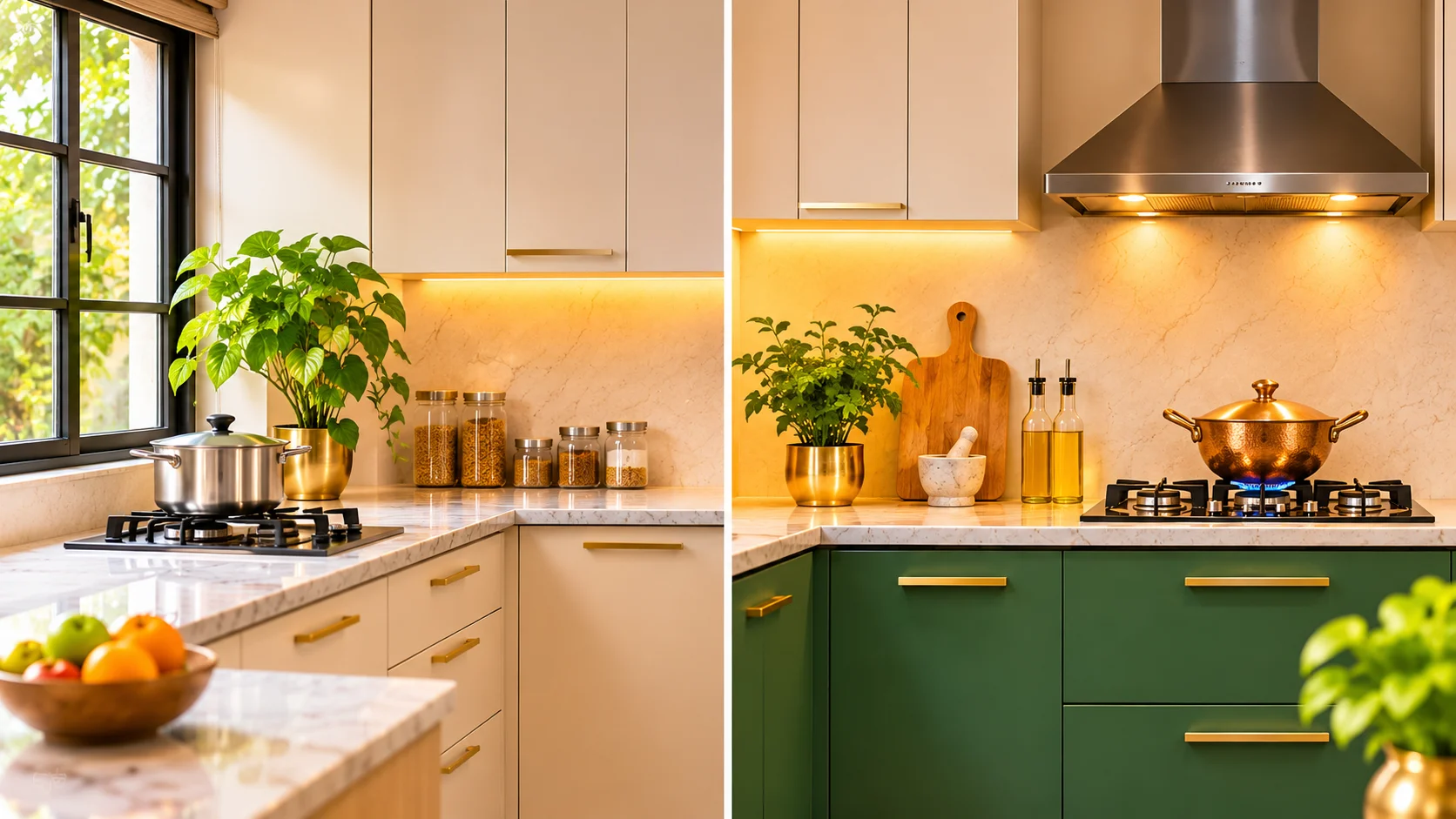
A kitchen is one of the most important working spaces in a home, so its layout often receives special attention in traditional Vastu guidance. If your kitchen is located in the North-East or South-West, you may wonder whether rebuilding the entire room is necessary.
Fortunately, traditional remedies often focus on practical adjustments before structural changes. One commonly suggested approach is to review the position of the stove and the condition of the surrounding space.
According to traditional Vastu principles, the South-East is associated with the fire element and is therefore commonly preferred for cooking activities. If your kitchen is already built in another area, a carefully considered internal arrangement may be a more realistic first step.
Important: Vastu is a traditional practice and interpretations can vary by region and practitioner. These suggestions are not guarantees of health, wealth or other outcomes. Confirm directions with a compass and consult qualified professionals before making structural changes.
Table of Contents
Why Kitchen Direction Matters in Traditional Vastu
Traditional Vastu associates different directions with different principles and elements. The kitchen is commonly connected with the fire element, which is why the South-East is traditionally considered a preferred zone for cooking.
The useful point for an existing home is not necessarily to panic about the location of the entire room. A fixed kitchen may be difficult or expensive to relocate. Instead, traditional guidance often begins by examining the elements inside the space that can still be adjusted.
For a kitchen, the cooking zone is one of the most practical places to start. This creates a clear decision framework: first identify the kitchen’s compass directions, then review where the stove is positioned, and finally look at clutter, weight and everyday usability.
If you are planning the overall arrangement of your cooking space, you may also find Vastu-Inspired Kitchen Organisation Made Effortlessly Practical useful.
Why the North-East and South-West Need Different Attention
In the traditional framework used for this topic, the North-East is associated with qualities such as water and purity. Because cooking involves fire, placing the main cooking activity in this area is traditionally viewed as an imbalance between those symbolic associations.
The South-West is traditionally associated with stability. When a kitchen occupies this zone, the practical response does not have to be a complete reconstruction. The first priority can be to organise the cooking functions thoughtfully within the room rather than assuming that the entire home must be altered.
This distinction matters because a single remedy should not be treated as a universal rule for every kitchen. A compact apartment kitchen, a rented home and a large built-in kitchen all have different limitations. Traditional placement guidance should therefore be adapted carefully to the actual layout.
For another direction-focused guide, see North East Vastu Remedies for Electronic Tech Clutter.
A Practical South-East Stove Placement Approach
The central traditional recommendation is straightforward: where the kitchen layout allows it, position the gas stove or primary cooking area in the South-East part of the kitchen.
Start by determining the actual compass directions rather than guessing from a floor plan or photograph. A phone compass can provide an initial indication, although the reading should be checked carefully before making important decisions.
Once the directions are established, consider whether the stove can be moved within the existing kitchen without major reconstruction. This may be more practical than changing cabinetry, plumbing or the entire room.
A useful approach is:
- Identify the South-East area of the kitchen.
- Check whether the stove can be safely positioned there.
- Keep adequate clearance around the cooking area.
- Follow appliance installation requirements and local safety standards.
- Avoid changes that interfere with ventilation, gas connections or electrical systems.
Traditional Vastu may guide the placement decision, but fire and appliance safety must always take priority. Any gas-line, electrical or structural work should be handled by an appropriately qualified professional.
How to Adapt a Fixed Kitchen Without Reconstruction
Not every kitchen can accommodate a major change. In rented homes or compact apartments, the stove may already be integrated into a fixed counter. In that situation, the practical aim is to consider smaller adjustments rather than forcing an unsafe or expensive alteration.
Traditional guidance for this topic suggests keeping the North-East portion of the kitchen light, clean and uncluttered, particularly if the main cooking zone is elsewhere. Avoid turning a small corner into unnecessary storage simply because it is available.
Heavy objects can also affect how usable a compact kitchen feels. Rather than filling every surface with appliances, containers and storage items, prioritise the equipment you genuinely use. This can create clearer work zones and make everyday cooking easier to manage.
If your kitchen includes significant storage or heavy built-in elements, you may also want to read Vastu Weight Principles for Kitchen Layout Balance.
Keep the Kitchen Safe, Light and Organised
Traditional placement is only one part of a kitchen that works well in everyday life. The strongest practical improvement is usually a layout that is organised, easy to use and safe around heat and appliances.
Keep frequently used cooking items accessible without overcrowding the counter. Maintain clear working space around the stove, and avoid allowing unnecessary clutter to accumulate near heat sources. Good ventilation and manufacturer-recommended appliance clearances should never be compromised for decorative or traditional placement preferences.
The visual idea is equally simple: let the kitchen feel purposeful rather than overloaded. A lighter, cleaner corner can make a compact kitchen easier to navigate, while organised storage can reduce visual clutter across the room.
Traditional Vastu guidance may associate this type of arrangement with household balance. From a practical perspective, an organised and safer cooking layout can also make daily kitchen tasks easier to manage.
The Practical Decision to Make
If your kitchen is in the North-East or South-West, you do not automatically need to rebuild it. First, confirm the actual directions and assess whether the stove can be safely positioned in the South-East part of the kitchen.
Then focus on what you can realistically control: keep the relevant space clean and uncluttered, avoid unnecessary heavy storage in the North-East, and maintain safe clearances around all cooking equipment. The most sensible approach is to combine traditional guidance with the practical requirements of your home.
Frequently Asked Questions
1. Is the South-East always the preferred direction for a kitchen in Vastu?
Traditional Vastu commonly associates the South-East with the fire element, making it a preferred area for cooking. However, interpretations can vary between practitioners and regional traditions.
2. What if my kitchen is already built in the North-East?
A complete rebuild may not be necessary. Traditional remedies for this topic suggest reviewing the internal arrangement, keeping the North-East area light and uncluttered, and considering safe stove placement where the layout allows.
3. Can I move only the stove instead of rebuilding the kitchen?
In many fixed-layout situations, reviewing the stove position may be a more practical first step than reconstruction. Any move must still comply with appliance instructions and gas, electrical and fire-safety requirements.
4. How do I know which part of my kitchen is South-East?
Use a reliable compass to identify the actual directions of the room. Do not assume direction from a photograph or from the apparent position of the room on a decorative floor plan.
5. Does changing kitchen placement guarantee health or household balance?
No. Vastu should be understood as traditional guidance rather than a guaranteed cause-and-effect system. A safe, organised and functional kitchen remains important regardless of traditional placement preferences.