
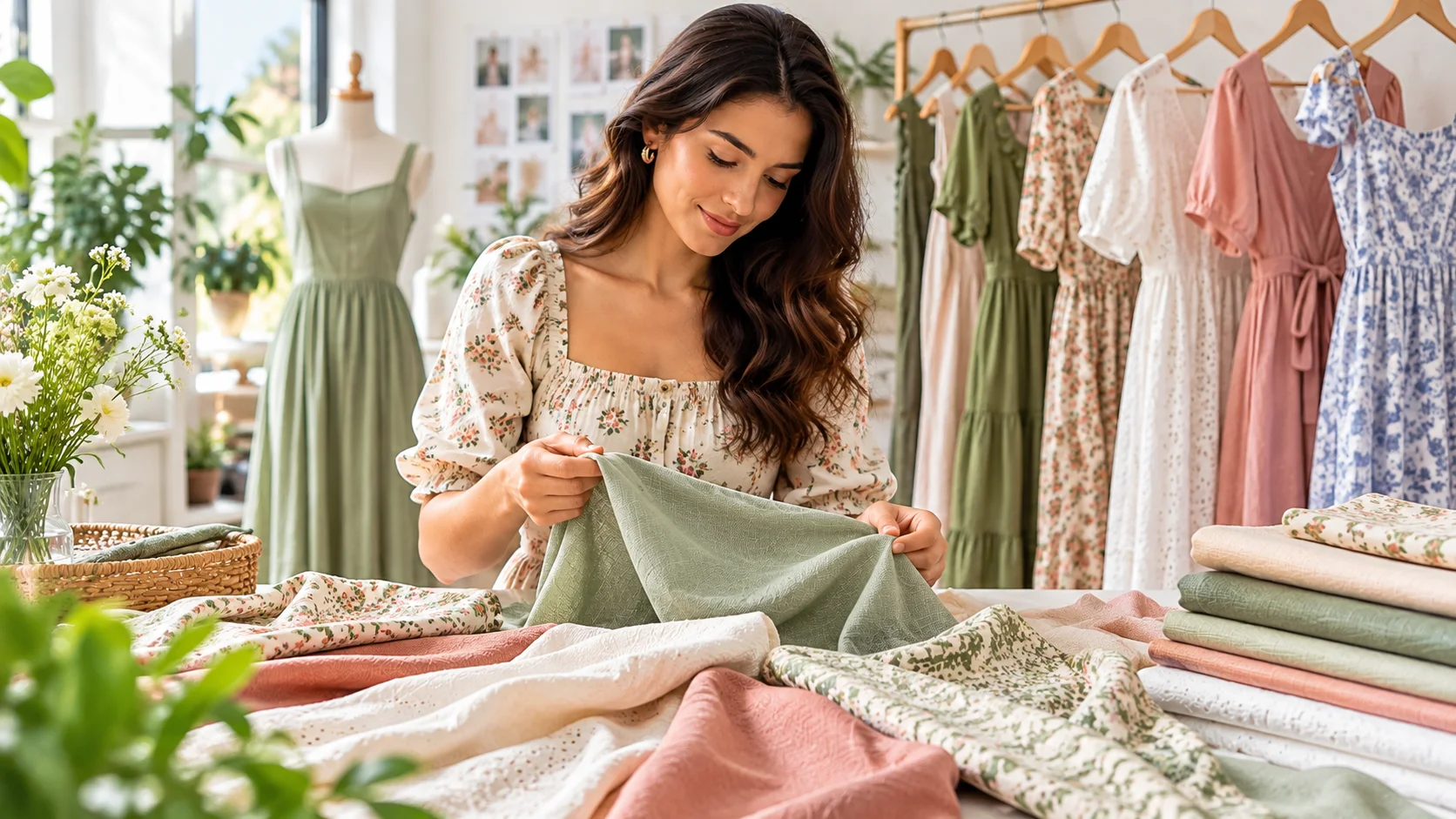
Choosing a dress for warm weather is about more than finding a colour or silhouette you love. Breathable dress fabrics can make a noticeable difference to how suitable a garment feels for the conditions, but fibre names alone do not tell the whole story.
A smarter approach is to look at the complete fabric: its fibre content, construction, thickness, lining and finish. Air permeability is influenced by several textile characteristics, including fibre and blend, yarn geometry, fabric structure and finishing.
Table of Contents
What Makes Dress Fabric Breathable?
“Breathable” can describe more than one aspect of textile comfort. Air permeability concerns how readily air can pass through a fabric, while moisture-vapour transfer is another part of how textiles manage heat and perspiration.
That is why judging a dress simply by seeing “cotton”, “linen” or another familiar fibre on the label can be too simplistic. The structure and density of the finished cloth also matter.
When shopping, think of breathability as a fabric-level characteristic rather than a fibre-name shortcut.
How to Check Breathable Dress Fabrics Before Buying
Start with the composition label, but do not stop there. Look at the dress as a complete garment.
Check the fibre composition. This tells you what the fabric contains and whether it is a single fibre or a blend.
Consider the fabric structure. A very compact construction can behave differently from a more open one. Fabric porosity and structural parameters influence air permeability.
Look at thickness and layers. A lightweight-looking outer fabric can still be paired with a substantial lining, so consider the whole dress rather than only its surface.
Read the care instructions. They can provide useful clues about how the garment should be maintained and whether that routine suits your wardrobe.
When shopping online, zoom into fabric photographs and read the material and care information supplied by the manufacturer or retailer rather than making assumptions from the dress style alone.
Natural Fibres Are Useful Clues, Not Guarantees
Natural-fibre names can be useful when narrowing your options, but they should not become an automatic “breathable equals good” rule.
Two fabrics made with the same fibre can have different yarns, densities, constructions and finishes. Those differences can influence airflow and other comfort-related characteristics. Textile references note that raw material, yarn geometry, woven structure and finishing can all affect air permeability.
So instead of asking only:
“What fibre is this?”
also ask:
“How has this particular fabric been constructed and used in this particular dress?”
That small change makes online dress selection considerably more informed.
Why Fabric Construction Matters
Fabric is not simply a collection of fibres. The way yarns are organised changes the resulting textile.
Woven fabrics are created by interlacing yarn systems and can be produced at different densities and weights. Knitted fabrics use interlocking loops and have their own structural characteristics, including differences in stretch and thickness.
This is particularly useful to remember when comparing dresses online. Two dresses may use similar fibre descriptions while having very different fabric constructions.
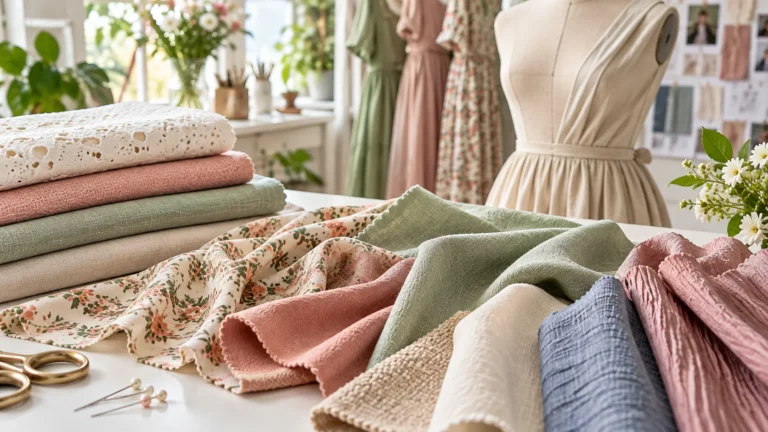
Rather than searching for one supposedly perfect material, compare fibre + construction + garment design together.
Match the Fabric to the Dress and Occasion
The best fabric choice also depends on what you want the dress to do.
For an everyday warm-weather dress, you may prioritise an easy silhouette and fabric construction appropriate to warmer conditions. For travel, you might additionally care about packing, care requirements and versatility. An occasion dress may place more emphasis on drape, structure or appearance.
If you are building a summer wardrobe, our Beautiful Summer Midi Dress Styling Made Effortless guide is a useful next step for translating fabric considerations into an outfit.
For maxi-dress inspiration, see How to Style a Patterned Ikat Maxi Dress for Summer.
The key is not to assume that one fabric category is universally best. Choose according to the specific dress, weather, activity and your own preferences.
A Simple Breathable Dress Fabric Checklist
Before buying a dress, run through these questions:
- What does the fibre-composition label actually say?
- Is the fabric a single fibre or a blend?
- Does the material appear light, medium or substantial?
- Is the construction relatively open or compact?
- Is the dress lined or layered?
- What care instructions are provided?
- Does the overall garment suit the weather and occasion in which you expect to wear it?
- Has the seller or manufacturer provided meaningful fabric information rather than only descriptive marketing language?
For a more technical explanation of how textile structure affects airflow, Textile School’s overview of fabric air permeability and porous structure explains how construction variables can influence air movement through fabric.
A little label-reading can therefore be more useful than relying on a single fabric buzzword.
Choose the Fabric, Not Just the Fibre Name
Finding breathable dress fabrics becomes easier once you stop looking for one magic material.
Use the fibre label as your starting point, then consider construction, thickness, lining, garment design and care information. This gives you a much more practical way to compare dresses—especially when shopping online and you cannot feel the fabric beforehand.
The goal is simple: choose a dress whose whole fabric-and-garment combination makes sense for where, when and how you plan to wear it.
Related Blogs
Beautiful Summer Midi Dress Styling Made Effortless
How to Style a Patterned Ikat Maxi Dress for Summer
Elegant Ivory Floral Cotton Mini Dress Your Ultimate Summer Style Guide
FAQs
What are breathable dress fabrics?
Breathable dress fabrics are textiles whose characteristics allow useful air and/or moisture-vapour movement. Fibre content matters, but construction, density and finishing can also affect fabric behaviour.
Is fibre content enough to judge a dress?
No. Fibre content is a valuable starting point, but the fabric’s construction, thickness, finish and the garment’s lining or layering should also be considered.
Does a lightweight fabric automatically mean it is breathable?
Not necessarily. Weight is only one characteristic. Fabric structure, porosity, fibre/yarn characteristics and finishing can also influence air permeability.
What should I check when buying a dress online?
Read the composition and care labels, inspect close-up fabric photographs, check whether the dress is lined, and look for useful manufacturer or retailer fabric information rather than relying solely on marketing descriptions.
Should I choose the same dress fabric for every warm-weather occasion?
Not automatically. Everyday wear, travel and occasions can place different demands on a dress. Consider the complete garment and how you expect to use it.