

This article may contain affiliate links. We may earn a commission at no extra cost to you.
There are some colours that quietly blend into a summer wardrobe, and then there are colours that immediately change its mood. A vivid golden-yellow dress belongs firmly in the second camp.
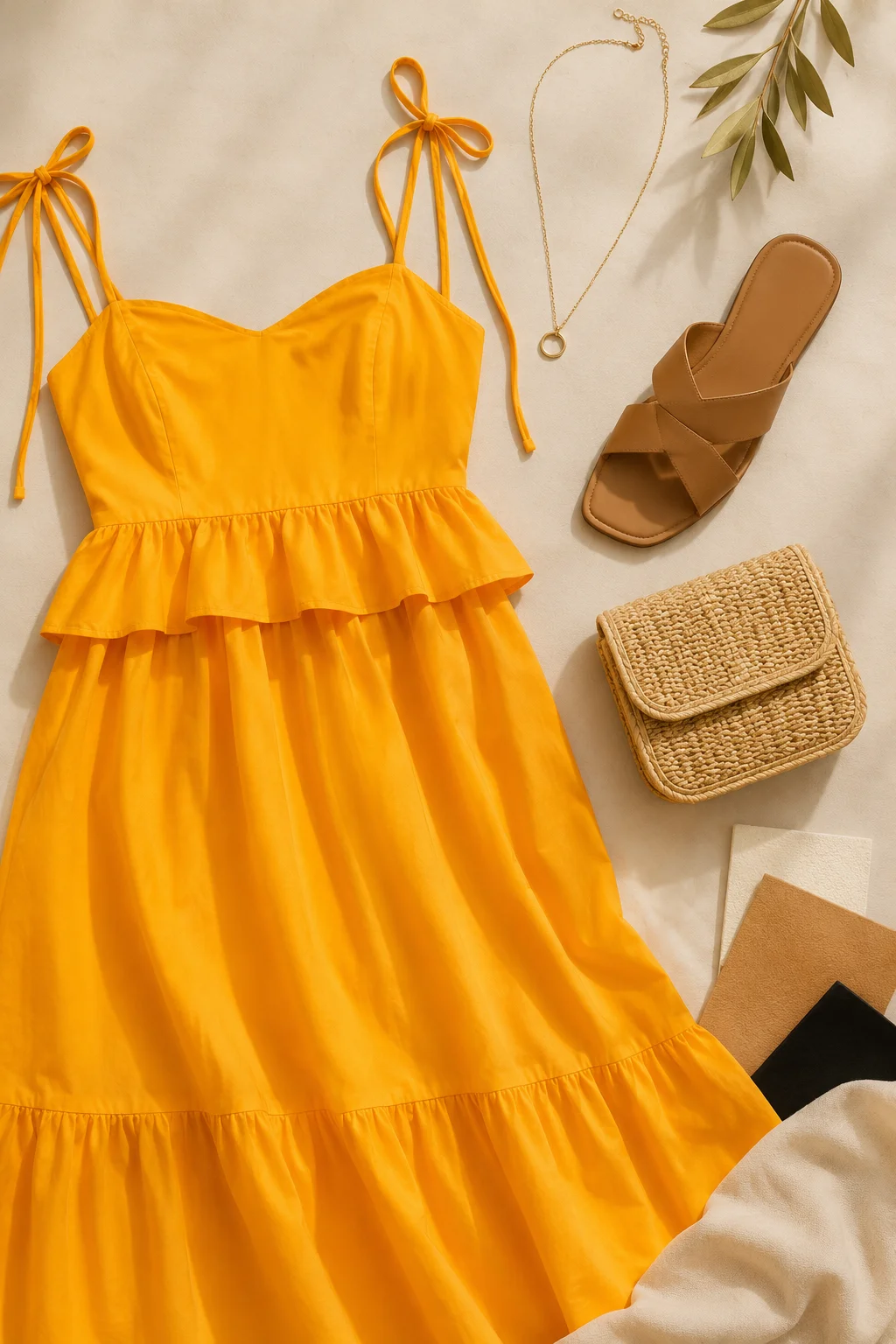
With its tie-shoulder design, softly shaped neckline, ruffled waist detail and tiered midi-length silhouette, this style already has enough visual personality to become the centre of an outfit. The trick is not to compete with it. The most effective summer midi dress styling keeps the supporting pieces considered, restrained and appropriate for where you are going.
For an easy starting point, pair a bright yellow midi dress with neutral accessories, simple jewellery and footwear that suits the occasion. From relaxed daytime plans to holidays and casual summer evenings, small accessory changes can take the same statement colour in several different directions without over-styling it.
Table of Contents
Why a Bright Midi Dress Needs Less Styling
The first thing you notice is the colour — and that is precisely why the rest of the outfit does not need to work so hard.
A saturated yellow or golden-orange tone creates a natural focal point. Add the feminine details of shoulder ties, a ruffled waist and a tiered skirt, and there is already plenty happening visually.
Rather than asking, “What else can I add?”, try asking, “What does this outfit actually need?”
Often, the answer is surprisingly little.
Fine jewellery can add polish without becoming another focal point. Neutral sandals can visually ground the colour. A woven or understated bag can introduce texture while allowing the dress to remain dominant.
That restraint is particularly useful with statement-colour dresses because it makes the overall outfit look intentional rather than assembled from individually attention-grabbing pieces.
Explore The StyleBuild the Look Around the Colour
Bright yellow can seem challenging on a hanger because it feels so decisive. In an outfit, however, it becomes easier to manage once you treat it as the main colour rather than trying to create an equally strong palette around it.
Start with warm neutrals
Tan, camel, cream, beige and natural woven tones are easy companions for a golden-yellow dress.
A tan sandal, for example, gives the eye somewhere quiet to rest. Similarly, a natural-textured tote can work for a relaxed daytime look without introducing another bold colour.
This approach is particularly effective when you want the outfit to feel sunny and casual rather than heavily coordinated.
Try crisp, clean accents
White and soft ivory can shift the mood in a slightly fresher direction.
Think about a compact white bag, understated white footwear where appropriate, or a light layer for cooler evenings. You do not need to use all three; one crisp accent can be enough.
Use black selectively
Black can create a stronger contrast, so consider the visual weight of each piece.
A slim black sandal or small bag may give the dress a sharper city-ready character. Large areas of black, on the other hand, can dramatically change the light summer mood.
The question is not whether black works with yellow. It does. The question is whether that contrast matches the look you want.
Three Easy Ways to Change the Mood
One of the useful things about a visually distinctive dress is that you do not necessarily need an entirely different outfit for every setting. Accessories can do much of the work.
1. Relaxed sunny-day styling
Keep everything uncomplicated.
A woven tote, understated jewellery, sunglasses and simple neutral sandals create a natural daytime direction. This combination works particularly well when you want the dress to remain the obvious hero of the outfit.
It is the sort of formula that can translate easily to sightseeing, lunch, a casual day out or relaxed holiday plans.
2. A cleaner evening direction
Remove the larger daytime accessories and refine the proportions.
Swap the roomy tote for a smaller bag. Choose more streamlined footwear. Keep the jewellery delicate, or introduce one slightly more noticeable piece rather than layering several competing elements.
You have not fundamentally changed the dress; you have changed the visual signals surrounding it.
3. Holiday-ready styling
This is where warm colour and natural textures can work especially well together.
A compact woven bag, sunglasses and minimal jewellery can create a relaxed holiday mood without turning the outfit into a costume. If you want another colour in the look, introduce it through one small accessory rather than several pieces.
That keeps the combination flexible and lets the yellow remain memorable.
Choosing Jewellery Without Competing With the Dress
A dress with shoulder ties and a defined neckline naturally brings attention towards the upper body, so jewellery deserves a little thought.
A fine necklace can follow that neckline without covering it. Small hoops or restrained earrings can add definition around the face while allowing the shoulder details to remain visible.
If you prefer statement earrings, consider skipping the necklace.
That simple editing principle is useful far beyond this particular style:
When one accessory becomes the statement, allow the others to become supporting pieces.
The same idea applies to bracelets and rings. You can certainly add them, but there is little reason to stack every jewellery category simply because the outfit has space for it.
The goal is balance rather than maximum accessorising.
When This Kind of Dress Makes Sense
A colourful midi dress occupies a useful middle ground in a summer wardrobe.
The length can give it more presence than a very casual mini dress, while the shoulder ties, ruffles and flowing silhouette keep the overall look relaxed rather than formal.
That creates several possible styling directions.
For a daytime lunch, keep accessories natural and easy. For sightseeing or holiday plans, prioritise practical footwear and a useful bag. For an informal summer gathering, refine the accessories slightly. For an evening meal, a smaller bag and cleaner jewellery can shift the mood without requiring a completely new outfit.
The dress does not have to be assigned to one narrowly defined occasion.
What matters more is whether its silhouette, colour and overall character fit your personal wardrobe and the places where you realistically expect to wear it.
View Produt DetailsBefore You Choose Your Accessories
The easiest way to avoid over-styling a bright summer dress is to decide on the mood before opening the jewellery box or choosing a bag.
Ask yourself three questions:
Where am I going?
A casual afternoon and an evening dinner may call for very different accessories.
What should be the focal point?
With a vivid yellow dress, the answer will usually be the dress itself.
Do I need another statement piece?
Sometimes yes. Often no.
From there, build gradually. Choose the footwear first, then the bag, then jewellery. Stop when the outfit feels complete.
This method is much easier than adding several accessories at once and then trying to work out why the finished look feels busy.
It also leaves room for personal style. Someone who loves minimal dressing may stop at earrings and sandals. Someone who enjoys more expressive styling might introduce a contrasting bag or stronger jewellery.
Neither approach is automatically better. The most successful outfit is the one in which every addition feels deliberate.
A Bright Dress Can Do Most of the Work
Good summer midi dress styling does not require a complicated formula.
When a dress already combines a vivid colour with noticeable design details, the smartest approach is often to let those characteristics lead. Neutral footwear, thoughtfully chosen jewellery and one appropriate bag can be enough to turn the dress into a complete-looking outfit.
And that is part of the appeal of a strong summer piece: you can change its personality without burying it under layers of styling.
Start with the dress. Decide where you are going. Add only what makes the outfit better.
FAQs
How can I make summer midi dress styling look polished?
Let the dress establish the main colour and silhouette, then use a small number of coordinated accessories. Neutral sandals, a simple bag and restrained jewellery are an easy starting formula. Adjust those pieces according to whether you are dressing for daytime, travel or an evening occasion.
What colours go well with a bright yellow dress?
Cream, ivory, beige, tan and other warm neutrals are versatile choices. White can create a fresher contrast, while black can produce a sharper look. The best combination depends on the occasion and how much contrast you want.
What shoes can I wear with a yellow midi dress?
Neutral sandals are an easy option for relaxed summer styling. Depending on the occasion and the particular dress, streamlined flats, suitable trainers or a more refined sandal can shift the outfit from casual to dressier.
Should jewellery be minimal with a colourful dress?
Not necessarily, but visual balance helps. If the dress has noticeable neckline or shoulder details, delicate jewellery can keep those elements visible. If you choose statement earrings, reducing other jewellery can prevent the upper half of the outfit from becoming crowded.
Can a bright midi dress work for more than holidays?
Yes. Styling can change its character considerably. Accessories can move a colourful midi dress towards casual daytime dressing, weekend plans, informal gatherings or summer evening looks, provided the individual dress is appropriate for the occasion.