
Affiliate Disclosure: This article may contain affiliate links. If you make a purchase through an eligible link, Nimon Group may earn a commission at no extra cost to you.
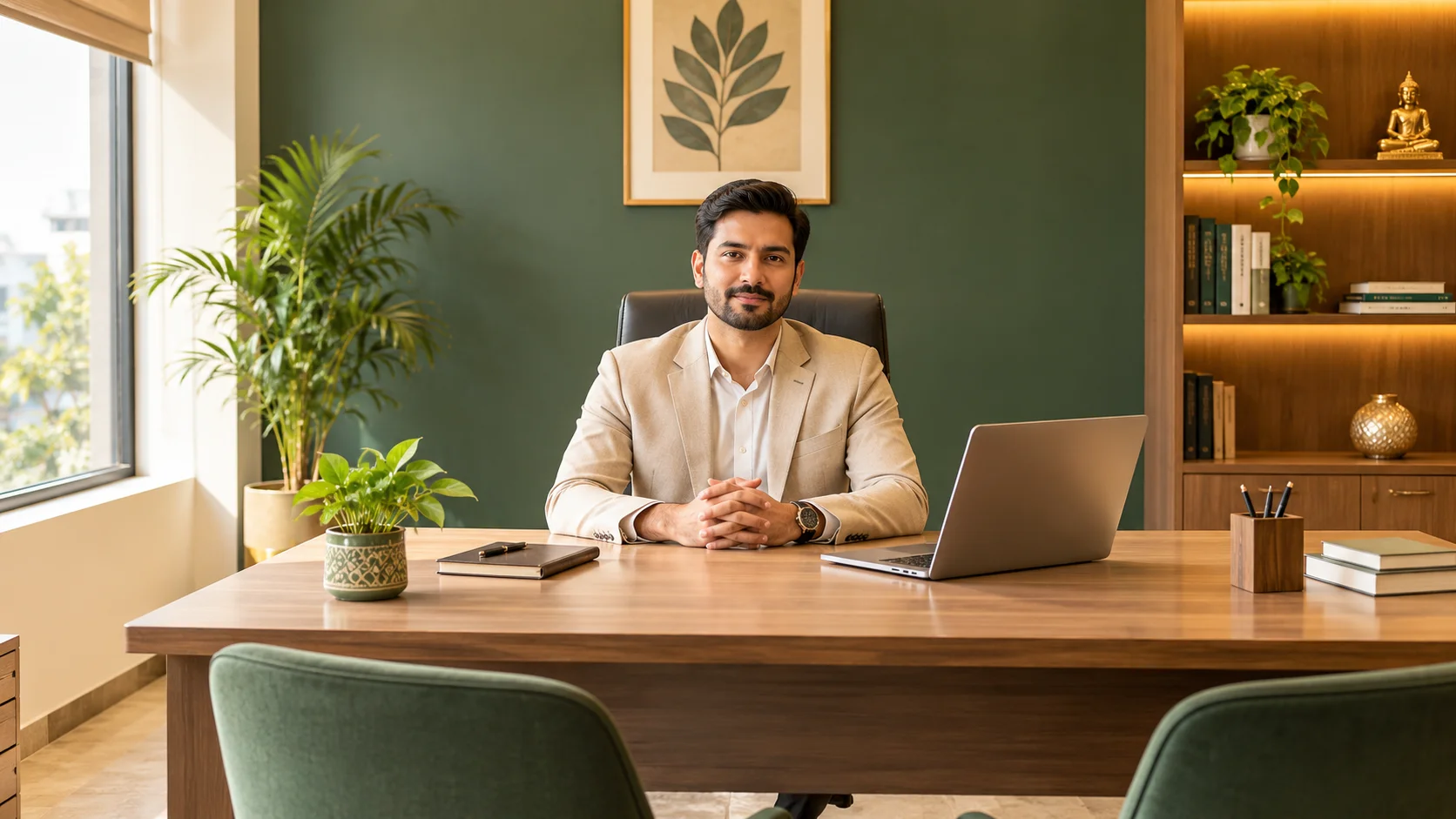
Where the owner’s, manager’s or decision-maker’s chair is positioned can change how an office feels. In both traditional Vastu and Feng Shui guidance, sitting with a solid wall behind the chair is commonly associated with support, stability and a stronger sense of backing.
If there is open space, a doorway or a window directly behind the chair, the traditional remedy is usually simple: reposition the desk so a solid wall is behind the seat. When moving the desk is not practical, a high-backed chair or a stable cabinet behind the seating area may help create a stronger sense of enclosure.
Table of Contents
Why a Solid Wall Behind the Chair Matters
The traditional principle behind this placement is straightforward: the person responsible for decisions should have a sense of support rather than an exposed space directly behind them. In Feng Shui, this idea is often connected with the broader concept of a supportive position, while Vastu guidance may similarly favour a stable and considered seating arrangement.
This should be understood as traditional spatial guidance rather than a guaranteed cause-and-effect rule. A solid wall does not automatically create authority or business success. However, the practical idea can still be useful: when the area behind your chair is visually busy, open or frequently used, it may create more awareness of movement around you.
For a wider look at desk positioning principles, see Home Office Vastu Desk Placement Tips for Better Energy Flow.
What to Do When Open Space Is Behind Your Seat
Start by looking at what is directly behind the chair when you are seated. An open walkway, active doorway or large window may create a very different feeling from a solid, visually calm wall.
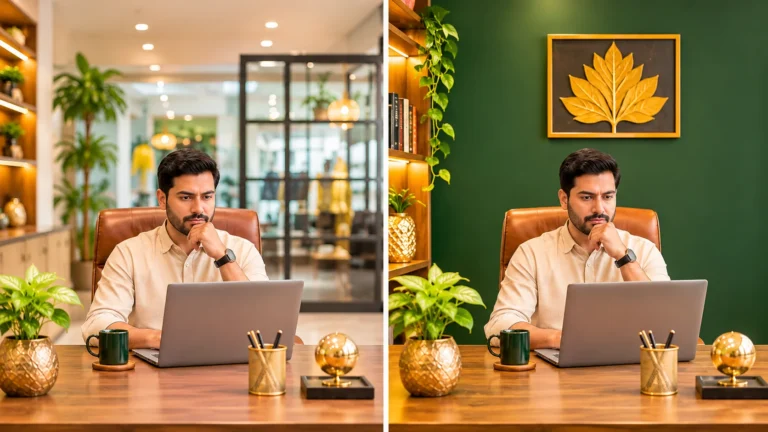
The simplest traditional fix is to rotate or reposition the desk so that the chair backs onto a solid wall. This creates a clearer boundary behind the person using the desk and keeps the main work position visually anchored.
If a full wall is already behind you but the area is cluttered with shelves, loose storage or distracting objects, simplifying that zone can be equally important from a practical design perspective. The goal is not to fill the wall with symbolism. It is to create a stable, uncluttered backdrop for the main work position.
Practical Fixes Without Reconstructing the Office
Not every office, shop, factory or warehouse allows furniture to be moved freely. A rented space, fixed counter or narrow layout may limit your options. In that situation, traditional remedies usually focus on creating a stronger sense of support without major reconstruction.
A high-backed chair can provide more visual enclosure when the space behind you cannot be changed. A low, stable cabinet or bookcase placed behind the chair may also help define the area, provided it does not block a walkway or create a safety issue.
Keep the solution proportionate to the room. A very tall or heavy storage unit squeezed into a small office can create more problems than it solves. Walkways, exits and access routes should always remain clear, and heavy furniture should be properly secured where necessary.
This same principle of avoiding an exposed back appears in other seating situations. You can also explore Sofa with Open Back in Feng Shui: A Simple Placement Fix.
How to Create a More Focused Office Layout
The wall behind the chair is only one part of the overall workspace. Once the main seating position is stable, look at what happens in front of and around the desk.
Try to keep the immediate work area organised, with frequently used items within easy reach and unnecessary visual clutter removed. Avoid placing large objects where they interfere with movement or make the office feel cramped. In a shop or warehouse, the same principle can be adapted to the owner’s or manager’s primary work position without disrupting operational safety.
Traditional Feng Shui desk guidance also considers the relationship between the desk, the room entrance and the person’s line of sight. If you want to explore that subject further, read The Ultimate Feng Shui Desk Rule: How to Position Your Desk for Success.
The most useful approach is usually to make the simplest change first. Before adding decorative objects or making expensive alterations, check whether the chair can be repositioned to create a calmer and more supported working position.
A Better Backdrop Can Be a Simple First Step
For offices and business spaces where the main chair currently has open space behind it, a solid wall or another stable visual boundary is a simple placement change worth considering within traditional Vastu and Feng Shui practice.
Start by examining the area directly behind the chair, then make the smallest practical adjustment that improves support, focus and everyday usability.
Related Blogs
- Home Office Vastu Desk Placement Tips for Better Energy Flow
- The Ultimate Feng Shui Desk Rule: How to Position Your Desk for Success
- Sofa with Open Back in Feng Shui: A Simple Placement Fix
Frequently Asked Questions
1. What is the best Vastu and Feng Shui office chair placement?
Traditional Vastu and Feng Shui guidance commonly favours a work chair with a stable wall or supportive boundary behind it. The exact arrangement depends on the room layout, and directions or other placement rules should be checked according to the relevant tradition rather than assumed from appearance alone.
2. Is it bad to sit with a window behind the chair?
Traditional guidance often prefers a solid wall behind the main seat because it symbolises support and backing. A window behind the chair is not necessarily a practical problem, but you may prefer a more stable visual boundary if the open space feels distracting.
3. What if my office desk cannot be moved?
Consider practical alternatives such as a higher-backed chair or a stable, appropriately sized cabinet behind the seating area. Do not block exits or walkways, and avoid structural changes unless they are professionally assessed where necessary.
4. Can this idea be used in a shop or warehouse?
Yes. The principle can be adapted to the owner’s or manager’s main working position. The key is to balance traditional placement preferences with practical needs, clear circulation routes and workplace safety.
5. Does a solid wall behind the chair guarantee business success?
No. Vastu and Feng Shui are traditional practices and should not be treated as guarantees of authority, wealth or business results. A solid backdrop may also offer a practical benefit by reducing visual activity directly behind the person working.