
In the fortnight before Diwali, a home fills up faster than it empties. Gift boxes arrive, new diyas come out of their wrapping, spare cushions get parked somewhere, and the corner that was meant to be your “wealth corner” quietly becomes the place where everything lands.
The short answer is that the order matters more than the objects. In Feng Shui, the wealth corner is traditionally the southeast of a home or room. Clear it first, then add a healthy plant, a little clean water or a bowl of coins, and a touch of purple, green or gold, and keep it fresh until Lakshmi Puja. Done this way, a feng shui wealth corner for Diwali fits neatly into the cleaning most households already do before the festival.
Table of Contents
Table of Contents
How to Find Your Feng Shui Wealth Corner Before Diwali
Two methods give two different answers, and that is the first thing worth knowing. The classical compass approach places the wealth area in the southeast sector of a home or room. The Western, or BTB, bagua map ignores compass directions and lays a grid over the floor plan from the front door, which puts the wealth area in the far-left back corner as you stand in the doorway looking in.
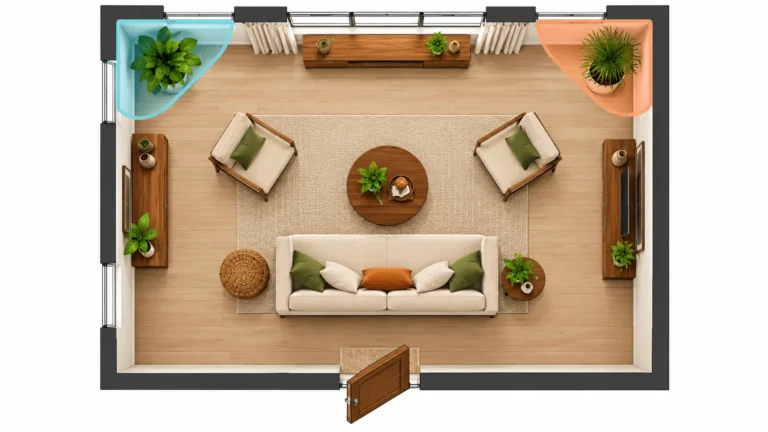
In many homes those two corners are not the same, and Feng Shui schools disagree on which to trust. If you want the background on why guides differ, the post on where the southeast and wealth association comes walks through each school.
Pick one method and stay with it. If you prefer the compass route, a phone compass app works, but hold it away from metal and electronics, which can skew the reading. If you prefer the entrance-based map, stand in your front doorway facing in and note the far-left back corner. Mixing the two leaves you decorating two corners and committing to neither, whereas one corner is easy to look after through the fortnight ahead.
A quick note for Vastu readers: Vastu Shastra is a separate system. It traditionally treats the southeast as the fire corner, the usual home of the kitchen, and links wealth more often with the north. Follow whichever system your household already uses rather than blending the two.
Clear the Corner Before You Decorate It
A decorated corner that is still cluttered simply looks cluttered, and traditional Feng Shui says much the same in its own terms: a blocked corner is thought to restrict the flow of abundance, however much decor you add. Diwali helps here, because many households already clean and tidy the whole home before Lakshmi Puja. Treat the wealth corner as the first stop on that clean rather than the last.
Start by emptying the corner completely, including the floor and any shelf or table in it. Wipe it down, check behind the furniture, and sort what came out into three piles: keep because it is used or loved, move elsewhere, or let go. Anything broken, chipped, wilted or tangled should not go back, whether that is a dead plant, last year’s dried flowers, a stopped clock or a knot of charger cables. You can only judge how much a corner can hold once you have seen it empty, and everything you add afterwards will then read as intentional.
The Diwali-specific trap is the gift pile. Boxes of sweets, hampers and wrapping paper collect in the nearest quiet corner and stay for weeks. Give them a home elsewhere, such as a tray by the door or a cupboard shelf, so the corner stays clear through the festival. If you are shifting furniture to do all this, keep walkways and exits open and ask for help with anything heavy.
Plants, Water and Coins: What Belongs in the Corner
Many Feng Shui guides link the southeast with the Wood element, which is why a living plant is the most traditional addition and why a little water is its usual partner, since water is said to nourish wood in the five-element cycle.
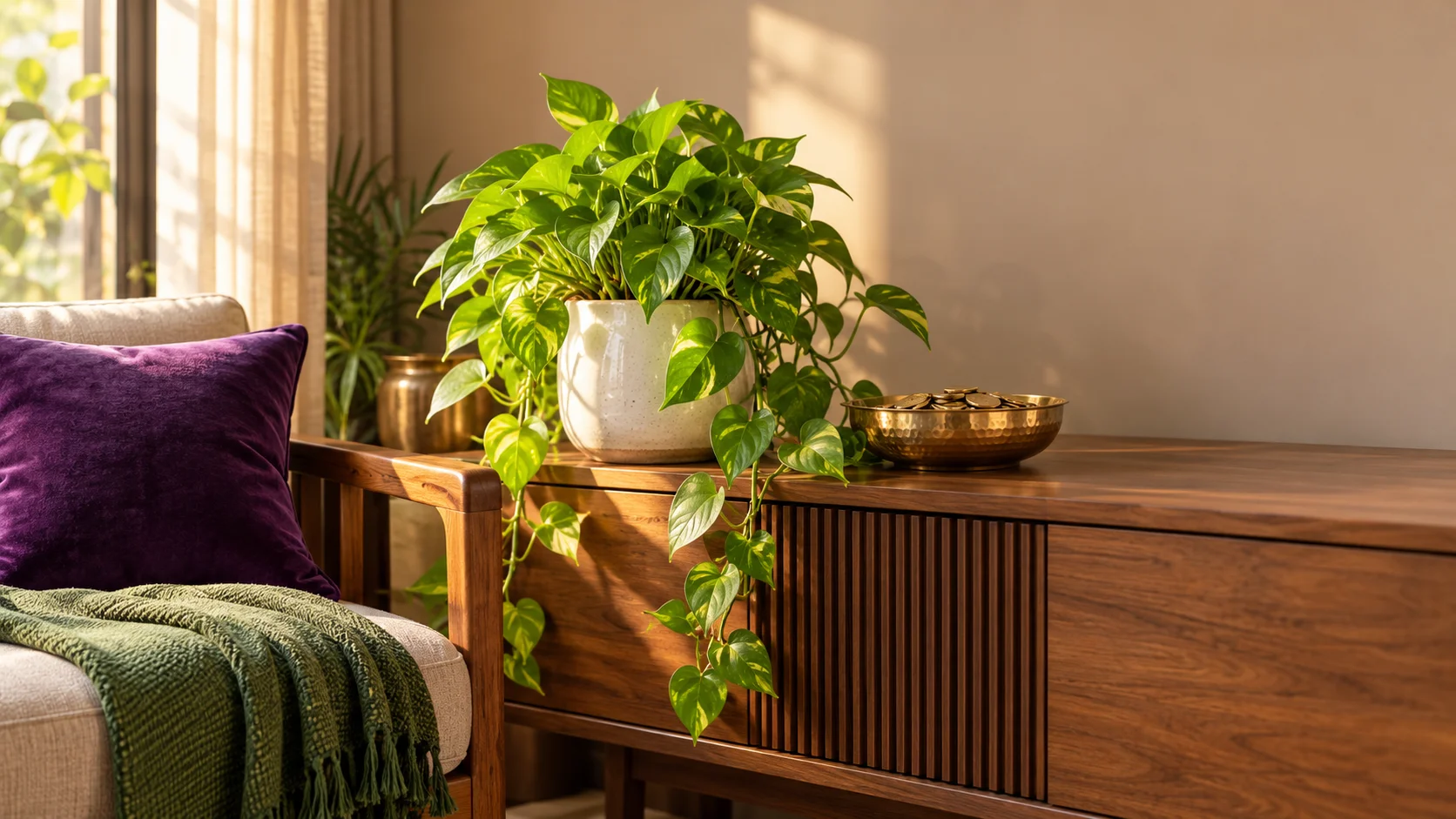
Money plant and jade plant are the two common choices. Choose by the light you actually have: a money plant copes with low to medium light, while a jade plant wants a bright spot. One healthy plant beats three struggling ones, because a yellowing plant in a dim corner works against the idea of growth it is meant to represent. Both plants can be harmful if chewed by pets or small children, so keep them out of reach.
For the water element, the simplest version is a shallow bowl of clean water with a few coins in it or beside it. Change the water every day or two and wipe the coins, since the tradition is about freshness, not stillness. In the weeks after the monsoon, standing water can also attract mosquitoes, so if you cannot refresh a bowl regularly, use a dry bowl of coins instead. Prefer a small tabletop fountain? Choose one with an easily reached pump, keep its plug and cable clear of splashes, and use the guide to Feng Shui water features for sizes and upkeep.
Purple, Green and Gold: Colour Without the Clutter
Green, purple and gold are traditionally considered supportive for this corner: green for the Wood element and growth, purple and gold for richness. They also sit comfortably inside this year’s home decor mood of earthy neutrals with jewel-tone accents, so you can bring them in without buying a new set of everything.
Use one accent from each family rather than the full set. Let the plant supply the green. Add a single purple or deep emerald piece, such as a cushion, a runner or a small cloth under the bowl, and one gold or brass element, such as a tray or the coin bowl itself. A corner where every object matches reads as a display rather than part of a lived-in room, while a calm neutral base lets the accents stand out.
In a rented flat with white walls, a folded purple throw over the arm of a chair near the corner does the job of a repaint, with nothing to undo when the lease ends. Festive reds and oranges are everywhere at Diwali, so let them live elsewhere in the room and keep the corner’s palette quieter.
What to Do When the Corner Is a Kitchen, Bathroom or Desk
Not every southeast corner is available. It may fall inside a kitchen, a bathroom, a staircase landing, a cupboard or the middle of a bedroom. Adapt the idea rather than the house: never move walls, heavy furniture or a room’s function for a symbolic zone, and never block a door, a walkway or an exit.
If the corner sits in a kitchen or bathroom, keep that room spotless and well ventilated, and set up your arrangement in the nearest living area instead. Another route is to treat each room as its own small map. Using the entrance-based method, the far-left back corner of your living room, measured from that room’s own doorway, can serve as the wealth corner wherever the compass southeast falls. In a compact flat, one shelf or windowsill is plenty, and in a shared home it is worth agreeing the plan with everyone first.
If the corner falls inside your work area, the desk takes priority. Pushing a desk into an awkward position just to sit in the wealth corner undermines the commanding position, which asks for a solid wall behind you and a clear view of the door. Get that layout right first using the Feng Shui desk rule guide, then dress the corner with a small plant or a coin bowl on a nearby shelf.
Keeping Your Wealth Corner Fresh Until Diwali Night
Aim to have the corner set up a few days before Dhanteras so it has time to settle. According to the Drik Panchang calendar for New Delhi, Dhanteras falls on Friday 6 November 2026 and Lakshmi Puja on Sunday 8 November, though dates and timings can vary by region, so check your local panchang.
From then on, switch from adding to maintaining. Every day or two, refresh the water, wipe the coins and pick off any yellowing leaves. In the final week, resist the urge to add more and refresh what is already there. If your household buys a coin or small metal item on Dhanteras, it can simply join the bowl, and there is no need to buy anything extra for the corner.
If you place a diya nearby on Diwali night, set it on a stable, heat-proof plate well away from leaves, fabric, dried marigold garlands and curtains, and never leave a lit flame unattended. Clear fresh flowers and burnt-out diyas the next morning. The arrangement can stay for as long as it keeps looking cared for.
Clear the wealth corner first, then keep to one plant, a little water or some coins, and a single touch of colour. It is a decor ritual that makes a corner pleasant to walk past, not a financial plan, so keep your budget and savings decisions where they belong. Start today by emptying the corner and wiping it down.
Related Blogs
- Front Door Feng Shui: Traditional Importance and Modern Design
- How to Place a Feng Shui Money Frog for Wealth
- Essential Vastu Tips for a Positive Festive Season
Frequently Asked Questions
What is a feng shui wealth corner for Diwali?
It is the area of a home or room that Feng Shui traditionally links with prosperity, usually the southeast, which many households tidy and decorate before Diwali. It is a decor-based ritual, not a guaranteed result, and it does not replace financial planning.
Which corner is the wealth corner in Feng Shui?
The compass method places it in the southeast. The entrance-based bagua places it in the far-left back corner as you face into the room from the doorway. Choose one method and stay with it, because the two can point to different corners in the same home.
Can I set up a wealth corner in a rented flat?
Yes. Everything needed is movable: a plant, a bowl of coins, a cushion or throw and a tray. Nothing requires drilling, painting or changing the layout, and it can all be packed up when you leave.
Which plant is best for a wealth corner?
A money plant or jade plant is traditional. Pick the one that suits your light and keep it healthy, since a thriving plant matters more than the species. Keep both away from pets and small children, as they can be harmful if chewed.
Is it safe to keep water in the wealth corner?
Yes, if you keep it clean and safe. Change a shallow bowl every day or two so it does not stagnate or attract mosquitoes, and keep any fountain’s plug and cable away from splashes, following the maker’s instructions.