
Affiliate Disclosure: This article may contain affiliate links. We may earn a commission at no extra cost to you.
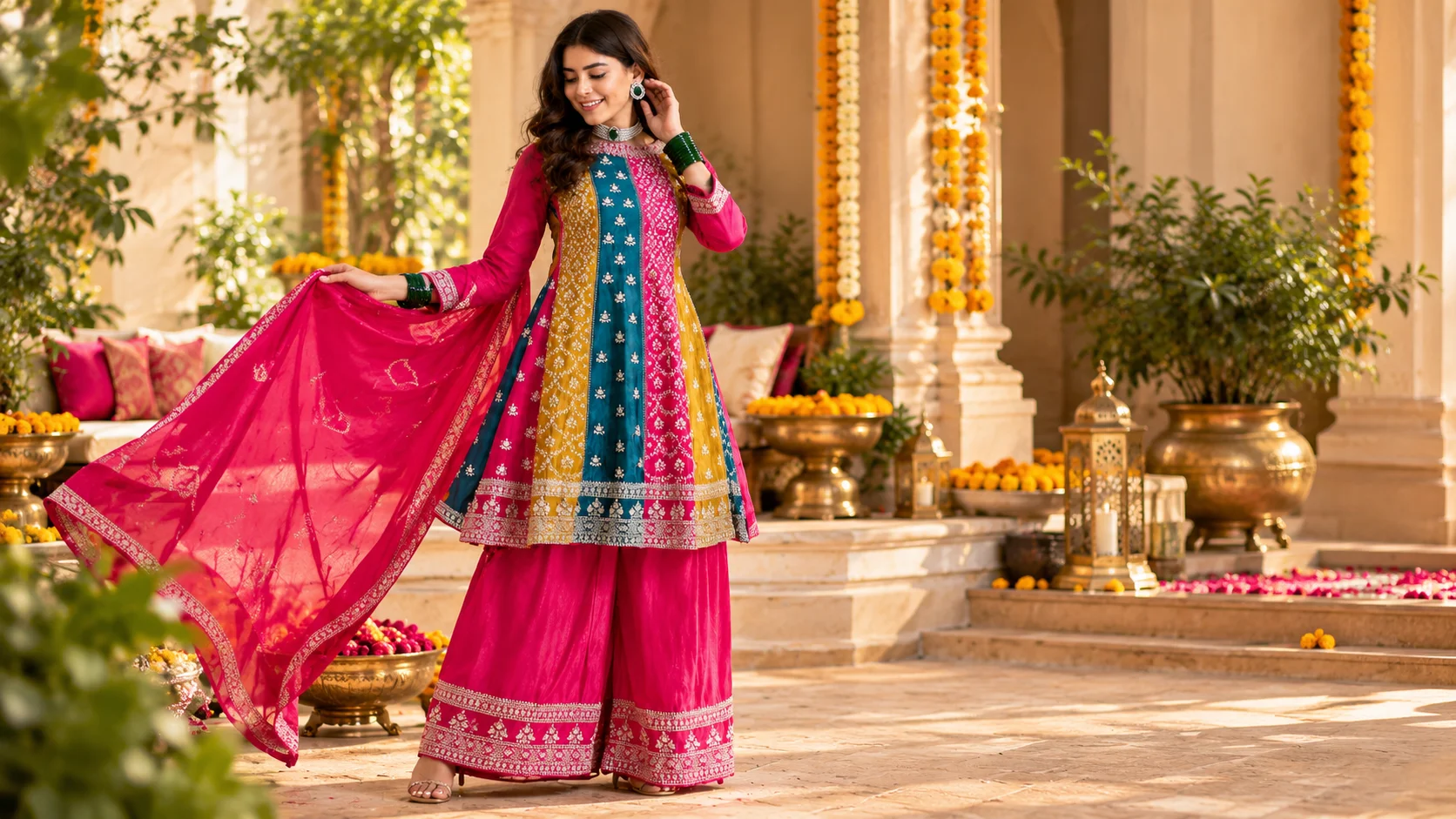
A colourful festive kurta set can make dressing for celebrations feel effortless, but the right styling choices are what bring the entire look together. When an outfit combines magenta, teal, mustard gold and detailed embroidery, it already has several strong visual elements. Adding too many competing accessories can make the overall appearance feel busy.
The secret to festive kurta set styling is to let the outfit lead, balance the jewellery, and use the dupatta, footwear and smaller accessories to create a coordinated finish. Whether you are dressing for Diwali, a family celebration, a festive dinner or a wedding function, a few thoughtful decisions can help you create a look that feels polished without losing its traditional character.
Table of Contents
Let the Colours and Embroidery Lead
A multicoloured kurta set has a built-in visual hierarchy. The brightest colour attracts attention, the embroidered details add texture, and the contrasting panels create movement across the outfit. Instead of introducing several new colours through accessories, choose one or two shades already present in the ensemble.
For a magenta, teal and mustard combination, gold-toned accessories can complement the warm details, while deep green bangles can echo an existing accent colour. Neutral footwear in beige, champagne or a similar understated shade can keep the attention on the outfit. These are styling suggestions rather than strict colour rules; the best combination depends on the exact shades and finishes.
A common mistake is matching every accessory to a different colour in the kurta. Magenta earrings, mustard footwear, teal bags and several contrasting bracelets may compete for attention. Choose one leading accessory colour and let the remaining pieces support it.
If you enjoy experimenting with colour, explore our red and blue Anarkali kurta set styling guide for another way to approach a strong two-colour outfit.
Balance Jewellery with the Neckline
Jewellery can make a festive outfit feel more formal, but the key is to decide which piece should attract the most attention. If the neckline is heavily decorated, a large necklace may compete with the embroidery. Statement earrings can be a better choice when you want the neckline to remain visible.
A choker-style necklace, on the other hand, can work well when you want to frame the neckline. If you choose a prominent choker, consider smaller earrings or a simpler design. If the earrings are the focal point, a delicate necklace or no necklace may create a cleaner result.
Bangles are another useful styling detail, especially when their colour repeats a shade already present in the outfit. You do not need to add a large ring, necklace, earrings and multiple bracelets simply because the occasion is festive. Select the pieces that contribute something distinct.
For a family gathering, balanced earrings and bangles may be enough. For an evening celebration, you could introduce a more prominent necklace or a dressier pair of earrings. The goal is not to wear less jewellery automatically; it is to avoid having every piece compete for attention.
Style the Dupatta for Different Occasions
The dupatta can change the overall impression of the same kurta set without requiring a new outfit. Its placement affects how the embroidered front, neckline and contrasting colours are seen.
For a relaxed family celebration, let the dupatta fall naturally over one shoulder while keeping the front of the kurta visible. This approach allows the embroidery and colour panels to remain part of the focal point. If you prefer a neater finish, arrange the fabric over both shoulders and secure it discreetly where needed.
For a wedding function or a more formal evening event, a carefully arranged drape can make the ensemble feel more structured. Keep the border visible where possible, particularly if it contains decorative details that complement the kurta. Avoid covering every interesting part of the outfit with layers of fabric.
For practical occasions involving movement, such as greeting guests or participating in family festivities, secure the dupatta so it stays manageable. The best drape is one that suits both the event and what you will be doing.
For more inspiration, read Vogue India’s feature on festive dupatta styling, which explores different dupatta styles and their role in occasion dressing.
Complete the Look with the Right Finishing Touches
Once the outfit, jewellery and dupatta are decided, use footwear and a bag to reinforce the occasion rather than introduce another competing focal point.
For daytime celebrations, understated flats or traditional-style footwear can keep the look relaxed. For a more formal event, embellished flats or heels may add a dressier finish. Choose a pair that suits the venue, the amount of walking involved and your personal preference. A coordinated appearance should still be practical for the occasion.
A small clutch or compact evening bag can complement a festive ensemble without distracting from the embroidery. Gold-toned, neutral or colour-coordinated details are useful starting points, but you do not need to match every accessory exactly.
Hair and makeup can also help maintain balance. If the neckline and earrings are prominent, a hairstyle that keeps them visible may work well. If you prefer to wear your hair down, consider whether it obscures the earrings or competes with the neckline. Keep the final choices consistent with the overall mood rather than treating every styling detail separately.
Explore the featured festive kurta set: If you are looking for a similar outfit for an upcoming celebration, you can review the product details and available options before deciding.
Shop the LookA Simple Final Check Before You Step Out
Before leaving, look at the complete outfit rather than judging each item separately. Check that the kurta’s main colours remain the focus, the jewellery works with the neckline, the dupatta is arranged as intended, and the footwear suits the occasion. If one accessory feels distracting, remove or replace it rather than adding another piece to balance it.
Festive kurta set styling works best when every detail has a purpose. Choose a clear focal point, repeat colours thoughtfully and adapt the finishing touches to the celebration. Start with the pieces you already own, then decide whether anything genuinely needs to be added.
Related Blogs
Frequently Asked Questions
1. How do you style a festive kurta set elegantly?
Festive kurta set styling starts with the outfit’s dominant colours and decorative details. Choose jewellery that complements the neckline, arrange the dupatta to show the kurta’s design, and select footwear suited to the occasion. Keeping one or two elements as the focal point helps the complete look feel coordinated.
2. What jewellery works best with an embroidered kurta set?
The neckline and embroidery should guide your jewellery choice. Statement earrings work well when the neckline is already detailed, while a choker can frame a simpler neckline. If you choose one prominent piece, keep the other jewellery relatively understated so the outfit retains its visual impact.
3. How should you drape a dupatta with a festive kurta?
For a relaxed gathering, drape the dupatta over one shoulder or let it fall naturally while keeping the kurta visible. For a formal event, arrange it neatly and show the decorative border where possible. Secure it appropriately when you expect to move around frequently.
4. Which footwear goes with a colourful ethnic outfit?
Embellished flats, traditional-style footwear, neutral sandals and heels can all work, depending on the outfit and occasion. Choose colours that complement the kurta rather than competing with it. Consider the venue and how much walking you expect to do before choosing a pair.
5. Can the same kurta set work for different festive occasions?
Yes. You can change the jewellery, dupatta drape, bag, footwear and hairstyle to adjust the level of formality. Simpler accessories can suit a daytime family gathering, while a more structured drape and statement jewellery may work for an evening celebration or wedding function.