
This article may contain affiliate links. We may earn a commission at no extra cost to you.
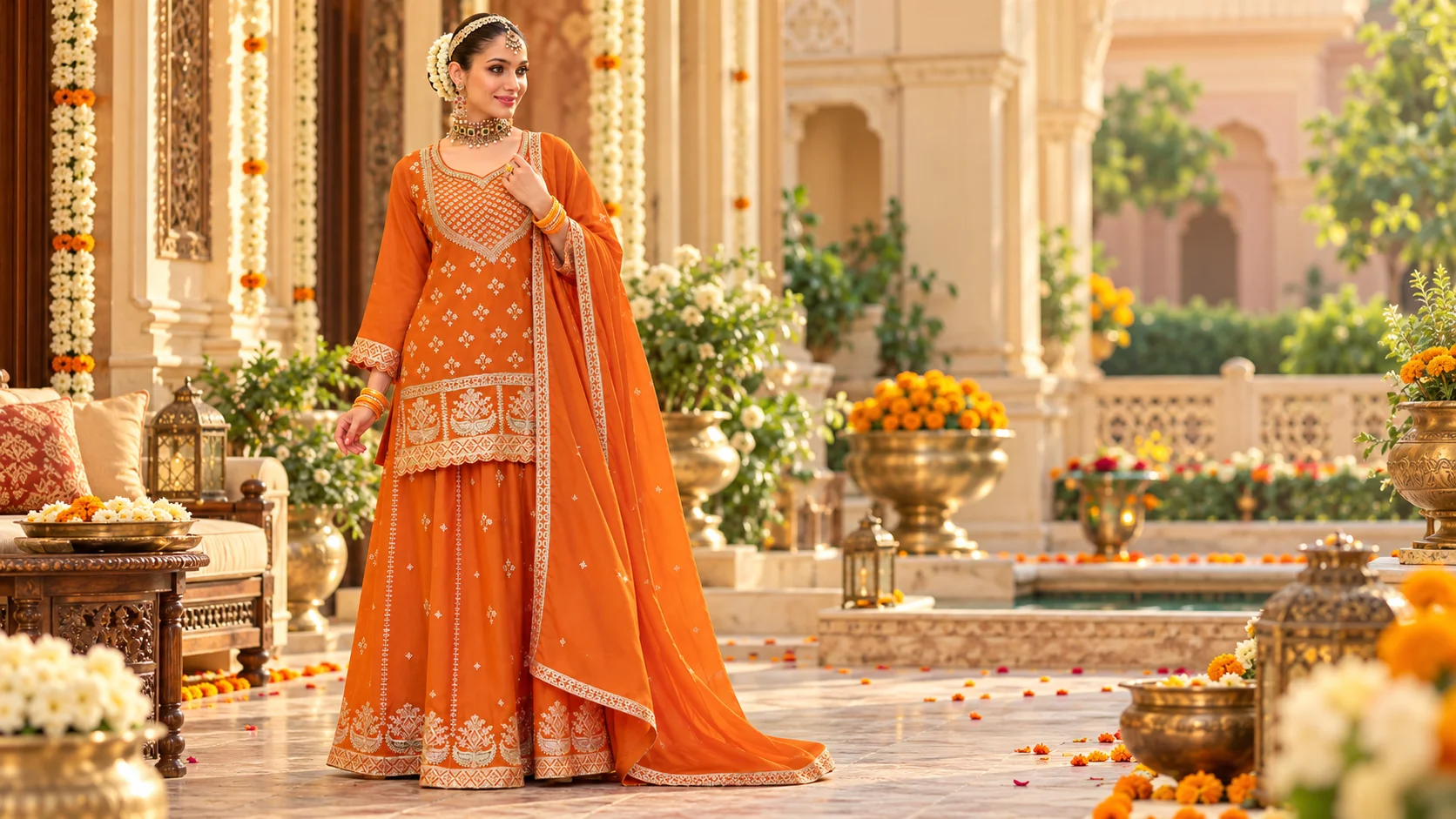
An orange ethnic outfit can make a memorable statement without needing layers of extra decoration. With its richly embroidered appearance, coordinated dupatta, flared lower silhouette and warm colour palette, this look already has several details that draw the eye. The secret is to balance those details with thoughtful jewellery, graceful draping and accessories that complement rather than compete with the outfit.
Whether you are dressing for a wedding, a festive dinner, a family celebration or a traditional gathering, learning how to style an orange ethnic outfit can help you create a look that feels coordinated and occasion-ready. Start with the garment as your focal point, then build the rest of your styling around it.
Table of Contents
Understand the Outfit’s Visual Focus
The first step in styling an orange ethnic outfit is identifying which details already attract attention. In this look, the orange base creates a strong colour statement, while the light decorative embroidery outlines the neckline, sleeves and hem. The flared lower silhouette adds movement, and the matching dupatta extends the colour through the outfit.
These details should guide your styling decisions. Instead of adding another heavily patterned layer, allow the embroidery to remain visible. A simple accompanying handbag, carefully chosen footwear and a restrained jewellery combination can make the entire look feel more intentional.
A useful rule is to choose one main focal point and let the other elements support it. If the neckline and embroidery are particularly decorative, avoid crowding that area with several competing accessories. If you prefer statement earrings, keep the remaining jewellery more understated.
A simple styling formula: one statement outfit, one main jewellery focus and a small number of coordinated finishing touches.
Shop the LookChoose Jewellery Without Overdoing It
Traditional jewellery can complement orange ethnic wear beautifully, but the right combination depends on the neckline, the amount of embroidery and the occasion.
A choker with matching earrings creates a traditional, jewellery-led look. This pairing works particularly well when you want the neckline to feel deliberate and the jewellery to connect visually with the decorative details of the outfit. If you choose a prominent choker and large earrings together, consider keeping additional necklaces to a minimum.
For a lighter approach, choose statement earrings and leave the neckline relatively uncluttered. Jhumkas, drop earrings or other traditional designs can provide enough detail without requiring a complete jewellery set. This is also a useful option when the garment itself has an elaborate neckline.
A maang tikka can add another traditional accent for weddings and celebrations. When wearing one, coordinate its visible colour and decorative style with the earrings rather than introducing several unrelated jewellery designs.
Bangles and rings should complete the combination, not become competing focal points. A coordinated set of orange, gold-tone or complementary bangles can connect with the outfit’s colour palette. If the sleeves already have decorative cuffs, keep the wrist accessories proportionate so the two details do not compete.
Style the Dupatta and Balance Proportions
The dupatta is more than a finishing layer. Its placement can change how the outfit’s silhouette and embroidery are seen.
For a relaxed family gathering or festive lunch, drape the dupatta over one shoulder and let it fall naturally. This approach keeps the outfit’s overall lines visible and avoids hiding too much of the embroidered front. It also allows the dupatta’s border to become a subtle supporting detail.
For a wedding or evening celebration, arrange the dupatta more deliberately. A neat shoulder drape can frame the neckline, while a controlled fall along one side can reveal more of the kurta and lower garment. The best arrangement is one that allows the decorative border to remain visible without making the outfit feel stiff.
Pay attention to the relationship between the kurta length and the flared lower silhouette. When both pieces have decorative borders, avoid introducing another visually busy layer at the same level. The outfit already contains enough detail to establish its character.
If you want to explore a related silhouette, see How to Style a Bandhani Anarkali Kurta Set for Festive Occasions. It offers another perspective on balancing traditional patterns, jewellery and dupatta placement.
Coordinate Colours, Footwear and Accessories
Orange works as a strong foundation for a festive outfit, so accessories do not need to match every decorative detail. Instead, choose a small supporting palette and repeat it selectively.
Cream and ivory create a softer contrast. These shades can work well for a handbag, footwear or other accessories when you want the orange outfit to remain dominant.
Gold-tone and warm metallic accents can complement the visual warmth of orange and connect with gold-toned-looking embroidery or jewellery. Keep the finish consistent where possible, particularly if your earrings, bangles and handbag hardware are all visible.
Deep brown and muted neutral shades offer another direction for accessories. They can create a more grounded appearance without introducing another bright colour.
Footwear should suit both the outfit and the event. Dressy sandals, traditional flats or refined heels can complement a wedding or festive look, depending on the venue and how much walking you expect to do. For a daytime gathering, a simpler pair of flats may be a more practical choice.
The handbag should follow the same principle. A structured clutch or compact bag can support a dressier outfit, while a simpler shoulder bag may be more convenient for a longer family event. You do not need every accessory to be embellished; a quieter bag can provide useful visual balance.
For more colour-coordination ideas, explore Colour Pairings for Traditional Outfits With 6 Stylish Power Updates.
Adapt the Outfit for Different Occasions
The same orange ethnic outfit can take on different moods through a few considered changes. You do not necessarily need a completely different set of accessories for every event.
For a wedding celebration
Let the outfit feel occasion-ready through a coordinated jewellery combination, a neatly arranged dupatta and dressier footwear. A choker, earrings and a maang tikka can work together when their scale and decorative style feel balanced. If all three are prominent, keep the remaining accessories restrained.
For a festive family gathering
Choose a relaxed dupatta drape and a comfortable-looking footwear style suited to the venue. Bangles and earrings can provide the festive detail without requiring every accessory to make a statement. This approach keeps the outfit expressive while making the styling feel less formal.
For an evening celebration
A more structured dupatta arrangement, a compact handbag and coordinated jewellery can give the outfit a more polished direction. Rather than adding multiple new colours, repeat one supporting shade through the jewellery or accessories.
For a daytime traditional event
Keep the styling lighter. Select one main jewellery feature, use a simpler bag and avoid unnecessary layers that obscure the embroidery. The orange colour and decorative borders can do much of the visual work on their own.
If you are unsure how formal to make the outfit, begin with the event’s dress code, venue and expected activities. Then adjust the jewellery and footwear rather than changing every element at once.
Make the Final Styling Check
Before heading out, look at the outfit as a complete combination rather than checking each accessory separately.
First, make sure the neckline and embroidery remain visible. Next, check that the dupatta sits where you want it and does not repeatedly cover the outfit’s most decorative areas. Finally, look for competing statement pieces. If the jewellery, bangles, handbag and footwear all draw attention independently, remove or simplify one element.
Also consider practical details such as footwear suitability, the way the dupatta stays in place and whether the accessories are appropriate for the event. These small checks can make the outfit easier to wear and help you feel more prepared.
The aim is not to make every detail match perfectly. It is to create a clear visual hierarchy in which the orange ethnic outfit remains the star.
Frequently Asked Questions
How do I style an orange ethnic outfit for a wedding?
Choose jewellery that complements the neckline, arrange the dupatta neatly and pair the outfit with dressier footwear. A choker, statement earrings and a maang tikka can create a traditional look, but keep other accessories restrained if the outfit is already heavily decorated.
What colour jewellery goes with an orange ethnic outfit?
Gold-tone and warm metallic-looking jewellery are natural options for a warm orange palette. You can also consider contrasting jewellery colours when they complement the outfit’s embroidery. Choose a coordinated combination rather than mixing too many competing colours and decorative styles.
Which footwear works with an embroidered ethnic outfit?
Dressy sandals, traditional flats and refined heels are possible choices. Consider the occasion, venue, walking requirements and overall formality before deciding. A simpler shoe can work especially well when the outfit already features prominent embroidery and decorative borders.
How should I drape a dupatta with an orange embroidered kurta?
A relaxed shoulder drape suits informal gatherings, while a more structured arrangement can work for weddings and evening celebrations. Aim to keep the neckline and decorative borders visible, and choose a drape that stays manageable throughout the event.
Can I wear a choker and a maang tikka together?
Yes. They can create a coordinated traditional look when their colours, scale and decorative styles work together. If you also choose prominent earrings, keep additional necklaces and wrist accessories relatively restrained to avoid making every part of the outfit compete for attention.
With an orange ethnic outfit, the most effective styling choices are often the most considered ones. Let the embroidery and silhouette lead, then use jewellery, dupatta placement and complementary accessories to suit the occasion. Save the styling formula and adapt one or two details whenever you want a different look.
Related Blogs
- Orange Kurta Sharara Set Styling Made Effortlessly Elegant — explore another orange ethnic silhouette.
- Red Lehenga Styling Guide for Elegant Festive and Wedding Looks — find ideas for coordinating jewellery and occasion accessories.
- Navratri Jewellery Guide to 5 Stylish, Essential Pieces — discover jewellery styling ideas for festive outfits.