
This article may contain affiliate links. We may earn a commission at no extra cost to you.
Green ethnic wear can already carry plenty of visual impact, especially when floral motifs, a coordinated bottom and a statement dupatta appear together. The most effective styling approach is often not to add more, but to decide which existing details deserve attention.
For an ornate green ethnic outfit, restrained accessories, thoughtful dupatta placement and occasion-aware finishing can create a polished look without competing with the pattern.
Table of Contents
Why Green Ethnic Wear Makes a Strong Statement
Deep green works particularly well as the visual anchor of an ethnic outfit because it can support decorative colours without disappearing behind them. When pink, gold-toned, blue or other contrasting motifs are distributed across the garment, the base colour still gives the overall look a sense of continuity.
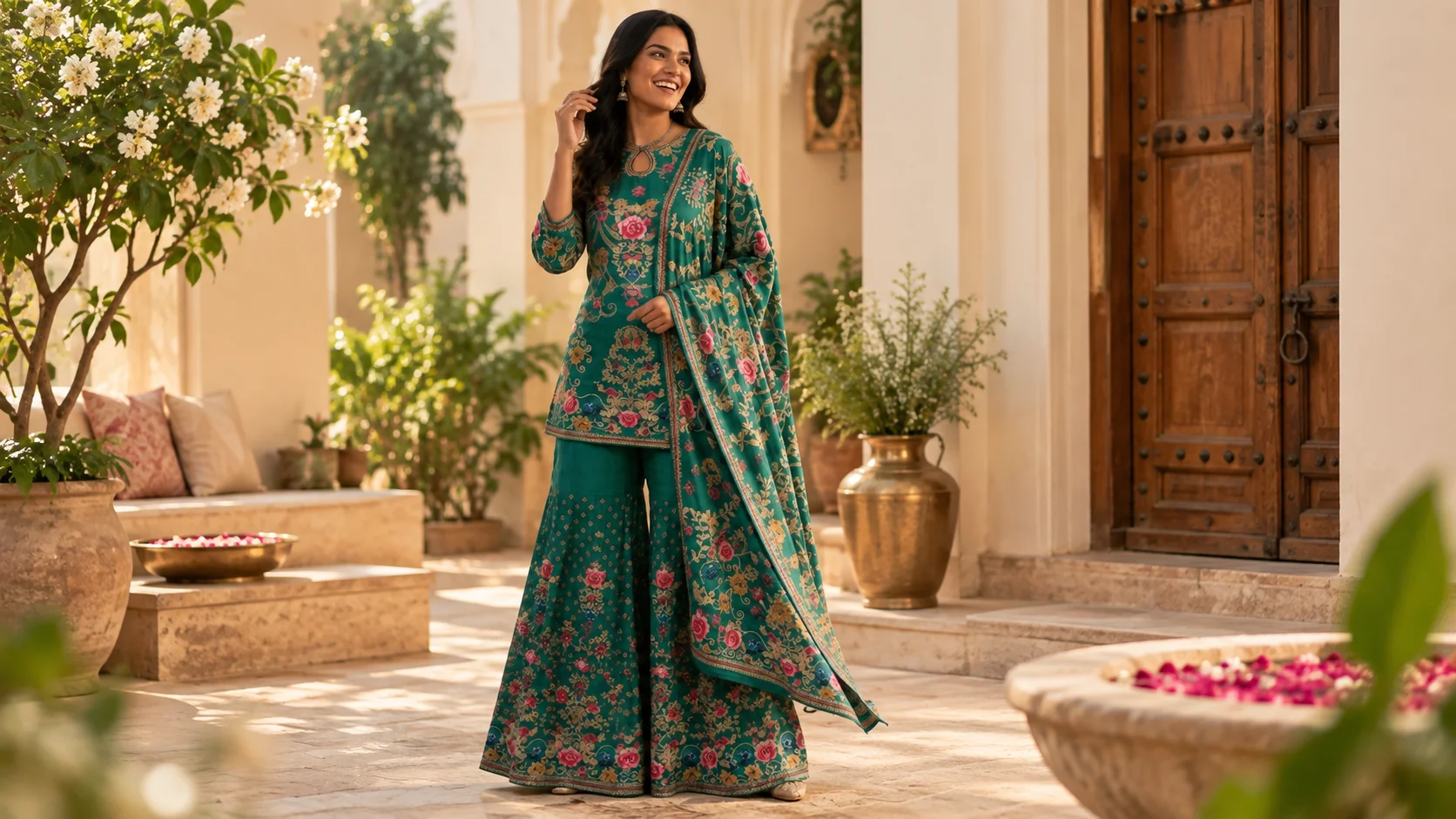
The outfit featured here combines a green kurta, coordinated wide-leg bottoms and a matching patterned dupatta. Floral and ornamental motifs carry through the pieces, while the neckline adds another visible point of interest.
That means the outfit already has several competing focal areas. Instead of treating it like a blank canvas, styling it as a finished statement is a more useful starting point.
For more ideas built specifically around this colour family, see Elegant Ethnic Green Outfit With Effortless Styling Power.
Explore This Green Ethnic StyleLet the Pattern Lead the Styling
The easiest way to style detailed green ethnic wear is to begin with what is already visible in the outfit.
If the print or decorative motif is concentrated around the neckline and lower sections, avoid covering those areas unnecessarily. A relatively open neckline lets the design remain visible, while simple earrings can add definition around the face without introducing another large pattern.
The same principle works with footwear and bags. Rather than trying to match every colour appearing in a multicoloured outfit, choose one quieter supporting direction. Neutral, gold-toned or similarly understated accessories can visually sit beside a busy pattern rather than compete with it.
This is also where colour repetition becomes useful. A small accessory can echo one secondary shade from the outfit without turning the whole look into an exact colour match.
For a broader approach to coordinating shades in Indian dressing, see Colour Pairings for Traditional Outfits With 6 Stylish Power Updates.
Style the Dupatta With Intention
A patterned dupatta can completely change the visual balance of green ethnic wear.
For a clean, elongated effect, allow it to fall from one shoulder so that a generous section of the border and motif remains visible. This works particularly well when the kurta already has detailed decoration because the drape frames the outfit rather than hiding it.
For occasions where you want a more composed presentation, bring the dupatta slightly closer to the body and allow the border to create a vertical line. If the event is more relaxed, a looser drape can make the styling feel less formal.
The key is not to create the most complicated drape. It is to make sure the dupatta looks deliberate.
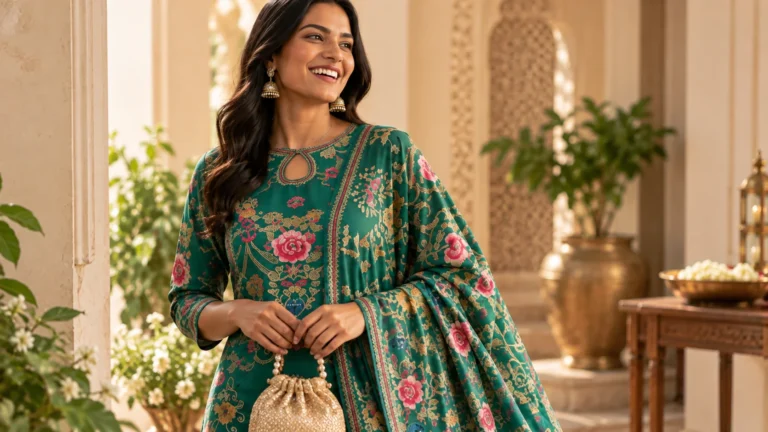
A useful final check is simple: look at the outfit as a whole before adding another accessory. If your eye already moves naturally between the neckline, floral details and dupatta, another decorative layer may not be necessary.
Choose Accessories Without Overloading the Look
Detailed ethnic wear rarely needs every traditional accessory at once.
Start with one focal accessory near the face. Jhumka-style or other statement earrings can work well when the neckline itself is decorative. In that situation, leaving out a large necklace can preserve more breathing room around the upper half of the outfit.
Next, consider the bag and footwear as supporting elements rather than separate statements. A small occasion bag can introduce a subtle contrast while keeping the outfit itself dominant. Similarly, understated embellished flats or traditional footwear can complement the overall direction without demanding attention.
If you want to introduce bangles or bracelets, consider reducing another accessory rather than simply adding them. This one-in, one-out approach is especially useful with richly patterned clothing.
The aim is visual hierarchy:
- outfit first;
- one strong accessory moment;
- quieter finishing details.
That hierarchy helps ornate clothing feel styled rather than crowded.
Adapt Green Ethnic Wear for Different Occasions
The same green ethnic outfit can take on a different mood depending on how you finish it.
For a festive gathering, a small statement bag, traditional earrings and a more deliberate dupatta drape can strengthen the occasion-ready feel. Decorative surroundings and warm evening lighting can further complement the richness of the green palette without requiring changes to the outfit itself.
For a family celebration or daytime event, reduce the accessory count. Keep the earrings, choose simple footwear and let the floral detailing do more of the work.
For a dressier celebration, you can increase the visual emphasis through one carefully chosen accessory rather than several. A stronger earring, a decorative clutch or a more structured dupatta drape can each shift the mood.
This approach also makes the outfit more reusable. Instead of searching for an entirely different look for every event, change the finishing decisions around the same statement piece.
For additional festive inspiration, see Elegant Festive Kurta Set Styling With Essential Impact.
Make the Look Feel Like Your Own
The strongest styling choice is not necessarily the most elaborate one.
You might prefer the green outfit with traditional earrings and almost nothing else. Someone else might make the dupatta the hero, while another wearer may introduce a compact occasion bag and subtle footwear.
Use the garment’s existing pattern as your boundary. If an accessory helps the eye appreciate the outfit, it is probably doing useful work. If it competes with the floral motifs, neckline, dupatta and other accessories simultaneously, simplify.
That also gives you a practical way to decide what to wear before an event: dress fully, add your intended accessories, then remove the least necessary one.
The result can feel more considered precisely because every visible element has room to register.
See the Green Ethnic Outfit DetailsGreen ethnic wear does not need complicated styling to make an impression. When an outfit already combines a strong colour, decorative motifs and a statement dupatta, thoughtful editing can be more effective than adding extra detail.
Let the pattern lead, choose one or two supporting accessories and adapt the finishing touches to the occasion. That leaves plenty of room for personal style while keeping the outfit itself at the centre.
FAQs
How should I style green ethnic wear without making it look too busy?
Let the garment’s strongest details lead. With heavily patterned green ethnic wear, try one focal accessory, restrained footwear and a deliberate dupatta drape rather than several competing statement pieces.
What jewellery works with a detailed green ethnic outfit?
Statement earrings can be an effective starting point, particularly when the neckline already has decorative detailing. You can then decide whether a necklace would enhance the look or simply compete with it.
What colour accessories can work with green ethnic wear?
Neutral and gold-toned looks are versatile options, while an accessory echoing a secondary colour already visible in the garment can create a more coordinated effect.
How can I make the same ethnic outfit work for different occasions?
Change the finishing details. Adjust the dupatta drape, jewellery, bag and footwear according to the occasion rather than changing every element of the outfit.
Should my dupatta match my kurta exactly?
Not necessarily. A coordinated dupatta can repeat colours or motifs from the outfit without being visually identical. What matters most is whether the pieces look balanced when worn together.