
This article may contain affiliate links. We may earn a commission at no extra cost to you.
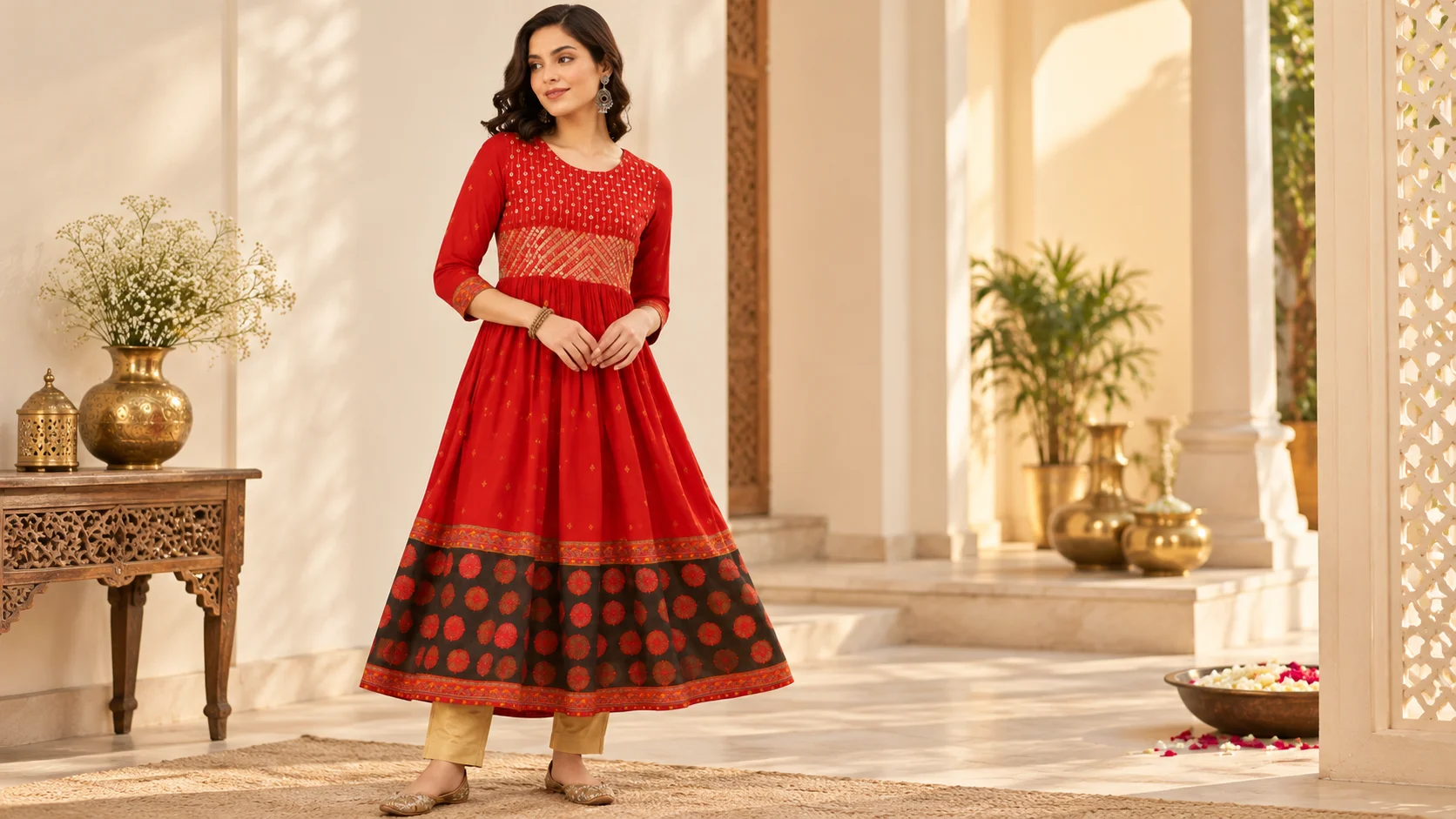
A red Anarkali kurta can make a strong style statement without needing a long list of accessories. The combination of gold detailing across the bodice, a flowing silhouette, a dark patterned hem and beige trousers already creates a clear visual hierarchy. The secret to successful red Anarkali kurta styling is to support those details rather than compete with them.
Whether you are dressing for Diwali, a wedding function, a family celebration or an evening gathering, a few thoughtful choices can help you create a polished outfit. Start with the garment’s most noticeable features, decide how much jewellery you need, and then adapt the footwear and accessories to the occasion.
Table of Contents
Red Anarkali Kurta Styling Starts with the Focal Points
The first step is to recognise where the eye naturally goes. In this look, the gold-decorated upper section draws attention towards the neckline and bodice, while the dark hem with red circular motifs creates a second point of interest near the bottom. The plain red sections between them give these details room to stand out.
Styling rule: let the existing decoration lead. Avoid adding several competing statement elements at once. For example, a heavily embellished necklace, oversized earrings, a highly decorative dupatta and a richly detailed bag could make the overall look feel crowded. A simpler supporting combination allows the Anarkali’s own pattern and colour contrast to remain visible.
The beige trousers provide a lighter visual break beneath the red and dark hem. You can use the same principle when choosing other supporting pieces: select one or two quieter colours that connect naturally with the outfit instead of introducing several unrelated shades.
For a family gathering, a simple pair of earrings, restrained bangles and neutral-toned footwear may be all you need. For a more formal event, you can introduce a stronger jewellery piece or a decorative bag while keeping the remaining accessories controlled.
Choose Jewellery Without Over-Accessorising
Gold detailing does not mean every accessory must be gold, nor does it automatically require a necklace. The better decision depends on how much visual activity already exists around the neckline and bodice.
For this particular look, earrings can frame the face without adding another large decorative area across the chest. Traditional drop earrings or jhumkas are options worth considering, especially when paired with a simple hairstyle that leaves them visible. If you prefer a necklace, choose one that sits comfortably with the neckline and does not obscure the bodice’s decoration.
Use a simple one-statement-piece approach:
- For a balanced daytime look: choose modest earrings and a small number of bangles.
- For an evening celebration: consider more noticeable earrings or a statement necklace, but avoid making both equally dominant.
- For a wedding function: a decorative clutch or a more elaborate pair of earrings can provide extra occasion detail without requiring every accessory to be prominent.
A useful next step is to explore jhumka earring styling ideas for ways to coordinate traditional earrings with different outfit styles.
If you are considering the specific Anarkali shown as your starting point, use the product listing to confirm the available details before making a purchase.
Shop the LookAdapt the Outfit for Different Festive Occasions
The same red Anarkali can create different impressions when you change the supporting pieces. Instead of building an entirely new outfit for every event, adjust the level of decoration, the footwear and the bag to suit the setting.
For daytime celebrations, keep the overall combination light in appearance. Neutral or understated footwear, simple earrings and a compact bag can complement the outfit without competing with its decorative hem. If the event involves sitting with family, moving between venues or spending time outdoors, choose footwear appropriate for the actual setting.
For evening parties and festive gatherings, the red-and-gold combination can be supported with more noticeable jewellery or a dressier bag. Keep the strongest accent near one area of the outfit. If the earrings are prominent, for instance, a quieter necklace or no necklace may create a more balanced result.
For wedding functions, consider whether the dress code calls for a more traditional finish. A coordinated dupatta, decorative footwear or a statement accessory can make the look feel more occasion-specific. However, the product listing should be checked to establish whether a dupatta or any other accessory is included; do not assume that every item shown in a styled photograph comes with the garment.
For more ideas on preparing outfits for celebrations, explore Festive Outfit Planning Made Effortless Without Buying a New Look. The useful principle is to start with what you already have and change the supporting pieces according to the occasion.
Balance Colours, Footwear and the Final Details
The red, gold and dark patterned sections already provide a strong palette. Beige is a natural supporting colour in the illustrated combination, while ivory, cream, tan and restrained metallic accents are other options to consider when choosing accessories. These are styling suggestions, not confirmed colour options for the product itself.
A practical colour rule is to repeat one existing shade in a supporting accessory and let the remaining pieces stay quieter. For example, gold-toned earrings can echo the bodice decoration, while beige or tan footwear can relate to the lighter trousers. This creates a connection between separate parts of the outfit without requiring an exact match.
Footwear should also reflect the occasion and the amount of walking involved. Embellished juttis or mojaris can reinforce a traditional festive look, while simple flats may suit a more relaxed family gathering. Dressier sandals are another possibility for suitable venues. Choose a pair that works with the garment’s length and allows you to move safely and comfortably.
Before leaving, check three details:
- The hem: make sure the garment falls clearly over the footwear without dragging or catching.
- The accessories: remove any piece that competes with the bodice or patterned hem.
- The overall palette: keep the main red-and-gold story visible and avoid introducing too many unrelated colours.
A well-balanced outfit does not need every detail to be elaborate. The garment should remain the centre of attention, with each supporting choice serving a clear purpose.
Red Anarkali kurta styling becomes easier when you treat the bodice and patterned hem as the main focal points, then adjust jewellery, footwear and other accessories around them. Start with a restrained combination and add one stronger accent only if the occasion calls for it.
Related Blogs
- Elegant Off White Cotton Floral Print Anarkali Set
- Maroon Anarkali Kurta Set Styling for Festive Occasions
- Pink Anarkali Dress Styling for a Graceful Festive Look
Frequently Asked Questions
1. How do you style a red Anarkali kurta for a festive occasion?
Red Anarkali kurta styling works well when you let the garment’s decorative details lead. Coordinate the jewellery with the neckline, choose footwear suited to the event, and use a restrained supporting colour such as beige, cream or gold. Add a statement accessory only when it does not compete with the main design.
2. Which jewellery goes well with a red Anarkali kurta?
Traditional drop earrings or jhumkas can complement a red Anarkali, particularly when the bodice already has noticeable decoration. A necklace is optional rather than essential. If you choose a prominent necklace, keep the earrings and other accessories relatively restrained to maintain a clear focal point.
3. What colour footwear goes with a red Anarkali outfit?
Beige, tan, gold-toned and other neutral footwear can work with red Anarkali outfits, depending on the accompanying trousers and accessories. Embellished juttis or mojaris suit a traditional appearance, while simple flats may be appropriate for relaxed gatherings. Consider the venue, walking requirements and garment length before choosing.
4. Can you wear a red Anarkali kurta to a wedding?
A red Anarkali can be suitable for many wedding functions, but the best choice depends on the dress code and your role at the event. Balance its decorative details with appropriate jewellery, footwear and a bag. Check any cultural or family-specific expectations before finalising the outfit.
5. How can you make a heavily decorated Anarkali look balanced?
Choose one dominant feature and let the remaining pieces support it. If the bodice and hem are both decorative, avoid combining several equally elaborate accessories. A restrained colour palette, carefully chosen earrings and simple footwear can help preserve the garment’s visual details without making the outfit feel overcrowded.