
This article may contain affiliate links. We may earn a commission at no extra cost to you.
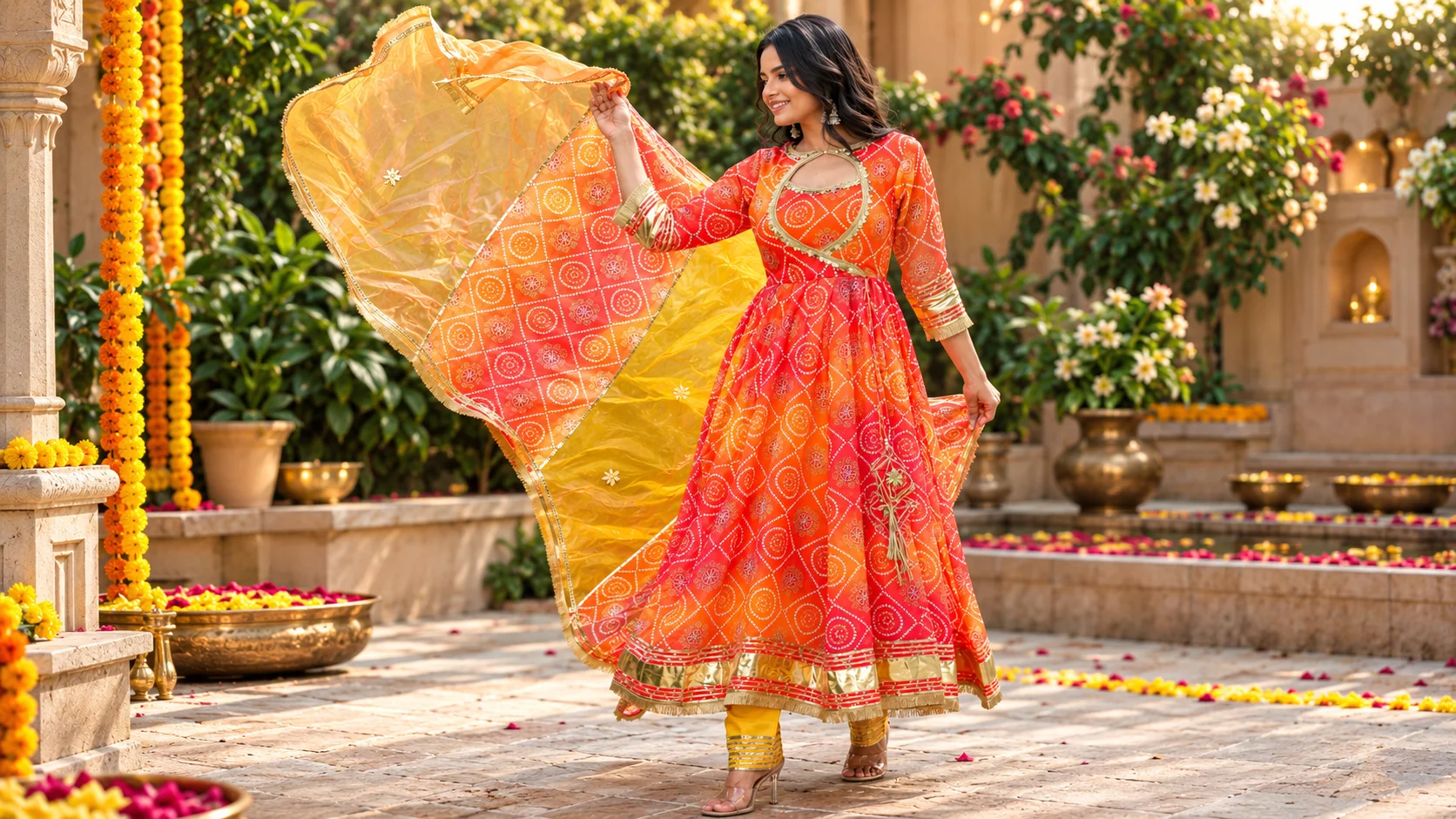
A Bandhani Anarkali kurta set already has most of what a festive outfit needs: a vivid colour story, a flowing silhouette, a decorative pattern and a coordinated dupatta. The featured ASHEERA set combines an orange Bandhani print with an Anarkali shape, Angrakha styling, a keyhole neck, three-quarter sleeves, a flared calf-length hem and gotta patti detailing. It comes with a solid churidar and a matching dupatta.
The easiest way to style a set like this is not to add more decoration at every point. Instead, let the print and flared shape establish the visual focus, then use Jewellery, dupatta placement, footwear and colour accents to control how formal the outfit feels.
Table of Contents
Why This Bandhani Anarkali Kurta Set Has a Strong Focal Point
The first thing to notice is the relationship between the saturated orange-red colour, repeated Bandhani patterning and the flared Anarkali silhouette. The Angrakha-inspired front and keyhole neckline also create a defined area around the upper body, while the broader skirt carries the pattern downwards. That gives the outfit movement without needing a large number of supporting pieces.
The styling rule is simple: choose one area to emphasise and allow the rest to support it. With this set, statement earrings can frame the face while the neckline and print remain visible. A heavily layered necklace may create unnecessary competition around the keyhole and Angrakha detailing, so a cleaner neckline can often look more deliberate.
This same focal-point principle is useful beyond one outfit. Nimon Group’s [Pink Anarkali Dress Styling for a Graceful Festive Look] explores how a strongly coloured Anarkali can be adapted with Jewellery, dupatta placement and finishing details.
Explore This Bandhani Anarkali Kurta SetHow to Style a Bandhani Anarkali Kurta Set Without Over-Accessorising
Start with the dupatta because it is one of the easiest ways to change the visual balance. A relaxed shoulder drape can keep the outfit soft and flowing for a family gathering or festive lunch. For a wedding or evening celebration, a more controlled drape can reveal the neckline and decorative border while making the overall look feel more intentional.
Next, choose Jewellery according to the amount of detail already present. Gold-tone or warm metallic-looking earrings can echo the decorative trim without introducing a competing colour. Jhumkas or other traditional statement earrings are a natural direction when you want the outfit to feel more festive. If the earrings are prominent, keep additional neck and wrist pieces restrained.
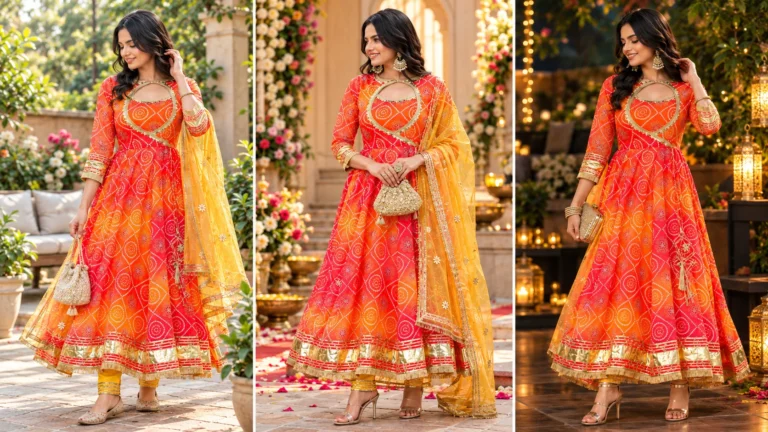
The solid churidar gives you useful visual breathing space beneath the printed kurta. Rather than adding another strong print, keep the footwear relatively simple. A warm metallic-looking sandal, refined heel or traditional flat can support the festive character while allowing the Anarkali to remain the hero.
For more ideas on coordinating supporting shades, Nimon Group’s Colour Pairings for Traditional Outfits With 6 Stylish Power Updates can help when you are deciding which accent colours to repeat through accessories.
How to Adapt the Look for Different Occasions
The same Bandhani Anarkali kurta set can move between occasions when you change only a few finishing details.
For a festive lunch or family gathering, keep the dupatta relaxed, choose statement earrings and use understated footwear. The bright colour already provides enough visual energy.
For a wedding-guest look, increase refinement rather than simply adding more accessories. A deliberate dupatta drape, dressier earrings and polished footwear can make the outfit feel more occasion-ready. A small traditional-style handbag can add another supporting detail if its colour does not compete with the print.
For an evening festive celebration, use the gold-looking detailing as a cue for your accessories. Warm metallic accents can connect the border, Jewellery and footwear into one colour story. Keep the number of accent colours controlled so the orange-red base remains dominant.
For Navratri or another colourful celebration, the printed silhouette can stand on its own. If you add Jewellery, choose pieces that complement rather than repeat every decorative detail. Nimon Group’s Festive Outfit Planning Made Effortless Without Buying a New Look offers a broader approach to refreshing one strong wardrobe piece for different occasions.
See Sizing & Colour OptionsThe Finishing Details That Make the Outfit Feel Complete
The final step is to check the whole outfit from a distance rather than judging each piece separately. The kurta has a strong pattern, the hem has decorative weight and the dupatta adds another layer of movement, so balance matters more than quantity.
Hair and earrings should work together. If the earrings are the focal point, keep them visible rather than hiding them beneath the hairstyle. Makeup can stay complementary rather than introducing another dominant colour.
The footwear should also follow the occasion. A refined heel can make it dressier, while a traditional flat suits relaxed daytime celebrations. The important point is to keep the footwear visually supportive rather than turning it into a second statement.
Before leaving, check three things: the neckline is still visible, the dupatta is arranged comfortably for movement, and the accessories are not competing with the printed skirt. If those three elements feel balanced, the outfit is already doing most of the styling work for you.
A simple formula to remember
Strong print + controlled Jewellery + intentional dupatta + complementary footwear = a polished festive look.
This Bandhani Anarkali kurta set does not need to be transformed. It needs to be edited. Let the vivid print and flowing shape lead, then choose supporting details that make the outfit feel right for the occasion.
Related Blogs
- Elegant Sangria Bandhani Kurti Set With Effortless Style — useful for another Bandhani-led festive styling approach.
- Orange Kurta Sharara Set Styling Made Effortlessly Elegant — useful for exploring another orange ethnic outfit silhouette.
- Navratri Jewellery Guide to 5 Stylish, Essential Pieces — useful when choosing Jewellery for colourful festive dressing.
Frequently Asked Questions
What is the best way to style a Bandhani Anarkali kurta set?
Let the printed Anarkali remain the focal point. Pair it with selective statement Jewellery, a considered dupatta drape and complementary footwear. Warm metallic-looking details can be repeated in small doses, while keeping the neckline and print visible maintains a balanced festive look.
What Jewellery goes with an orange Bandhani Anarkali?
Warm gold-tone or traditional-style earrings are an easy choice because they complement the outfit’s decorative detailing. Jhumkas can add a festive feel, while additional necklaces or bangles should be kept controlled if the neckline and print are already visually strong.
How should I drape the dupatta with an Anarkali?
For a relaxed daytime look, a soft shoulder drape can preserve the flowing feel of the outfit. For weddings or evening celebrations, a more deliberate arrangement can reveal the neckline and decorative border while giving the overall silhouette a neater finish.
Can I wear a Bandhani Anarkali to a wedding?
Yes. The level of formality can be adjusted through the dupatta, Jewellery and footwear. Dressier earrings, polished footwear and a more structured drape can make the same outfit suitable for a wedding celebration, while simpler accessories can work for daytime events.
What colour accessories work with an orange-red kurta set?
Gold, warm metallic tones, ivory and carefully chosen complementary shades can work well with an orange-red base. The safest approach is to repeat one supporting colour rather than introduce several competing accents, allowing the Bandhani pattern to remain the visual anchor.