
This article may contain affiliate links. We may earn a commission at no extra cost to you.
A wedding outfit does not need to be covered in layers to look memorable. With a richly embroidered men’s dhoti kurta set, the smarter approach is to decide what deserves attention first, then keep every supporting detail in proportion.
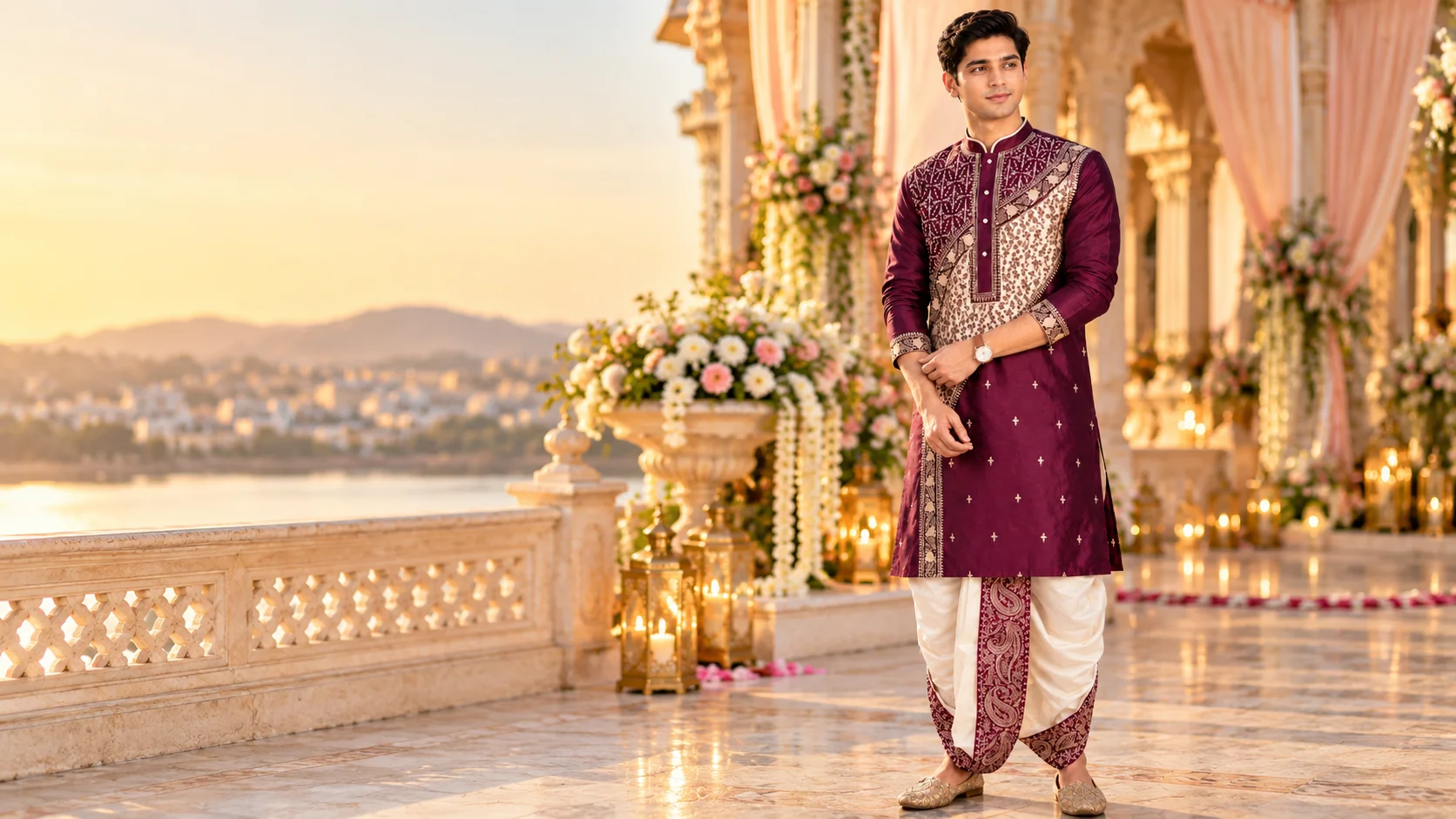
The Gouri Collections set combines an embroidered Jaffran silk kurta with a Dupion silk dhoti, creating a deep maroon-and-ivory foundation with a distinctly traditional character. The visual styling adds ornate borders and traditional juttis, so the goal is to refine that story rather than compete with it.
Table of Contents
Let the Men’s Dhoti Kurta Set Lead the Look
The upper half of this men’s dhoti kurta set carries the strongest visual information: a deep maroon colour, concentrated embroidery around the chest and placket, a stand collar and decorative border work. That naturally creates the focal point of the outfit.
A useful styling rule is to keep the area around that focal point quieter. Avoid adding another highly patterned layer near the neckline unless the occasion genuinely calls for it. A simple watch, clean grooming and restrained accessories allow the embroidery to remain the detail people notice first.
This approach also fits the longer history of the kurta as an Indian menswear garment. The Metropolitan Museum of Art holds embroidered Indian kurtas classified as menswear, including examples made from cotton and silk. The Metropolitan Museum of Art’s embroidered Indian kurta collection record That context reinforces why an embroidered kurta can carry the visual identity of an occasion outfit without needing excessive decoration.
See the Gouri Collections Dhoti Kurta Set DetailsUse the Ivory Dhoti to Create Clean Contrast
The maroon-and-ivory combination does much of the colour work for you. The deep upper half feels rich and formal, while the lighter dhoti creates visual separation and prevents the outfit from becoming one uninterrupted block of dark colour.
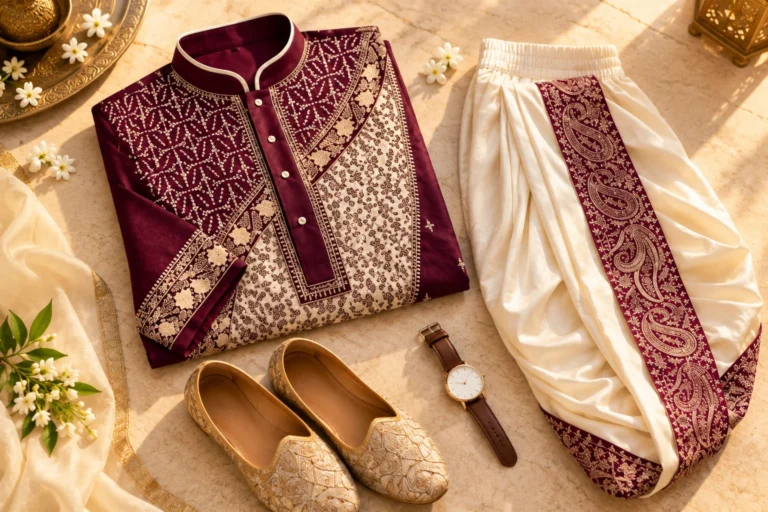
Keep that contrast intentional. If you add a stole, pocket detail or another accessory, choose a finish that connects with either the ivory or the warm decorative tones already present. Avoid introducing several unrelated bright colours simply because the event is festive.
If you are comparing other traditional colour combinations, the same principle is useful: let one colour dominate, use a second shade to create structure, and reserve any extra colour for a small accent.
The result should feel coordinated rather than perfectly matched. That distinction matters because an embroidered kurta already has enough pattern to give the outfit personality.
Use Footwear and Accessories to Control Formality
Footwear is one of the easiest ways to change the character of a traditional outfit. The ornate juttis shown with this set reinforce the ceremonial mood, making them particularly suitable when the setting is a wedding, reception or festive gathering. For a less formal daytime celebration, a simpler traditional shoe can create a quieter finish.
Accessories should follow the same logic. One classic watch can add polish without creating another focal point. If you want to introduce Jewellery, keep the scale modest and consider the embroidery already occupying the chest area. A heavy necklace competing with dense upper-body embroidery can make the composition feel crowded.
The same restraint applies to grooming. A neat hairstyle and well-finished overall appearance support the traditional silhouette without adding visual noise.
For another perspective on richly patterned menswear and heritage styling, Nimon Group’s Elegant Men’s Tribal Jacquard Kurta Set guide explores how a highly decorative kurta can remain the centre of a festive look.
Adapt the Men’s Dhoti Kurta Set to the Occasion
The strongest reason to choose a set like this is its ability to communicate occasion dressing without relying on a conventional suit. For a daytime family celebration, keep the accessories light, let the ivory dhoti remain prominent and avoid unnecessary layering.
For an evening wedding or reception, the same maroon-and-ivory foundation can feel more formal when paired with polished traditional footwear, a refined watch and carefully chosen finishing details. The key is to increase definition rather than simply adding more pieces.
There is also a useful dress-code distinction. A wedding guest outfit should look celebratory while still leaving the most dramatic styling choices to the couple and wedding party. If the invitation suggests a particularly formal or ceremonial dress code, a more elaborate traditional finish may make sense; for a relaxed gathering, the same set can be styled with greater restraint.
The Metropolitan Museum’s collection shows how embroidered kurtas have long existed within Indian menswear, but modern styling gives you room to adjust the surrounding pieces for the setting. The garment can remain traditional while the overall presentation feels current.
Check the Final Details Before the Event
Before leaving, look at the outfit as one complete composition rather than checking each item separately. The kurta should remain the visual anchor, the ivory dhoti should provide contrast, and the footwear should support the level of formality.
Then check the small details: is the embroidery visible, are the accessories competing with the neckline, and does the footwear feel appropriate for the venue? If the answer is yes, the outfit is probably doing enough.
The best styling choice here is not adding another statement piece. It is knowing when the embroidered men’s dhoti kurta set has already made its statement.
Related Blogs
Frequently Asked Questions
What is the best way to style a men’s dhoti kurta set?
Let the embroidered kurta remain the focal point, then use the dhoti, footwear and accessories to support its colour and formality. With a detailed maroon kurta, ivory bottoms and restrained accessories create a balanced festive look.
What colour dhoti works with a maroon kurta?
Ivory, cream and other light neutrals create a strong contrast with maroon while keeping the outfit traditional. The lighter bottom also gives the embroidered upper section more visual definition without introducing another dominant colour.
Which footwear works with a men’s dhoti kurta set?
Traditional juttis or other refined ethnic footwear generally complement a dhoti kurta set well for weddings and festive occasions. Choose the level of ornamentation according to the venue and dress code rather than automatically selecting the most decorated pair.
Should I wear Jewellery with an embroidered kurta?
You can, but it is not essential. If the kurta already has dense embroidery around the chest and neckline, keep Jewellery understated so it supports rather than competes with the main design.
Can a dhoti kurta set work for different wedding occasions?
Yes. The same set can be made quieter for a daytime family function or more defined for an evening reception by changing footwear and accessories. The core colour and embroidered kurta can stay the same while the supporting details shift the mood.