
This article may contain affiliate links. We may earn a commission at no extra cost to you.
Warm autumn days create an unusual footwear dilemma. It may look like autumn outside, but temperatures can still feel too mild for heavy winter boots — while very summery shoes can seem disconnected from the rest of a layered seasonal outfit.
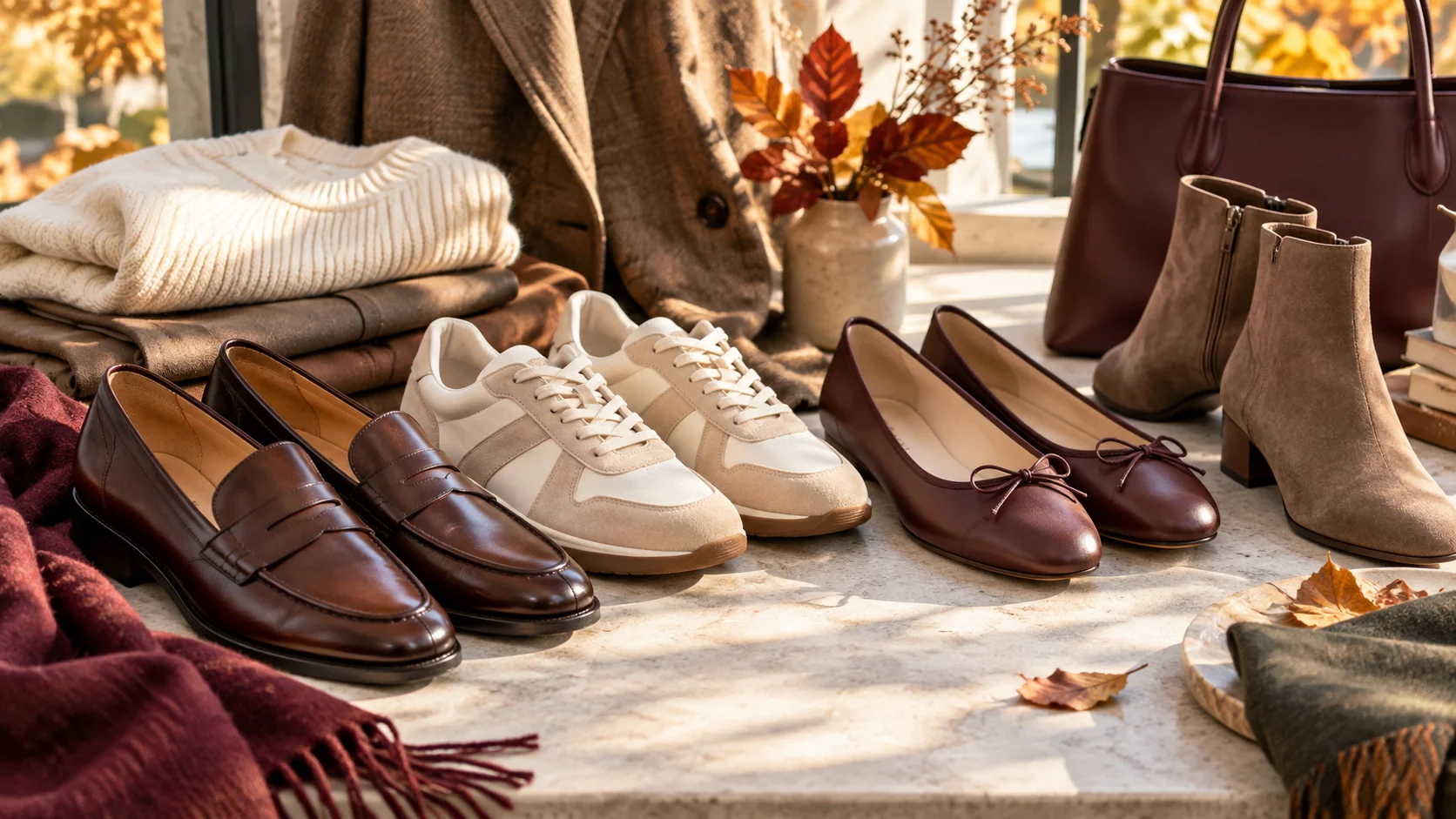
The easiest solution is to choose transitional footwear that visually works with autumn clothing without adding unnecessary heaviness. Loafers, streamlined trainers, ballet flats and lightweight ankle boots can all bridge this seasonal gap, depending on the weather, walking demands and outfit.
Table of Contents
Why Transitional Footwear Works in Warm Autumn
Good transitional footwear is less about following a single trend and more about balancing season, outfit and practicality.
When autumn begins but temperatures remain comfortable, your clothes may already be shifting towards denim, trousers, cardigans, light jackets and richer seasonal colours. Your shoes need to make the same transition without jumping immediately to cold-weather footwear.
Current Fall 2026 fashion coverage reinforces this flexible approach. Loafers remain particularly relevant for autumn styling, while flats, trainers and updated classic shoe shapes continue to appear across seasonal fashion coverage. Vogue’s current autumn footwear coverage is useful further reading for the broader trend context.
The practical rule is simple: dress for the actual temperature first and the calendar second.
Loafers for Polished Everyday Dressing
Loafers are one of the easiest transitional footwear ideas because they sit comfortably between casual and polished dressing.
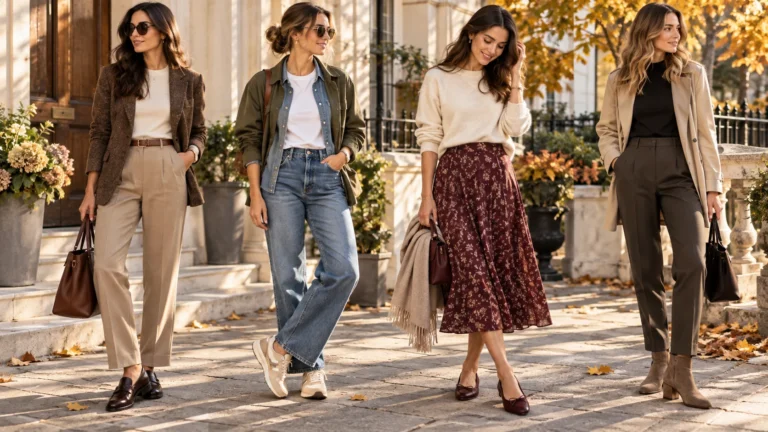
A simple loafer can work with straight-leg jeans and a lightweight knit for an everyday look. With tailored trousers, a tucked-in shirt and a light blazer, the same general footwear style can move towards smart casual territory.
Black, dark brown, burgundy and other deeper neutrals naturally connect with autumn palettes. However, you do not need to buy a new seasonal colour if a neutral pair already works with most of your wardrobe.
For warm days, consider the entire outfit rather than making the shoe look artificially autumnal. Cropped trousers or relaxed denim can keep the silhouette lighter while the loafer provides enough structure to signal the seasonal change.
Vogue’s August 2026 loafer guide similarly presents loafers as a practical autumn style that can move between preppy, polished and everyday outfits.
Retro Trainers for Relaxed Autumn Outfits
When walking and everyday practicality matter, streamlined trainers can be an effective bridge between seasons.
Rather than treating trainers purely as sportswear, pair them with pieces that already carry an autumn mood: straight jeans, relaxed trousers, an overshirt, a cardigan or a lightweight jacket.
Earthy neutrals can make the combination feel particularly seasonal, but colour is a styling choice rather than a requirement.
Current Fall 2026 coverage continues to show trainers as part of the seasonal footwear conversation. Vogue’s Fall 2026 sneaker report includes classic plimsolls and other streamlined or personality-led interpretations, demonstrating how trainers remain relevant as temperatures begin to fall.
For a versatile wardrobe, prioritise compatibility with clothes you actually wear rather than choosing a highly distinctive shoe simply because it is trending.
Ballet Flats for a Lighter Silhouette
Ballet flats can be especially useful on those autumn days that still feel almost like late summer.
They work naturally with ankle-length trousers, midi skirts, relaxed denim and dresses layered with a cardigan or light jacket. Because their silhouette is visually lighter than a boot, they can prevent an outfit from feeling too heavy when the weather remains mild.
For 2026, flats remain visible in seasonal fashion coverage, with designers experimenting with different toes, textures, embellishment and hybrid shapes.
Comfort, however, should not be assumed simply because a shoe is flat. Fit, cushioning and support vary significantly between individual designs. For a day involving substantial walking, judge the actual shoe rather than the category.
Lightweight Ankle Boots When the Weather Turns
Not every warm autumn day stays warm.
If the forecast suggests cooler evenings, wind or unsettled weather, an ankle boot can provide more coverage while still working with transitional clothing.
The key is proportion. Heavy winter boots may visually overpower lightweight early-autumn outfits, whereas a cleaner ankle-boot silhouette can pair comfortably with straight jeans, midi skirts or relaxed trousers.
Suede and other textured finishes are visible in seasonal fashion coverage, but material choice should also reflect local weather and the manufacturer’s care guidance. A fashionable finish is not automatically the practical choice for wet conditions.
For genuinely changeable weather, think beyond appearance. Consider the sole, coverage, your expected walking distance and the conditions you are likely to encounter.
How to Choose the Right Pair for Your Day
The most useful transitional shoe is not necessarily the newest or most fashionable one. It is the pair that works with your outfit and the day ahead.
Before leaving home, consider four things:
Temperature: A warm afternoon may call for considerably less coverage than a cold evening.
Walking: A short café visit and a full day exploring a city place very different demands on footwear.
Weather: Rain or damp pavements can change which materials and soles make practical sense.
Outfit balance: Structured trousers may pair naturally with loafers, while casual denim may work equally well with trainers, flats or ankle boots.
This is where transitional dressing becomes easier. Instead of asking which shoe is universally “best” for autumn, ask which pair completes the specific outfit without compromising the practical needs of the day.
Build Around Versatility, Not a Huge Shoe Rotation
A transitional wardrobe does not require a different shoe for every outfit.
For many wardrobes, a small selection covering distinct situations is more useful: perhaps one polished everyday option, one comfortable casual pair and one more covered choice for cooler or less predictable conditions.
The exact combination will depend on climate, personal style, dress codes and how much walking you normally do.
Colour compatibility can make a small rotation work harder. Black, brown, cream, grey and other adaptable neutrals are straightforward options, but burgundy, olive or another recurring wardrobe colour can serve the same purpose if it coordinates with what you already own.
The goal is not to build a theoretically perfect autumn shoe collection. It is to make getting dressed easier.
The Simplest Warm-Autumn Formula
When the weather sits somewhere between summer and true autumn, footwear should be equally adaptable.
Start with what the day requires. Then use loafers when you want polish, trainers when practicality leads, flats when you want a lighter silhouette, or ankle boots when additional coverage makes sense.
That approach keeps transitional footwear useful beyond a single trend cycle and allows seasonal style to come from the complete outfit rather than one supposedly essential purchase.
FAQs
What is the best transitional footwear for warm autumn days?
Transitional footwear such as loafers, trainers, flats and lightweight ankle boots can all work. The best choice depends on temperature, weather, walking requirements and the rest of your outfit.
Can I still wear flats in autumn?
Yes. On mild, dry days, flats can work well with trousers, denim, skirts and layered dresses. Choose the individual pair according to fit, comfort and expected walking.
Are trainers suitable for autumn outfits?
Yes. Streamlined trainers can pair naturally with jeans, trousers, knitwear, overshirts and lightweight jackets, making them useful for casual transitional dressing.
When should I switch to ankle boots?
Consider ankle boots when cooler temperatures, additional coverage or changing conditions make them more practical. There is no fixed calendar date for switching footwear.
Do autumn shoes have to be brown or black?
No. Neutral shades are easy to coordinate, but burgundy, olive, cream and other colours can work equally well when they complement the rest of your wardrobe.