
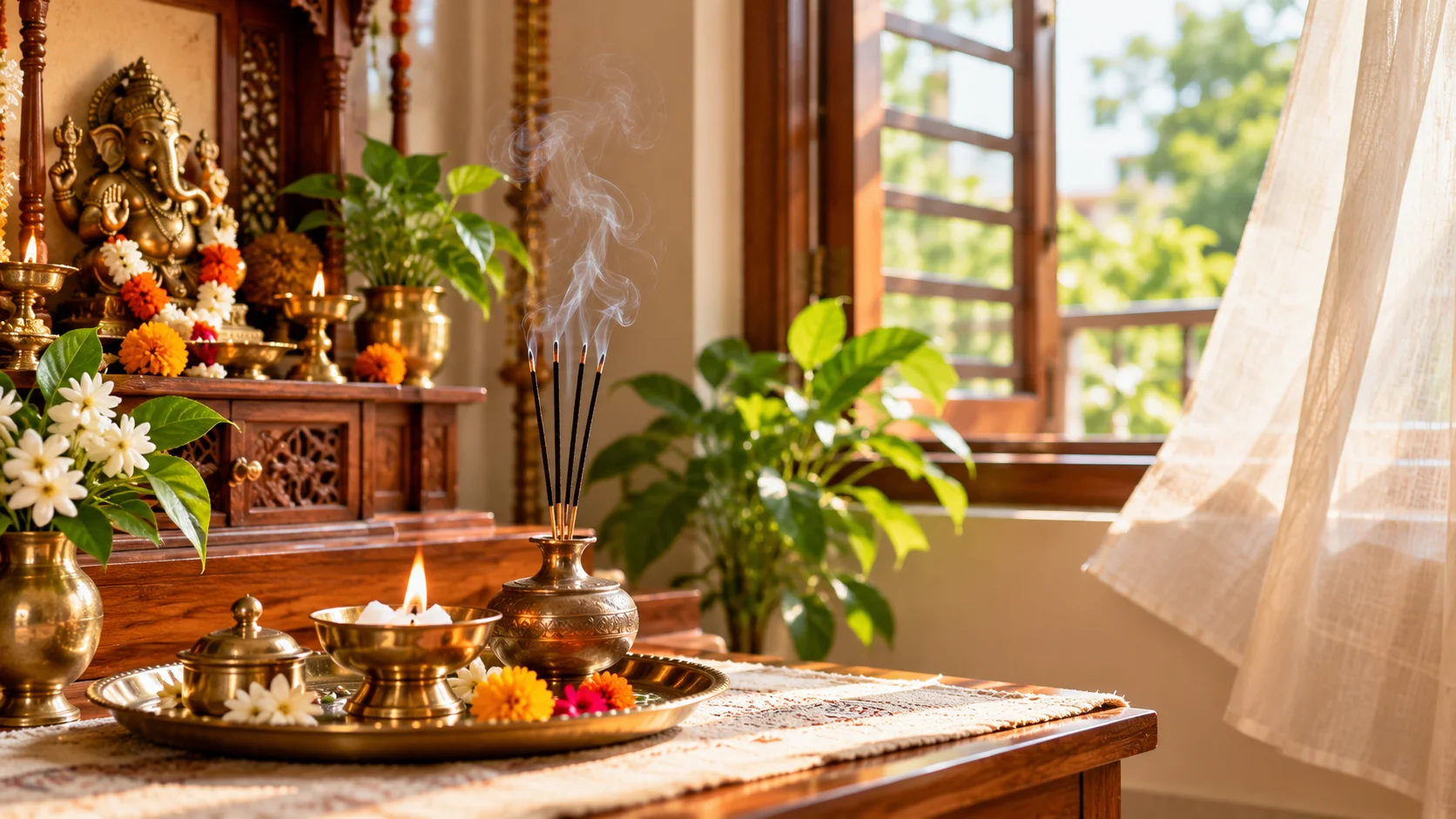
Vastu cleansing is often discussed through familiar Indian rituals such as lighting incense or using camphor. These practices can have genuine cultural and devotional meaning, but that does not make their claimed effects scientifically established. A sensible approach is to respect the tradition while treating smoke, flames and indoor air as practical safety matters.
For a modern home, the useful question is not simply whether camphor or incense is considered cleansing. It is how to keep the ritual proportionate, well ventilated and safely separated from children, pets, fabrics and other combustible materials.
Table of Contents
What Vastu Cleansing Means in Traditional Practice
Vastu is a traditional Indian approach to architecture and spatial planning, and its modern use is not always identical to the prescriptions of historical texts. Scholarship on Vastu Vidya distinguishes traditional textual prescriptions from later and contemporary interpretations, so popular cleansing remedies should not automatically be presented as ancient Vastu rules. 🌐
Within contemporary household practice, incense, camphor, lamps and other ritual elements may be used to create a devotional or symbolic sense of renewal. Some practitioners associate these rituals with clearing an unwanted atmosphere or resetting a space. Those are traditional or symbolic interpretations, not proven cause-and-effect claims.
That distinction matters. You can include a familiar ritual in your home because it is meaningful to you without treating it as a guaranteed way to remove “negative energy”, improve health or attract wealth.
For readers exploring a prayer space, our guide to Prayer Corner Vastu can help with the broader placement and organisation of a sacred area.
Camphor and Incense Are Not the Same Safety Question
Camphor and incense are often mentioned together, but they create different practical considerations because both involve combustion.
Incense produces smoke and fine particulate matter. Research reviews identify incense as one source of indoor particulate pollution, while the U.S. Environmental Protection Agency specifically recommends ensuring proper ventilation when burning candles and incense indoors. 🌐 🌐
That does not mean a brief, occasional ritual should be treated as automatically dangerous. It does mean that a closed, poorly ventilated room with prolonged smoke exposure is a poor setup. The amount of smoke, duration of burning, room size and ventilation all matter.

Camphor also needs to be treated as a combustible material rather than simply as a symbolic object. Keep a burning camphor source on a stable, heat-resistant surface, away from curtains, paper, loose clothing and decorative materials. Never leave an open flame unattended.
A Practical Way to Use Incense at Home
If incense is part of your household or devotional routine, start with the room rather than the ritual.
Choose a stable holder and position it where the smoke can disperse rather than collect around the face. A window or suitable ventilation path can help move indoor pollutants out of the room. The EPA recommends proper ventilation when burning incense, making airflow a practical priority alongside the cultural practice.
Keep the amount of incense modest. More smoke does not make a traditional practice more meaningful, and it can unnecessarily increase indoor particulate exposure. Research has found that incense burning can contribute to indoor PM2.5, although exposure varies considerably between products and settings.
If several people share the room, consider their comfort and sensitivity to smoke. WHO notes that incense burning can be one source of indoor air pollution and that indoor exposure depends on factors including ventilation and building characteristics. 🌐
For anyone with a respiratory condition, young children or other people who may be particularly sensitive to smoke, reducing exposure is a sensible precaution rather than something to solve through Vastu remedies.
Keep the Ritual Separate From Safety Decisions
One of the most useful Vastu habits is knowing where traditional guidance ends and practical safety begins.
Do not use a Vastu explanation to justify placing incense beside curtains, on an unstable shelf or close to electrical equipment. Likewise, do not keep burning camphor in a location simply because a popular practitioner associates that direction with a particular symbolic effect.
Directions can be important within Vastu traditions, but they should not override basic safety. If a placement is recommended for a ritual, first make sure the area is stable, ventilated and clear of combustible materials. If you are unsure about a fire-related installation or structural change, seek appropriate professional advice.
The same principle appears in other Nimon Group guidance where traditional Vastu considerations are weighed against practical fire, gas and electrical safety: Kitchen Vastu vs Fire, Gas and Electrical Safety is a useful related example.
A Simple Vastu Cleansing Routine Without Overdoing It
A restrained routine can preserve the cultural character of the practice without turning it into a complicated “remedy” programme.
First, tidy the area and remove unnecessary clutter. Then prepare a stable, clean surface for any incense or camphor holder. Open a window or use suitable ventilation where appropriate. Use only a modest amount and keep the flame attended.
After the ritual, extinguish the flame completely and allow the room to air out. Store combustible materials safely and keep matches, lighters and camphor away from children and pets.
Most importantly, treat the ritual as a cultural or personal practice. There is no need to buy expensive objects, make structural changes or repeatedly “correct” a home because someone claims that an unseen problem is causing bad luck.
The Bottom Line
Vastu cleansing can be approached as a meaningful cultural practice without confusing tradition with scientific proof. If you use camphor or incense, make ventilation, flame control and household safety the non-negotiable part of the routine. The goal is a calm, respectful space—not more smoke, fear or expensive remedies.
Related Blogs
- Prayer Corner Vastu Made Simple for a Beautiful Sacred Space
- Essential Vastu Tips for a Positive Festive Season
Frequently Asked Questions
1. What is Vastu cleansing with camphor and incense?
Vastu cleansing with camphor and incense refers to traditional or contemporary household practices in which these materials are used during devotional or symbolic space-reset rituals. Their cultural meaning can be respected, but claims that they scientifically remove negative energy or guarantee health, wealth or luck are not established facts.
2. Is burning incense indoors safe?
Incense creates smoke and can contribute to indoor particulate matter. Safety depends on factors such as ventilation, quantity and duration. The U.S. EPA recommends proper ventilation when burning incense indoors, so avoid prolonged burning in a closed, poorly ventilated room.
3. Where should I place incense for Vastu?
Vastu traditions and modern practitioners may give different placement advice. Rather than treating one direction as universally mandatory, first choose a stable, well-ventilated location away from curtains, paper, electrical equipment and other combustible materials.
4. Can camphor or incense improve health or remove negative energy?
They should not be presented as medical treatments or scientifically proven methods for removing negative energy. Their use can have cultural, devotional or symbolic meaning. Indoor-air and fire-safety decisions should be based on appropriate practical guidance instead.
5. Should children or pets be around burning incense or camphor?
It is safer to keep children and pets away from open flames, hot holders and burning materials. Never leave a burning ritual unattended, and keep combustible materials and camphor stored securely when not in use.