
This article may contain affiliate links. We may earn a commission at no extra cost to you.
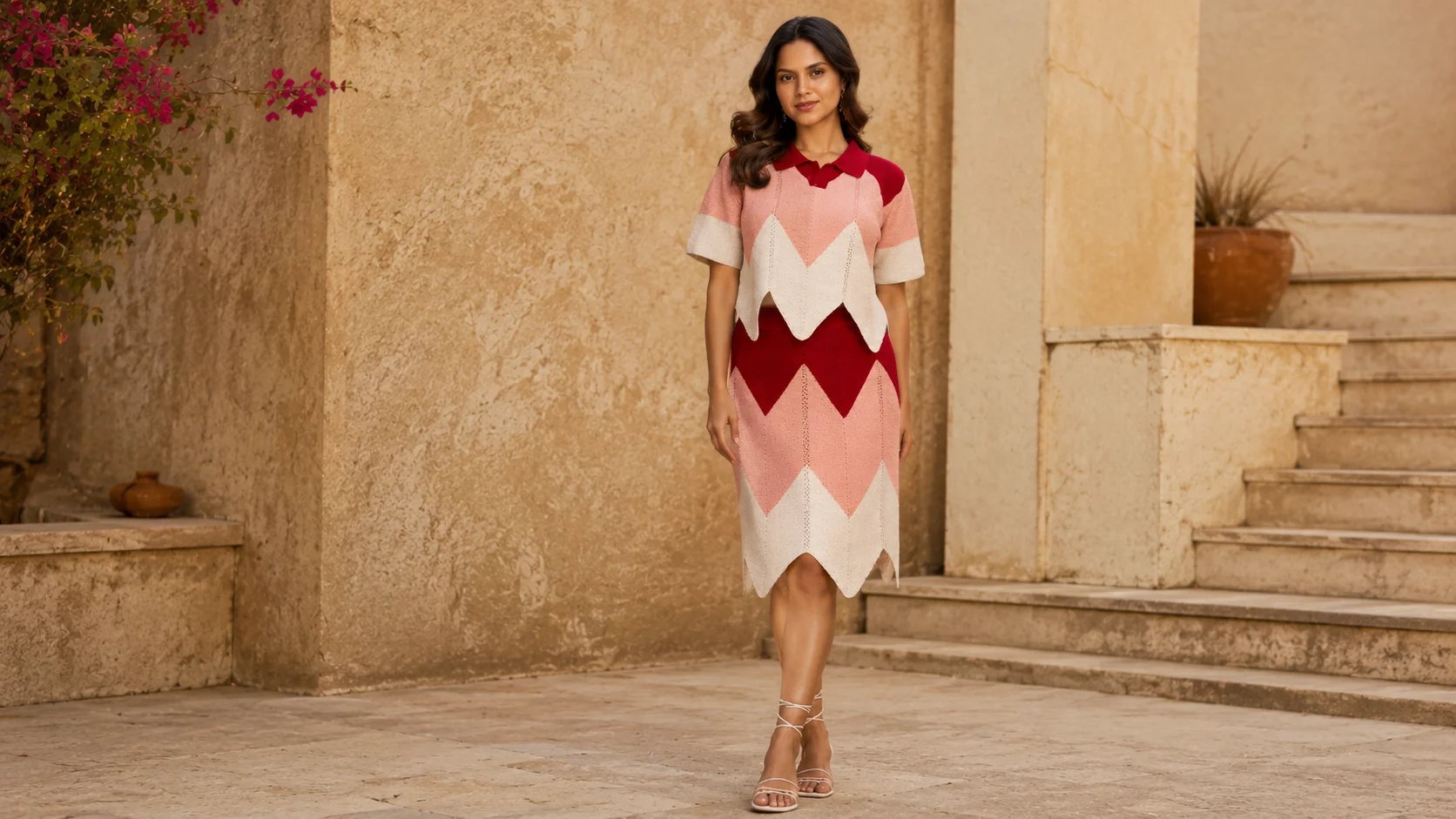
Some outfits rely on accessories to create interest. Others do most of the visual work themselves. A colour-blocked statement dress combining blush pink, deep red and soft cream falls firmly into the second camp.
The oversized zigzag pattern, contrasting polo-style collar and coordinated colour palette give this look a strong graphic identity. That means the smartest styling approach is not to compete with the dress, but to let its distinctive colour story lead.
For anyone wondering how to style a statement dress without making the overall outfit feel busy, the answer is surprisingly simple: keep the supporting pieces restrained, repeat one of the dress colours where useful, and allow the graphic pattern to remain the focal point.
Table of Contents
Why This Statement Dress Gets Noticed
The immediate attraction here is contrast.
Blush pink brings softness, deep red adds visual strength, and cream creates breathing room between the two. Rather than using a small repeating print, the design relies on broad zigzag sections that make the colour blocking part of the silhouette itself.
There is another interesting detail at work: the top and skirt appear visually coordinated, creating the impression of one continuous statement look while still giving the outfit dimension around the waist.
The collar adds another focal point without introducing an unrelated colour. That repetition matters. Because the red appears in several areas rather than only once, the palette feels deliberate instead of random.
This is exactly the kind of outfit that benefits from restraint elsewhere.
Explore This StyleLet the Colour Combination Lead the Outfit
A common mistake with a strong patterned outfit is assuming it needs equally strong accessories. Usually, the opposite works better.
With a pink, red and cream combination, you already have three colours doing plenty of visual work. Introducing several more shades through a handbag, jewellery and footwear can quickly dilute the impact.
Instead, try one of these directions.
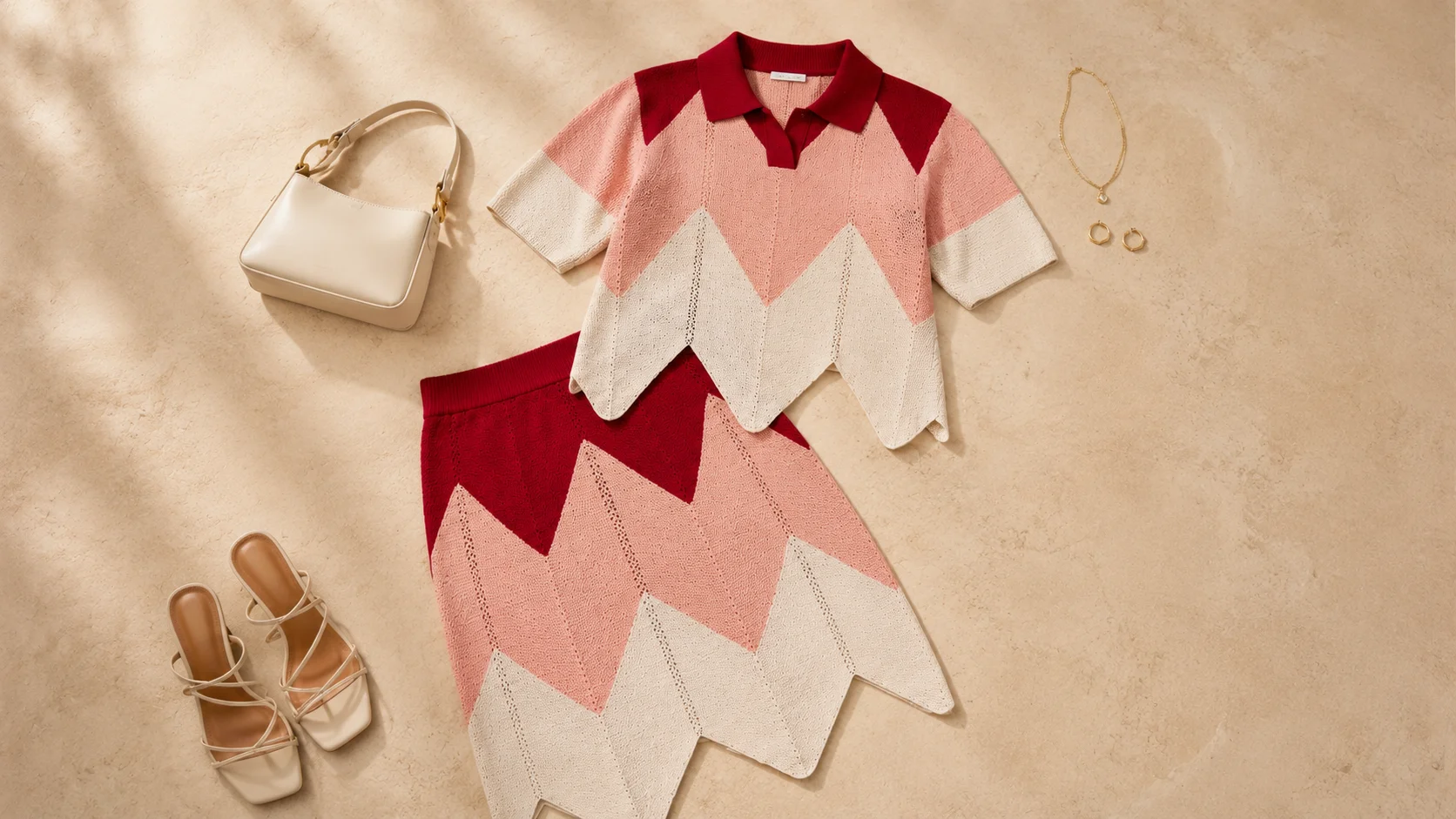
Stay close to cream or ivory. A light neutral bag or footwear can echo the palest section of the outfit without becoming another focal point.
Repeat the red selectively. If you want a bolder result, a small red accent can connect naturally with the collar and central zigzag sections. The key word is small.
Use warm metallic details sparingly. Delicate gold-tone jewellery can sit comfortably alongside these warm colours, particularly when the design itself remains the main attraction.
Avoid matching everything perfectly. Styling becomes more interesting when the pieces coordinate rather than look as though they came from a pre-arranged set.
This gives you flexibility while keeping the outfit visually coherent.
Keep Accessories Deliberately Simple
When the clothing already has a recognisable geometric pattern, accessories should usually play a supporting role.
Start with jewellery. Small drop earrings, understated hoops or another restrained design can add polish without competing with the neckline and collar. A large necklace, oversized earrings and multiple bracelets worn together could create too many competing focal points.
The same principle applies to bags.
A compact neutral handbag is an easy direction because it gives the outfit some visual space. Cream, beige and other quiet neutrals are particularly useful when you want the dress colours to remain dominant.
For a slightly stronger styling direction, choose one accessory that introduces personality and keep everything else quieter.
That one-in, one-out approach is useful well beyond this particular look: the more expressive the clothing becomes, the more selective you can afford to be with everything surrounding it.
Choose Shoes That Do Not Fight the Pattern
Footwear can completely change the mood of a colourful dress.
Fine-strapped neutral sandals create a visually light finish because they do not add another heavy block of colour below the hem. This works particularly well when the dress already features large geometric sections.
But sandals are not the only possible direction.
For relaxed daytime styling, simple low-profile footwear in cream, beige or another complementary neutral can keep the look approachable. For a more dressed-up occasion, a streamlined heel can sharpen the outfit without stealing attention.
The useful test is simple: look at the outfit from head to toe and ask where your eye lands first.
If the shoes immediately overpower the dress, simplify them. If your attention naturally returns to the colour-blocked pattern, the balance is probably working.
Where This Look Can Work
A statement dress does not automatically mean formal dressing.
With restrained accessories and uncomplicated footwear, a colourful geometric look can move into lunches, casual gatherings, daytime celebrations, holidays and other occasions where you want more personality than a basic everyday outfit.
Change the styling details and the mood changes with it.
A small neutral bag and delicate jewellery make the outfit feel polished. Simpler accessories can push it towards an easier daytime direction. Slightly dressier footwear can make the same visual idea feel more occasion-ready.
This versatility is one reason bold clothing can be surprisingly useful: you do not necessarily need to add more to create a new impression. Sometimes you simply need to change what surrounds it.
See the Product DetailsThe Styling Rule Worth Remembering
The strongest lesson from this look is not about one particular colour or accessory.
It is about visual hierarchy.
Every outfit needs somewhere for the eye to settle. Here, the zigzag design and red-pink-cream palette already provide that destination. Adding several other statement elements would make each piece compete for attention.
Instead, build outward from the dress:
Let the pattern lead.
Choose one supporting colour direction.
Keep jewellery selective.
Use streamlined footwear.
Add only as much contrast as the outfit genuinely needs.
That formula makes styling easier because you are no longer asking, “What else can I add?”
You are asking the more useful question: “What does this outfit actually need?”
Often, the answer is very little.
A Colourful Outfit Does Not Need Complicated Styling
A bold dress can initially look harder to style than a neutral one, but strong colour blocking can actually simplify the process. Much of the visual decision-making has already been done by the garment itself.
The blush pink, cream and deep red combination creates an obvious palette to work around, while the prominent zigzag design provides the statement.
Keep the surrounding elements considered rather than excessive and the result can feel expressive without becoming overloaded.
That is the sweet spot with statement dress styling: enough personality to be memorable, but enough restraint to let the design speak for itself.
FAQs
How should I approach statement dress styling with bold colours?
Start by identifying the dominant colours and pattern, then keep most accessories quieter. Neutral footwear, restrained jewellery and a simple bag can support a statement dress without competing with it.
What accessories work with a pink and red dress?
Cream or neutral accessories are an easy option, while subtle warm metallic jewellery can complement the palette. You can also repeat red in one small accessory rather than introducing several additional colours.
Should jewellery be minimal with a geometric dress?
It often helps. If the dress already has a strong pattern, collar or colour blocking, restrained jewellery allows those details to remain visually dominant.
Can a colourful statement dress work for daytime?
Yes. The overall effect depends heavily on styling. Simple footwear, an understated bag and minimal jewellery can make a visually bold dress feel much more suitable for daytime occasions.
How many colours should I add to an already colourful outfit?
There is no fixed number, but you rarely need many. Repeating colours already present in the garment or introducing one quiet neutral usually creates a more cohesive result than adding several unrelated shades.