
This article may contain affiliate links. We may earn a commission at no extra cost to you.
A heavily embroidered outfit can look beautiful on its own, yet become visually crowded when every accessory competes for attention. The secret to styling a sage green embroidered kurta set is to recognise which details already provide interest and let the remaining elements support them.
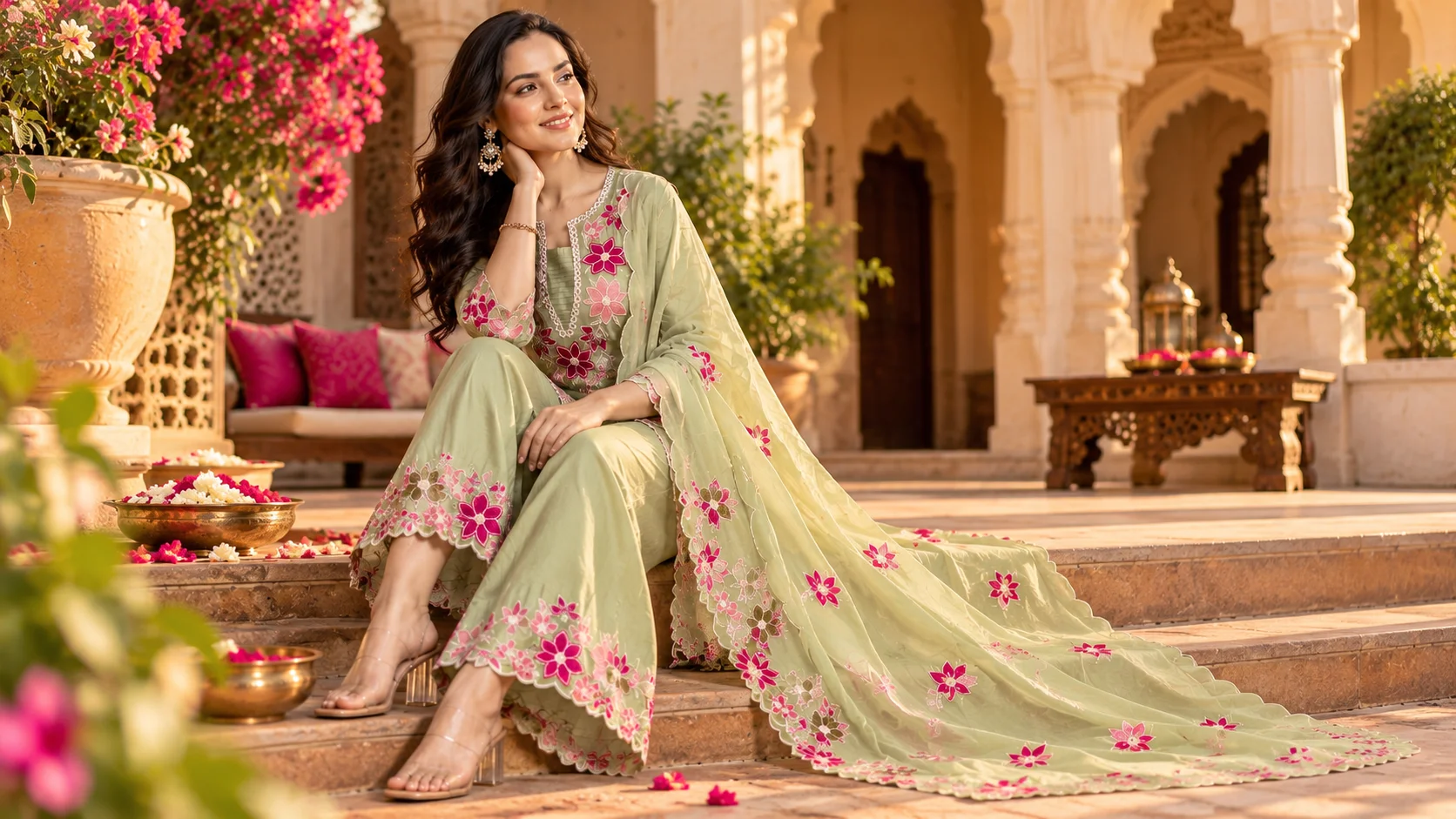
A coordinated kurta, palazzos and dupatta offer a natural starting point. With floral embroidery in pink and magenta, a decorative neckline and scalloped borders, this look can be styled for festive gatherings, family celebrations and dressier daytime occasions. The most effective approach is to balance the embroidery, choose accessories selectively and use the dupatta to change the overall impression.
Table of Contents
Table of Contents
1. Let the Embroidery Lead the Outfit
The first styling decision is knowing where to direct attention. On this sage green kurta set, the floral embroidery around the neckline, sleeves and hem creates several natural focal points. The matching palazzos and decorated dupatta continue the visual theme.
Because the outfit already has multiple decorative areas, avoid adding equally elaborate details everywhere else. A large necklace, statement earrings, an embellished clutch and heavily decorated footwear could compete with the embroidery rather than complement it.
Instead, choose one principal accent. If you prefer statement earrings, keep the neckline relatively uncluttered. If you want to wear a necklace, consider more restrained earrings. This gives the embroidered neckline room to remain visible.
The same principle applies to handbags and footwear. Simple shapes and understated colours can provide contrast without introducing another dominant pattern.
Shop the Style2. Style the Dupatta Without Hiding the Details
The dupatta is more than a finishing layer. Its placement can change how the entire outfit appears, particularly when its scalloped edge and floral motifs are part of the design.
For a relaxed daytime look, drape it over one shoulder and allow the border to fall naturally. This keeps the kurta’s embroidered front visible while introducing movement along one side of the outfit.
For a family celebration or festive gathering, arrange the dupatta more deliberately across the shoulders or forearms. Make sure the decorative edge remains visible rather than folding it underneath the fabric. The result feels considered without requiring additional embellishment.
A common mistake is arranging the dupatta so that it covers the most distinctive part of the kurta. Before leaving home, check the outfit from the front and side. A small adjustment can restore the visual balance between the neckline, hem and flowing border.
For more ideas on adapting traditional outfits to different settings, explore festive kurta set styling.
3. Choose Colours and Accessories That Support Sage Green
Sage green sits between a muted green and a soft, earthy neutral. With pink and magenta embroidery, it already creates a clear relationship between the main colour and its decorative accents.
Cream, beige and tan are useful starting points for footwear or a handbag. These shades can complement the green without competing with the brighter floral details. For a more coordinated appearance, pick up one of the embroidery colours in a small accessory rather than introducing several new colours.
Jewellery deserves the same attention. Gold-tone earrings or bangles can complement the warm tones often used in traditional styling, while a more restrained design allows the embroidered neckline to remain the focus. The choice depends on how prominent you want your accessories to appear.
If earrings are your preferred finishing touch, consider Kundan statement earring styling for additional inspiration. You do not need to reproduce an entire jewellery look; one well-chosen piece may be enough.
Footwear should suit the occasion as well as the outfit. Simple sandals can work for daytime gatherings, while dressier footwear may suit an evening celebration. Choose a pair that complements the outfit’s overall formality rather than distracting from its decorative borders.
4. Adapt the Kurta Set to the Occasion
The same coordinated outfit can create different impressions through small changes in accessories and presentation. Instead of building a completely new look for every event, adjust one or two elements.
For daytime family gatherings: Keep the styling relatively simple. Choose understated earrings, a neutral handbag and sandals that suit the setting. Let the floral embroidery provide most of the visual interest.
For festive celebrations: Give the outfit a slightly dressier finish with statement earrings or a coordinated bangle. Arrange the dupatta so its border frames the outfit rather than covering the embroidered front.
For an evening event: Consider a more structured handbag and dressier footwear. If you choose prominent jewellery, avoid adding several other statement accessories. A controlled contrast between the muted green and the pink embroidery can be more effective than introducing multiple competing colours.
For photographs and social occasions: Pay attention to how the outfit looks from a distance. Check whether the dupatta border is visible, the trouser hems are unobstructed and the jewellery complements rather than overwhelms the neckline. These small details help the complete outfit read as one coordinated look.
Before purchasing any similar set, check the retailer’s current photographs, available sizes, included pieces and care instructions. A styled photograph is useful inspiration, but the retailer’s listing should guide your decision about the actual product.
The best styling choice is the one that suits your event and lets the outfit’s own design remain recognisable.
Conclusion
A sage green embroidered kurta set does not need an elaborate collection of accessories to make an impression. Let the floral embroidery lead, use the dupatta to shape the silhouette and introduce complementary colours through a few considered finishing touches.
Related Blogs
- Green Ethnic Wear Styling Made Effortlessly Standout
- Floral Embroidered Kurti Styling
- Elegant Kurta Set Styling With Essential Modern Appeal
Frequently Asked Questions
1. How do you style a sage green embroidered kurta set?
Style a sage green embroidered kurta set by keeping the embroidery as the main focal point. Choose complementary neutral accessories, avoid overcrowding the neckline and arrange the dupatta so its decorative border remains visible.
2. What colours go with a sage green kurta set?
Cream, beige and tan are useful neutral options for footwear and handbags. Small accents of pink or magenta can echo the floral embroidery, helping the outfit feel coordinated without introducing too many competing colours.
3. Which jewellery suits a floral embroidered kurta?
Statement earrings can work well when the neckline already has prominent embroidery. If you prefer a necklace, consider keeping the earrings and other accessories more understated so the different decorative elements do not compete.
4. How should you drape a dupatta with an embroidered kurta?
Try draping it over one shoulder or arranging it across the shoulders and forearms. Keep the embroidered front and scalloped border visible, and adjust the fabric so it does not conceal the kurta’s most distinctive details.
5. Can an embroidered kurta set be worn for different occasions?
Yes, a coordinated embroidered kurta set can be styled for different occasions by adjusting jewellery, footwear, handbag and dupatta placement. Keep the changes appropriate to the event, and check the dress code before choosing a more formal or festive finish.