
This article may contain affiliate links. We may earn a commission at no extra cost to you.
Winter ethnic dressing can be tricky when an outfit already has plenty of decorative detail. Add a contrasting jacket, an elaborate dupatta and statement jewellery, and the original design can quickly disappear.
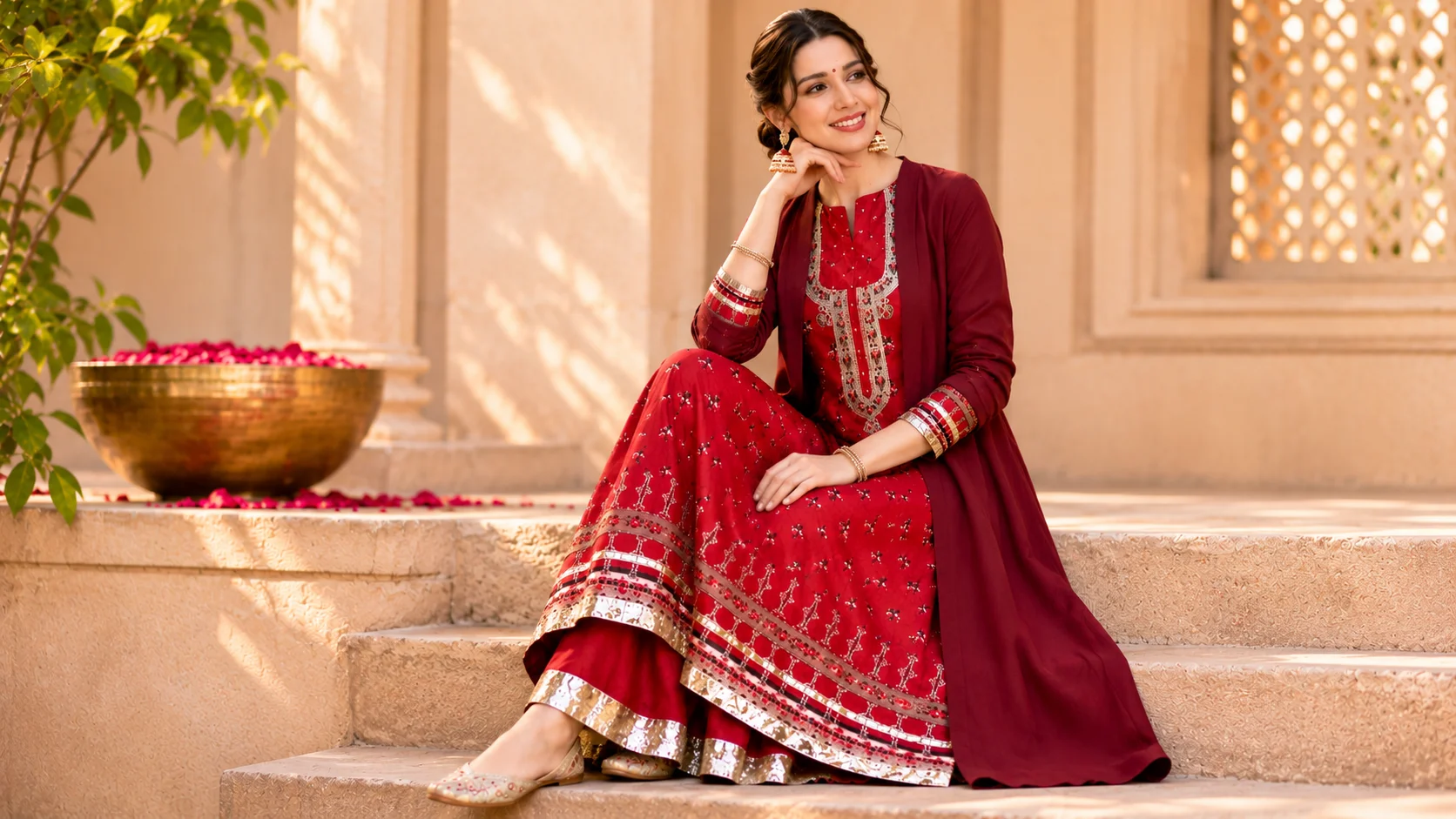
A better approach is to let the garment establish the look and use layering to adapt it to the occasion. A red and black Gotta Patti kurta offers an interesting starting point, with its round neckline, three-quarter sleeves, repeated ethnic motifs, A-line shape and flared hem.
The styling principle is simple: preserve the decorative areas, introduce quieter supporting colours and choose layers that complement rather than conceal the kurta.
Table of Contents
Table of Contents
1. Let the Red Gotta Patti Kurta Lead the Outfit
The first styling decision is to understand the garment’s visual structure. This Biba kurta combines a red base with black ethnic motifs and decorative Gotta Patti detailing. Its round neckline, three-quarter sleeves and calf-length A-line silhouette create several areas of visual interest.
The neckline deserves particular attention. Since it already has decorative detailing, a heavily embellished necklace may introduce unnecessary competition. Instead, consider traditional earrings and a restrained bangle combination.
The flared hem is another important detail. Avoid allowing an excessively elaborate bottom or another heavily decorated layer to compete with it. Solid-coloured trousers, straight bottoms or understated palazzos can provide a quieter foundation.
A useful styling formula is:
- Let the neckline remain visible.
- Keep the lower half comparatively simple.
- Repeat one supporting colour through your accessories.
- Avoid introducing several competing patterns.
This approach works because it gives the garment a clear visual hierarchy instead of making every part of the outfit equally prominent.
Shop the Style2. Layer a Red Gotta Patti Kurta Without Hiding Its Details
Winter layering is not simply about adding another garment. It is about choosing a layer that works with the original silhouette.
For this kurta, an open-front outer layer in a solid colour is a useful starting point. Beige, black, deep wine and muted neutral shades are possible directions, depending on the look you want.
A shorter open-front layer can keep attention on the A-line silhouette. A longer layer creates a different visual line, so check that it does not completely hide the decorative hem.
There are three practical ways to approach layering:
For a daytime gathering: Try a simple neutral outer layer and keep the accessories understated. This allows the red kurta to remain the main feature.
For a festive evening: A darker open-front layer can introduce contrast. Keep the neckline visible rather than wrapping a bulky scarf around it.
For a more traditional appearance: A coordinated shawl can be used as a supporting element. Consider draping it over one shoulder rather than covering the entire front of the kurta.
One important point: the retailer’s use of the word winter in the product name does not establish a particular warmth rating. Choose additional layers according to your local temperature, venue and personal requirements.
The best result is a layered outfit in which the kurta’s defining details are still easy to see.
3. Choose Jewellery and Accessories Around the Round Neckline
A decorative neckline changes how jewellery should be selected. Rather than automatically adding a necklace, consider whether the kurta already provides enough detail around the neck.
Traditional jhumkas or drop earrings can draw attention towards the face while leaving the neckline unobstructed. If you prefer a more noticeable necklace, choose earrings with a quieter design.
Bangles can introduce another traditional element, but the sleeve borders should remain visible. A smaller combination is often easier to coordinate than several elaborate pieces.
For more inspiration, explore how to style jhumka earrings with ethnic outfits.
The handbag and footwear should follow the same visual logic.
- Beige or champagne-toned footwear can create a softer contrast.
- Black footwear can repeat the darker motifs.
- Gold-toned accessories can complement the decorative details.
- A simple clutch can balance an otherwise elaborate festive look.
These are styling possibilities, not included product accessories. Select pieces from your existing wardrobe that suit the occasion rather than assuming everything needs to be purchased as a matching set.
4. Coordinate Colours for Daytime and Festive Occasions
Red and black already create a strong colour relationship. The easiest way to build around them is to introduce one supporting shade rather than several unrelated colours.
For a traditional appearance, gold-toned accents can complement the decorative detailing. For a quieter interpretation, beige and cream can provide contrast without drawing attention away from the kurta.
You can explore more combinations in our guide to colour pairings for traditional outfits.
The occasion should determine how much additional styling you introduce.
Family gatherings: Choose modest earrings, simple bangles and understated footwear. The outfit can remain traditional without looking overly elaborate.
Festive celebrations: Introduce one more noticeable accessory, such as statement earrings or a decorative clutch. Keep the other pieces relatively restrained.
Evening functions: A darker outer layer and coordinated accessories can create a more defined appearance. Avoid adding too many contrasting colours.
Daytime events: Keep the combination lighter with neutral footwear and fewer accessories.
If you are planning several festive looks from your existing wardrobe, our festive outfit planning guide offers additional ideas.
Shop the LookA Final Check Before Wearing the Outfit
Before heading out, check that your outer layer does not hide the neckline, that the sleeve borders remain visible and that your footwear suits the venue.
If you are considering purchasing this particular kurta, consult the retailer’s current size chart, product description and care instructions. The product listing should also be checked for the exact items included in the purchase.
The most effective winter ethnic look is not necessarily the most elaborate one. Let the red Gotta Patti kurta remain the focal point, then use thoughtful layering and selective accessories to adapt it to your occasion.
Related Blogs
- Red Anarkali Kurta Styling – Balance Gold Details and a Bold Hem
- How to Style Statement Ethnic Earrings for a Festive Look
- How to Style a Red Silk Kurta Set for Festive Occasions
Frequently Asked Questions
1. How do you style a red Gotta Patti kurta for winter?
Style a red Gotta Patti kurta with a simple open-front layer, coordinated footwear and selective jewellery. Keep the neckline and decorative sleeve borders visible. Choose additional layers according to the actual weather rather than assuming the garment alone provides sufficient warmth.
2. Which colour jacket goes with a red and black kurta?
Beige, black, deep wine and muted neutral shades are possible choices. Select a solid-coloured layer to avoid introducing another competing pattern, and consider its length in relation to the kurta’s A-line silhouette.
3. Which earrings look good with a Gotta Patti kurta?
Jhumkas and drop earrings are suitable styling options for a traditional appearance. If the neckline is already decorated, let the earrings provide the main jewellery accent instead of automatically adding a heavy necklace.
4. Can I wear a red ethnic kurta to a winter wedding function?
A red ethnic kurta can be considered for a suitable daytime or informal wedding function. Check the event’s dress code and formality before deciding whether to add a shawl, jacket, more prominent jewellery or other festive accessories.
5. What should I check before buying a kurta online?
Check the current size chart, garment measurements, colour description, fabric composition, care instructions and package contents. Product photographs may include styling accessories that are not part of the purchase, so read the listing carefully.