
This article may contain affiliate links. We may earn a commission at no extra cost to you.
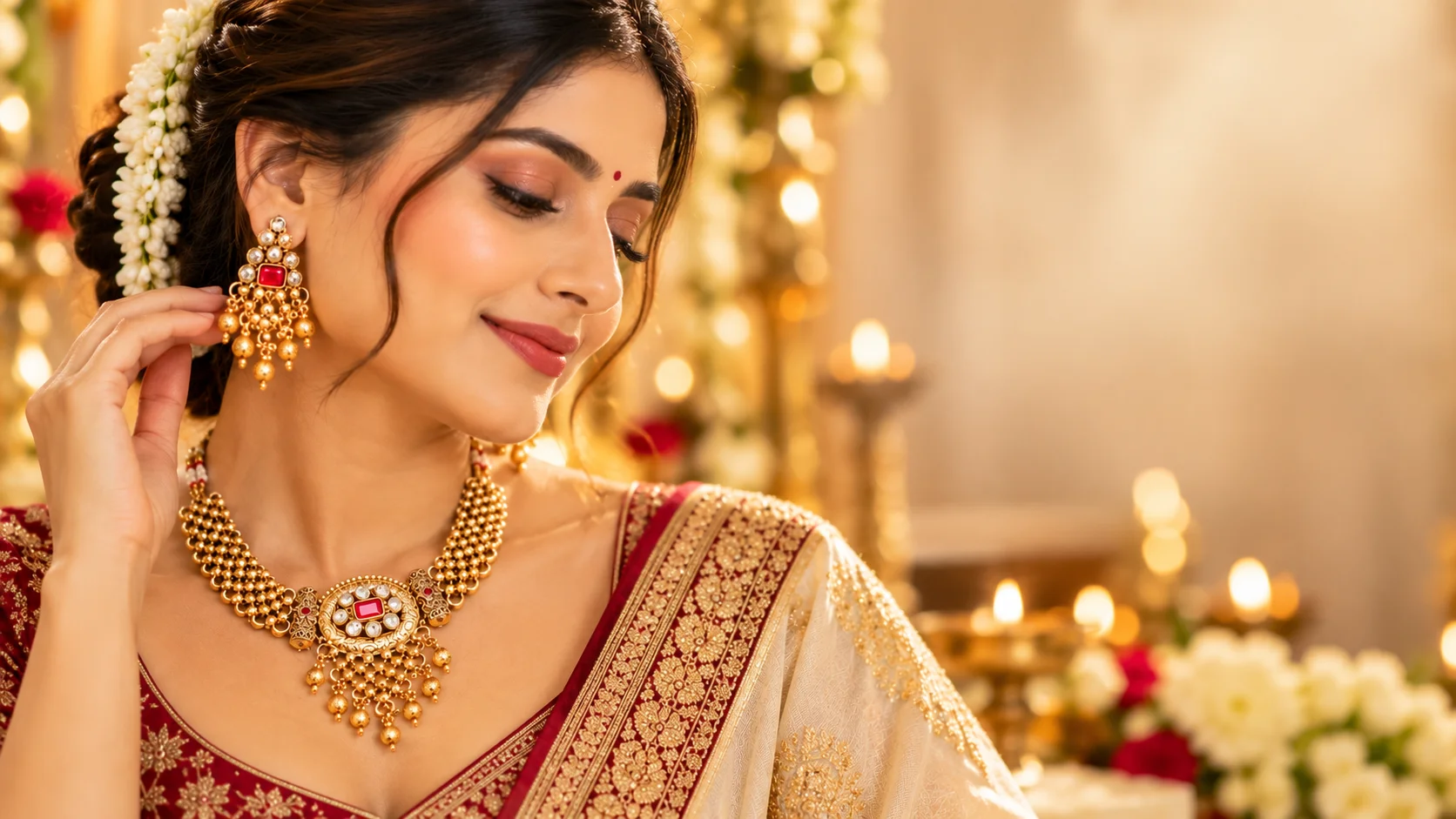
A heavily detailed choker can make an outfit feel finished before you add a single bangle. The trick is not to compete with it. With this gold Kundan choker set, the broad beaded necklace, circular centre pendant, red-and-white stone detailing and matching drop earrings already create a complete focal point. The most effective approach is to repeat one or two visual cues and keep everything else controlled.
Table of Contents
Start With the Choker’s Built-In Focal Point
The first decision is your neckline. A choker works best when the neckline leaves enough visual space for the necklace to sit clearly rather than cutting across it. Saree blouses, traditional suits and festive tops with a defined open or gently curved neckline can frame the circular pendant naturally.
The set has a strong centre-led rhythm: the broad necklace draws the eye towards the pendant, while the matching earrings continue that detail around the face. That means a simpler blouse neckline often works better than another heavily embellished neckline. If your outfit is already richly worked, let the neckline create breathing room around the jewellery.
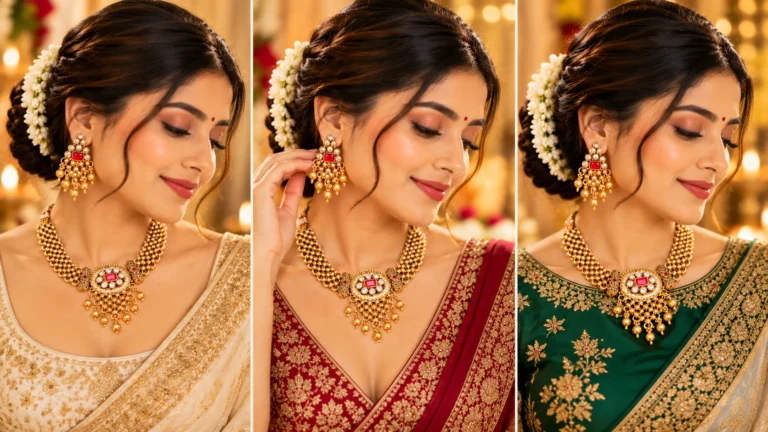
For a deeper neckline, allow the pendant to remain visible rather than adding a competing collar or layered chain. For a higher neckline, keep the rest of the outfit cleaner so the choker reads as a deliberate focal point. If you want more guidance on statement-necklace proportion and balance, see Statement Necklace Styling Made Effortless With Smart Balance.
See the Rubans Kundan Choker Set DetailsBalance Jewellery Around a Kundan Choker
Once the necklace and earrings are on, resist the urge to fill every remaining space. The matching earrings already carry significant visual weight, so adding another statement necklace, oversized collar detail or several competing pieces around the face can make the styling feel crowded.
A useful rule is one dominant jewellery story per area. Keep the necklace and earrings as the main story, then choose restrained bangles, a slim bracelet or a small ring if you want another accent. The red stone detail gives you a natural colour anchor, while the gold tone connects easily with warm embroidery and traditional fabrics.
This is especially useful when the outfit itself is ornate. A heavily embroidered saree can work with the set, but the accessories around it should become quieter. If the clothing is simpler, you have more room for a traditional bangle stack or a slightly richer clutch. For related guidance on earrings and necklines, see Choosing Earrings for High and Low Necklines Made Effortless.
Change the Outfit, Not the Necklace
You do not need a different necklace for every festive event. Change the outfit around the same choker. For a traditional wedding look, pair it with maroon, deep red, ivory, cream or rich green and let the gold detailing echo the embroidery. The aim is coordination, not an exact colour match.
For a lighter festive gathering, an ivory or cream outfit can make the necklace feel more prominent without adding more jewellery. For a wedding-guest look, keep the rest of the styling quieter and use the set as the visual centre.
Hair can change the mood too. A sleek bun or softly controlled updo keeps the earrings visible and gives the necklace a more formal frame. A softer hairstyle can make the same jewellery feel less bridal for a family celebration or festive dinner. The difference comes from proportion, colour and styling restraint rather than piling on more accessories.
For a wider occasion-based jewellery checklist, see Navratri Jewellery Guide to 5 Stylish, Essential Pieces.
Coordinate Colour, Hair and Final Details
The easiest way to make the whole look feel intentional is to coordinate three small details: one outfit colour, one jewellery tone and one finishing accent. Here, the warm gold tone can be repeated through embroidery, a clutch or footwear detail, while the red centre can be echoed in a border, bindi or another small accent.
You do not need an exact colour match. In fact, slightly different shades can make the styling look more considered than a head-to-toe colour match. If the saree is already richly patterned, choose one supporting accessory in a quieter finish rather than introducing another strong statement piece.
For makeup, warm neutrals and a defined eye can support the traditional mood without competing with the necklace. Keep the hairline and ears reasonably clear if the earrings are part of the look. Before storing the set, follow its care instructions and keep it away from water, sprays and perfume. General jewellery-care guidance also recommends protecting jewellery from harsh chemicals and storing pieces separately to reduce scratching. GIA jewellery care guidance gia
The same approach also helps when deciding whether to add a bindi, bangles or a clutch: repeat an existing colour or finish before introducing a completely new visual element.
The result is a look that feels coordinated without becoming overworked.
The simplest styling rule for this type of choker is to let the jewellery lead, then build the outfit around its scale and colour cues. Choose a neckline that frames the pendant, keep competing jewellery restrained and change the mood through outfit colour and finishing details. Before wearing it, follow the product care guidance rather than treating plated jewellery like solid gold.
Related Blogs
- Necklace Length for Different Necklines Made Effortless
- Elegant Kundan Statement Earrings for an Effortless Festive Look
- Colour Pairings for Traditional Outfits With 6 Stylish Power Updates
Frequently Asked Questions
1. What is a gold Kundan choker?
A gold Kundan choker is a close-fitting necklace style featuring a broad or compact front design, often with stone or bead detailing. This particular listed set is gold-plated over brass and has white and red stone-studded details with matching drop earrings. Myntra
2. Can I wear a Kundan choker with a saree?
Yes. A Kundan choker can work particularly well with sarees when the blouse neckline leaves enough space for the necklace. Let the choker and earrings provide the main jewellery focus, then keep additional pieces comparatively restrained.
3. What colours pair well with a gold Kundan choker?
Warm traditional colours such as maroon, red, ivory, cream and rich green can complement the gold tone and red-and-white detailing. Instead of matching every shade exactly, repeat one colour from the jewellery in a small outfit or accessory detail.
4. Can I wear statement earrings with a choker?
Yes, when the earrings belong to the same visual language and the rest of the jewellery is controlled. A matching drop-earring set can look balanced with a choker because the necklace and earrings form one coordinated story rather than competing focal points.
5. How should I care for a gold-plated jewellery set?
Follow the product’s care guidance, including keeping it away from water, sprays and perfume and wiping it with a soft cloth after use. General jewellery-care guidance also recommends avoiding harsh chemicals and storing pieces separately to reduce scratching.