
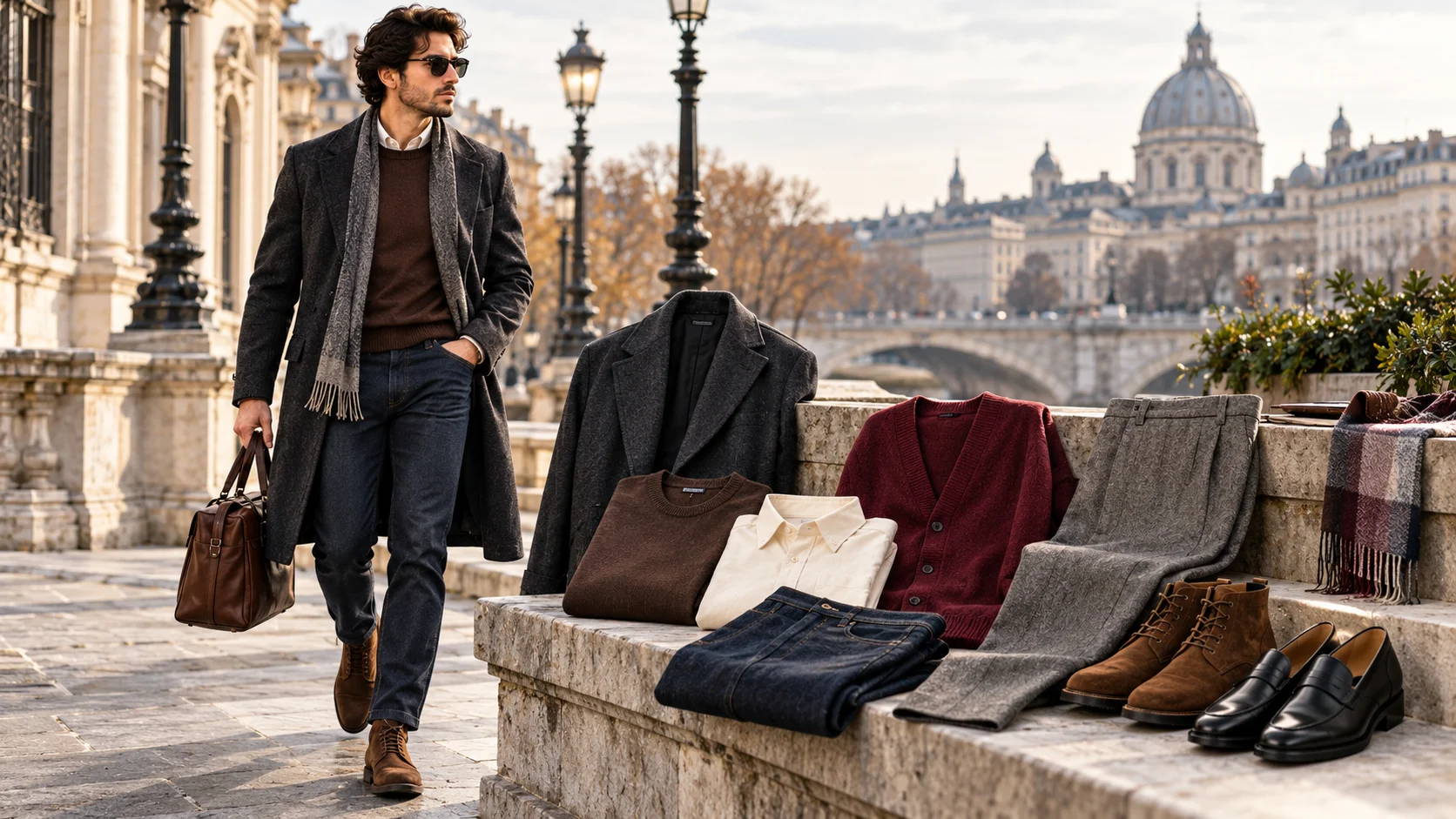
European winter dressing is not simply about wearing the thickest coat you own. A look that works for a mild winter afternoon in southern Europe may be completely inadequate for a cold, windy day in northern or central Europe. The smarter approach is to build a winter capsule wardrobe around versatile layers, coordinated colours and footwear that suits your destination.
A European winter capsule wardrobe for men can start with eight versatile pieces: a charcoal overcoat, chocolate-brown crewneck jumper, cream Oxford shirt, burgundy cardigan, dark straight-leg jeans, grey flannel trousers, brown suede boots and black loafers. These pieces create a useful foundation for everyday city dressing, smart-casual occasions and relaxed evening plans, with additional layers chosen according to the weather.
Table of Contents
Choose the Right Winter Layers for Your Destination
The first decision is how much warmth you actually need. Europe includes regions with very different winter conditions, so a single heavy-winter formula will not suit every city. Northern destinations and mountain areas may require substantial insulation, while some Mediterranean destinations often call for lighter layers and protection from rain or wind.
For mild conditions, combine the cream Oxford shirt with the chocolate crewneck and charcoal overcoat. In colder weather, add a thermal base layer, warmer socks and a scarf. During wet or windy conditions, consider a suitable water-resistant outer layer beneath or instead of a traditional overcoat, depending on its construction and the forecast.
The principle is simple: build warmth in layers rather than relying on one oversized garment. This also gives you more flexibility when moving between chilly streets, public transport, cafés and heated indoor spaces.
Before travelling, check the local forecast and expected precipitation. The European Environment Agency’s overview of changing European climate hazards explains why snow conditions differ across regions, reinforcing the importance of adapting your clothing to your destination.
Build Outfits Around Eight Versatile Wardrobe Pieces
The advantage of a capsule wardrobe is that each item has a clear purpose and works with several others. Rather than treating every garment as a separate outfit, think about how your tops, layers, trousers and shoes combine.
1. Charcoal wool overcoat
Make the overcoat your main outer layer for polished city outfits. Its dark neutral colour works with both denim and tailored trousers. Wear it over the chocolate crewneck for understated dressing or over the burgundy cardigan when you want a richer colour contrast.
2. Chocolate merino crewneck
A brown crewneck provides a softer alternative to black or navy knitwear. Pair it with a cream Oxford shirt for a clean neckline, dark denim for casual outings or grey flannel trousers for a more refined combination. If you are buying a new jumper, check its care label rather than assuming every knitwear item can be washed in the same way.
3. Cream Oxford shirt
The cream shirt creates a lighter layer beneath darker knitwear. Wear it under the brown crewneck, with the collar visible, or beneath the burgundy cardigan for a smart-casual outfit. Its understated colour also makes it useful when the rest of the outfit includes several darker shades.
4. Burgundy cardigan
Use burgundy as the outfit’s accent rather than introducing several competing statement colours. A burgundy cardigan works particularly well with cream, charcoal, chocolate and dark denim. Button it over the Oxford shirt for a neat appearance or wear it beneath the overcoat when additional warmth is needed.
5. Dark straight-leg denim
Dark denim is the casual foundation of the wardrobe. It pairs with all four upper-body pieces and looks particularly balanced with the charcoal overcoat and brown boots. Keep the hem compatible with your footwear so the trouser leg does not bunch excessively over the shoe.
6. Grey flannel trousers
Grey trousers shift the capsule towards smarter dressing without requiring a completely separate wardrobe. Combine them with the chocolate crewneck and brown boots for a tonal outfit, or wear them with the cream shirt and burgundy cardigan for a stronger contrast.
7. Brown suede boots
Brown boots ground the earthy colour palette and complement chocolate knitwear, charcoal outerwear and dark denim. They are a useful option for casual city walks and smart-casual outings. In wet or snowy conditions, check the footwear’s actual weather suitability; suede should not automatically be treated as waterproof.
8. Black loafers
Loafers offer a cleaner finish for dinners, indoor events and milder winter days. Wear them with grey flannel trousers and the Oxford shirt, or add the cardigan for a relaxed but considered look. For icy pavements, deep snow or persistent rain, choose footwear with appropriate grip and weather protection instead.
For another seasonal wardrobe framework, explore Fall 2026 Capsule Wardrobe for Men With 12 Pieces and 36 Outfits. Its mix-and-match approach can help you identify which existing garments will transition into colder weather.
Use Colour and Texture to Make Every Outfit Work
A capsule wardrobe becomes easier to style when its colours follow a consistent pattern. Charcoal, chocolate, cream and grey form the neutral foundation, while burgundy supplies the strongest accent. Dark denim connects these colours without introducing another competing focal point.
Start with two or three colours in the main outfit, then introduce a supporting shade through a shirt, scarf or accessory. For example, a chocolate jumper, grey trousers and brown boots form a restrained combination because the colours share a muted quality. Adding a cream shirt creates contrast around the face without disrupting the palette.
Texture provides the next layer of interest. The visible difference between a structured-looking overcoat, a knitted jumper, smooth shirt fabric and suede footwear can make a simple outfit feel considered even when the colours remain neutral. You do not need several patterns or oversized accessories to make winter dressing distinctive.
Try these combinations:
- Understated city look: charcoal overcoat, chocolate crewneck, dark denim and brown boots.
- Smart-casual outfit: cream Oxford shirt, burgundy cardigan, grey flannel trousers and black loafers.
- Relaxed weekend look: chocolate crewneck, dark denim, brown boots and a scarf in a complementary neutral shade.
- Dinner-ready combination: cream shirt, grey flannel trousers, charcoal overcoat and black loafers, when conditions permit.
For more footwear inspiration, see How to Style Loafers for Effortless Early Autumn Outfits. The same principles of trouser length, colour coordination and formality can help you adapt loafers to suitable milder winter occasions.
Create Winter Outfits for Different Occasions
The easiest way to use these eight pieces is to plan around the occasion before selecting individual garments. This prevents you from dressing too formally for a casual day or choosing unsuitable footwear for the weather.
For sightseeing: Wear dark straight-leg jeans, the chocolate crewneck and charcoal overcoat. Brown boots provide a natural visual connection with the jumper. Add a scarf and weather-appropriate outer protection when needed. If you expect rain, prioritise practical footwear over appearance alone.
For a smart-casual workplace: Combine grey flannel trousers with the cream Oxford shirt and burgundy cardigan. Add the charcoal overcoat for the commute. This outfit uses three distinct tones without relying on a matching suit, making it suitable for workplaces where smart-casual clothing is acceptable.
For dinner or an evening gathering: Start with grey trousers and the cream shirt, then add the burgundy cardigan. Black loafers provide a more formal finish than brown boots in suitable conditions. If you need to walk outdoors in heavy rain or icy weather, wear more protective footwear and change indoors if practical.
For a relaxed weekend: Dark denim and the chocolate crewneck create an easy base. Add the overcoat when the temperature requires it and use brown boots for a cohesive finish. In milder conditions, you can leave the heavier outer layer behind and keep the knitwear as the main visible layer.
For travel: Wear the bulkiest suitable layer during transit, but avoid overheating indoors. Choose a combination that can be adjusted easily, with a shirt beneath knitwear and an outer layer that can be removed. The goal is to arrive with clothing that works for both the journey and the first activity.
Avoid the Mistakes That Weaken Winter Outfits
A coordinated wardrobe can still look wrong if its proportions, weather suitability or level of formality are overlooked.
First, avoid wearing every layer at once simply because it is winter. A shirt, thick jumper, cardigan and heavy coat may create unnecessary bulk. Choose layers according to the actual conditions and how long you expect to spend outdoors.
Second, do not assume that every brown or black item must match exactly. Similar colours can have different undertones, and an outfit usually benefits more from deliberate contrast than from attempting to match every shade. Chocolate knitwear with charcoal outerwear, for example, creates separation while remaining understated.
Third, pay attention to trouser length and footwear. Excess fabric gathering above loafers can make a tailored outfit look untidy, while suede boots may be unsuitable for prolonged exposure to wet snow. Select the footwear for the conditions first, then build the outfit around it.
Finally, avoid buying a complete new wardrobe before checking what you already own. If you have dark jeans, a neutral jumper and a suitable coat, you may only need one or two complementary pieces to create more combinations.
A practical European winter capsule wardrobe is built around adaptable layers, a controlled colour palette and footwear suited to the destination. Start with the eight core pieces, then adjust warmth and weather protection for your itinerary. Before your next trip or seasonal wardrobe refresh, check the forecast and identify the combinations you can create from clothes you already own.
Frequently Asked Questions
1. What is a European winter capsule wardrobe for men?
A European winter capsule wardrobe for men is a compact collection of versatile clothing designed for cold-season outfits. It combines coordinating tops, knitwear, outerwear, trousers and footwear, with the amount of insulation adapted to the destination’s weather.
2. Which colours work best for men’s winter outfits in Europe?
Charcoal, chocolate brown, cream, grey and dark denim form a flexible foundation. Burgundy adds a noticeable accent without requiring several statement colours. These shades can be combined across casual, smart-casual and selected evening outfits.
3. Are loafers suitable for European winter?
Loafers can work for indoor events, dinners and milder winter days. They are not automatically suitable for icy pavements, heavy rain or snow. Check the sole grip, construction and local conditions before choosing them for extended outdoor walking.
4. How can men dress for different European winter climates?
Use lighter layers in milder conditions and add thermal layers, warmer knitwear, scarves and protective outerwear when temperatures fall. Northern, central, mountainous and Mediterranean destinations can have different winter conditions, so check the local forecast before packing.
5. Can eight clothing pieces create enough winter outfits?
Eight carefully coordinated pieces can create several useful combinations because the tops, trousers, outerwear and footwear can be interchanged. The exact number depends on your activities, weather, dress codes and whether you add base layers, accessories or additional garments.