
This article may contain affiliate links. We may earn a commission at no extra cost to you.
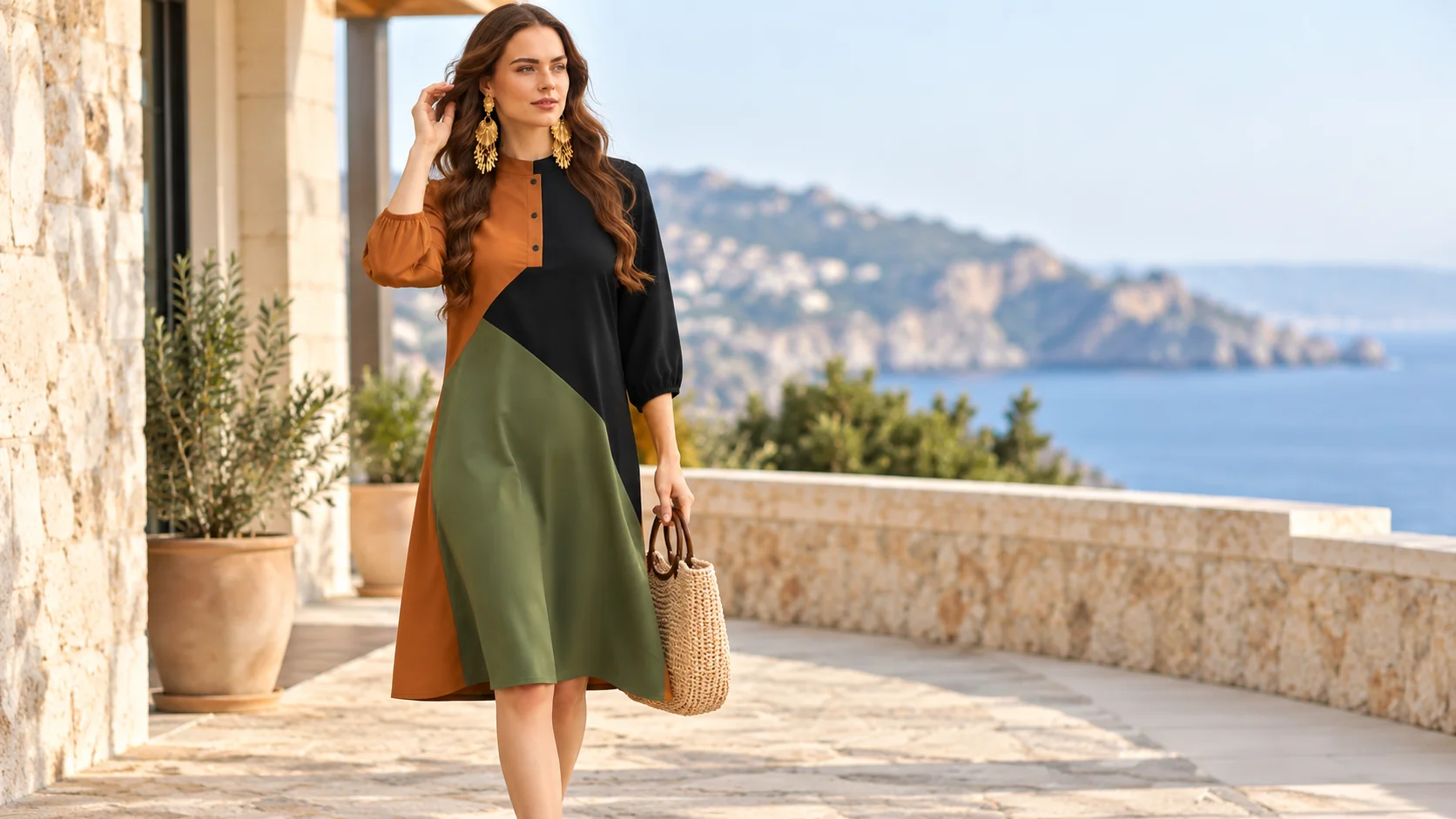
Some dresses need accessories to create personality. Others arrive with their own visual story. A rust, black and olive colour block midi dress sits firmly in the second group: the contrasting panels immediately attract attention, while the relatively clean silhouette keeps the overall look from becoming overly complicated.
The easiest way to approach colour block midi dress styling is to treat the dress as the focal point rather than trying to compete with it. Build the rest of the outfit around its existing colours, introduce accessories selectively and decide whether you want the final mood to feel relaxed, polished or occasion-ready.
That simple shift makes a bold dress surprisingly easy to work with.
Table of Contents
Why This Colour Block Midi Dress Stands Out
The first thing you notice is the colour combination.
Warm rust creates an earthy starting point, black adds strong graphic contrast, and muted olive introduces another grounded shade without making the palette feel excessively bright. Because the colours appear in large geometric sections rather than a small repeating print, the colour blocking becomes part of the dress’s overall design.
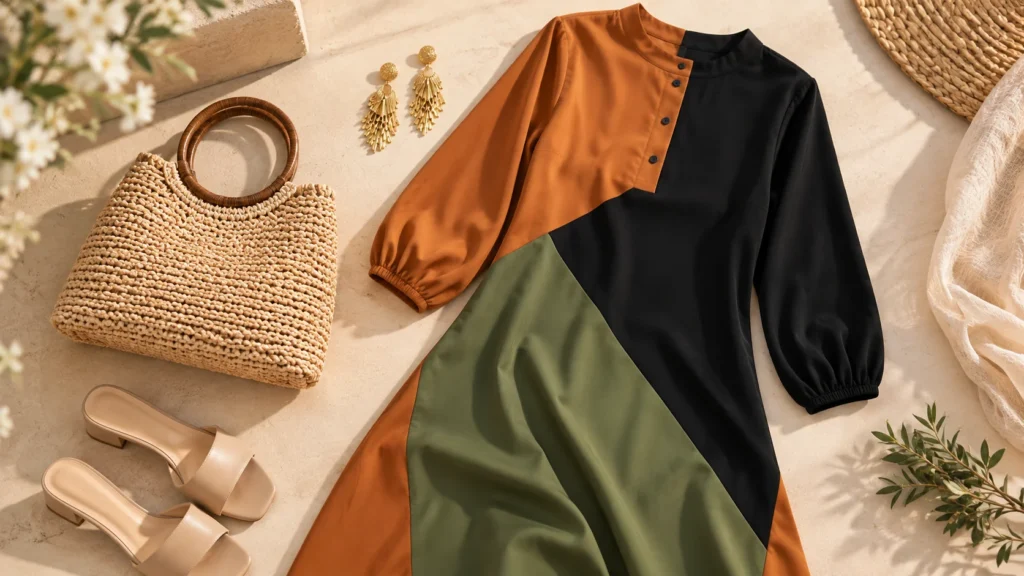
The upper section adds more definition through the contrasting black and rust areas, while the small button detail gives the neckline another visible point of interest. Three-quarter sleeves and the around-the-knee to midi-style length keep the silhouette relatively straightforward.
That combination matters when it comes to styling.
There is already plenty for the eye to notice, so you do not need to build an elaborate outfit around it. In fact, adding too many competing elements can dilute exactly what makes the dress interesting.
The useful rule is simple: let the colour blocking lead and make everything else earn its place.
Explore This StyleBuild Around the Existing Colour Palette
When an outfit already combines several noticeable colours, the temptation can be to introduce even more. Usually, a more controlled approach produces a stronger result.
Repeat one colour rather than adding several new ones
Black is perhaps the easiest colour to repeat because it is already prominent in the dress. A black bag or streamlined footwear can connect naturally with the existing palette without creating another visual storyline.
Rust offers a warmer alternative. Instead of trying to find an exact match, you could explore nearby earthy tones such as tan, cognac or warm brown for accessories.
Olive is best handled selectively. Because it occupies a substantial part of the dress, you may not need another large olive accessory. Allowing that panel to remain distinctive can give the overall look more breathing room.
Use neutrals when you want a quieter finish
Cream, beige and other understated neutrals can be useful when you want the dress itself to receive most of the attention.
A neutral bag, for example, introduces a functional element without demanding that the eye leave the dress. The same idea works for footwear: instead of matching every shade exactly, choose something that supports the existing palette.
The goal is coordination, not perfect colour matching.
Consider the warmth of the palette
Rust and olive both have an earthy character, while black provides the strongest contrast. That makes warm-looking accessories a natural editorial direction to explore.
Gold-tone jewellery can visually complement these colours, particularly when used selectively. Statement earrings may be enough on their own; adding a large necklace, stacked bracelets and another bold accessory at the same time could create too many focal points.
Accessories Can Completely Change the Mood
One of the most useful things about a visually distinctive dress is that you can change its personality without changing the main piece.
A woven-style bag, for example, can push the outfit towards a relaxed daytime or holiday-inspired direction. A cleaner structured handbag can make the same dress feel more polished. Remove the bag entirely and emphasise earrings instead, and the styling becomes more focused around the face and neckline.
This is where restraint becomes useful rather than restrictive.
If you choose statement earrings, consider letting them be the main jewellery element. If the handbag has noticeable texture or shape, quieter jewellery may create better balance.
Footwear can make an equally significant difference.
Simple sandals can keep the styling visually light. Streamlined flats can offer another understated direction, while a clean heel can shift the same dress towards a more polished occasion without requiring an entirely different accessory collection.
You are not trying to discover the one “correct” combination. You are choosing which part of the outfit should speak second after the dress.
Three Styling Directions Worth Exploring
A colour block dress becomes much more useful when you stop thinking of it as one fixed outfit.
Here are three distinct directions that work with the same underlying colour story.
1. Relaxed daytime styling
For an easier daytime mood, start with natural-looking textures.
A woven-style tote or compact neutral bag can sit comfortably alongside the rust and olive tones without introducing another strong colour. Keep jewellery controlled and choose uncomplicated footwear.
This direction can inspire styling for casual lunches, daytime outings, holidays, relaxed gatherings or occasions where you want something more distinctive than a basic neutral dress without looking overly dressed.
The key is allowing the surroundings to soften the graphic quality of the colour blocking.
2. Polished statement styling
For a more refined direction, remove some of the casual texture.
Let a pair of noticeable earrings provide the secondary focal point and choose a cleaner bag shape. Footwear can remain streamlined so that attention stays around the dress and face rather than becoming concentrated at the bottom of the outfit.
Black can work particularly well here because repeating the dress’s darkest shade creates visual continuity.
The result does not require more accessories—just more deliberate ones.
3. Earthy contemporary styling
There is another direction hidden in the palette itself.
Instead of emphasising black, build around the rust and olive relationship. Warm brown, tan, beige or similarly subdued accessory colours can continue the earthy character without trying to reproduce the dress exactly.
This approach can be particularly effective when you want the outfit to feel visually coordinated but not overly matched.
Choose one or two supporting elements and stop there.
That final part is important.
A dress with strong colour blocking already contributes much of the visual interest normally supplied by accessories. Styling it successfully often means knowing what not to add.
The Styling Balance That Matters Most
The most useful principle for colour block midi dress styling is visual hierarchy.
Ask yourself one question before adding another accessory:
Where should the eye land first?
With this type of dress, the answer should normally be the colour-block design itself. The rust, black and olive combination already establishes a clear identity.
From there, choose only one secondary direction.
If the earrings are bold, simplify the bag. If the bag has plenty of texture, keep the jewellery quieter. If you choose stronger footwear, avoid adding several other statement elements simply because there is room for them.
This creates an outfit that feels considered rather than assembled piece by piece.
It also gives you more freedom.
You can move from a relaxed daytime direction to a more polished look by changing just a few surrounding details rather than replacing the entire outfit. A different bag, footwear choice or jewellery emphasis can alter the mood while keeping the distinctive dress at the centre.
View Product DetailsA bold colour combination does not automatically make a dress difficult to style. In many cases, it does the opposite: the main visual decision has already been made for you.
Rust, black and olive provide a ready-made palette. The geometric colour blocking supplies the statement. Your job is simply to decide how much support it needs.
Keep that balance in mind, and an expressive dress can become much easier to style than its first impression suggests.
Related Blogs
For another take on using bold colour without overloading an outfit, explore Effortless Statement Dress Styling With Smart Colour Ideas. It focuses on letting strong colour blocking lead while keeping accessories controlled.
You may also like Elegant Coral Midi Dress Styling With Effortless Impact for more ideas on changing the mood of a colourful midi dress through jewellery, bags and footwear.
For a contrasting monochrome approach, see Effortless Black and White Dress Styling With Standout Impact, which explores similar visual-hierarchy principles with a very different palette.
FAQs
How do you approach colour block midi dress styling?
Let the colour blocking remain the main focal point. Repeat one existing shade or introduce a quiet neutral, then use jewellery, footwear and a bag selectively rather than making every accessory compete for attention.
What colours work with a rust, black and olive dress?
Black is the easiest shade to repeat, while beige, tan, cream and warm brown can provide quieter supporting options. Rather than matching all three dress colours, choose one direction and keep the palette controlled.
Can you wear statement earrings with a colour block dress?
Yes. Statement earrings can become an effective secondary focal point. When the earrings are noticeable, consider keeping necklaces, bracelets and other accessories restrained so the overall look does not become crowded.
What type of bag can work with a colourful midi dress?
A neutral woven-style bag can create a relaxed direction, while a cleaner structured bag can make the outfit feel more polished. Choose the bag according to the mood you want rather than trying to match every colour exactly.
How do you stop a colour block outfit looking too busy?
Limit competing focal points. Let the dress lead, choose one supporting colour or neutral direction, and avoid combining multiple statement accessories, strong patterns and additional unrelated colours at once.