
This article may contain affiliate links. We may earn a commission at no extra cost to you.
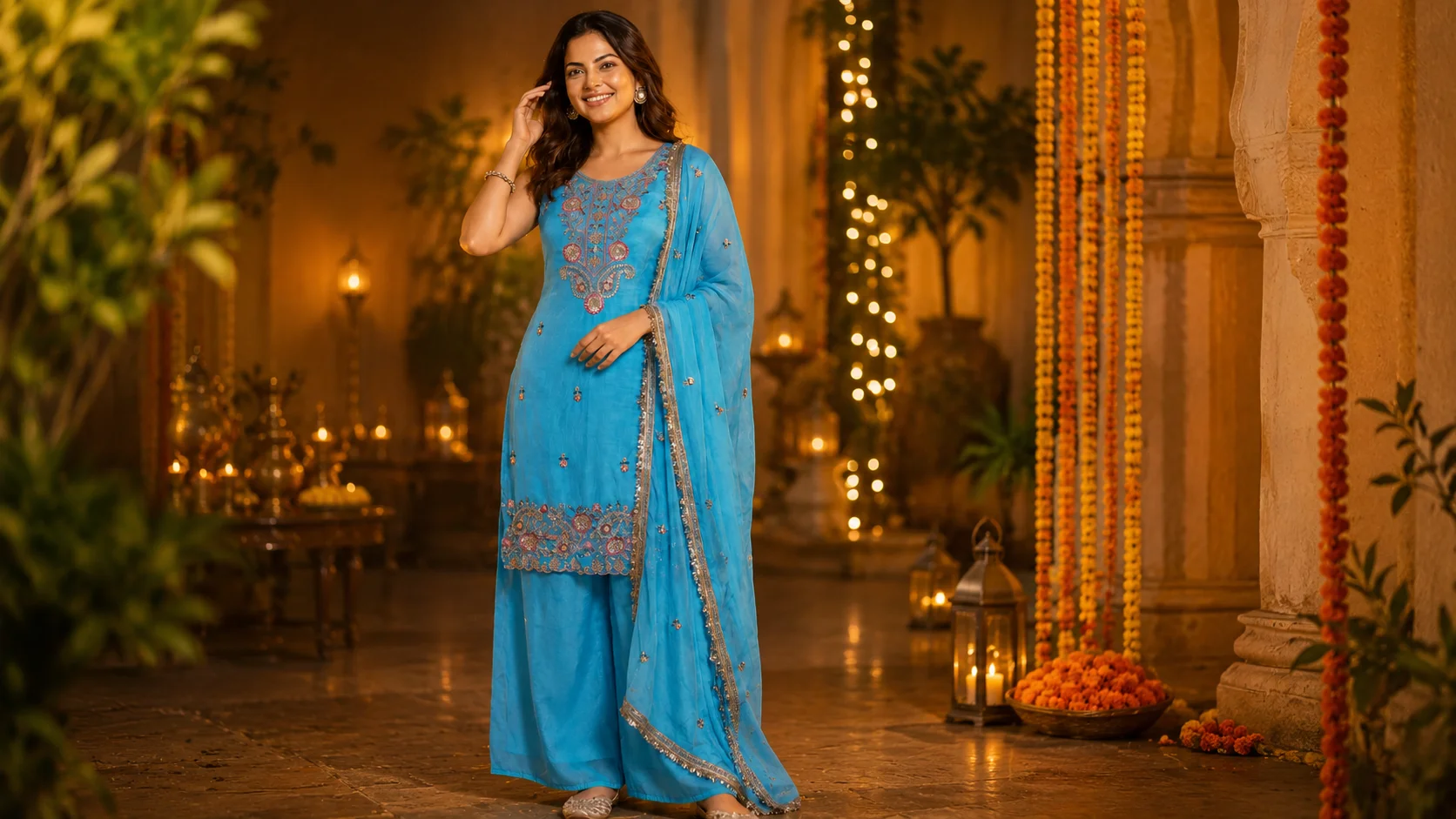
There is something especially striking about a festive outfit that does not need a complicated styling formula to make an impression. A bright blue kurta set with ornate decorative detailing, coordinated trousers and a flowing dupatta already brings plenty of visual interest to the look.
The key is knowing when to stop adding.
For a festive kurta set like this, the most effective approach is to let the colour and decorative details lead, then use jewellery, footwear and beauty choices as supporting elements. That creates a polished occasion-ready appearance without making every part of the outfit compete for attention.
Table of Contents
Why This Festive Kurta Set Stands Out
The first thing that draws the eye is the vibrant blue colour. It creates a strong base before any accessories are introduced, while the decorative motifs around the neckline and lower portion of the kurta give the outfit a more occasion-focused character.
The coordinated blue trousers keep the silhouette visually continuous rather than breaking the outfit into several competing colour blocks. Meanwhile, the matching dupatta introduces movement and another layer of detail through its embellished-looking border and scattered decorative accents.
Together, these elements create an outfit that already feels visually complete.
That matters when styling it. With a detailed ethnic outfit, adding more is not automatically better. The most successful accessories are often the ones that echo something already happening in the clothing rather than introducing an entirely new direction.
Explore This StyleLet the Blue Colour Lead the Look
A saturated blue outfit naturally becomes the focal point, so accessories do not have to fight for attention.
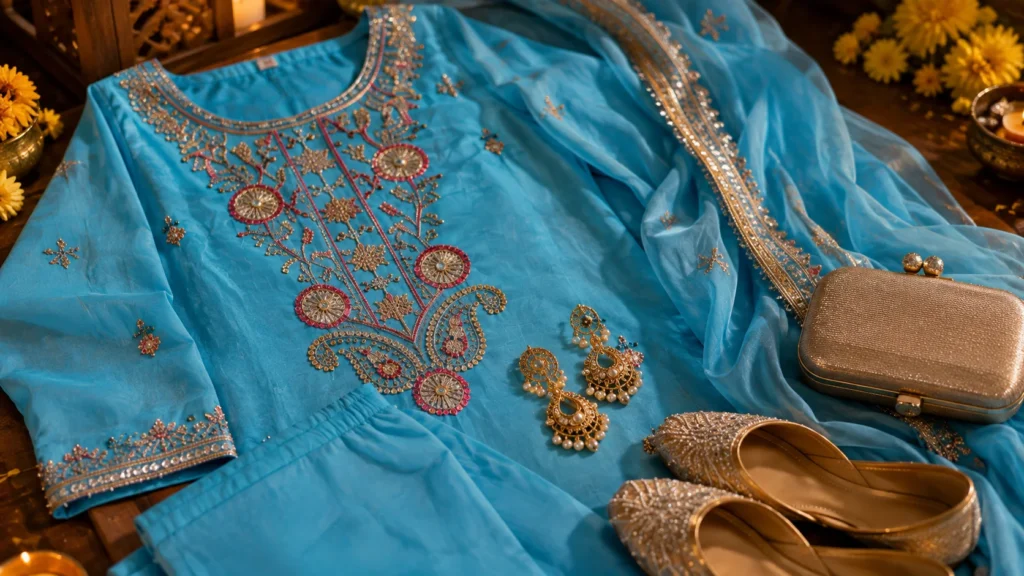
Metallic-looking accents work particularly well with this colour direction because they can pick up the decorative detailing without requiring another dominant shade. A pair of embellished flats or juttis, for example, can visually connect the lower half of the outfit with the ornate neckline and dupatta border.
If you want to introduce another colour, use it selectively.
Soft metallic tones, muted pink accents, warm neutrals or similarly restrained shades can complement the blue while keeping the overall palette coherent. The goal is not to match every accessory perfectly. Instead, repeat one or two visual cues from the outfit.
This is an easy styling principle to remember:
One dominant colour + repeated decorative accents + restrained accessories.
It works particularly well when the clothing already contains several intricate details.
Keep Jewellery Beautiful but Considered
Statement ethnic wear can tempt you to add earrings, a necklace, bangles, rings and other accessories all at once. That can work for certain maximalist looks, but it is not necessary here.
Because the neckline itself has substantial decorative interest, earrings can become the primary jewellery feature.
Medium-to-statement earrings with a traditional or ornate appearance can frame the face while leaving the neckline visible. A delicate bracelet or a small group of bangles can then add another festive touch without shifting attention away from the outfit.
A necklace is optional rather than essential.
If you choose one, consider how much space exists between the necklace and the neckline detailing. When both occupy the same visual area, the result can become busy. Leaving that area open can actually make the embroidery-style motifs appear more prominent.
The same principle applies to rings and bracelets: choose pieces that contribute to the look rather than simply filling every available styling opportunity.
Choose Footwear That Complements the Details
Footwear may occupy only a small part of the finished outfit, but it can make the styling feel noticeably more cohesive.
With a blue festive kurta set, embellished juttis or similarly occasion-appropriate flats can create a natural visual connection with decorative elements elsewhere in the outfit.
You do not necessarily need blue footwear.
In fact, a metallic-looking neutral can be especially versatile because it complements the decorative accents while allowing the main blue colour to remain dominant.
When comparing footwear options, consider three visual questions:
Does the footwear complement rather than compete with the outfit?
Does it repeat an existing accent or decorative direction?
Does it suit the formality of the occasion?
Answering those questions is usually more useful than trying to achieve an exact colour match.
How to Style It for Different Festive Occasions
One of the advantages of a coordinated ethnic set is that relatively small styling changes can alter its overall mood.
For a family festive gathering
Keep the styling polished but relaxed. Statement earrings, understated wrist jewellery and embellished flats can provide enough finishing detail.
Wear the dupatta in a natural drape rather than creating an overly structured arrangement. This allows the outfit’s decorative elements to remain visible while keeping the overall impression effortless.
For an evening celebration
An evening setting can support slightly stronger accessories.
You might introduce more noticeable earrings or a decorative clutch while keeping the rest of the jewellery restrained. A defined eye look or richer lip colour can also shift the outfit towards a more evening-oriented mood without changing the clothing itself.
For a wedding-related celebration
For a more dressed-up occasion, the accessories can become richer while still following the same hierarchy.
Choose one major jewellery focal point, coordinate the footwear and consider a more deliberate dupatta drape. The outfit already provides colour and detail, so the styling does not need several competing statement pieces.
For festive photographs
Think about silhouette and visibility as much as accessories.
A dupatta positioned so that both its border and the kurta detailing remain visible can make the complete outfit easier to appreciate. Jewellery that frames the face rather than covering the neckline can also keep the visual balance cleaner.
See the Product DetailsThe Small Details That Complete the Look
A successful festive outfit is often less about discovering one dramatic styling trick and more about making several small decisions work together.
Start with the strongest element. Here, that is the blue outfit itself.
Next, identify the secondary visual feature — the ornate decorative detailing. Accessories can then reference that element through their shape, finish or level of embellishment.
Finally, leave some visual breathing room.
If your earrings are elaborate, your necklace can be minimal or absent. If your footwear has plenty of decorative detail, the bag does not also need to become a statement piece. If the dupatta is prominently draped, allow it to provide some of the outfit’s movement and drama.
This approach prevents an elegant festive outfit from becoming visually crowded.
It also makes getting dressed simpler: instead of asking what else can I add?, ask what does this outfit actually need?
For a vibrant blue ethnic look with noticeable decorative details, the answer may be surprisingly little.
A considered pair of earrings, complementary footwear, a well-positioned dupatta and one or two restrained finishing touches can be enough to turn an attractive outfit into a beautifully balanced festive look.
FAQs
How do you style a festive kurta set without over-accessorising?
For festive kurta set styling, first identify the strongest details already present in the outfit. If the neckline and dupatta are ornate, prioritise earrings and restrained wrist jewellery rather than automatically adding a statement necklace.
What jewellery works with a heavily detailed kurta neckline?
Consider making earrings the main jewellery feature. This keeps attention around the face while allowing decorative neckline details to remain visible. A bracelet, bangles or a ring can provide smaller supporting accents.
Does footwear need to match a blue ethnic outfit exactly?
No. Complementary metallic-looking or neutral footwear can work beautifully because it supports the outfit without creating another strong colour block. Look for visual harmony rather than an exact shade match.
How can I make the same kurta set look more festive?
Adjust the accessories rather than overwhelming the clothing. More prominent earrings, occasion-appropriate footwear, a decorative clutch and a considered dupatta drape can make the look feel more dressed up.
Should I wear a necklace with an embroidered-looking kurta?
It depends on the neckline. When decorative work already occupies much of the neckline area, leaving it necklace-free can create better visual balance. If you prefer a necklace, choose one that does not compete with the existing detailing.