
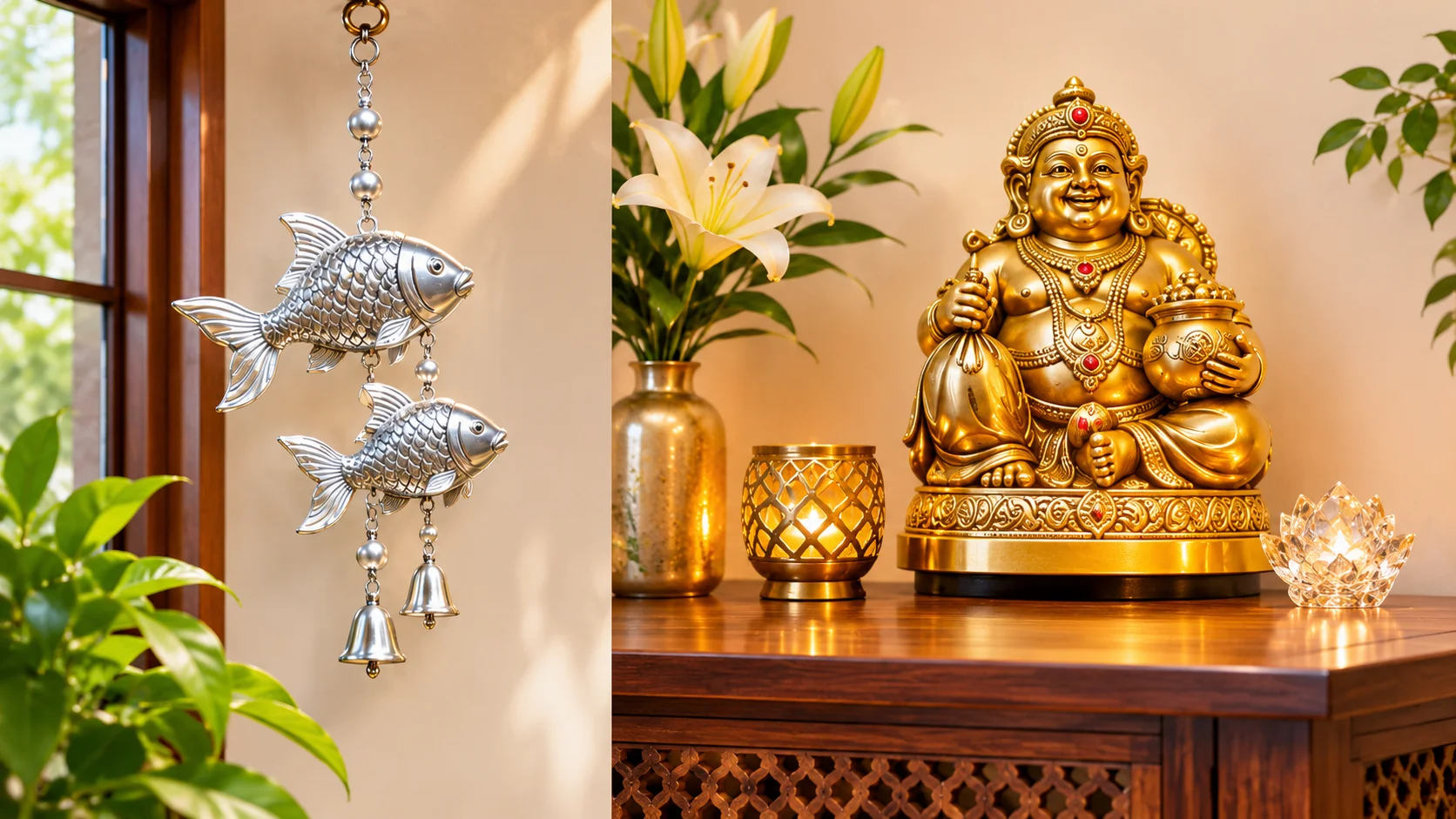
Vastu advice often connects a home’s North-East corner with calm, clarity and a dedicated place for prayer. Some modern placement guides also suggest hanging a silver fish or displaying a Kuber statue there when money feels difficult to manage. But are these objects traditional rules, and does the North-East have the same meaning in every Vastu interpretation?
The short answer: treat the silver fish and the Kuber statue as symbolic décor choices, not proven financial remedies. The North-East is commonly called the Ishanya corner in Vastu, while historical descriptions of Kubera associate him with wealth and the North. Those are related ideas, but they are not automatically the same placement rule.
Table of Contents
Table of Contents
What the North-East or Ishanya Corner Means in Vastu
The North-East corner is known in Vastu as Ishanya or the Ishaan direction. In many contemporary Vastu explanations, it is treated as a light, uncluttered and spiritually significant part of the home. A prayer or meditation area is often suggested here, provided the room layout makes that practical.
Distinguish a traditional preference from a universal instruction. Vastu interpretations vary by text, region and practitioner: some emphasise keeping this area open and clean, while others consider the room’s function and the overall layout. A small or rented home may not have a usable North-East corner; that does not make it automatically inauspicious.
Identify the North-East with a compass, not from a photograph, window position or the direction you happen to face. Use a floor plan and compass reading, allowing for possible magnetic interference. If uncertain, ask a knowledgeable practitioner rather than moving heavy furniture or making structural changes.
Silver Fish in the North-East: What the Symbol Can and Cannot Mean
A silver fish hanging ornament can work as a decorative focal point. In some contemporary Vastu and Feng Shui content, fish imagery is used symbolically in connection with abundance, movement or good fortune. However, there is no single, universally accepted Vastu rule established here that says a silver fish must be hung in the North-East to stabilise money.
If you choose to display one, treat it as a personal or cultural symbol. Select a size that suits the wall or corner, hang it securely, and make sure it does not obstruct a doorway, walkway or ceiling fan. Avoid placing it where it can swing into people, breakables or electrical fittings. In a compact room, a small wall-mounted ornament may look more balanced than a large hanging piece.
Ask whether the ornament suits the space and is safely secured. It may add meaning and visual interest, but it is no substitute for budgeting, saving, debt management or qualified financial advice.
Kuber Statue in the North-East: Why the Claim Needs Context
Kubera, also written as Kuber, is recognised in Hindu tradition as a deity associated with wealth and prosperity. The National Museum, New Delhi describes its seated Kubera sculpture as representing the god of wealth and notes that Kubera is the guardian of the North. 🌐
This is useful historical and iconographic context, but it does not prove that placing a modern Kuber statue in the North-East will improve household finances.
That distinction matters because the North and North-East are separate directions. The image-led suggestion to place a Kuber statue in the Ishanya corner may reflect a particular contemporary practice or a practitioner’s interpretation; it should not be described as the only traditional rule. If you follow a family custom or a specific Vastu school, use that guidance consistently and understand that other traditions may recommend a different placement.
For a home display, choose a stable surface where the statue can be kept respectfully and cleaned easily. Avoid a cramped shelf where it may be knocked over, a damp spot, or a location directly beside clutter and discarded items. If you maintain a prayer space, keep it tidy and appropriate to your household’s customs. The object’s symbolic meaning should guide the display, not a promise of guaranteed wealth.
How to Apply the Idea Without Disrupting Your Home
You do not need to redesign a room to accommodate a symbolic object. First, check the direction accurately. Next, decide whether the corner is being used for prayer, storage or everyday activity. If it is already a calm prayer area, avoid overcrowding it with multiple remedies. One meaningful object, placed neatly, is usually more coherent than several unrelated symbols competing for attention.
If the North-East is a busy passage, a shared room or an area with essential furniture, prioritise clear movement and household safety. Do not block exits, hang heavy objects from unsuitable fittings or shift electrical appliances simply to match a generalised online tip. For further practical context, see Nimon Group’s guide to North-East Vastu remedies for electronic and tech clutter.
It is also worth keeping Vastu and Feng Shui advice distinct. Both traditions discuss how spaces are arranged, but they have different histories and frameworks. A placement recommendation from one should not automatically be presented as a rule from the other. If you are exploring wealth symbolism across both, Nimon Group’s article on the Southeast and wealth in Feng Shui explains why the direction associated with a wealth area can differ between systems.
A final reminder: objects and directional arrangements cannot guarantee stable income, business success or financial security. Use them as meaningful cultural or decorative choices if they resonate with you, while relying on practical financial habits for real-world money decisions.
Related Blogs
- Vastu Main Door Threshold Tips for Wealth
- How to Place a Feng Shui Money Frog for Wealth
- Prayer Corner Vastu Made Simple for a Beautiful Sacred Space
Frequently Asked Questions
1. Is a Kuber statue in the North-East considered good in Vastu?
Some contemporary guides recommend it, but it is not a universal rule across all Vastu interpretations. Historical museum material associates Kubera with the North, so check which tradition or practitioner’s guidance you are following before treating the North-East placement as definitive.
2. Can a silver fish be hung in the North-East corner?
You may display a silver fish ornament there if it is part of your personal or family tradition. The placement is not a proven financial remedy or a universally established Vastu requirement. Make sure it is securely fixed and does not obstruct movement.
3. Which direction is associated with Kubera?
Kubera is traditionally associated with wealth and is described in Indian museum iconography as the guardian of the North. This is distinct from the North-East, known as Ishanya in Vastu terminology.
4. How do I identify the Ishanya corner of my home?
Use a compass to identify the North and East, then locate the corner between them on your floor plan. Do not assume the direction from a photograph or the way a room appears. If the layout is irregular, seek a qualified assessment.
5. Do silver fish or Kuber statues make money more stable?
There is no reliable evidence that either object changes income, spending or financial outcomes. They may hold symbolic or devotional meaning, but financial stability depends on practical factors such as budgeting, saving, debt management and informed decisions.