
This article may contain affiliate links. We may earn a commission at no extra cost to you.
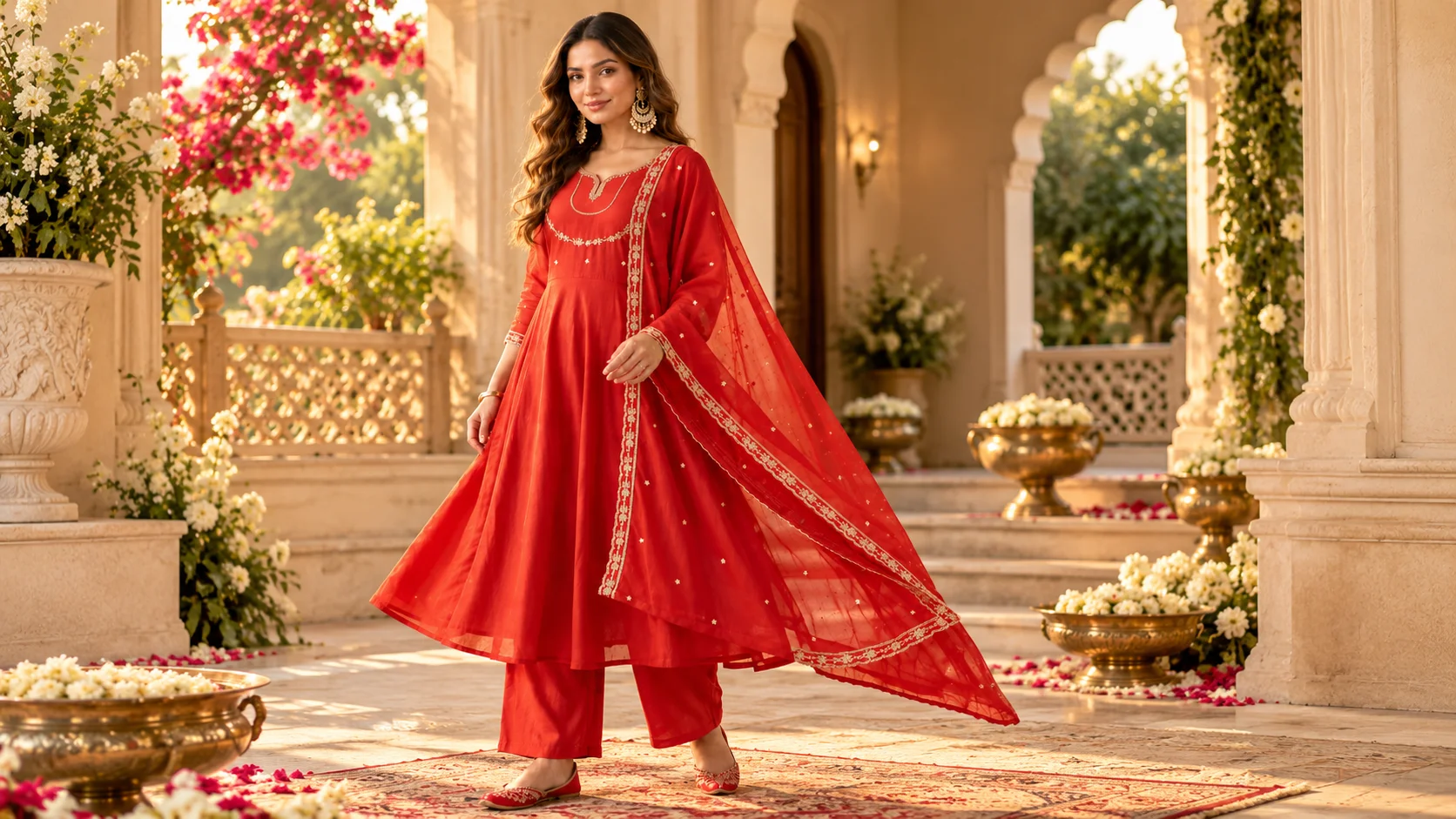
A festive outfit can look overworked when every accessory competes for attention. With a rust-red salwar suit detailed with gold zariwork, the more useful question is not what else to add, but how to make the dupatta, neckline and accessories work together.
The featured style is named as a Rust Zariwork (Gold) Soft Raw Silk Readymade Salwar Suit. The most versatile approach is to decide on the dupatta drape first, then choose jewellery and footwear around the details already visible. That gives the same outfit room to feel relaxed at a family gathering or more considered for an evening celebration.
Table of Contents
Table of Contents
Rust Zariwork Salwar Suit Styling Starts with the Dupatta
The rust-red colour and gold detailing already establish a clear festive direction. The visible look combines a flared kurta, matching trousers and a sheer dupatta with a decorative gold border. That border is not simply an extra layer: it creates a line that can frame the outfit, add movement or become the main styling detail.
Treat the dupatta as part of the outfit’s structure. Before choosing earrings or a bag, stand in front of a mirror and decide what you want to remain visible: the neckline, the front of the kurta, the border, or the overall flare. A drape that hides the neckline may call for simpler earrings; a drape that leaves the upper front open gives the embroidery more room.
This dupatta-first approach is also useful beyond this particular suit. Vogue India’s feature on festive dupattas explores how changing the drape can shift the mood of an outfit, from traditional to more individual styling. See its guide to dupattas for festive dressing.
Shop the StyleChoose a Drape That Keeps the Suit’s Details Visible
For a relaxed family lunch or daytime celebration, try placing the dupatta over one shoulder and letting the bordered edge fall naturally. This leaves the front of the kurta easier to see and avoids covering too much of the outfit. If the fabric slips while you move, use a discreet pin at the shoulder after checking that the drape still falls neatly.
For a more formal gathering, arrange the dupatta across both shoulders or over the forearms so the border creates a deliberate frame. Keep the front panel visible rather than pulling the fabric tightly across the neckline. The aim is not to make the drape elaborate; it is to show the detail without making the outfit feel crowded.
A third option is to let the dupatta fall from one shoulder while bringing a small section over the opposite arm. This creates a little movement in photographs and while walking, while keeping the kurta’s shape visible. Try the drape while standing, sitting and taking a few steps before settling on it. A style that looks attractive in one pose should also feel manageable through the event.
Choose Jewellery Around the Rust Zariwork Salwar Suit’s Neckline
Once the dupatta is in place, choose one jewellery focal point. If the neckline already has visible gold work, statement earrings or jhumkas can be enough. A heavy necklace may compete with the embroidery and the dupatta border, particularly when both sit close to the face and upper chest.
If you prefer a necklace, keep the earrings quieter and check that the necklace does not cover the kurta’s main decorative area. The reverse also works: choose noticeable earrings, leave the neckline open and keep bangles or rings restrained. The goal is a clear focal point rather than a matching set of accessories.
For more ideas on using one prominent pair as the centre of a festive look, explore Nimon Group’s guide to Kundan statement earrings. The same principle applies here: let one piece lead and allow the garment’s own detailing to remain visible.
Finish the Look for the Occasion, Not Just the Colour
For daytime events, understated flats or simple sandals can keep the overall look easy to wear. Choose a bag that does not introduce another competing decorative feature; a small neutral or gold-toned option can support the outfit without becoming a second focal point.
For an evening celebration, you can make the finishing details more defined with dressier footwear, a compact clutch and a more deliberate dupatta arrangement. This does not mean every accessory needs embellishment. If the earrings are already prominent, keep the bag simple; if the dupatta border is the main detail, let it remain visible.
For wedding-related events, follow the invitation and the hosts’ dress code before deciding how formal to make the look. The same suit can be styled more quietly for a daytime ceremony or with more defined accessories for an evening function, but the venue, cultural setting and expected level of formality should guide the final choices. Nimon Group’s festive outfit planning guide offers a wider framework for coordinating pieces you already own.
Before leaving, walk a few steps and sit down once. If the dupatta border twists, slips or catches, adjust the pin or choose a simpler drape rather than adding more accessories.
The most balanced way to wear this rust zariwork salwar suit is to let the dupatta establish the look, then add one clear jewellery focal point. Keep the remaining details in proportion to the occasion, and explore the product details if this combination suits your wardrobe.
Related Blogs
- Red Anarkali Kurta Styling — Balance Gold Details and a Bold Hem
- Indian Festive Outfit Ideas for a Cream and Red Wedding Guest Look
Frequently Asked Questions
1. How do you style a rust zariwork salwar suit for a festive event?
Start by arranging the dupatta so its border and the kurta’s neckline remain visible. Then choose either statement earrings or a necklace as the main jewellery feature, not both at full strength. Finish with footwear and a bag that match the event’s formality.
2. Should I wear a necklace with a gold-work kurta?
A necklace is optional. If the neckline already has noticeable embroidery, statement earrings may be enough. If you prefer a necklace, choose a simpler design and keep the earrings understated so the upper part of the outfit does not look crowded.
3. How can I keep a dupatta in place during an event?
Try the intended drape while standing, sitting and walking. If it shifts, use a discreet pin at a shoulder seam or another secure point that does not distort the border. Check the arrangement in a mirror after pinning so the fabric still falls naturally.
4. What footwear works with a rust-red salwar suit?
Neutral, beige, tan or gold-toned footwear can complement a rust-red outfit, but the event and the visible trouser length matter too. Traditional flats or embellished juttis suit many festive settings; dressier sandals or heels may work for a more formal venue.
5. Can the same salwar suit work for daytime and evening occasions?
Yes. Keep the daytime version simpler with a relaxed dupatta drape and restrained accessories. For evening, make the drape more deliberate and choose one stronger finishing detail, such as statement earrings or dressier footwear. Always adapt the look to the event’s dress code.