
Affiliate Disclosure: This article may contain affiliate links in the future. If you purchase through an approved affiliate link, Nimon Group may earn a commission at no additional cost to you.
Building a winter wardrobe can become expensive and confusing when every outfit seems to require another jacket, sweater or pair of shoes. A well-planned Winter 2026 capsule wardrobe for men offers a simpler approach: choose a small collection of versatile pieces that work together across everyday situations.
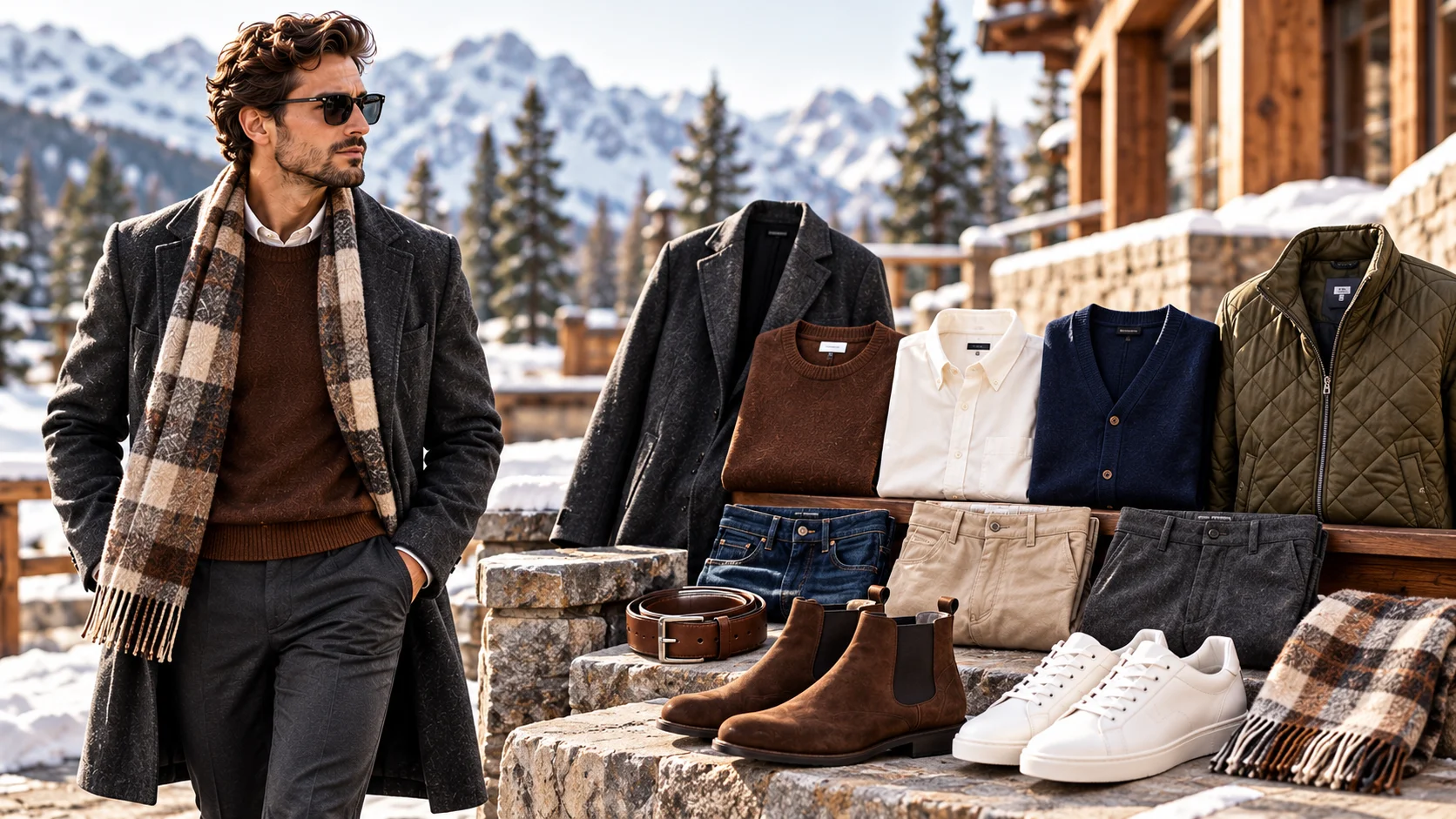
For this guide, the capsule centres on 12 clothing and accessory essentials in charcoal, chocolate brown, cream, navy, olive and stone. These pieces can be combined into office outfits, relaxed weekend looks, city-ready combinations and practical travel styles. The key is not owning more clothes; it is understanding how to combine them for the weather, occasion and level of formality.
Table of Contents
1. The 12 Pieces That Build a Winter Capsule
A useful capsule starts with pieces that serve different purposes without competing with one another. The aim is to combine outerwear, knitwear, shirts, trousers, footwear and accessories into a coordinated wardrobe.
Here is the 12-piece foundation:
| No. | Wardrobe essential | Suggested colour | Main styling role |
|---|---|---|---|
| 1 | Wool-look overcoat | Charcoal | Smart outer layer |
| 2 | Crewneck sweater | Chocolate brown | Everyday knitwear |
| 3 | Oxford shirt | Cream | Polished base layer |
| 4 | Merino-style cardigan | Navy | Adjustable smart layer |
| 5 | Quilted jacket | Olive | Casual outerwear |
| 6 | Straight-leg jeans | Dark wash | Relaxed everyday outfits |
| 7 | Tailored trousers | Charcoal | Office and smarter occasions |
| 8 | Chinos | Stone | Refined casual dressing |
| 9 | Chelsea boots | Brown | Smart winter footwear |
| 10 | White leather-style sneakers | White | Casual combinations |
| 11 | Belt | Brown | Finishing detail |
| 12 | Wool-look scarf | Neutral checks | Warmth and visual texture |
The colours are important because they make coordination easier. Charcoal and navy provide dark foundations, chocolate brown adds warmth, cream creates contrast, olive introduces an earthy accent, and stone lightens the overall palette.
The capsule is a styling framework rather than a fixed shopping list. If you already own a similar coat, sweater or pair of trousers, use it instead of buying another. Choose pieces that suit your local climate, personal preferences and existing wardrobe.
2. How to Create More Outfits from Fewer Pieces
The most useful capsule wardrobe rule is to make each item compatible with several others. Instead of treating every garment as part of one fixed outfit, build combinations around colour, proportion and formality.
Start with a simple colour system. Pair the cream shirt with charcoal trousers, dark jeans or stone chinos. Chocolate knitwear works naturally with charcoal, navy, dark denim and stone. Olive outerwear can sit over brown knitwear and dark jeans, while a navy cardigan offers a cleaner alternative for office settings.
Give every layer a purpose. The shirt establishes a neat base, the sweater or cardigan adds a middle layer, and the coat or quilted jacket provides the outer layer. Not every outfit needs all three. A cardigan over a shirt may be sufficient indoors, while a coat and scarf can complete the same combination outdoors.
A practical way to multiply outfits is to change one element at a time:
- Keep the shirt and trousers, but swap the cardigan for a sweater.
- Keep the knitwear and jeans, but change the quilted jacket to the overcoat.
- Keep the main outfit, but switch Chelsea boots to clean sneakers when the setting permits.
- Replace the checked scarf with a simpler neutral accessory if the outfit already contains several textures.
These small changes make combinations feel distinct without requiring an entirely new wardrobe. For more seasonal inspiration, explore the Fall 2026 Capsule Wardrobe for Men With 12 Pieces and 36 Outfits.
3. Five Winter Outfit Formulas for Different Occasions
The same capsule can serve different settings when you adjust the structure and finishing details. Start by considering the occasion, then choose the appropriate outerwear, trousers and footwear.
1. Office look: Combine the cream Oxford shirt, navy cardigan and charcoal tailored trousers. Add the charcoal overcoat and brown Chelsea boots when travelling to and from work. This combination uses a restrained palette and a clear, structured silhouette.
2. Casual city look: Wear the chocolate crewneck sweater with dark straight-leg jeans and the olive quilted jacket. White sneakers make the outfit relaxed, while brown boots create a slightly smarter finish. Keep the remaining accessories simple so the earthy colours stay balanced.
3. Smart-casual look: Pair the cream shirt with the chocolate sweater and charcoal trousers. The overcoat and Chelsea boots reinforce the outfit’s formal direction without requiring a full suit. This is a useful option for dinners, informal meetings and occasions with an unclear dress code.
4. Weekend look: Choose the sweater, stone chinos and white sneakers. Add the quilted jacket when conditions call for another layer. The lighter trousers contrast with the darker top, making the combination feel less formal than charcoal tailoring.
5. Travel look: Wear dark jeans, a comfortable shirt or sweater, and the olive jacket or charcoal overcoat according to the forecast. Choose footwear suitable for the journey, and use the scarf when needed. The best travel outfit is one that allows easy movement and works across more than one part of the day.
For situations that move from professional settings to evening plans, the principles in Men’s Office to Dinner Outfits: A 2-Piece Fall 2026 Switch offer another useful way to think about changing an outfit without replacing every piece.
4. How to Adapt Your Capsule to American Winter Weather
Winter in the USA does not mean the same thing everywhere. A wardrobe for a cold, snowy city may need different outerwear and accessories from one used in a milder coastal region. Even within the same city, a windy morning commute and a warmer afternoon can call for different combinations.
In milder conditions, the Oxford shirt, cardigan or crewneck sweater may provide enough layering beneath a suitable coat. For colder outdoor periods, add appropriate thermal base layers, warmer socks, gloves or a hat. These extra weather-dependent items sit outside the 12-piece style capsule; they should not be sacrificed simply to maintain a neat wardrobe count.
Layering should serve a practical purpose as well as a visual one. REI’s guide to dressing in cold weather explains the roles of base, insulating middle and protective outer layers. This is useful when planning outfits for conditions involving wind, rain or snow.
The charcoal overcoat and quilted jacket also serve different style roles. The overcoat suits smarter combinations, while the quilted jacket naturally fits casual outfits. Neither should be assumed to provide adequate protection in every winter climate. Check local conditions and choose weather-appropriate outerwear and footwear.
5. The Styling Details That Make the Difference
A coordinated colour palette is only part of a successful winter outfit. Fit, proportions and texture determine whether the individual pieces look intentional together.
Check the proportions. The coat should work comfortably over the layers you intend to wear beneath it. Trousers should sit appropriately over the chosen footwear, and hems should not bunch excessively. A straight-leg jean and a tailored trouser can both work, but they create different levels of formality.
Balance textures. A checked scarf can add interest to a plain sweater and overcoat. If the scarf is visually prominent, keep the remaining pieces relatively simple. Similarly, a quilted jacket already introduces texture, so a solid knit and uncomplicated trousers can prevent the outfit from feeling busy.
Coordinate accessories without overmatching. A brown belt and brown Chelsea boots can create a natural connection, especially when paired with chocolate knitwear. They do not need to be identical shades. White sneakers offer a more relaxed direction, so consider whether a belt will be visible and whether its style suits the occasion.
Keep a practical final check. Before leaving, consider the forecast, how long you will be outdoors, the amount of walking involved and whether you will need to remove layers indoors. A polished outfit should still work for the conditions in which you will wear it.
The final H2 above focuses on the last styling decisions; the conclusion below brings the overall wardrobe strategy together.
A successful winter capsule is not about wearing the same outfit every day. It is about having a coordinated selection of pieces that can change with the occasion and the weather. Start with the essentials you already own, fill only genuine gaps, and build combinations around a consistent colour palette.
Related Blogs
- Fall Texture Styling for Men with Wool, Suede and Corduroy — complements the article with advice on combining textures.
- Men’s Autumn City Break Wardrobe Guide — offers additional outfit planning for travel.
- Indian Summer Travel Capsule for Men – The Ultimate Packing Guide — extends capsule wardrobe planning to a warmer travel season.
Frequently Asked Questions
1. What is a Winter 2026 capsule wardrobe for men?
A Winter 2026 capsule wardrobe for men is a compact collection of coordinated clothing designed to create multiple outfits with fewer individual pieces. It typically combines versatile tops, knitwear, outerwear, trousers, footwear and accessories. The exact selection should reflect local weather, lifestyle and dress-code needs.
2. Can 12 winter wardrobe pieces really create 30 outfits?
Yes, 12 compatible pieces can support many combinations, especially when tops, bottoms, outerwear and footwear are interchangeable. Thirty outfits is a useful styling target rather than a guarantee: the final number depends on which combinations suit the weather, fit your preferences and meet the requirements of each occasion.
3. Which colours are easiest to mix in a men’s winter wardrobe?
Charcoal, navy, cream, chocolate brown, olive and stone are useful starting points. Dark neutrals provide a visual foundation, while cream and stone create contrast. Brown and olive add warmth without making the palette difficult to coordinate. Introduce brighter colours if they complement the pieces you already own.
4. What should men wear for very cold American winters?
Choose layers according to the temperature, wind, precipitation and time spent outdoors. A suitable base layer, an insulating middle layer and protective outerwear can work together, supplemented by warm socks, gloves, a hat and weather-appropriate footwear. A fashion capsule alone is not a complete extreme-cold clothing system.
5. How can men build a winter capsule wardrobe without overspending?
Begin by reviewing your current wardrobe and identifying versatile pieces you already own. Replace or add items only when a genuine gap exists. Prioritise combinations that work for several occasions, and consider cost per wear rather than buying every item in a suggested list. A capsule should simplify your wardrobe, not create unnecessary purchases.