
This article may contain affiliate links. We may earn a commission at no extra cost to you.
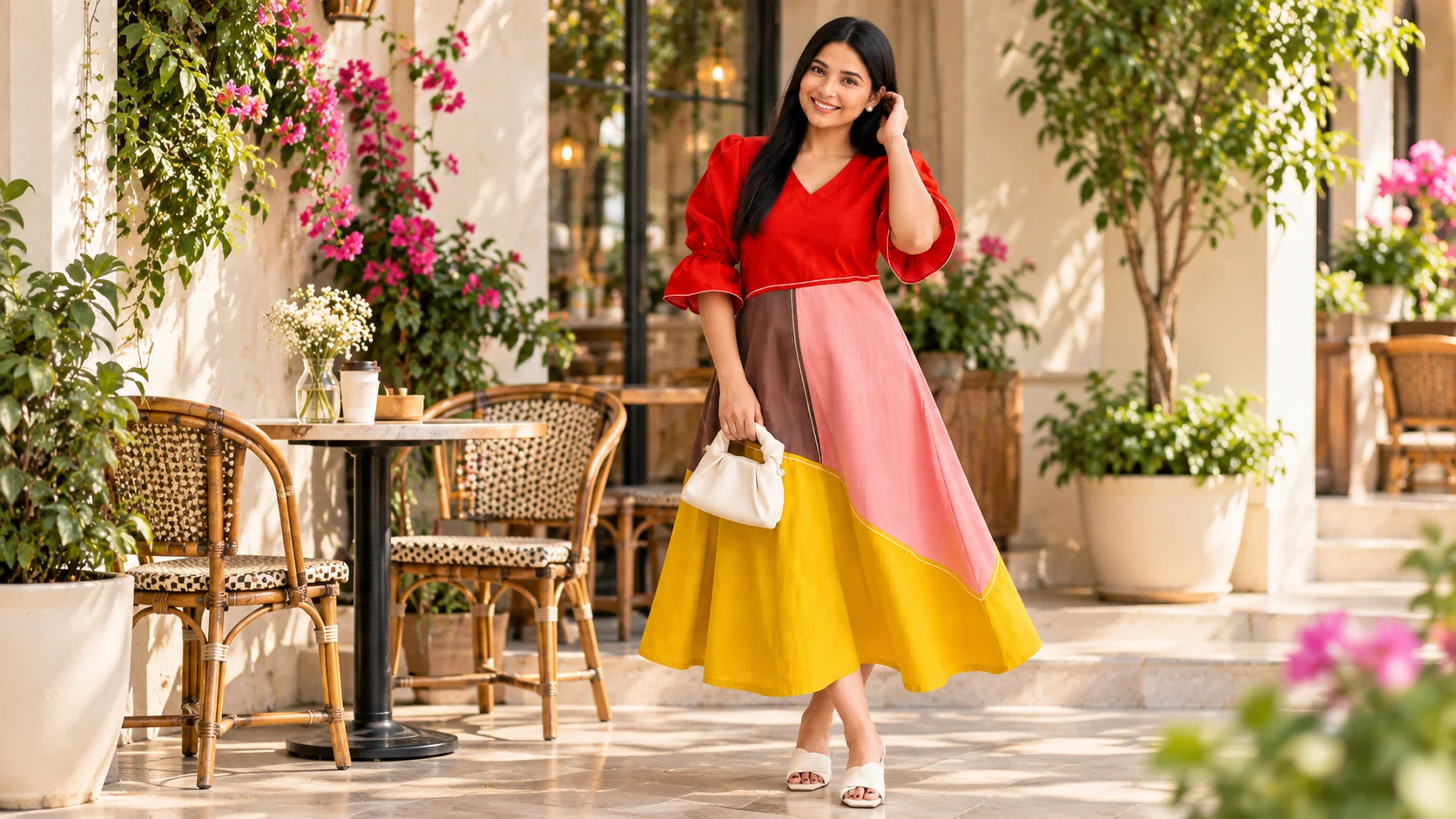
A colour-block dress can make an outfit feel complete before you add a single accessory. With a vivid red bodice, dusty-pink and brown panels, and a mustard-yellow hem, this look already has several colours competing for attention—in a good way.
The trick to styling a colour block dress is to let its colour placement lead, then choose shoes, a handbag and jewellery that support rather than compete with it. A few thoughtful decisions can take the same dress from a relaxed café date to a daytime celebration or a more dressed-up evening outing.
Table of Contents
Understand the dress before adding accessories
The most useful feature of this colour block dress is its built-in visual structure. The red V-neck bodice and puff sleeves draw attention towards the upper body, while the large pink and brown panels create contrast through the skirt. The mustard-yellow hem adds another strong colour near the bottom.
Because the dress already has several focal points, you do not need every accessory to make a statement. Start by deciding which part of the outfit should attract the most attention. For everyday styling, let the dress remain the hero and keep the other pieces relatively simple.
A practical rule is to repeat one colour from the dress in a small accessory, or choose a neutral that gives the colour combination some breathing space. Cream, ivory, tan and soft beige are useful starting points because they do not introduce another strong colour.
For example, a cream handbag echoes the light footwear and creates a visual pause between the bold dress colours. This is often more cohesive than adding a bright bag in an unrelated shade.
If you enjoy experimenting with palettes, the guide to colour theory for women’s fashion offers another way to think about colour relationships before choosing accessories.
Choose shoes and handbags that balance the colours
Shoes and handbags can change the mood of a colour block dress without changing the dress itself. The best pairing depends on the occasion, the level of formality and how much contrast you want.
Cream or ivory sandals: These are an easy starting point for daytime outfits. Their light appearance supports the cream handbag and keeps the focus on the red, pink and mustard panels. Choose a simple flat or low heel for a relaxed look.
Tan or nude footwear: Warm neutral shoes can work well with the brown section of the dress. They introduce a softer transition between the dress and the footwear, particularly when you want a slightly more refined daytime outfit.
Mustard footwear: A mustard shoe can deliberately repeat the hem colour. This creates a more coordinated, statement-making look, but it is worth keeping the handbag understated so that the outfit does not become visually busy.
For handbags, a small cream or ivory bag is the most straightforward companion. A structured tan or brown bag can also work when you want to echo the darker panel. A woven bag adds texture and a relaxed feel for a daytime outing, although it may be less suitable for a formal dinner.
Avoid treating any shoe or bag colour as universally wrong. Dark accessories, chunky trainers or high heels can work in the right setting. The important question is whether their shape, visual weight and formality suit the look you want.
Explore and ShopAdapt the dress for different occasions
A colour block dress does not need to be reserved for one type of outing. Changing the accessories and the surrounding styling can make it feel appropriate for several settings.
For brunch or a café date: Keep the look relaxed with cream sandals, a small light-coloured handbag and understated earrings. This combination lets the bright bodice and colourful skirt do most of the work. A simple hairstyle can also keep the overall look balanced.
For shopping or a daytime city outing: Choose footwear that suits the amount of walking you expect to do. Simple flats or supportive sandals can keep the outfit practical, while a crossbody or compact handbag offers an alternative to carrying a small top-handle bag. Comfort depends on the specific footwear, so choose a pair you can wear comfortably for the planned activity.
For a garden celebration or casual gathering: You can introduce a little more detail through delicate jewellery or a textured handbag. If the setting is outdoors, consider the weather and ground conditions before choosing a heel. The dress already supplies the colour, so extra decoration can remain restrained.
For an evening meal: A more structured bag, a refined sandal or a modest heel can shift the dress towards a dressier mood. Small earrings and a simple bracelet may be enough. If you choose more dramatic footwear, avoid adding several equally bold accessories.
For further inspiration on taking a midi dress between settings, explore pink midi dress outfit ideas for day-to-night styling. The colour differs, but the principle of changing the accessories rather than rebuilding the entire outfit is useful.
Coordinate jewellery, layers and finishing details
Jewellery should work with the neckline and sleeve volume rather than compete with them. The V-neck creates a natural open area at the neckline, while the puff sleeves already add visual volume to the shoulders and arms.
For a daytime outfit, small studs, delicate drop earrings or a fine bracelet can provide enough detail. If you prefer a necklace, choose one that sits comfortably within the V-neck without becoming another dominant focal point. You can also skip the necklace entirely and let earrings frame the face.
For a dressier occasion, choose one stronger finishing detail—perhaps statement earrings or a more noticeable bracelet—and keep the remaining jewellery quieter. This creates a deliberate focal point without making the look feel crowded.
Layering is best approached according to the weather and setting. A light neutral layer can work when the temperature drops or when you want a little more coverage, but avoid adding a competing print or another large colour-block pattern. A plain cream, beige or brown layer is an easy place to start.
The final check is to look at the outfit from a distance. If your eye moves immediately between the dress, bag, shoes and jewellery, simplify one element. If the dress remains the main focus and the accessories feel connected, the combination is likely working as intended.
Frequently Asked Questions
1. How do you style a colour block dress?
Start with the dress’s strongest colours and choose one neutral accessory colour, such as cream, ivory, tan or beige. Keep shoes and the handbag relatively simple, then add understated jewellery. This lets the dress remain the focal point while the accessories make the outfit feel complete.
2. What colour handbag goes with a red, pink and yellow dress?
Cream, ivory and tan are useful options because they complement the warm, bright palette without adding another strong colour. Brown can echo a darker panel in the dress. A mustard bag may also work if you want to repeat the hem colour, provided the rest of the accessories stay restrained.
3. Can you wear a colour block dress to a wedding?
That depends on the wedding’s dress code, venue and cultural expectations. A colourful midi dress may suit some daytime or semi-formal celebrations, but the dress’s exact design and the event’s level of formality matter. Check the invitation and choose footwear and accessories that match the occasion.
4. What jewellery works with a V-neck dress and puff sleeves?
Small studs, delicate drop earrings and a fine bracelet are versatile starting points. A necklace can follow the open V-neck, but it is not essential. Since puff sleeves already create volume around the shoulders, keeping other accessories relatively light can produce a more balanced look.
5. Can you wear dark shoes with a colourful dress?
Yes. Dark shoes can create contrast and may suit an evening outfit or a more graphic styling direction. To make them feel intentional, consider echoing the darker colour elsewhere in a small accessory, or keep the rest of the outfit simple so that the shoes do not appear disconnected.
A colour block dress already provides a strong starting point, so styling does not have to be complicated. Choose accessories that support its existing colours, adapt the footwear to the occasion, and keep one clear focal point. Start with a neutral handbag and simple sandals, then experiment with stronger accents when you want a different mood.