
This article may contain affiliate links. We may earn a commission at no extra cost to you.
A bright pink dress can make getting dressed easier, but choosing the right shoes, bag and extra layers can be surprisingly tricky. The secret is to let the dress lead the outfit and change the supporting pieces to suit the occasion.
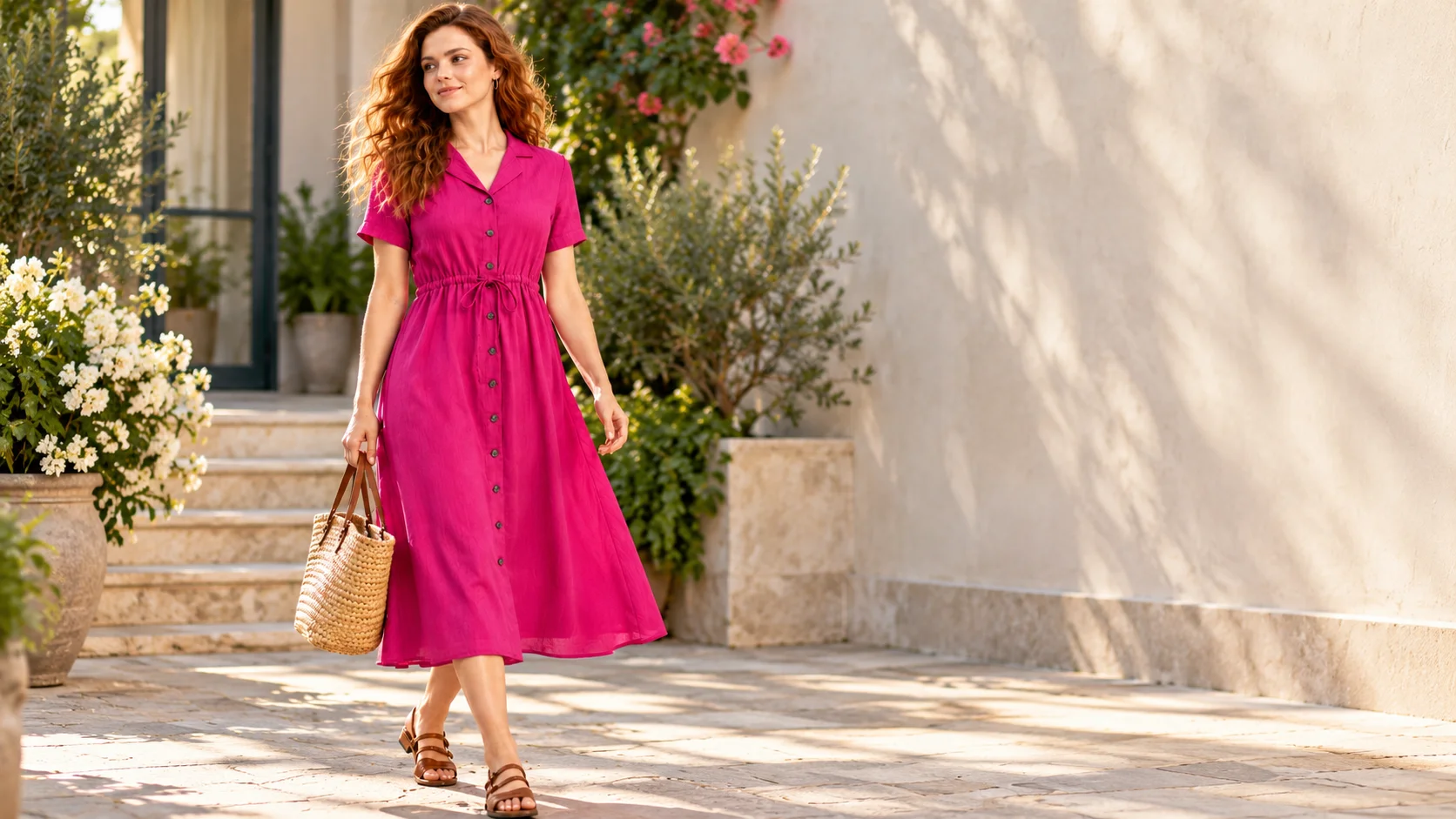
A pink midi shirt dress with a collar, front buttons, short sleeves and a drawstring waist offers a useful starting point. Its bold colour already attracts attention, while its shirt-style details give you room to create anything from a relaxed daytime look to a more polished outfit.
Table of Contents
Let the Pink Midi Shirt Dress Lead
The first styling decision is how much attention the dress should receive. A solid fuchsia-pink colour, button-front design and defined waist create several visual details already, so the rest of the outfit does not need to compete with them.
Start by wearing the dress as the main piece. If its waist drawstring is adjustable, tie it neatly to create the shape you prefer without pulling it excessively tight. Keep the front buttons aligned and let the skirt fall naturally. These small details help the dress look intentional without requiring complicated styling.
For a daytime outfit, brown flat sandals and a woven tote create a warm contrast against the pink. The earthy tones balance the brighter colour, while the simple accessories keep the overall look relaxed. Small hoop earrings can finish the outfit without introducing another dominant focal point.
The same principle applies to other shirt dresses: decide what should stand out first, then select accessories that support it. For more ideas on changing a dress between settings, explore pink midi dress outfit ideas for easy day-to-night styling.
Explore and ShopChoose Shoes and Bags for the Occasion
Shoes can change the impression of a midi dress more quickly than adding several accessories. Instead of buying or carrying a different outfit for every occasion, start with the setting and choose footwear that matches its level of formality.
- Casual outings: Brown flat sandals create an easy daytime combination. Add a woven tote for errands, a café visit or a relaxed lunch.
- Weekend plans: Clean white trainers introduce a sportier contrast. A simple crossbody bag can make the outfit feel practical without adding visual bulk.
- Work settings: If the workplace dress code permits this style, try a structured blazer with closed-toe flats or modest heels. A neat handbag helps the outfit feel more deliberate.
- Evening plans: Swap the daytime bag for a smaller clutch or shoulder bag and choose dressier sandals or heels. Keep the remaining accessories restrained so the pink remains the focal point.
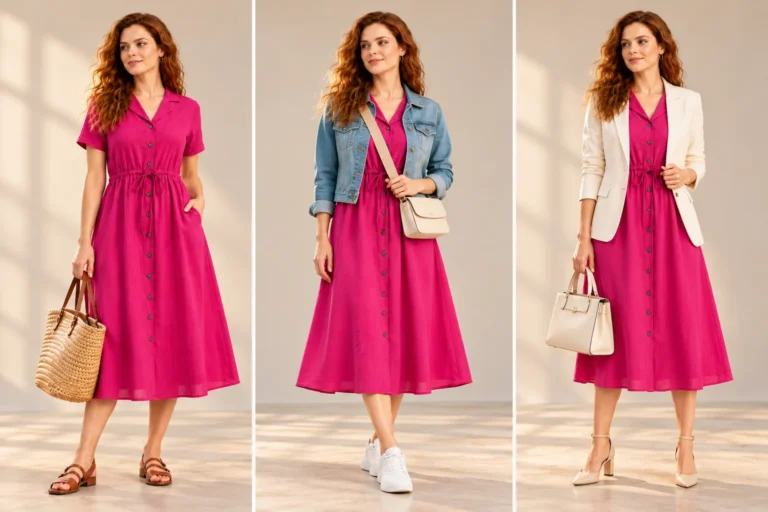
A useful rule is to choose one main accessory direction. A woven tote and flat sandals communicate relaxed daytime dressing, while a structured bag and heels suggest a smarter occasion. Mixing several unrelated styles can make the outfit feel less cohesive.
The shoe and bag colours do not have to match exactly. Brown, tan, cream and white can all complement pink in different ways; choose the combination that suits the mood you want.
Change the Look with One Extra Layer
A shirt dress can work across different settings when you change its outer layer carefully. The goal is not to cover the dress completely, but to introduce a different level of structure or casualness.
For a smart-casual setting, try a cream or beige blazer. The lighter neutral creates a clear contrast with fuchsia and gives the outfit a more tailored appearance. Keep the blazer’s shape simple so the dress’s collar, buttons and waist detail remain visible.
For a weekend look, a blue denim jacket offers a more relaxed contrast. Pair it with white trainers or flat sandals, depending on the amount of walking planned. Because the dress is already a strong colour, a plain denim layer is usually easier to coordinate than one with prominent embellishment or competing patterns.
When the weather changes, choose a light layer that suits the temperature and the setting rather than adding one purely for decoration. Avoid bulky layers that bunch around the waist drawstring or overwhelm the skirt’s shape.
For another approach to balancing formality, see smart-casual outfit formulas for unclear dress codes. Vogue’s shirtdress styling guide also illustrates how footwear and accessories can shift a shirt dress between relaxed and more polished occasions.
Coordinate Colours and Accessories
Fuchsia is a high-impact colour, so a supporting palette can help the outfit feel balanced. You do not need to match every accessory to the dress. Instead, repeat one or two complementary tones and allow the rest to remain quiet.
| Colour | Styling direction | What it adds |
|---|---|---|
| Brown or tan | Flat sandals and a woven bag | Warm, relaxed contrast |
| White | Trainers or a light accessory | Fresh, casual contrast |
| Cream or beige | Blazer or structured bag | A polished, softer balance |
| Gold tone | Small hoop earrings or a delicate necklace | A subtle finishing detail |
| Denim blue | Jacket or casual layer | A laid-back weekend feel |
Keep jewellery proportionate to the look. Small hoops or a simple necklace can complement the open shirt collar without crowding the neckline. If you choose a more noticeable pair of earrings, consider leaving the necklace out so the accessories do not compete.
Also pay attention to the number of colours in the complete outfit. The dress can remain the dominant shade, supported by a neutral bag and shoes. A third accent colour can work, but it should have a clear purpose rather than appearing in several unrelated pieces.
Make the Final Styling Check
Before leaving, check the outfit as a whole rather than judging each piece separately. Make sure the waist tie sits neatly, the buttons lie flat and the hem falls freely. These details matter because the dress has a clear front line and a gathered waist that can become visually busy if accessories or layers bunch around them.
Look at the shoes and bag together. They do not need to be identical, but they should make sense for the same occasion. Finally, remove one accessory if it competes with the dress or makes the neckline feel crowded.
The simplest formula is to let the pink dress lead, choose shoes and a bag for the occasion, and add only one layer or accent when it improves the outfit. Start with brown sandals and a woven tote for an easy daytime look, then adapt that foundation to suit your plans.
Related Blogs
- Beautiful Summer Midi Dress Styling Made Effortless — additional ways to style a midi dress.
- Pink Tropical Midi Dress Style Guide for Summer — a related pink dress with a different visual treatment.
- Beautiful Blue Casual Dress with Effortless Styling Power — another casual dress styling reference.
Frequently Asked Questions
1. How do you style a pink midi shirt dress?
Style a pink midi shirt dress with neutral shoes and a bag, then adapt the accessories to the occasion. Brown sandals and a woven tote work for casual days, while a blazer and structured bag create a smarter direction. Keep the bright dress as the main focal point.
2. What colour shoes go best with a pink dress?
Brown, tan, cream and white are useful options. Brown and tan create a warm contrast, while white gives the outfit a fresher casual feel. For smarter settings, choose footwear that suits the dress code and coordinates with your bag.
3. Can you wear a pink shirt dress to work?
It may suit a work setting where dresses of this style and colour are appropriate. Add a tailored blazer, a structured bag and polished flats or heels. Check your workplace dress code, as expectations vary by role, industry and region.
4. What jacket goes with a pink midi dress?
A cream or beige blazer creates a polished contrast, while a blue denim jacket makes the outfit more casual. Choose a layer that allows the dress’s collar and waist detail to remain visible, and avoid excessive bulk around the waist.
5. How do you accessorise a bright pink dress without overdoing it?
Choose one or two supporting accessories rather than making every item a statement. Neutral sandals, a simple bag and small hoop earrings are a useful starting point. If you choose bold earrings or a standout bag, keep the remaining accessories understated.