
This article may contain affiliate links. We may earn a commission at no extra cost to you.
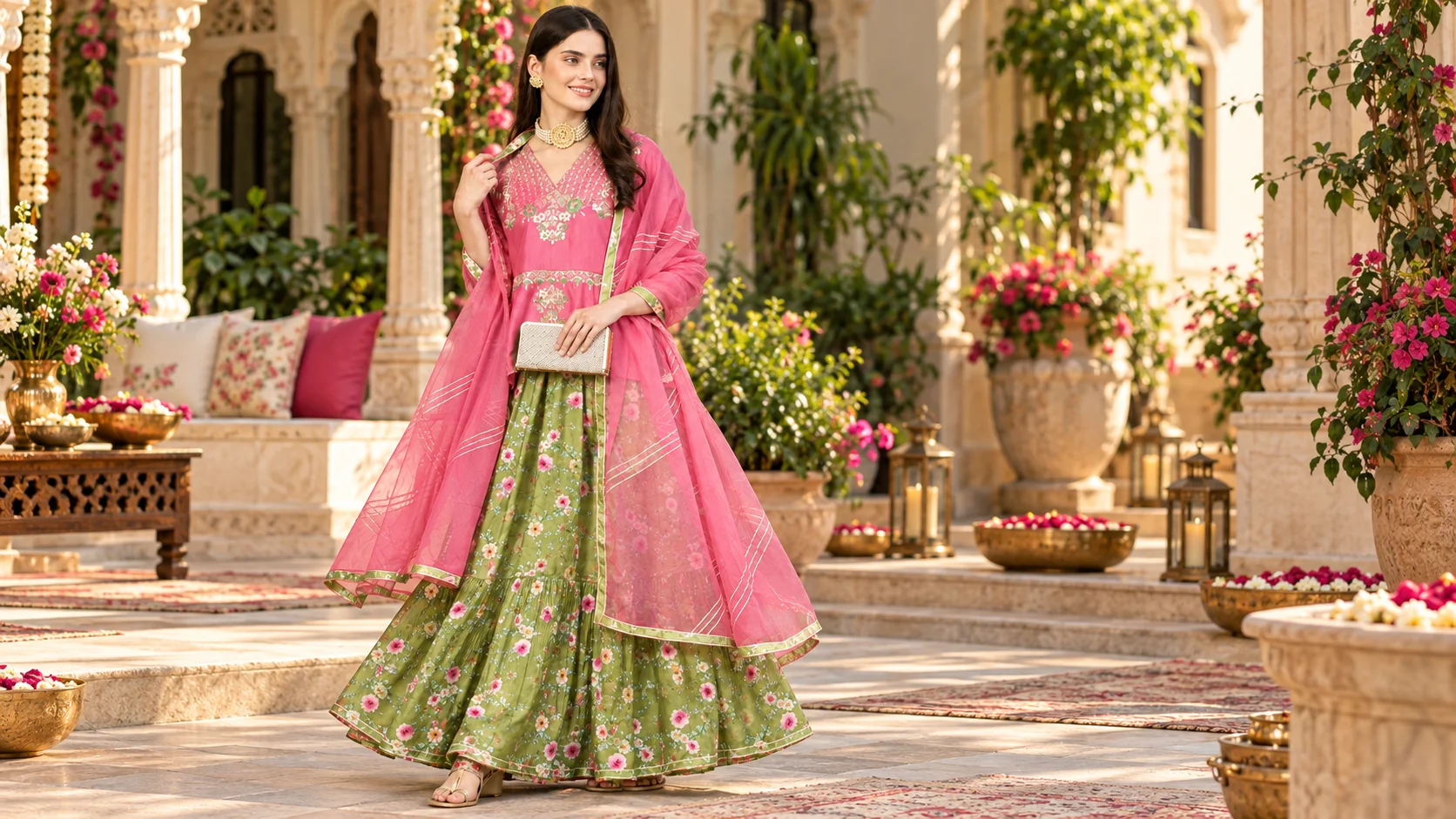
A pink and green ethnic outfit offers a beautiful balance of colour, floral detail and traditional elegance. With a pink embroidered top, a flowing green floral skirt and a sheer pink dupatta, the look already has plenty of character. The secret to styling it well is knowing which details to highlight and which accessories to keep understated.
Whether you are dressing for Diwali, a wedding celebration or a family gathering, a few thoughtful choices can help you create a coordinated outfit without making it feel overdone. From jewellery and dupatta draping to footwear and occasion-ready finishing touches, here is how to make this colour combination work for you.
Table of Contents
Understand the Pink and Green Colour Balance
The first step in styling a pink and green ethnic outfit is to recognise its existing focal points. The pink top draws attention through its embroidery, while the green skirt introduces a contrasting floral pattern. The sheer pink dupatta connects the two colours and adds another layer of movement.
Rather than introducing several new shades, let the existing palette guide your choices. Ivory, cream and muted gold can complement the pink-and-green combination without competing with its decorative details. You can also pick a small colour from the floral print for a subtle accessory accent.
A simple styling rule: when your outfit combines embroidery, florals and a decorative border, let one or two features lead the look. Keep the remaining details supportive.
For example, if you choose a statement choker, avoid adding several equally prominent necklaces. If the skirt has a dense floral print, consider simpler footwear and a compact bag. This creates a more deliberate appearance because each element has room to stand out.
Shop the LookFor more inspiration, explore Nimon Group’s floral kurta set styling guide, which explains how to coordinate accessories around a patterned ethnic outfit.
Style the Dupatta Without Hiding the Outfit
A dupatta can change the overall appearance of an ethnic outfit without requiring a different base ensemble. In this look, the pink dupatta echoes the top, while its green edging relates to the skirt. Its sheer appearance also allows the underlying floral pattern to remain visible.
For a balanced drape, try these approaches:
- One-shoulder drape: Place the dupatta over one shoulder to show more of the embroidered top and skirt.
- Open-front drape: Let both sides fall naturally at the front, keeping the central embroidery visible.
- Elbow-supported drape: Arrange the fabric over your forearms for a relaxed, occasion-ready appearance.
- Defined-border drape: Position the green edging so it frames the outfit rather than bunching up in one area.
Choose the drape according to the occasion and how much movement you expect. For a family celebration where you will be greeting guests or taking photographs, secure the dupatta in a way that keeps it manageable. For a more posed festive look, an open drape can show the contrast between the pink fabric and green floral skirt.
Avoid covering every decorative area at once. The aim is to frame the outfit, not hide the embroidery or obscure the skirt’s pattern.
Choose Jewellery and Accessories That Complement the Look
Jewellery should support the neckline and embroidery rather than compete with them. A statement choker and matching earrings create a coordinated focal point, particularly when the neckline is open enough to leave some space around the jewellery.
If you choose a prominent necklace, keep additional neckwear minimal. Alternatively, skip the necklace and let the earrings provide the main accent. The best choice depends on the neckline, the scale of the embroidery and how ornate you want the overall appearance to feel.
For a festive version, consider gold-toned or pearl-inspired accessories that relate to the warm details visible in the outfit. These are styling suggestions rather than requirements; choose pieces that work with your own jewellery collection.
Complete the look with thoughtful accessories:
- Clutch: A cream, ivory or muted metallic clutch can balance the colourful outfit without introducing another dominant shade.
- Footwear: Choose sandals or occasion-appropriate footwear that complements the outfit’s formality. Neutral or softly metallic shades are easy options.
- Hair: A simple side part, loose waves or a neat low hairstyle can keep the neckline and earrings visible.
- Make-up: A soft, coordinated look can complement the outfit, while a stronger lip colour can provide a deliberate contrast if that suits your preference.
Keep the number of statement accessories under control. When the outfit, necklace and earrings already attract attention, a quieter bag and simpler footwear usually create a more cohesive result.
You can also explore Nimon Group’s green ethnic wear styling guide for more ideas on balancing colour, patterns, dupattas and accessories.
Adapt the Outfit for Different Occasions
The same pink-and-green combination can be styled differently depending on the setting. You do not necessarily need to change the entire outfit; small adjustments to jewellery, footwear and the dupatta can shift its overall mood.
For Diwali and festive gatherings: Let the colours and embroidery remain prominent. Add coordinated earrings, a statement necklace if the neckline allows it, and a compact metallic clutch. A neatly arranged dupatta helps the look feel intentional in photographs.
For wedding celebrations: Consider slightly more prominent jewellery or a more structured hairstyle. Keep the other accessories restrained if the necklace and earrings are already elaborate. Choose footwear that suits the venue and the amount of walking or standing involved.
For daytime family events: A lighter approach can work well. Wear fewer statement pieces, choose simpler earrings and let the floral skirt provide most of the visual interest. A relaxed dupatta drape can make the ensemble feel less formal.
For evening celebrations: A defined dupatta drape, coordinated jewellery and a refined clutch can create a more dressed-up appearance. You can emphasise either the neckline or the earrings rather than making every accessory equally prominent.
The guiding principle is to adjust the level of detail to the occasion. A daytime gathering may call for restraint, while a formal celebration can accommodate a stronger jewellery accent.
Avoid These Common Ethnic Styling Mistakes
Even a well-coordinated outfit can lose its visual balance when too many elements compete for attention. A few small corrections can make the difference.
1. Matching every accessory exactly. You do not need a pink bag, pink shoes and pink jewellery to coordinate with a pink dupatta. Neutral tones and subtle metallic accents can provide a more balanced finish.
2. Overloading the neckline. A statement choker, layered necklaces and prominent earrings can crowd an embroidered neckline. Choose one main jewellery focus and let the other pieces support it.
3. Hiding the skirt’s pattern. A heavily folded or bunched dupatta can obscure the floral design. Adjust the drape so that the top, skirt and dupatta remain visually connected.
4. Introducing too many competing prints. The outfit already combines embroidery and florals. Additional strongly patterned accessories may make the overall look feel busy. Simpler supporting pieces allow the original design to stand out.
5. Ignoring the setting. Footwear suitable for a smooth indoor venue may not be practical on grass or uneven outdoor surfaces. Consider the venue and your planned activities before choosing your final accessories.
A Final Check Before You Head Out
Look at the complete outfit from a little distance. Can you see the embroidered top, the green floral skirt and the dupatta’s contrasting edge? Does the jewellery complement the neckline? Do the bag and footwear support the look without distracting from it?
If the main elements feel balanced, resist the urge to keep adding details. A coordinated ethnic outfit often looks most considered when its strongest features are allowed to speak for themselves.
Related Blogs
- Effortless Floral Kurta Set Styling With Smart Ideas
- Elegant Ethnic Green Outfit With Effortless Styling Power
- Green Ethnic Wear Styling Made Effortlessly Standout
Frequently Asked Questions
1. How do you style a pink and green ethnic outfit?
Start with the outfit’s existing colours and patterns. Pair the pink embroidered top and green floral skirt with a thoughtfully draped dupatta, coordinated jewellery and understated accessories. A cream or metallic clutch can finish the look without competing with the embroidery.
2. Which jewellery works with a pink and green ethnic outfit?
Gold-toned, pearl-inspired or coordinated statement jewellery can complement this colour combination. If the neckline is heavily embroidered, choose earrings as the main accent or wear a single statement necklace with simpler supporting pieces.
3. How should you drape a dupatta with a floral skirt?
Try a one-shoulder, open-front or elbow-supported drape. Arrange the fabric so that it frames the outfit without hiding the top’s embroidery or too much of the skirt’s floral pattern. Secure it appropriately for the occasion and your planned activities.
4. Which footwear colours complement pink and green ethnic wear?
Cream, beige, muted gold and other understated metallic shades are useful options. Choose footwear according to the outfit’s formality and the venue. The aim is to complement the existing colours rather than introduce another dominant element.
5. Can you wear a pink and green ethnic outfit to a wedding?
Yes. The combination can suit many wedding-related celebrations, depending on the event’s dress code and local customs. You can make the look more formal with coordinated jewellery and a refined clutch, while keeping the overall accessories balanced.