
This article may contain affiliate links. We may earn a commission at no extra cost to you.
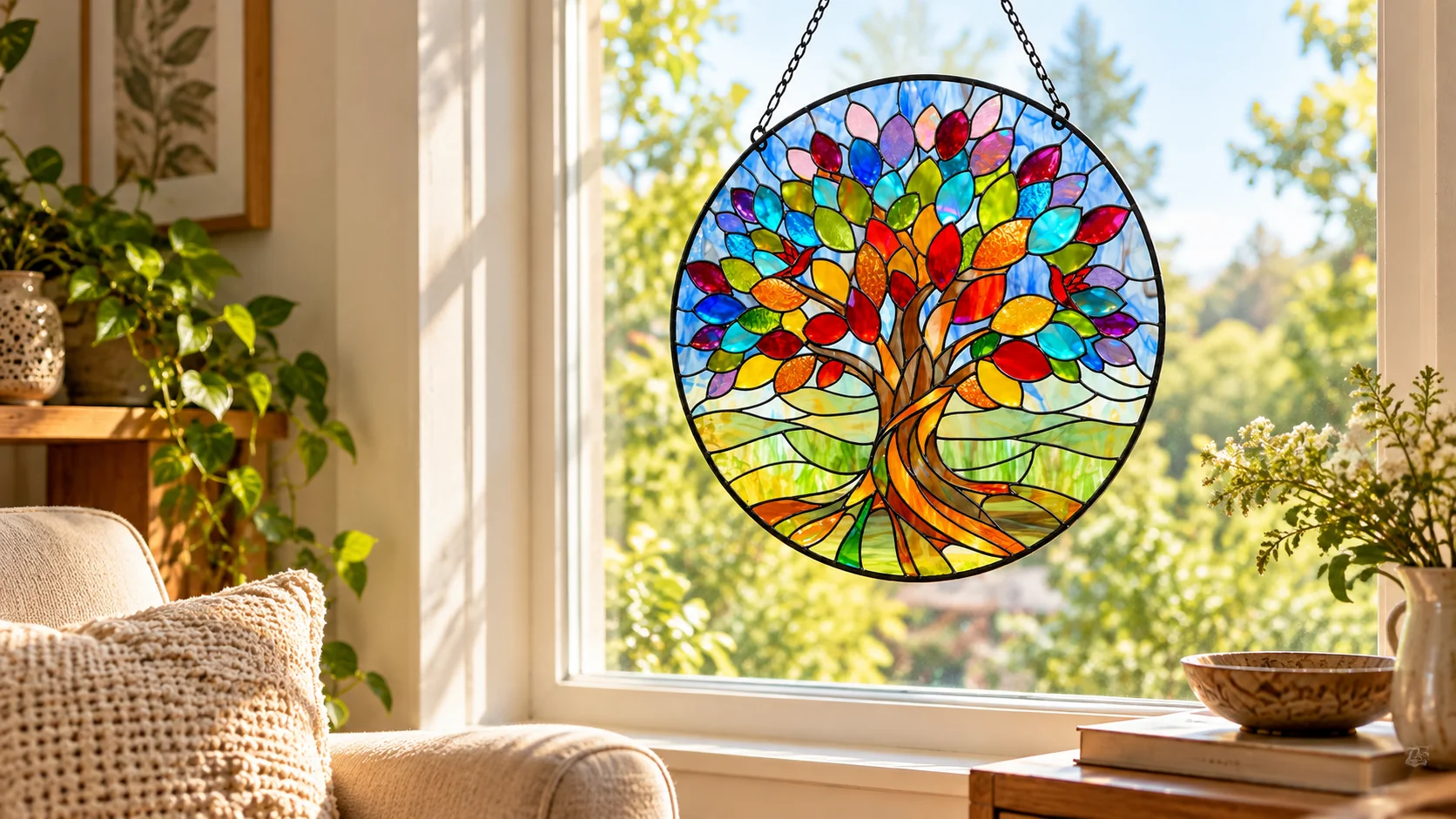
A stained glass tree suncatcher can turn an otherwise overlooked window into an eye-catching part of the room. With its circular tree design, colourful leaf-shaped details and warm-toned trunk, this decorative hanging has enough visual presence to work as a focal point without needing a complicated styling scheme.
Its biggest decorating advantage is placement. Hang a colourful window ornament where natural light can reach it, then let the surrounding furniture, plants and accessories play supporting roles rather than competing for attention.
Table of Contents
Why a Stained Glass Tree Suncatcher Stands Out
The appeal starts with the design itself. The circular composition creates a strong outline, while the branching tree motif fills the centre with movement.
Rather than relying on one dominant shade, the design brings together reds, blues, greens, turquoise, amber, yellow, pink and purple tones. That varied palette means the piece does not have to match every colour already in the room.
In fact, trying to match it too precisely can make the styling feel forced. A simpler approach is to allow one or two colours from the decoration to echo elsewhere in the room.
A green houseplant, rust-coloured cushion, blue decorative object or warm wood surface can be enough to establish a visual connection.
That makes this type of window décor particularly useful when a neutral room needs a more expressive accent.
Let the tree remain the focal point
Because the tree contains plenty of visual detail already, the area around it does not need much additional decoration.
Think in terms of visual breathing room. A clear section of window, a restrained nearby plant and one or two understated accessories will usually create a stronger composition than filling every available surface.
For more inspiration on balancing decorative pieces with surrounding objects, Nimon Group’s Timeless Animal Décor Ideas for an Elegant Living Space explores similar principles of placement, scale and restrained styling.
Explore the Stained Glass Tree SuncatcherWhere to Place a Stained Glass Tree Suncatcher
The obvious starting point is a window, but not every window creates the same decorating effect.
Consider both how the ornament looks from inside the room and what surrounds it. The strongest position is often one where the decoration can be noticed from a normal seating or walking area rather than being hidden behind curtains, furniture or several other objects.
Here are three particularly useful placement directions.
A bright living-room window
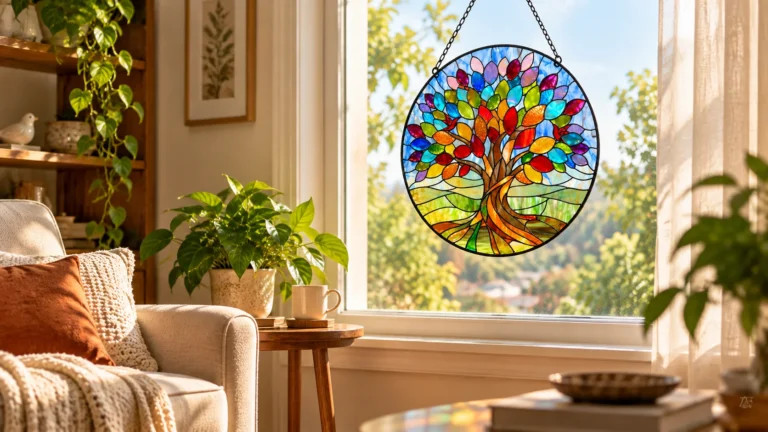
A living room gives colourful decorative glass enough space to become part of the wider interior.
Try positioning it near a seating area where the tree can act as a vertical accent above or beside a console, side table or low cabinet.
Keep the furniture underneath relatively simple. Warm woods, cream upholstery, natural textures and leafy plants work particularly well as supporting elements because they allow the multicoloured design to remain visually dominant.
An entryway with natural light
An entryway is another interesting option when there is a suitable window.
Because this is one of the first areas people see when entering a home, a distinctive hanging decoration can introduce colour without taking up floor or console-table space.
Avoid surrounding it with several equally bold pieces. Instead, consider a small plant, simple tray or restrained decorative object below it.
A quiet reading corner
A window beside a reading chair can give the piece a softer, more relaxed setting.
A chair, cushion, small side table and plant are enough to establish the area. The suncatcher then becomes part of the visual atmosphere rather than appearing as an isolated decoration.
This approach can work especially well in rooms where most furnishings are neutral.
How to Style It Without Overcrowding the Window
One of the easiest mistakes with colourful décor is adding too many competing elements.
The stained glass tree already combines an intricate silhouette with numerous colours. Give those elements room to register.
Start by assessing what is immediately around the window. Patterned curtains, several hanging ornaments, densely packed plants and strongly coloured wall art can all compete with the tree.
You do not necessarily need to remove everything. Instead, establish a hierarchy.
Primary focal point: the colourful tree decoration.
Supporting elements: one plant, understated textiles or simple furniture.
Background: the window, wall and larger neutral surfaces.
This hierarchy makes the arrangement easier to understand at a glance.
Use plants as a subtle visual bridge
Plants are a natural companion for a tree motif, but restraint still matters.
A single leafy plant positioned below or to one side can reinforce the botanical character without turning the window into a crowded display.
Vary the scale as well. If the hanging ornament is visually substantial, a medium-sized plant usually creates better balance than several small objects arranged around it.
Give the decoration negative space
Negative space is particularly important around intricate pieces.
Leaving visible window or wall space around the circular outline helps define its shape. It can also make the arrangement look more intentional and less like an accumulation of unrelated decorations.
This is a useful principle beyond window décor. Nimon Group’s Simple Dining Layout Fixes for Harmonious Living looks more broadly at how thoughtful placement and spacing can make an interior feel more coherent.
Choosing the Right Room and Colour Palette
A multicoloured decorative object does not require a multicoloured room.
Often the opposite works better.
Neutral surroundings — cream, beige, warm white, soft grey and natural wood tones — can provide a calm backdrop for the reds, greens, blues and amber shades visible in the tree.
If your room already contains colour, select one or two existing shades rather than trying to coordinate every tone.
For example, a rust cushion could relate to the warm orange and red areas of the design, while greenery naturally connects with its green details.
The result feels coordinated without looking overly planned.
Warm interiors
Rooms with warm wood, beige upholstery, terracotta accessories or brass-toned accents can pick up the warmer side of the palette.
Here, the reds, yellows, oranges and brown-toned tree trunk become useful visual connections.
Cooler interiors
A room dominated by white, grey or cooler neutrals can instead emphasise the blues, turquoise, green and purple shades.
You do not need to change the entire room. A cushion, ceramic piece or small decorative accessory may provide enough repetition.
Eclectic interiors
An eclectic room can handle more colour, but maintaining hierarchy remains important.
Rather than surrounding the window with several equally intricate pieces, allow the tree motif to occupy its own visual zone.
That distinction helps colourful interiors feel collected rather than chaotic.
Simple Care for Decorative Glass
Decorative glass deserves gentle treatment.
For established stained and leaded glass, the Stained Glass Association of America recommends beginning conservatively: routine dust can be handled with a feather duster or soft cotton cloth, while abrasive, ammonia-based and acid-based cleaners should be avoided. See the Stained Glass Association of America care guidance for more detailed information.
For a modern decorative suncatcher, however, always follow the seller or manufacturer’s instructions for that specific product because its construction and decorative treatments may differ from traditional architectural stained glass.
Also handle a hanging ornament carefully when moving or repositioning it. Check the hanging arrangement periodically and avoid placing delicate décor where it is likely to be knocked during everyday activity.
Is This Style Right for Your Home?
A stained glass tree suncatcher makes the most sense when you want the window itself to become part of the decorating scheme.
It is particularly interesting for spaces that already have a calm foundation but could benefit from a stronger focal accent. The circular tree motif introduces pattern and colour without requiring additional floor space, which can also make hanging décor worth considering in smaller rooms.
Before choosing a position, look at the room from several normal viewing angles. Ask whether the piece will be clearly visible, whether nearby objects compete with it, and whether there is enough open space around its outline.
Then keep the rest of the arrangement deliberately simple.
Take a Closer Look at This Tree SuncatcherA colourful stained glass tree suncatcher does not need an elaborate interior makeover around it. The more effective approach is often to give the piece a clear position, repeat just one or two of its colours elsewhere, and leave enough surrounding space for the design to stand out.
The window becomes more than a background — it becomes part of the room’s decoration.
FAQs
What is a stained glass tree suncatcher used for?
A stained glass tree suncatcher is primarily decorative window décor. Its tree motif and colourful appearance can create a focal point near a window while adding visual interest to the surrounding interior.
Where should I hang a colourful tree suncatcher?
A suitable window in a living room, entryway or reading corner can work well. Choose a position where the ornament remains visible and has enough open space around it rather than competing with several other hanging decorations.
Does colourful window décor work with neutral interiors?
Yes. Neutral walls, upholstery and natural wood can provide an effective background for multicoloured décor. You can repeat one or two colours from the ornament elsewhere through cushions, plants or small accessories.
Should I put other decorations around a window suncatcher?
You can, but keep them secondary. A plant or a few restrained accessories can complement the window decoration without overwhelming it. Leaving some negative space around the ornament helps maintain a clear focal point.
How should decorative stained glass be cleaned?
Cleaning requirements depend on the item’s construction, so follow its specific care instructions. General professional guidance for stained glass favours gentle cleaning and avoiding abrasive or unsuitable chemical cleaners.