
This article may contain affiliate links. We may earn a commission at no extra cost to you.
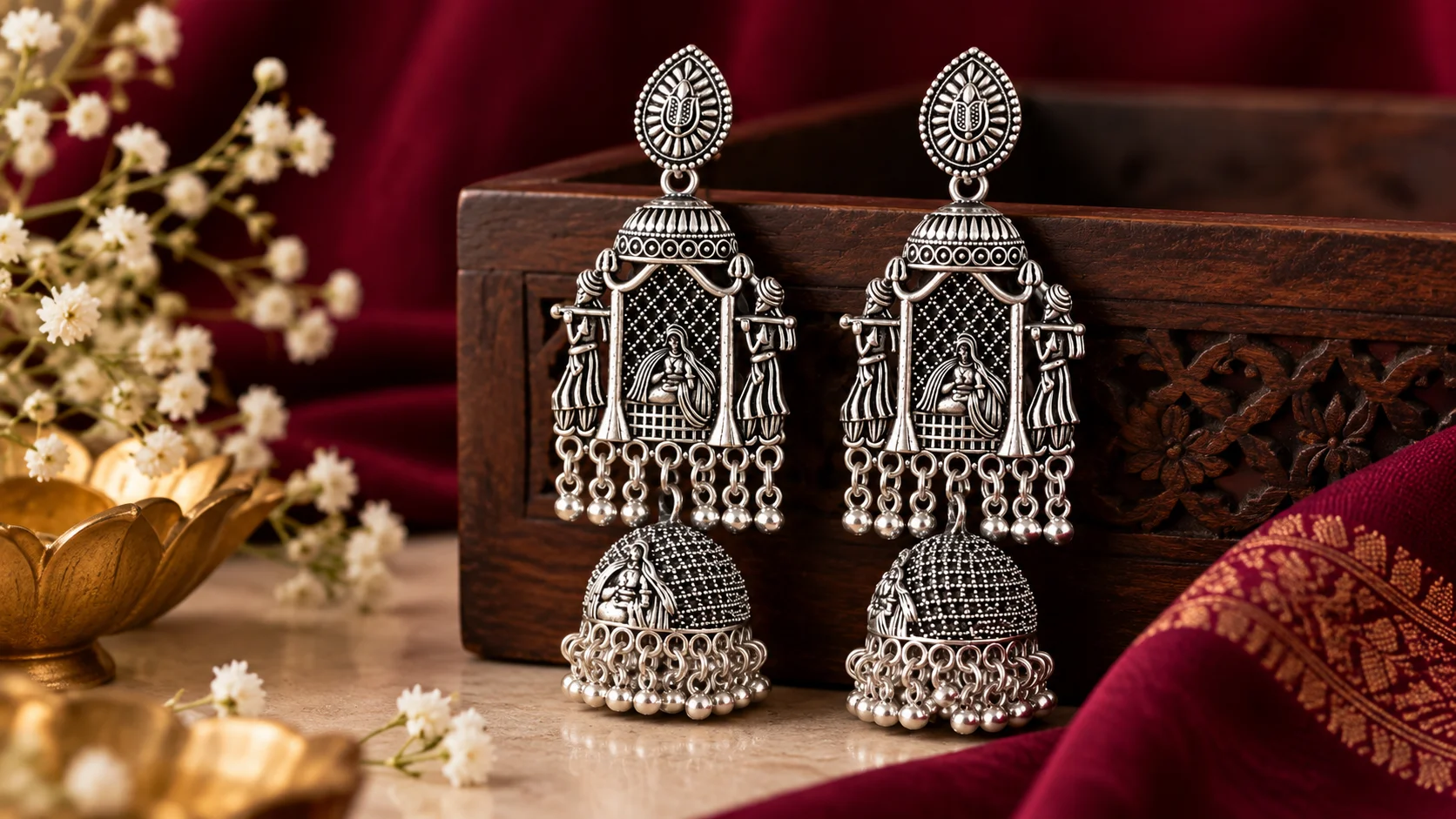
Oxidised temple earrings have a way of turning jewellery into the focal point of a look. With an elongated silhouette, intricate figurative detailing, dangling elements and a statement jhumka-style drop, this particular design has enough visual presence to work as the defining accessory rather than simply another finishing touch.
The easiest way to style ornate oxidised temple earrings is to give them visual space. Pair them with relatively restrained clothing, keep competing jewellery selective and use colour or texture to echo their traditional character without creating an overly coordinated look.
Table of Contents
Why Oxidised Temple Earrings Make a Statement
The appeal of this design begins with scale and detail. The earrings feature a long, multi-part silhouette with an ornate upper section, figurative motifs, small hanging details and a rounded jhumka-inspired drop.
That combination naturally attracts attention around the face. Instead of trying to compete with it, a well-balanced outfit can allow the earrings to become the visual anchor.
This is particularly useful when you want an outfit to feel considered without relying on several pieces of statement jewellery. One expressive accessory can often create a clearer look than a necklace, earrings, bangles and other bold elements all demanding equal attention.
Explore These Oxidised Temple Earrings7 Effortless Ways to Style Oxidised Temple Earrings
1. Let black create a strong backdrop
Black is an easy partner for an intricate silver-tone look because the contrast allows small decorative details to stand out.
A black saree, kurta, blouse or other simple silhouette can create an understated base. The clothing does not have to be plain, but avoiding heavy embellishment close to the face can help the earrings retain their impact.
This approach is especially useful when you want traditional-inspired jewellery to feel polished rather than overly ceremonial.
2. Pair them with rich jewel colours
Deep maroon, wine, emerald, navy and similarly saturated shades can complement the dramatic character of ornate temple-inspired earrings.
You do not need to match every accessory to the clothing. In fact, allowing the earrings to contrast slightly with the outfit can make the overall styling feel less predictable.
For example, a deep maroon outfit with these earrings and otherwise restrained accessories can create a strong focal point without requiring an elaborate jewellery set.
3. Try them with a simple saree
A statement earring can transform a relatively simple saree combination.
Rather than choosing an equally elaborate necklace, consider leaving the neckline quieter and allowing the earrings to frame the face. A subtle border, textured fabric or restrained motif can provide enough visual interest elsewhere.
This is also where proportion matters. Because the earrings are visibly long and detailed, a less crowded upper half can make the styling feel intentional.
4. Give a kurta set one strong jewellery focus
A straightforward kurta set provides another natural setting for oxidised temple earrings.
Choose clothing with enough simplicity around the neckline to prevent the details from merging into one busy area. You can then introduce colour through the dupatta, footwear or a small supporting accessory rather than adding another dominant jewellery piece.
The result can work particularly well when you want the outfit to feel dressed up without building an entire coordinated jewellery combination.
5. Mix traditional jewellery with a cleaner silhouette
Temple-inspired detailing does not have to be restricted to a completely traditional outfit.
Try using the earrings as the heritage-inspired element within an otherwise cleaner ensemble. A solid-colour long dress, a minimalist kurta or another uncluttered silhouette can create an interesting contrast between detailed jewellery and restrained clothing.
The important point is not to make every part of the outfit equally decorative.
6. Use bangles as a supporting clue, not a competitor
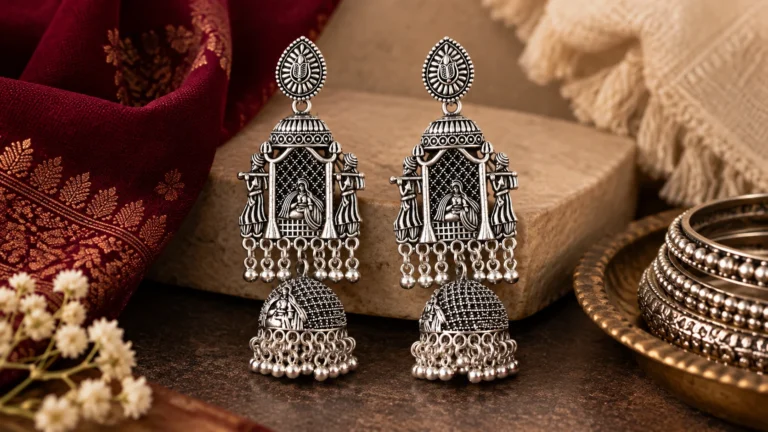
If you want to introduce another jewellery element, a small bangle stack can work without taking attention away from the earrings.
Keep the balance deliberate. The earrings already contain multiple decorative sections and dangling details, so a large necklace plus heavy bangles plus other statement pieces may make the look feel crowded.
Think in terms of hierarchy: earrings first, supporting jewellery second.
7. Style around the earrings rather than adding them last
Statement jewellery often works better when it is chosen earlier in the styling process.
Start with the earrings, then ask what neckline, hairstyle and colour palette will give them enough room. This reverses the common habit of completing an outfit first and adding jewellery afterwards.
It can also make wardrobe decisions easier because you already know where the visual emphasis should sit.
How to Balance Other Jewellery
With large statement earrings, restraint elsewhere can be useful.
You might skip a necklace entirely, choose a very subtle one, or introduce a few bangles instead. There is no universal rule—the right balance depends on the neckline, clothing detail and occasion—but giving each accessory a clear role generally creates a more coherent result.
If the clothing itself includes ornate embroidery around the neckline, consider reducing additional jewellery. Conversely, a simple neckline leaves more visual room for accessories.
This is one reason statement earrings can be versatile from a styling perspective: changing the surrounding pieces can significantly alter the mood without changing the earrings themselves.
Choosing Necklines and Hairstyles
The neckline affects how much visual breathing room long earrings receive.
Open, relatively simple and uncluttered necklines can make an elongated earring silhouette easier to appreciate. Higher or heavily decorated necklines can still work, but it becomes more important to control the amount of competing detail.
Hair makes a difference too.
An updo or swept-back hairstyle exposes the full outline of the earrings and puts the decorative details in view. Wearing hair down creates a softer effect, although very long or voluminous hair may conceal parts of an elaborate design.
There is no single correct choice. Decide whether you want the earrings to be immediately prominent or revealed more subtly as you move.
What to Consider Before Choosing Statement Earrings
Visual appeal is only one part of choosing elaborate earrings. Before buying, check the retailer’s current product information carefully for details that cannot be established from appearance alone.
In particular, confirm the actual materials and finish, dimensions, fastening mechanism, product weight, care guidance and what is included in the purchase. These practical details can matter with a long, highly detailed earring design.
The visible design here suggests a strongly ornamental, traditional-inspired direction, but appearance alone cannot establish metal composition, purity, durability, comfort or manufacturing method.
If the combination of elongated temple-style detailing and jhumka-inspired drops is what attracted you, the retailer listing is the appropriate place to confirm the specifications before deciding.
Take a Closer Look at the Temple Earring DesignCaring for Detailed Jewellery
Detailed earrings deserve thoughtful handling, particularly when they contain multiple hanging components.
Store jewellery separately rather than allowing elaborate pieces to rub against other items. The Gemological Institute of America also recommends protecting jewellery from potentially damaging chemicals and storing pieces carefully to reduce scratching and impact damage.
Cleaning methods should depend on the actual materials and construction. Avoid assuming that one cleaning solution is safe for every type of jewellery; GIA notes that different metals, gemstones and treatments can require different approaches.
For this particular product, follow the retailer or manufacturer’s care instructions once its actual composition is confirmed.
A Statement Piece That Does the Styling Work
Oxidised temple earrings are at their most effective when the rest of the styling gives their intricate silhouette room to speak.
Start with one clear idea: make the earrings the focal point. From there, experiment with a black or jewel-toned base, a simple saree, a restrained kurta set or a cleaner contemporary silhouette. Add other jewellery only when it contributes to the composition rather than competing with it.
The result does not need to be complicated. Sometimes one distinctive accessory is enough to give an entire outfit its direction.
Frequently Asked Questions
What can I wear with oxidised temple earrings?
Oxidised temple earrings can be styled with sarees, kurta sets, dresses and other outfits that give statement jewellery sufficient visual space. Simple necklines and controlled accessory combinations can help intricate earrings remain the focal point.
Can I wear long statement earrings without a necklace?
Yes. Leaving out a necklace can create useful breathing room around long, detailed earrings. Whether that works best depends on your neckline, outfit detail and the overall effect you want.
What colours work with oxidised-style earrings?
Black, maroon, wine, navy and other rich colours can provide attractive contrast, while neutrals can create a quieter backdrop. Treat these as styling possibilities rather than fixed rules.
Should I wear my hair up with statement earrings?
An updo or swept-back hairstyle exposes more of a long earring silhouette. Wearing your hair down can create a softer effect, so choose according to how prominently you want the earrings displayed.
How should detailed earrings be stored?
Keep detailed jewellery separated from other pieces where possible to reduce rubbing and tangling. Use the product’s specific care instructions for cleaning because appropriate methods depend on its actual materials and construction.