
This article may contain affiliate links. We may earn a commission at no extra cost to you.
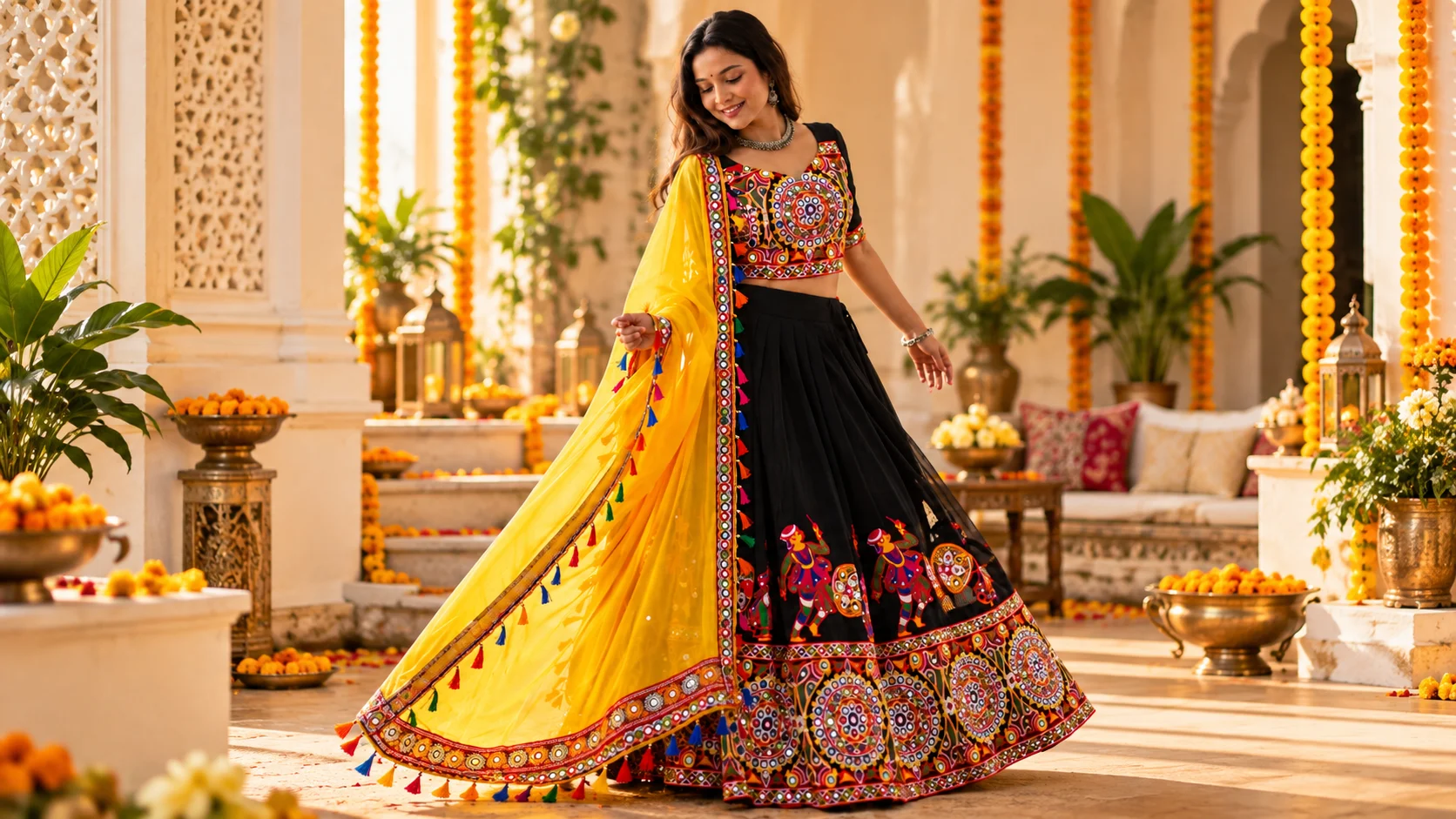
A festive lehenga can look spectacular without every element competing for attention. With a black skirt, colourful embroidered details, a bright yellow dupatta and silver-toned jewellery, this look already has a strong visual story. The trick is to decide what leads, what supports it and what should stay quiet.
For this style, the most useful approach is simple: let the lehenga set the colour direction, keep jewellery focused around one main area, and use the dupatta, hair and footwear to change the mood for the occasion.
Table of Contents
Festive Lehenga Styling Starts With Visual Hierarchy
The outfit’s strongest feature is its contrast. The dark skirt gives the colourful lower border and embroidered motifs a defined base, while the yellow dupatta creates a bright sweep across the silhouette. The blouse continues the multicolour detailing, so the outfit already contains several visual points of interest.
That means accessories should not introduce another competing story. Instead, repeat one existing cue. Silver-toned jewellery works naturally with the cool metallic appearance visible in the accessories, while a small colour echo in bangles, earrings or footwear can connect the outfit without making everything match exactly.
A useful rule is to ask what someone notices first when you look in the mirror. If the answer is not the outfit or your face, remove or simplify one competing detail.
Shop This Festive Lehenga StyleControl Jewellery Around the Neckline
The blouse has a detailed neckline and front, while the outfit is already rich with colour and pattern. That makes the neckline the place where restraint matters most. A choker or short necklace can reinforce the neckline, but stacking several heavy pieces can quickly crowd the upper half of the look.
If you choose a prominent necklace, let the earrings support it rather than compete with it. If statement earrings are the main focus, a lighter necklace—or no necklace—can create more breathing room. A considered bangle stack is usually more effective than adding every available piece.
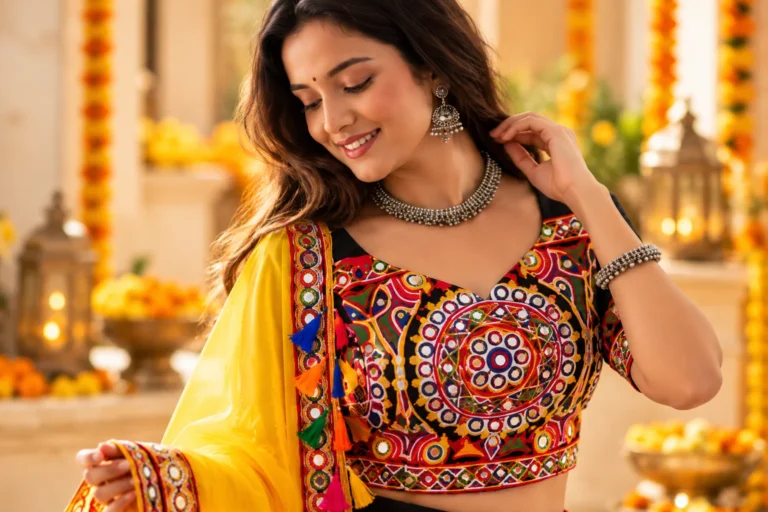
The goal is not minimal jewellery at all costs. It is controlled emphasis. Vogue India has also highlighted the importance of placement when mirror work, tassels and ornate jewellery appear together. 🌐
For a more jewellery-focused next step, explore How to Style Statement Ethnic Earrings for a Festive Look.
Adapt the Dupatta for the Occasion
The yellow dupatta is more than a finishing layer here; it is the element that changes how much movement and brightness the whole outfit carries. A loose, flowing arrangement suits a relaxed festive gathering because it lets the colour and tassels move naturally. For a wedding or a more formal event, a neater shoulder drape can make the same outfit feel more composed.
Keep the decorated edge visible rather than folding it into a thick bundle. This is especially useful when the border contains strong colour or pattern. Vogue India’s recent festive coverage likewise treats the dupatta as a major styling element, showing how its drape and visual weight can change the tone of an Indian outfit🌐.
For several celebrations, change the drape first, then adjust jewellery and footwear.
Coordinate Hair, Footwear and Finishing Details
Once the main outfit and jewellery are decided, the remaining details should support the same visual direction. With a detailed blouse and statement skirt, hair that keeps the neckline visible can help the upper half feel cleaner. A soft open style can suit a relaxed gathering, while a neater tied-back style can work when you want the jewellery and neckline to lead.
Footwear should follow the occasion rather than trying to become another statement. Traditional flats or embellished sandals can echo the festive character, while a simpler option can be useful when the skirt and dupatta already carry substantial detail. The same principle applies to a handbag: choose a quiet shape or repeat one existing colour instead of introducing a new dominant shade.
For wedding-related dressing, compare this approach with Indian Festive Outfit Ideas for a Cream and Red Wedding Guest Look.
A final mirror check helps: look at the complete outfit from a distance, then check the neckline, hem and dupatta edge separately. If one accessory attracts attention before the main outfit, simplify it.
Adapt Festive Lehenga Styling for Every Celebration
A richly detailed lehenga does not have to be reserved for one type of event. The easiest way to reuse it is to change one visual variable at a time. For a lively festival gathering, keep the yellow dupatta prominent and allow the colourful details to show fully. For a wedding guest setting, make the drape neater and choose one stronger jewellery focal point.
For a smaller family celebration, you can reduce the jewellery and let the embroidered blouse and skirt do more of the work. If the event is outdoors or during the day, a lighter beauty look and less structured styling can keep the outfit feeling fresh rather than overly formal.
The key is not to create a completely different outfit every time. Keep the main colour story intact and change the supporting pieces. Festive Outfit Planning Made Effortless Without Buying a New Look explores the same idea from a broader wardrobe-planning angle.
The strongest festive lehenga styling is usually about control rather than addition. Let the colourful lehenga lead, choose one clear jewellery focus, use the yellow dupatta to set the occasion mood, and keep hair and footwear supportive.
Related Blogs
- Semi-Stitched Lehenga for an Elegant Standout Look
- Elegant Ethnic Wear Styling Made Effortlessly Smart
- Navratri Jewellery Guide to 5 Stylish, Essential Pieces
Frequently Asked Questions
1. How should I approach festive lehenga styling?
Start by identifying the strongest visual feature of the outfit. With this look, the colourful embroidery and yellow dupatta already provide plenty of interest, so build jewellery, hair and footwear around them rather than adding unrelated statement details.
2. What jewellery works with a heavily detailed lehenga?
Choose jewellery according to the neckline and the existing visual density. A prominent necklace can work with simpler earrings, while statement earrings can take the lead when the neckline is already detailed.
3. How can I style a yellow dupatta with a black lehenga?
Let the yellow remain the main contrast colour and avoid introducing too many competing shades. Keep the decorated border visible and coordinate one small accessory with a colour already present in the embroidery.
4. Can I wear a vibrant lehenga to a wedding as a guest?
Yes, provided the styling suits the event and the dress code. For a wedding guest setting, a polished drape, controlled jewellery and occasion-appropriate footwear can make a colourful lehenga feel refined rather than overly casual.
5. How can I make a festive lehenga look less overwhelming?
Reduce competing focal points rather than removing the festive character. Keep the lehenga as the hero, choose one main jewellery feature, simplify the footwear and let the dupatta provide movement and colour.