
This article may contain affiliate links. We may earn a commission at no extra cost to you.
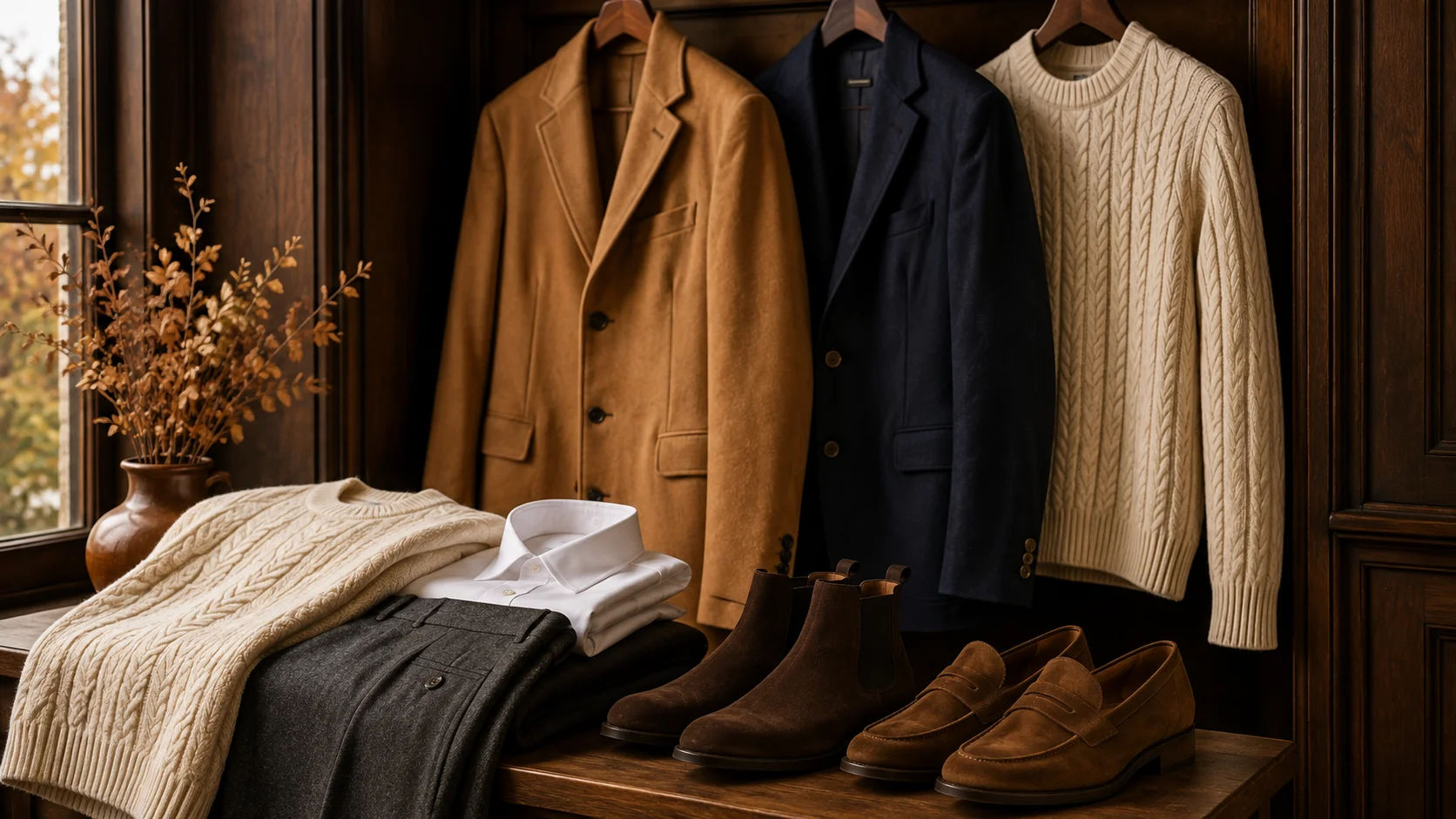
There is something particularly appealing about autumn dressing when the wardrobe becomes simpler rather than busier. A camel coat, navy blazer, cream cable-knit sweater, crisp white shirt, charcoal trousers and brown footwear already give you the foundations for a refined wardrobe without relying on loud trends.
That is the appeal of old money fall style for men: restrained colours, classic silhouettes and thoughtful layering. You do not need every piece to look identical or come from the same collection. The useful idea is to build around a small group of visually compatible staples, then change the proportions, layers and footwear to create different moods.
For an easy starting point, keep camel, cream, navy, white, charcoal and brown within the same wardrobe. These shades coordinate naturally, which makes it easier to move from relaxed daytime dressing to smarter occasions without completely rebuilding an outfit.
Table of Contents
Why Old Money Fall Style Looks So Refined
The strongest old money-inspired outfits rarely depend on one attention-grabbing garment. Their impact comes from the relationship between pieces.
Imagine a camel coat over a cream cable-knit sweater with charcoal trousers. Nothing is fighting for attention, yet the contrast between warm camel, pale cream and deep grey gives the outfit dimension. Replace the coat with a navy blazer and the same colour story immediately feels sharper.
This approach works because the wardrobe has visual continuity. Instead of asking, “What statement piece should I add?”, think:
Which pieces can I combine without making the outfit feel overworked?
That shift is important. A restrained wardrobe gives you more freedom to repeat clothing because changing one layer or shoe can noticeably alter the overall impression.
It is also worth separating the look of a garment from its specifications. Colour, silhouette and visible texture can guide styling, but fibre composition, construction and other product details should always be checked on the relevant product listing before buying.
Build Around Five Wardrobe Foundations
You can interpret the five-piece idea as five wardrobe roles rather than a rigid shopping checklist.
1. A camel outer layer
Camel is an effective anchor for this aesthetic because it brings warmth to navy, charcoal, cream and white.
A longer coat creates a more dramatic silhouette, while a shorter tailored jacket gives the same colour family a slightly more relaxed character. What matters most is keeping the surrounding pieces relatively restrained.
2. A navy tailored layer
A dark navy blazer gives you an alternative to camel without disrupting the palette.
Wear it over a white shirt when you want a cleaner, sharper combination, or introduce a cream knit for more visible texture. Navy also provides enough contrast against charcoal trousers to stop a neutral outfit from looking flat.
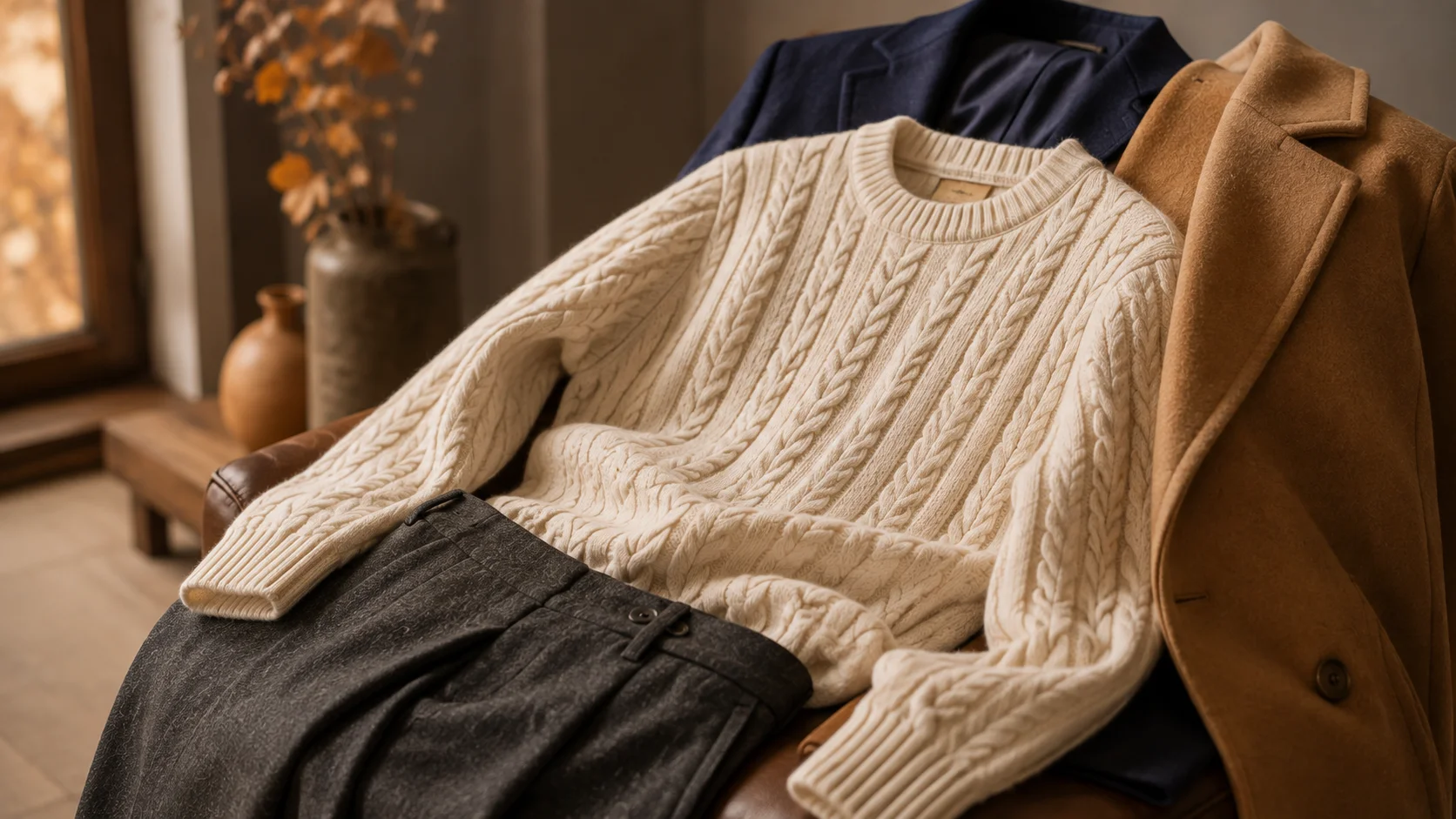
3. A cream textured knit
A cable-knit or similarly textured cream sweater can become the visual bridge between tailored outerwear and casual dressing.
The pale colour brightens darker trousers and jackets, while visible texture introduces interest without needing prints or bold graphics.
4. A crisp white shirt
The white shirt is the reset button in this wardrobe.
Under a blazer, it creates a sharper line. Beneath a sweater, even a small amount of white at the collar can introduce contrast. Worn more simply, it allows stronger outerwear to remain the focal point.
5. Dark neutral trousers
Charcoal trousers are especially useful because they sit comfortably beside camel, cream, navy and white.
Rather than trying to match the coat or blazer exactly, allow the trousers to act as the darker foundation. This gives the upper layers room to stand out while keeping the overall outfit controlled.
The same principle—using a compact group of interchangeable pieces—is already central to Nimon Group’s existing men’s capsule-wardrobe guidance.
Use a Quiet Autumn Colour Palette
One of the easiest ways to make old money fall style feel convincing is to control the palette before thinking about individual outfits.
A useful combination is:
Camel + Cream + Navy + White + Charcoal + Brown
You do not need every colour in every outfit.
For example, camel, cream and charcoal create a warm autumn combination. Navy, white and charcoal feel cleaner and slightly smarter. Camel, white and charcoal provide contrast without looking overly formal.
Brown footwear then connects naturally with the warmer side of the palette.
This is also why a compact wardrobe can produce more variety than its size suggests. When most of the colours work together, changing the outer layer, shirt or footwear creates a new combination without introducing another unrelated colour.
Create Different Looks Through Layering
Layering is where a restrained wardrobe becomes interesting.
Start with three levels:
Base: white shirt
Mid-layer: cream sweater or navy blazer
Outer layer: camel coat
You do not have to wear all three simultaneously. Instead, think of them as interchangeable levels.
For a simple daytime combination, try the cream knit with charcoal trousers and brown loafers. When you want a more tailored direction, switch to the white shirt and navy blazer. When the outfit needs greater visual presence, introduce the camel coat as the outermost layer.
Another useful option is allowing a white shirt collar to appear above the cream knit before adding the coat. It creates a small amount of contrast around the face while keeping the palette restrained.
The important part is editing. If the coat, sweater and trousers already create enough visual interest, you probably do not need several additional accessories competing with them.
Nimon Group’s autumn capsule guides similarly use coordinated neutral layers as the foundation for creating multiple combinations from relatively few garments.
Let Footwear Change the Mood
Shoes can change the character of these combinations more than another accessory often will.
Brown loafers work naturally when you want the outfit to appear lighter and more streamlined. They pair particularly well with charcoal trousers, a white shirt and navy tailoring.
Chelsea-style boots create a different impression. Their higher profile gives autumn outerwear more visual weight and can work especially well when a longer camel coat is involved.
You do not necessarily need both immediately.
If most of your wardrobe leans towards smarter daytime outfits, loafers may integrate more naturally. If you frequently wear longer outerwear and prefer a stronger autumn silhouette, boots may make more sense.
The goal is not to collect every possible option. It is to choose footwear that changes the mood while still coordinating with the clothes you already own.
How to Keep the Look Modern
Old money-inspired fashion can become costume-like when every “classic” element is added at once.
A better approach is to borrow the restraint rather than imitate a stereotype.
Keep the colour palette controlled, but let the silhouette feel current. Combine tailored pieces with uncomplicated knitwear. Leave unnecessary accessories out. Most importantly, avoid assuming that an outfit needs visible branding to look considered.
You can also change the level of formality without abandoning the aesthetic.
For a smarter setting, try:
Navy blazer + white shirt + charcoal trousers + brown loafers
For a relaxed autumn day:
Cream knit + charcoal trousers + loafers
For a stronger layered look:
Camel coat + cream knit + charcoal trousers + brown footwear
These examples are starting points, not rules. Fit, climate, occasion and the specific pieces already in your wardrobe should determine the final combination.
If you are travelling, the same neutral strategy becomes particularly useful because fewer pieces can coordinate across multiple days. Nimon Group’s autumn city-break guide explores this type of compact, coordinated approach in more detail.
The Real Secret Is Repetition With Variation
A stylish wardrobe does not have to produce a completely different identity every morning.
In fact, repeating a recognisable palette can make personal style feel more intentional.
You might wear the same charcoal trousers twice in one week but change the cream sweater for a white shirt and navy blazer. The camel coat might appear repeatedly, while loafers and boots alternate depending on the occasion.
That is where the “five pieces, multiple looks” idea becomes useful: the value is not in owning fewer clothes for its own sake, but in choosing pieces that give you more combinations.
Before buying anything new, compare it with what is already in your wardrobe. If you can immediately picture it working with several existing pieces, it is more likely to contribute to the system rather than becoming an isolated purchase.
Old money fall style works best when it feels effortless rather than engineered. Begin with a controlled palette, combine tailoring with simple layers, and allow texture and proportion to create interest.
The result is a wardrobe that can feel elegant and distinctive without needing an excessive number of clothes.
Related Blogs
- Men’s Fall Capsule Wardrobe — 11 Essentials for 36 Outfits
- Fall 2026 Capsule Wardrobe for Men — 12 Piece Formula
- Men’s Autumn City Break Wardrobe Guide
Frequently Asked Questions
What is old money fall style for men?
Old money fall style for men typically centres on restrained colours, classic silhouettes, simple layering and understated combinations. Camel outerwear, navy tailoring, cream knitwear, white shirts, dark trousers and brown footwear can all support this visual direction.
Which colours work well for an old money autumn wardrobe?
Camel, cream, navy, white, charcoal and brown form an easy starting palette. Because the shades are relatively restrained, many of them can be mixed without creating excessive contrast.
Do I need a large wardrobe to create this style?
No. A smaller collection can work particularly well when the garments share a compatible palette and each piece can be combined in several ways.
Should I choose loafers or Chelsea boots for autumn?
It depends on your wardrobe and occasion. Loafers can give tailored trousers and blazers a streamlined finish, while Chelsea-style boots can add visual weight to longer outerwear and layered autumn combinations.
How can I avoid making old money style look like a costume?
Focus on restraint rather than trying to reproduce every stereotypical element. Use a few classic colours and silhouettes, keep accessories controlled and combine traditional-looking pieces with straightforward modern styling.