

This article may contain affiliate links. We may earn a commission at no extra cost to you.
Draping six yards in cold weather often feels like an impossible trade-off between shivering in a cropped blouse and burying intricate borders beneath a shapeless cardigan. Knowing how to style a saree in winter solves that dilemma by turning cold-weather layers into deliberate architectural framing rather than an afterthought.
To style a saree in winter without losing its silhouette, build warmth from the inside out using a fitted high-neck knit or a rich velvet blouse, then anchor the shoulder line with a structured coat, tailored blazer, or draped shawl. Matching the outer layer’s formality and hemline to the occasion keeps the pleats and pallu sharp across workdays, weddings, and evenings.
Table of Contents
Why Saree Layering Fails When You Rely on Loose Knitwear
A saree already carries generous visual volume through its waist pleats and cascading pallu. When you throw a slouchy,hip-length cardigan or an oversized jumper over the top, two bulky silhouettes collide at the midsection, hiding the border work and making the drape look accidental.
The fix lies in treating your winter layers as either a sleek second skin underneath or a clean vertical frame on top. A close-fitting ribbed turtleneck worn in place of a traditional choli creates a smooth, uninterrupted torso line that lets the pallu sit flat across the shoulder without bunching. If you prefer a traditional neckline for celebrations, a deep jewel-toned velvet blouse adds visual weight and surface warmth while keeping the midriff and collarbones neatly defined.
For everyday layering inspiration across ethnic silhouettes, our guide on winter kurta layering for India breaks down how slim inner layers preserve traditional proportions.
How to Style a Saree in Winter for Four Distinct Occasions
Cold-weather saree styling works best when you match the outer layer’s structure to the setting rather than reaching for the same shawl every time. Adjusting just the top layer and footwear shifts the same drape from a morning commute to a late-night reception.
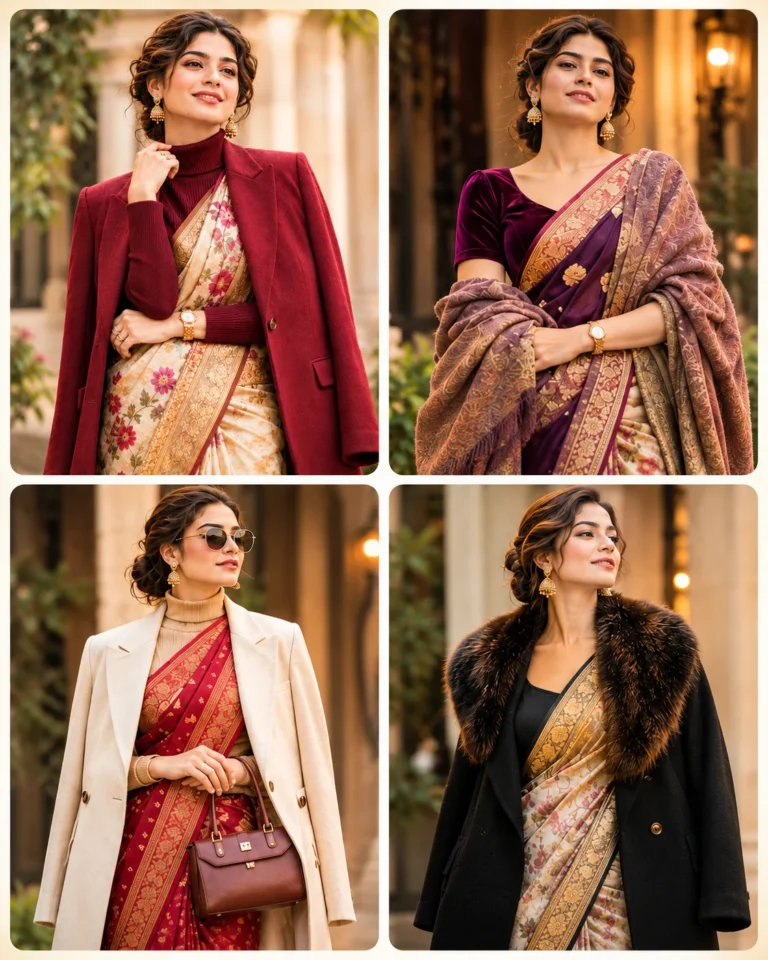
- Office Chic: Pair a cream or floral-printed saree with a burgundy ribbed turtleneck and drape a matching structured wool blazer or longline coat over your shoulders. Wearing the coat open preserves the diagonal sweep of the pallu while keeping your arms and back insulated during commutes.
- Festive Elegance: Swap the knit base for a deep plum or wine velvet blouse, and wrap a patterned wool shawl loosely around your elbows and forearms. Leaving the shawl off the shoulder keeps the embroidered saree border and neckline visible for family photographs.
- Day Out Style: Ground a rich crimson patterned saree with a warm beige turtleneck and an ivory tailored blazer.Adding dark sunglasses and a structured leather top-handle bag gives the outfit a crisp, city-ready polish for winter lunches and gallery visits.
- Evening Glam: Layer a dark tailored coat finished with a plush faux-fur collar over a black blouse and gold-bordered saree. The dramatic texture around the neckline frames the face like statement jewellery while blocking evening chills.
If you are planning a festive look around rich winter textures, see how to style velvet ethnic wear for Indian winter for deeper fabric and jewellery pairings.
Adapting Your Saree Layers to Regional Winter Climates
Winter weather varies dramatically from North India’s crisp mornings to milder afternoons in Central, West, and South India, so your layering strategy should scale with local temperatures rather than follow one rigid formula.
In colder northern cities, combine three distinct tiers: a thermal-friendly fitted turtleneck at the base, a mid-weight silk or wool-blend saree in the centre, and a knee-length tailored wool coat on top. Keep the coat unbuttoned so the vertical pleats remain visible from waist to hem, creating a long, uninterrupted column that prevents heavy outerwear from shortening your frame.
In milder western and central regions, drop the heavy overcoat in favour of a structured hip-length blazer or a velvet blouse paired with a lightweight stole you can carry over one arm indoors. For cool southern evenings where daytime temperatures stay pleasant, a short-sleeved velvet blouse paired with a folded wool shawl gives you an easy layer to drape once the sun sets. For further context on traditional Indian woollen weaves and shawl textiles, explore the textile collections documented by the Victoria and Albert Museum.

How to Style a Saree in Winter With Boots, Bags, and Jewellery
Once your clothing layers are set, accessories determine whether the outfit looks cohesive or cluttered. High-neck knits and fur-trimmed collars cover the collarbone, which means heavy chokers often tangle with fabric or disappear beneath lapels.
Skip the necklace whenever you wear a turtleneck or high coat collar, and let traditional gold jhumkas carry the focal weight near your face. Keep wrists clean with a classic gold-tone bracelet watch rather than wide stacks of bangles that catch on knitted cuffs. For styling traditional ear pieces cleanly with high necklines, read our guide on how to style jhumka earrings with ethnic outfits.
At the hemline, swap open-toed sandals for sleek dark brown leather block-heel ankle boots. Boots keep your feet warm on cold stone floors, add subtle height so the saree hem clears damp pavements, and echo the structured tone of a leather top-handle handbag.
Mastering how to style a saree in winter comes down to keeping the inner layer sleek, the outer coat structured, and the accessories focused above the collar and below the hem. Choose one occasion formula from above, anchor it with a fitted base layer, and step out warm without sacrificing a single fold of your drape.
Related Blogs
- India Winter 2026 Capsule Wardrobe: 12 Pieces for Polished, Adaptable Style
- How to Style a Faux Fur Jacket for Winter 2026
- Gold Temple Jewellery Set Styling for Sarees and Festive Looks
Frequently Asked Questions
How can I style a saree in winter without looking bulky?
Replace loose cardigans with a close-fitting ribbed turtleneck tucked neatly into your underskirt, then layer an open tailored blazer or longline coat on top. Keeping the inner layer slim preserves waist definition and lets the pallu drape flat without fabric bunching.
Can I wear a turtleneck sweater instead of a saree blouse?
Yes, a fitted crewneck or turtleneck knit works seamlessly as a winter blouse. Choose a fine-knit ribbed texture in a shade picked from your saree’s border or floral motif so the neckline looks intentional rather than improvised.
What footwear goes best with a saree in cold weather?
Block-heel leather ankle boots are the most practical winter choice. They insulate your feet, prevent the saree hem from dragging on cold or damp floors, and provide stable footing while pairing naturally with structured coats and handbags.
How do you carry a shawl with a saree so it looks modern?
Instead of pinning a heavy shawl across both shoulders and hiding the pallu, drape it loosely around your elbows and forearms or fold it neatly over one arm. This keeps the saree’s neckline and border visible while still offering warmth.
Which jewellery works best when layering a coat or turtleneck over a saree?
Pair high-neck knits and structured coat lapels with statement gold jhumkas and a classic bracelet watch, leaving the neck bare. Avoiding necklaces prevents chains from snagging on knitwear and keeps the upper silhouette clean.