

Your main entrance is more than just a doorway. It is the first space you see when returning home and the first impression visitors receive. Yet many homes have beautifully decorated interiors while their entrances remain surprisingly plain.
In traditional Vastu Shastra, the main entrance is considered an important part of the home’s overall environment. Adding thoughtful decorative elements such as a toran, rangoli or Om symbol is traditionally associated with creating an auspicious and welcoming entrance.
The good news? You do not need an expensive renovation. A few carefully chosen decorative details, combined with cleanliness, good lighting and an uncluttered doorway, can transform the appearance of your entrance.
Table of Contents
Table of Contents
What Makes a Main Entrance Important in Vastu?
The entrance creates the transition between the outside environment and your private living space. In Vastu Shastra, it is traditionally regarded as an important area through which energy is believed to enter the home.
A completely plain entrance is not automatically considered inauspicious. However, traditional Vastu-inspired decorating often emphasises a clean, maintained and welcoming doorway.
Think about the difference between an undecorated entrance and one featuring a beautiful floral toran, a neat rangoli and a thoughtfully placed decorative symbol. The second arrangement creates a stronger visual welcome without requiring significant changes to the property.
There is also a cultural connection behind these decorations. The Textile Museum of Canada documents the traditional use of torans above doorways in western India, where they are associated with welcoming and the decoration of important spaces.
These traditions should be understood as cultural and spiritual practices, not scientifically proven ways of guaranteeing prosperity, happiness or good fortune.
Main Entrance Vastu Decor Ideas That Make a Difference
The best approach is to introduce a few meaningful decorative elements rather than filling the entire doorway with accessories.
1. Add a Traditional Toran Above the Door

A toran is one of the most recognisable traditional entrance decorations in Indian homes.
You can choose from:
- Fresh mango leaf torans.
- Marigold flower garlands.
- Fabric torans with traditional embroidery.
- Decorative wooden or handcrafted door hangings.
Choose a design that complements the colour and style of your main door. A traditional floral toran works particularly well with wooden entrances, while a simple fabric design can complement a contemporary home.
Make sure the hanging is securely fixed and does not interfere with opening or closing the door.
2. Create a Beautiful Rangoli at the Entrance
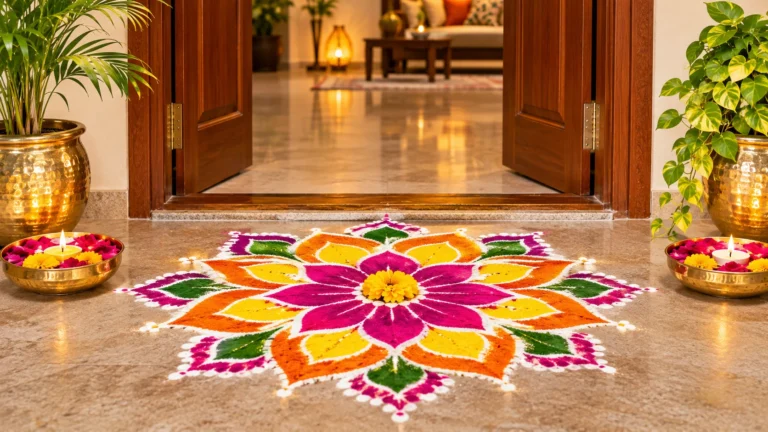
Rangoli adds colour, creativity and a traditional welcoming touch to the entrance.
You can experiment with:
- Simple floral patterns.
- Lotus-inspired designs.
- Geometric rangoli.
- White and coloured powder combinations.
- Flower-petal decorations.
For everyday decoration, a small, simple design can look more elegant than an oversized pattern.
Rangoli traditions vary across India and are known by different regional names, including kolam, alpana and mandana. The practice has cultural significance beyond decoration.
3. Introduce an Om Symbol or Traditional Wall Accent

A decorative Om symbol can provide a meaningful focal point near the entrance for households that follow this tradition.
Other options include a traditional wall hanging or a small decorative motif that complements the home’s overall aesthetic.
Avoid placing too many religious symbols together simply to fill empty wall space. A single, thoughtfully positioned element often creates a more balanced appearance.
How to Decorate Without Creating Clutter
A common decorating mistake is assuming that more decoration automatically creates a more auspicious entrance.
In reality, an overcrowded doorway can look untidy and make everyday movement difficult.
Use these simple styling principles:
- Keep the doorway clear: Avoid placing decorative objects where they obstruct movement.
- Balance the colours: Saffron, orange, cream, white and deep green can create a warm traditional palette.
- Maintain visual balance: If your toran is colourful, keep other decorations relatively simple.
- Choose suitable lighting: A well-lit entrance improves visibility and makes the doorway feel more welcoming.
- Maintain cleanliness: Remove dust, fallen leaves and damaged decorations regularly.
You can also explore our guide to simple Vastu and Feng Shui lighting tips for a dark main entrance.
One important consideration is safety. Rangoli should not make the floor slippery, and decorative objects must never obstruct the entrance or emergency access.
Simple Entrance Styling for Different Homes
Not every home has the same entrance. A large independent house may have space for elaborate decorations, whereas an apartment may have only a small doorway opening onto a shared corridor.
Here are three practical approaches.
For Independent Houses
Combine a floral toran, a neatly arranged rangoli and suitable entrance lighting. If space permits, a well-maintained decorative planter can complete the arrangement without overcrowding the doorway.
For Apartments and Flats
Choose a compact door hanging and a small decorative accent. If the entrance opens directly onto a shared corridor, avoid placing rangoli, planters or other objects where neighbours need to walk.
For Small or Rented Homes
Focus on removable decorations. Fabric torans, lightweight wall hangings and temporary rangoli designs allow you to refresh the entrance without drilling holes or making permanent alterations.
The most important decision is to adapt the decoration to your available space rather than copying an elaborate entrance from another property.
A simple, clean and well-maintained entrance can be just as visually appealing as a heavily decorated one.
Conclusion
A welcoming main entrance does not require expensive changes or excessive decoration. Start with one traditional element, such as a toran, add a small rangoli if space permits, and keep the doorway clean and unobstructed.
Treat Vastu-inspired decoration as a meaningful cultural practice while prioritising practical comfort and safety. Sometimes, the simplest entrance creates the most beautiful first impression.
Related Blogs
- How to Fix a Blocked Main Door with Vastu and Feng Shui
- Dustbin and Dirty Shoes Near the Main Door: Vastu and Feng Shui Fixes
- Vastu Main Door Threshold Tips for Wealth
Frequently Asked Questions
1. What are the best main entrance Vastu decor ideas?
Traditional main entrance Vastu decor ideas include floral torans, rangoli, decorative Om symbols and suitable lighting. Choose elements that reflect your household’s traditions while keeping the entrance clean, balanced and easy to access.
2. Can I put a toran on my main door?
Yes. Torans are traditionally hung above doorways in several Indian communities. You can choose fresh leaves, flowers, fabric or decorative designs, depending on your preferences and regional traditions.
3. Is rangoli necessary outside the main entrance?
No. Rangoli is a traditional decorative practice, not a compulsory requirement for every household. A small design can add a welcoming touch, but maintaining a clean and safe entrance is more important.
4. Can I use an Om symbol near my main entrance?
You can use an Om symbol as a traditional decorative or spiritual element if it reflects your beliefs. Choose a suitable location where it can be displayed respectfully without interfering with everyday activities.
5. How can I decorate a small apartment entrance according to Vastu?
Choose a compact toran, a removable wall hanging and a small rangoli if sufficient space is available. Avoid bulky decorations, keep shared corridors unobstructed and prioritise cleanliness and appropriate lighting.